
What Is Racking a Tile in American Mahjong?
Last updated: Nov 23, 2026
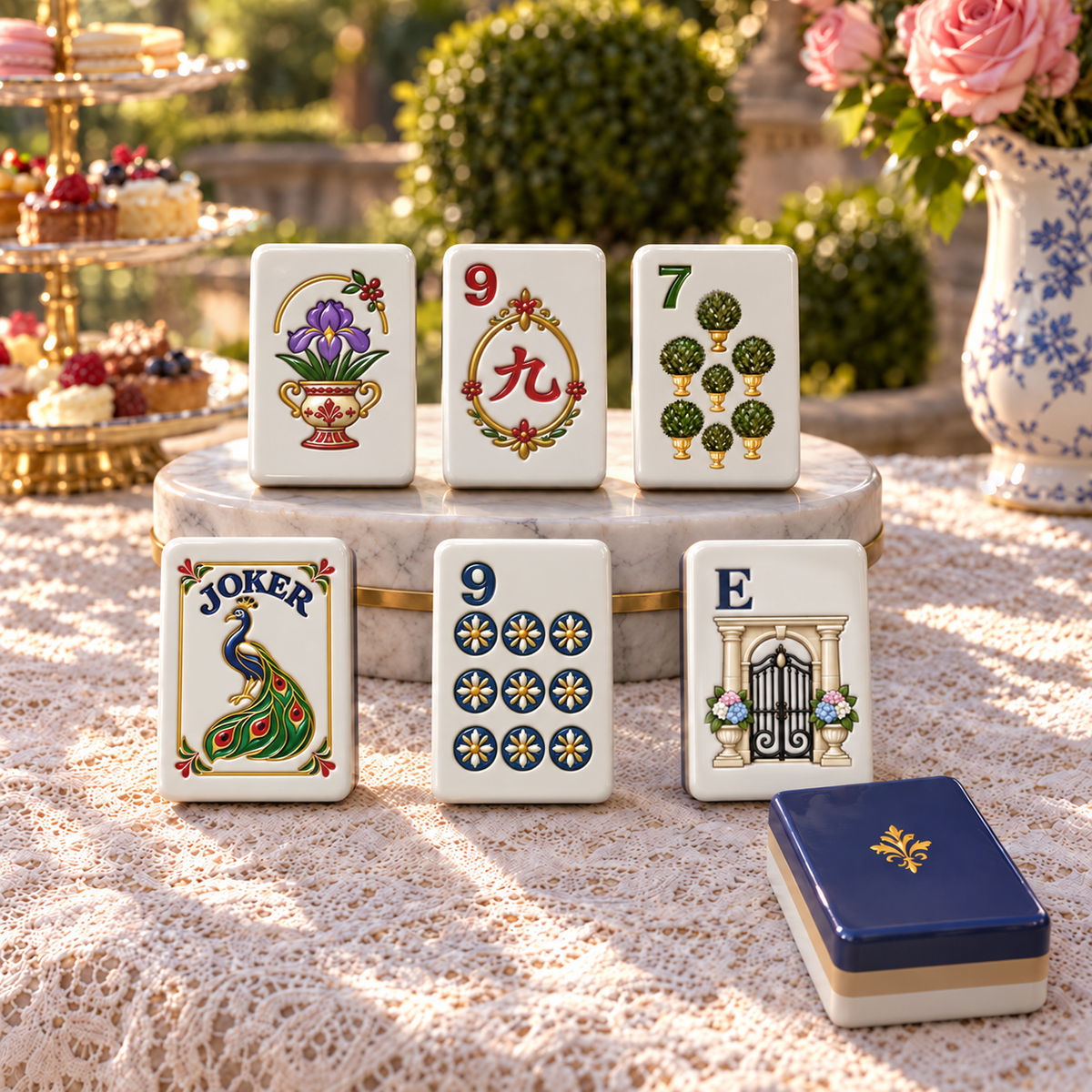
Racking in American mahjong means placing a tile you've drawn into your personal rack (or hand if no rack is used), organizing it among your other tiles so you can see all of them and form melds without exposing your strategy to opponents. You rack a tile face-down or angled away from the table when you pick it from the wall during your turn; most players using racks arrange tiles from left to right, grouping like suits and numbers to spot winning patterns quickly. Racking takes a few seconds per turn and is mandatory—you cannot leave a tile in your hand loose or half-exposed. The goal is speed without revealing your hand composition. Poor racking slows the game, invites rule challenges, and gives opponents information they shouldn't have. Mahstead racks with pushers are designed specifically to hold 13 or 14 tiles cleanly, and pushers make racking faster and more discreet.
Racking a tile is one of the first mechanics new players learn, yet it remains a source of confusion because it sits at the intersection of rule, strategy, and table etiquette. Unlike the Charleston or declaring a win, racking happens on every single turn—it's the rhythm of the game. Understanding what racking is, when you do it, and how to do it well transforms you from someone struggling to keep pace into a player who moves smoothly with the table.
What does "racking a tile" literally mean?
Racking means placing a tile you just drew from the wall into your rack (the stand that holds your tiles). The tile goes into your rack in a position where you can see it alongside your other 12 or 13 tiles, and where opponents cannot see its face. You rack the new tile in whatever position makes sense for your hand—often next to similar suits or numbers so you can read your hand quickly. The action happens in seconds. It's not dramatic or strategic in itself; it's the mundane motion that happens after the draw and before your discard.

Why does the order of tiles in your rack matter?
The order of tiles in your rack matters because it signals your thinking to observant opponents, who may note whether you tend to arrange by suit, by number, or by the hands you're working toward. Some players keep all Bams left, Craks center, Dots right; others mix strategically to hide their direction. More importantly, a disorganized rack slows you down—you'll miss patterns, hesitate on discards, and lose the game's natural flow. Racking tiles logically (often left-to-right by suit, then number) lets you read your own hand in a split second and decide on your discard without pause. A clear rack is a clear mind.
What's the difference between racking in American mahjong and other variants?
American mahjong is rigid about racking because hands are tied to the current year's National Mah Jongg League card, and players must quickly match their tiles to exact patterns. You rack and re-rack constantly as you draw and discard, and you never expose a tile to the table unless you've completed a meld (pung, kong, quint, or sextet) or declared a win. In Chinese mahjong or Riichi variants, sequences (chows) can be exposed and called during play, so racking is less about pattern recognition and more about reading table state. Hong Kong mahjong players often rack fewer tiles because sequences are called, and the game moves differently. American racking is uniquely focused: you're always matching to a fixed card, always concealing, always organizing.
How do you rack a tile without giving away your hand?
Rack a new tile face-down into an opening in your existing rack, angled or positioned so its face is hidden from the table. Most players use mahjong racks with pushers because pushers let you insert or remove a tile without moving your entire hand—you simply slip the pusher under the tile to move it left, then place the new tile on the right, then push all tiles forward to close the gap. This motion is quick and smooth, and your hand remains angled downward at all times. If you're playing without racks (hand-only), hold your tiles in a closed fan against your body, angled down and away from the table, and slip the new tile into position while keeping all faces toward you. Never fan your tiles upward or toward the center of the table. Never lay tiles face-up to "find" where a new one goes.
🀄 Shop best-selling mahjong sets →
What mistakes do new players make when racking?
New players often make these racking errors:
Leaving tiles loose or half-exposed. A tile still being held or placed on the table, not fully in the rack, invites disputes. Slide it all the way in.
Fanning or opening tiles toward the table. Even for a second, this shows your hand to opponents and is poor etiquette. Keep your rack angled toward you.
Racking too slowly or repeatedly re-sorting. Hesitation signals that you're deciding on a hand direction or struggling to read your tiles. Practice quick, decisive racking so your draws don't slow the game.
Not using a pusher when one is available. Without a pusher, you'll move all tiles left to insert a new one on the right, wasting motion. A pusher does the work for you in one sliding motion.
Racking the new tile in a visibly random spot. While variation is good for concealment, placing it wildly out of order every time can signal nervousness. Rack it logically, then let strategy come later.

How to organize your rack for speed and clarity
Organize your rack in a consistent system so you can read your hand at a glance:
Left-to-right by suit: Bams on the left (1–9), then Craks (1–9), then Dots (1–9), with winds and dragons grouped at one end (usually far right).
Within each suit, arrange by number: 1s, 2s, 3s … 9s. This way, a quick scan tells you immediately how many of each number you hold.
When you draw a new tile, slip it into its suit-and-number slot. If you draw a 5 Crak and you already have a 3 and 4 Crak, place the 5 right after the 4 so the sequence is visible.
Reserve a spot for jokers (often far right). Jokers are wild, so grouping them separately keeps your main tiles organized.
When you discard, remove a tile and push all remaining tiles forward (or use a pusher) so the rack closes and stays neat.
This method means you spend under two seconds per draw: grab new tile, find its slot, slide it in, move on. Veterans make it look automatic because they've done it 10,000 times.
Racking Style | Speed | Concealment | Best For |
Suit-grouped, numbered left to right | Fast | Moderate | Pattern matching; logical players |
Deliberately mixed (with system only you know) | Moderate | High | Strategic play; hiding your reads |
By-hand patterns (grouping potential melds together) | Moderate | Low | Beginners; easy to read own hand, but telegraphs your direction |
No rack, hand-held, fanned | Slow | Variable | Casual play; travel; no table space |
🎁 See our most-loved mahjong sets & accessories →
What equipment makes racking easier?
Racking is fastest and cleanest with a mahjong rack with pushers. A rack holds 13–14 tiles in a row, tilted slightly downward so you see the tile faces clearly and opponents see nothing. A pusher is a thin stick that slides under any tile so you can move it left without touching other tiles. When you draw a new tile, you place it on the right edge of your rack, then use the pusher to move all tiles forward one space, creating an opening where the new tile slides in. This takes one smooth motion and never breaks your hand's concealment.
Some players play without racks, holding tiles in a closed fan in their lap or against their body. This works, but it's slower, makes pattern-reading harder, and increases the risk of accidentally showing tiles. If you're hosting weekly games or hosting a newcomer, having enough racks with pushers for all four players speeds play and reduces racking fumbles.
When does racking end for the round?
Racking continues for every turn until someone declares a win or the wall runs out (no playable tiles left). The moment a player says "mahjong," racking stops—all racks are revealed and the winning hand is verified against the current year's card. Racking also pauses if someone calls a meld (e.g., "pung" or "kong" on a discard), because the calling player must pull the discarded tile from the table and expose it with the meld. After the meld is confirmed, the player whose turn it is racks normally again.
If the wall empties with no winner (called a "dead wall" or "wall game"), the round ends and players re-count their racks to see if anyone had a winning hand that was never called. This almost never happens in serious play because the wall is usually picked clean by an earlier win.
What to check before you buy equipment to improve your racking
Rack size: Confirm it holds at least 13 tiles comfortably (many hold 14–15 for ease). If tiles are too snug, insertion and removal are slow.
Pusher length and fit: The pusher must slide smoothly under tiles without catching. Poor fit makes racking harder, not easier.
Angle and visibility: The rack should tilt tiles toward you at roughly 45 degrees so you see all faces without leaning. A flat rack forces you to crane your neck.
Stability: The rack shouldn't tip or slide across the mat during play. Check it sits firmly on the surface.
Number of racks in your set: A full 160-tile set from Mahstead comes with four racks. If you've added a fifth player or lost a pusher, buy a replacement from the racks with pushers collection.
Tile material compatibility: Acrylic tiles slide smoothly in most racks. Bamboo or heavier tile sets may require wider or deeper racks. Mahstead's sets come with racks tested for their tile type.
✨ Find your Mahstead set — free US shipping →

FAQ
Can I rack tiles in any order I want?
Yes—there's no rule dictating order. But organizing logically (by suit, then number) makes you faster, hides your hand better, and keeps the game moving. Random racking is permitted but looks unpractical.
What happens if I rack a tile face-up by mistake?
If an opponent sees it before you hide it, you may be required to play the tile as your next discard or face a penalty, depending on house rules. Always keep faces angled toward you until the tile is fully in your rack.
Do I have to use a rack, or can I play with tiles in my hand?
You can play either way. Racks are not mandatory, but they're faster, more concealing, and less tiring over a long game. Most serious American mahjong games use racks.
How fast should racking be?
Ideally 1–2 seconds per turn. If you're taking 5+ seconds to rack, you're overthinking it or your rack is too small or poorly organized. Practice organizing by suit and number until it becomes automatic.
What's the difference between racking and discarding?
Racking is placing a tile you drew into your rack (keeping it hidden). Discarding is removing a tile from your rack and placing it face-up in the center of the table so other players can see it and call melds on it if they can.
If I use a pusher, do I have to push all my tiles forward every turn?
No. You insert the new tile anywhere in your rack using the pusher, then leave the tiles where they are. Pushing forward is optional and a matter of habit or strategy (some players keep their rack tidy, others use rearrangement to hide their hand).
Can I rack a joker the same way as a numbered tile?
Yes, rack jokers exactly as you would any tile—into your rack in logical order or strategy, always face-down or angled away from opponents. Jokers are just tiles until you use them in a meld.


View More
View More
View More
