
Mahjong Lessons in Albuquerque: Finding Teachers & Starting Play
Last updated: Nov 23, 2026
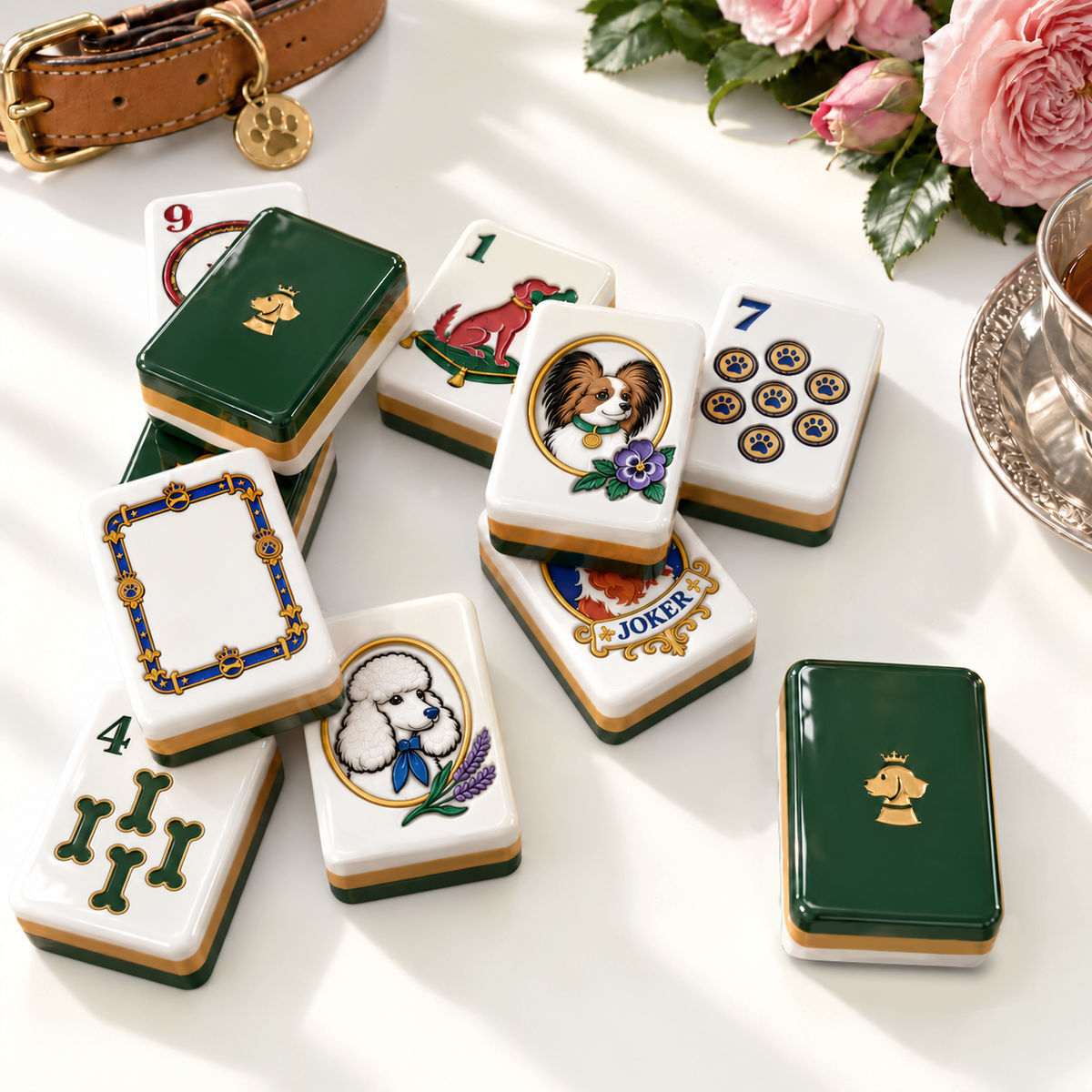
Mahjong lessons in Albuquerque are offered through community centers, public libraries, senior centers, and private instructors who advertise on meetup boards and local Facebook groups. Most beginner instruction follows American mahjong rules (152 tiles, four players, hands from the current-year National Mah Jongg League card). A typical beginner lesson lasts 90 minutes to 2 hours and covers tile identification, the Charleston (pre-game tile-passing ritual), hand reading, and basic rules. To start learning, contact your local library or community center directly—many host free or low-cost drop-in games alongside structured lessons. You'll need a 160-tile set, a mat to define play space, and the current year's mahjong card; our best-selling sets come ready to play.
Where do Albuquerque players find mahjong lessons?
Your best bets are public libraries (many offer free open-play sessions and beginner workshops), community centers and parks departments, senior centers, and private instructors. Search Meetup.com for "Albuquerque mahjong," check Facebook groups for "Albuquerque mahjong," and ask at local synagogues, country clubs, and retirement communities—they often host games or can recommend teachers. Word-of-mouth from existing players is gold: join a game at a library event, make friends, and ask who taught them. Several instructors in the Albuquerque area advertise through community bulletin boards and local senior networks.

What topics does a typical beginner lesson cover?
A first lesson introduces the 152 tiles (Bams, Craks, Dots, winds, dragons, flowers, and jokers), explains American mahjong's core difference from other variants—no sequences (chows), only pungs, kongs, and longer sets—and walks through the Charleston. You'll learn how to read the mahjong card, which lists legal hands for that year. A second lesson covers discarding strategy, calling rules (when you can claim a tile from the discard), and how jokers work—they substitute for any tile in a set but never as a single tile or a pair. By week three, you play a full game with guidance. Most teachers emphasize that American mahjong is rule-strict: every hand on the card is legal, others are not.
How is American mahjong different from Chinese or Riichi variants?
American mahjong uses 152 tiles and only hands printed on the League card are valid—you can't invent hands. The game has no chows (sequences like 1-2-3 of the same suit); instead you build pungs (three identical tiles like three 5 Dots), kongs (four identical), quints (five), and sextets (six). Jokers can fill any tile in a set but may never be a single tile or a pair. Scoring is fixed by the card, not calculated. Chinese and Hong Kong mahjong allow chows, have different tile counts (usually 144), and let you create hands by combining sequences and sets. Riichi (Japanese) adds melding, a hand-concealment phase, and no jokers. Most Albuquerque lessons teach American rules because the League card structure and tile set are widely standardized. If you want to learn another variant, ask the instructor upfront.
What equipment do you need to start playing?
You need a 160-tile American mahjong set (152 playing tiles plus spares), a mat (24" × 24" to 27" × 27" is standard for four players), a set of racks with pushers to hold and organize your tiles, and the current year's National Mah Jongg League card. Many instructors have sets to teach with, but owning your own lets you practice at home—and the tactile experience of shuffling and stacking actual tiles speeds up learning. Engraved sets with personalized designs make a strong first set. A carrying case keeps everything safe for games at a friend's house or regular meetups. The mat defines the playing zone and helps you see each player's discard pile clearly.
🀄 Shop best-selling mahjong sets →

How do you find the right instructor or beginner group?
Ask for an instructor who teaches American mahjong specifically (not Chinese) and verify they use the current-year League card. Watch or join one open-play session before signing up for paid lessons—you'll see the teaching style and energy. Good instructors answer rules questions without judgment and let beginners replay moves if they misunderstand. Search for group classes (usually cheaper and more social) or private one-on-one tutoring (faster progress). Many Albuquerque players start at a library drop-in game, then ask the regular players who teaches. Online instructors are also an option if in-person lessons aren't convenient. A beginner series typically spans 4–6 weeks at 1–2 sessions per week.
What are the most common beginner mistakes to avoid?
New players confuse Bams, Craks, and Dots—each suit has a different symbol (Bams show bamboo stalks, Craks are Chinese coins, Dots are circles). They forget that jokers can only substitute within a set, never as a pair or single; this costs hands because it's an automatic "dead" situation. They discard high-value tiles early (like dragons or winds) without strategy—save them if they fit your emerging hand. Many beginners over-call; you can claim a tile only if it completes a legal set on the current year's card. They also neglect the Charleston—this tile-exchange phase is mandatory and shapes your starting hand significantly. Finally, new players ignore the mahjong card entirely; it's your law book. Refer to it constantly until you memorize common hands.
Common Mistake | Why It Costs You | How to Avoid It |
Confusing suits (Bams/Craks/Dots) | Wrong tiles in your hand; can't complete sets | Study tile symbols before play; ask instructor to point them out live |
Using jokers as a pair or single tile | Hand is dead—you lose the round | Memorize: jokers only substitute within a set |
Discarding pairs and honors too early | You lose tiles your hand might need later | Think ahead: which tiles fit your card's hands? Save those. |
Over-calling discards | You're locked into a mediocre set; opponents block you | Only call if the hand is on the card and you're confident you'll win |
Ignoring the Charleston ritual | Starting hand doesn't match your strategy | Participate fully; know which tiles you want to pass and why |
🎁 See our most-loved mahjong sets & accessories →
What should you check before you buy your first set?
Verify the set has 160 tiles (152 playing tiles plus spares). Check that the tile symbols are clearly engraved or printed and large enough for you to see from across the table—if you have vision difficulty, ask about sets with larger numerals or contrast. Confirm the tiles are acrylic or a durable plastic; they'll survive thousands of shuffles. Check that your mat is non-slip on the bottom so it doesn't slide during play—a 24" × 24" mat fits comfortably on most dining tables for four players. Make sure racks have pushers; these let you draw tiles smoothly from the wall and are essential for the Charleston. Read the product description for mahjong mats to confirm the material (felt, vinyl, or microsuede) suits your table and storage space. Finally, confirm the set includes the current year's mahjong card—if not, you'll buy it separately.
✨ Find your Mahstead set — free US shipping →

FAQ
Can I learn mahjong online instead of in-person in Albuquerque?
Yes. Many instructors offer Zoom lessons that cover rules, the card, and strategy. You'll need to play practice hands on your own or with a local group to truly internalize the game, but online tutorials and lessons are a solid foundation and cost less than private local tutoring.
What's the difference between a beginner lesson and a drop-in game?
A lesson is structured, usually 1–2 hours, with an instructor answering questions and stopping play to explain rules. A drop-in game is for players who know basic rules; experienced players may not explain every detail. Start with a lesson, then move to drop-ins once you're confident.
How long does it take to get good at American mahjong?
You can play a full game correctly after 3–4 sessions. Becoming a strong strategic player—knowing hand patterns, reading opponents, and discarding wisely—takes 6–12 months of regular play (weekly or more). Learn more about the fundamentals.
Do I need to buy an expensive set for lessons, or can I use the instructor's tiles?
You can learn on an instructor's set, but owning your own accelerates learning because you practice at home and get familiar with your tiles' feel and symbols. You don't need an expensive set—a standard acrylic set from our best-selling collection is affordable and durable.
What's the Charleston, and why do beginners find it confusing?
The Charleston is the pre-game tile-passing phase where each player passes three tiles to the left, then three to the right, then three across. It takes practice to remember the order and timing. Your instructor will drill it with you. See the full guide for step-by-step detail.
Should I buy a mat and racks before my first lesson?
You don't need them for lessons, but owning them helps you practice at home. A mat keeps tiles organized and defines the playing area; racks with pushers let you manage your tiles like a pro. Most regular players have both.


View More
View More
View More
