
What Is Quints in American Mahjong? Rules & Examples
Last updated: Nov 23, 2026
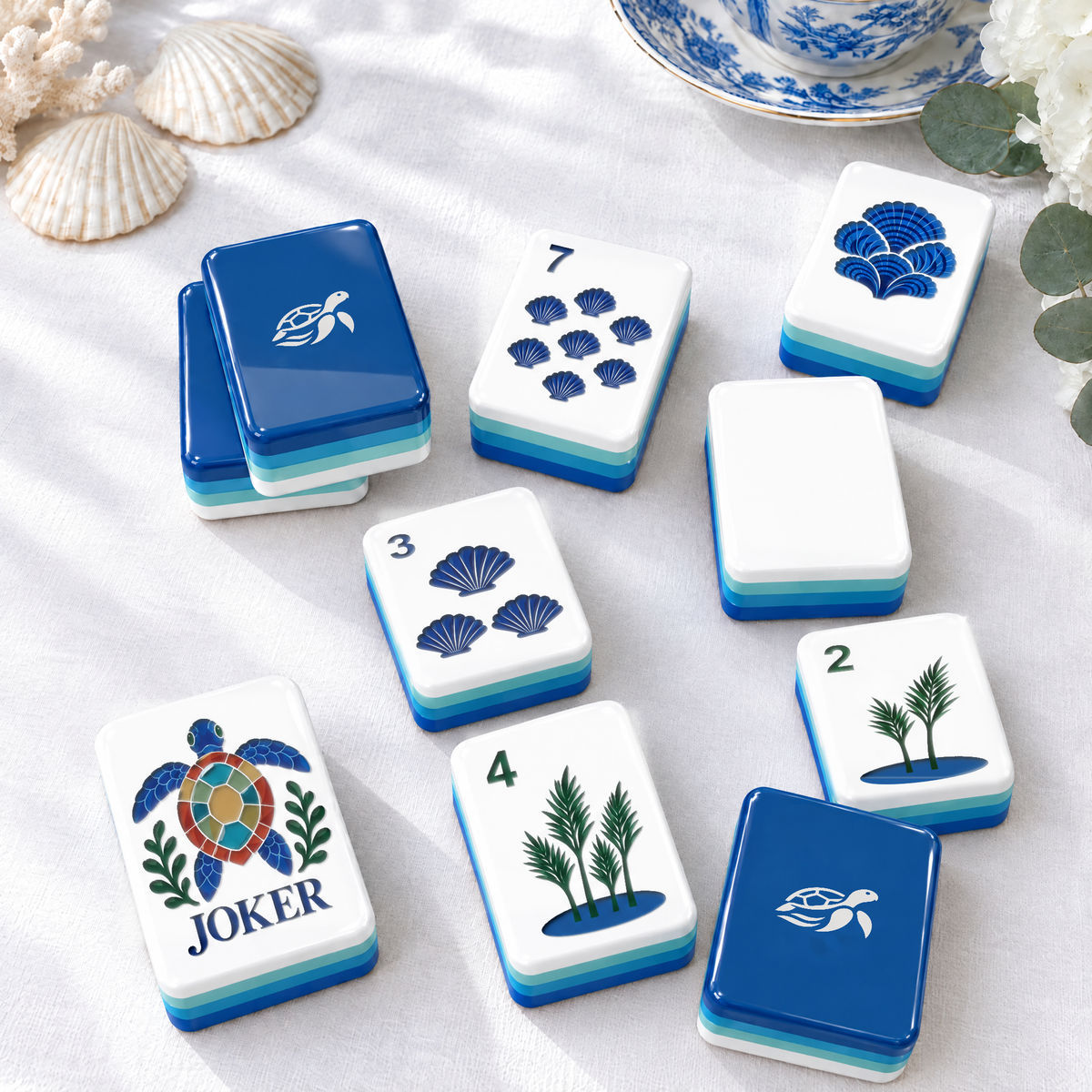
A quint in American mahjong is exactly five identical tiles—say, five 3 Dots or five East winds—that you expose as one meld on the table. Quints sit between pungs (3 identical) and sextets (6 identical) on the exposure ladder. You form a quint by drawing or calling a tile that gives you four in hand, then adding a joker (or vice versa), or by combining exposures during play. Quints appear on certain hands in the current year's National Mah Jongg League card as one of the building blocks toward mahjong. They're worth more points than a pung but less than a sextet. American mahjong allows quints and sextets—unlike Chinese variants that forbid exposures beyond 4—making them a strategic advantage when your hand calls for them. You cannot use a joker as a "sixth tile" to convert a quint into something else; once exposed, a quint stays a quint until you win.
How does a quint differ from a pung and a sextet?
A pung is three identical tiles; a quint is five; a sextet is six. All are melds you expose face-up on the table during play. Pungs and quints use one joker maximum; sextets use two jokers maximum. Each exposure type locks in a certain point value on the NMJL card, so choosing the right exposure structure is core to hand strategy. Study how to read the mahjong card to see which hands reward which exposure sizes.
Exposure | Tiles Required | Jokers Allowed | When to Use |
Pung | 3 identical | 0–1 | Early hand-building; lowest point value |
Quint | 5 identical | 0–1 | Mid-game; specific hands on the card |
Sextet | 6 identical | 0–2 | Rare; highest point value on the card |

Can you use a joker inside a quint?
Yes. A quint can be four identical tiles plus one joker, or five identical tiles. Once placed on the table, a quint with a joker is locked: you cannot remove the joker or swap it out. The joker stands in for the missing tile and counts as one of the five. For example, four 5 Craks plus one joker equals a valid 5-Crak quint. You still need how jokers work to avoid wasting them on weak exposures early.
When should you expose a quint instead of a pung or sextet?
Expose a quint when your hand on the NMJL card shows a quint as the intended meld. Do not expose a quint just because you can. Study your card before play begins. If your hand calls for two pungs and a quint, and you only have three of a tile, hold off—wait until you can expose the full five. Exposing a pung early signals strength but gives away tiles; exposing a sextet signals commitment to a high-scoring hand. Quints are the middle path: they lock in medium points and force opponents to see your strategy. Timing and card literacy matter far more than quint frequency.
How do you form a quint during the game?
You form a quint by calling a tile (discarded by another player) or drawing from the wall. Start with four identical tiles in hand. When the fifth appears—either drawn or called—expose all five face-up on the table in front of you. A common path: you hold four 7 Dots and draw a 7 Dot from the wall, or another player discards a 7 Dot and you call it. Place all five 7 Dots in a row in front of you. If you have four 7 Dots and one joker already visible (in an earlier exposure), and you draw the fifth 7 Dot, move the joker back into hand or leave it as part of the quint, depending on your card. Always consult your hand before acting; once you expose, you cannot undo.
What happens if you accidentally expose a quint incorrectly?
If you expose five tiles that look identical but one is wrong—for example, four 5 Craks and a Red dragon by mistake—call it at the table immediately. Most house rules require correction before the next player's turn. Your group may rule that you must break the exposure, return tiles to hand, and lose your turn. Some groups treat it as a play error with no penalty if caught instantly. Talk through your group's exposure-error rule before the game starts, and keep your tiles aligned so misreads happen rarely. Clear lighting and well-organized mahjong racks with pushers reduce sorting mistakes.
🀄 Shop best-selling mahjong sets →

Quints in Chinese and other variants: how they differ from American mahjong.
Chinese mahjong, Hong Kong mahjong, Riichi (Japanese), and Taiwanese variants do not use exposures (melds) in the same way. Hong Kong mahjong allows simple exposure for scoring at the end, but does not allow live quints or sextets mid-game. Chinese and Riichi play is entirely closed until win. American mahjong's openness—exposing pungs, quints, and sextets freely—is unique and makes the game visually clearer and strategically richer. If you play multiple variants, keep them separate in mind: American quints have no equivalent in closed games.
Step-by-step: exposing a quint correctly.
Check your card before drawing or calling. Confirm a quint is the intended meld for this hand slot.
Gather five identical tiles in hand or via a draw/call. Use a joker if needed (maximum one per quint).
Announce "quint" or "pung" aloud so the table hears your move (some groups require verbal confirmation).
Lay the five tiles face-up in a neat row in front of you, separate from your hand rack.
Continue play. The quint now belongs to that hand structure; you cannot modify it unless the entire hand is void (nearly impossible).
Never remove or swap jokers from a quint after exposure. A joker in a quint is locked for the remainder of play.
🎁 See our most-loved mahjong sets & accessories →
Common quint mistakes and how to avoid them.
Exposing a quint too early: You hold four 3 Dots and expose three of them as a pung, adding a joker. Later you draw the fourth and fifth 3 Dot—but the joker is now stuck in a pung exposure, not a quint. Always count your tiles and your remaining draws before committing to an exposure.
Confusing a quint with a sextet: Five tiles ≠ six. If you expose five, it is a quint, period. Do not try to "add" a sixth tile to a quint mid-hand; that is not legal. Sextets must be declared upfront as six, or you cannot convert a quint.
Using two jokers in one quint: Illegal. One joker maximum per quint. If you need two jokers for a hand structure, that structure is not a quint—it is a sextet (up to two jokers) or an error.
Forgetting your hand card at a critical moment: Exposing a meld not on your card is a dead hand. Refer to your card every time before exposing. Keep it in front of you, readable, always.
Mixing up tile faces: Check that all five tiles are truly identical. One 1 Bam (with a bird) is not the same as one 2 Bam. Slow down. Use best-selling mahjong sets with clear tile markings to reduce confusion.
What to check before you buy a mahjong set for quint-heavy games.
When you are ready to host regular games with quint exposures and frequent hand checking, invest in a quality set. Look for:
Clear tile faces: Tiny fonts or faded colors cause errors in spotting five identical tiles. Acrylic or bone tiles with bold numerals and suit symbols are best.
Sufficient jokers: A standard American set includes eight jokers (enough for multiple exposures per hand). Verify your set ships with at least eight.
Organized racks: Racks with pushers let you line up tiles neatly so five identical tiles stay visibly grouped. Loose tiles scattered on a mat invite mix-ups.
Durable tile edges: Chipped or worn tiles look wrong and create doubt during exposure. Acrylic or bone sets resist edge damage better than ceramic.
✨ Find your Mahstead set — free US shipping →
Why quints matter: strategy and scoring.
Quints unlock higher-point hands on the NMJL card. A hand that calls for one pung and two quints will score more than a hand with three pungs. Spotting quint opportunities in your hand—especially when jokers are in play—separates casual players from competitive ones. You also signal table presence when you expose a quint: opponents know you are building deliberately, not fishing. Over many games, mastery of quint strategy and timing builds consistency. How to play American mahjong covers the full game arc; quints are one lever among many.

FAQ
Can you expose a quint on your first turn?
Yes, if your hand card allows it and you have five identical tiles after the Charleston. Most hands require pungs early; quints come later as jokers are drawn or discards align.
If you hold a quint in hand and another player discards the sixth identical tile, can you take it?
No. Once you have five identical tiles (whether exposed or in hand), calling the sixth would give you six—which is a sextet, a different exposure. You cannot convert a quint into a sextet mid-game by calling an extra tile. You would need a separate hand on the card that begins with a sextet structure.
Are quints more common in American mahjong than in other variants?
Yes. American mahjong permits—and designs hands around—quints and sextets as part of the NMJL card. Chinese and Riichi variants play with closed hands, so quints never appear. Hong Kong mahjong uses simpler exposure rules. American is unique in this way.
What if you expose a quint, then realize it was not on your current card?
Your hand is dead. You cannot win from that hand. Call this out immediately so the table can pause. Remove the exposure, set it aside, and the hand concludes with no points for you. This is why checking your card before every exposure is non-negotiable.
If a quint has a joker in it and you win, do you still get full points?
Yes. A quint with one joker counts as a full quint for point calculation. The presence of a joker does not reduce the point value—it only marks which tile is standing in. Consult the NMJL card or your group's scoring rule to confirm the exact points, but the joker does not penalize you.
Can you use the same joker in two different exposures at once?
Absolutely not. A joker, once placed in a meld (pung, quint, or sextet), stays there until the hand ends or you win. You cannot remove it and place it in another meld. This is a core rule of American mahjong and prevents abuse.
How many quints can appear in a single hand?
Anywhere from zero to three, depending on the card. Most hands use one or two quints mixed with pungs or sextets. Hands with three quints are rare and high-scoring. Check the current NMJL card to see the mix for each hand type.


View More
View More
View More
