
What Is Marvelous Mahjong Card in American Mahjong?
Last updated: Nov 23, 2026
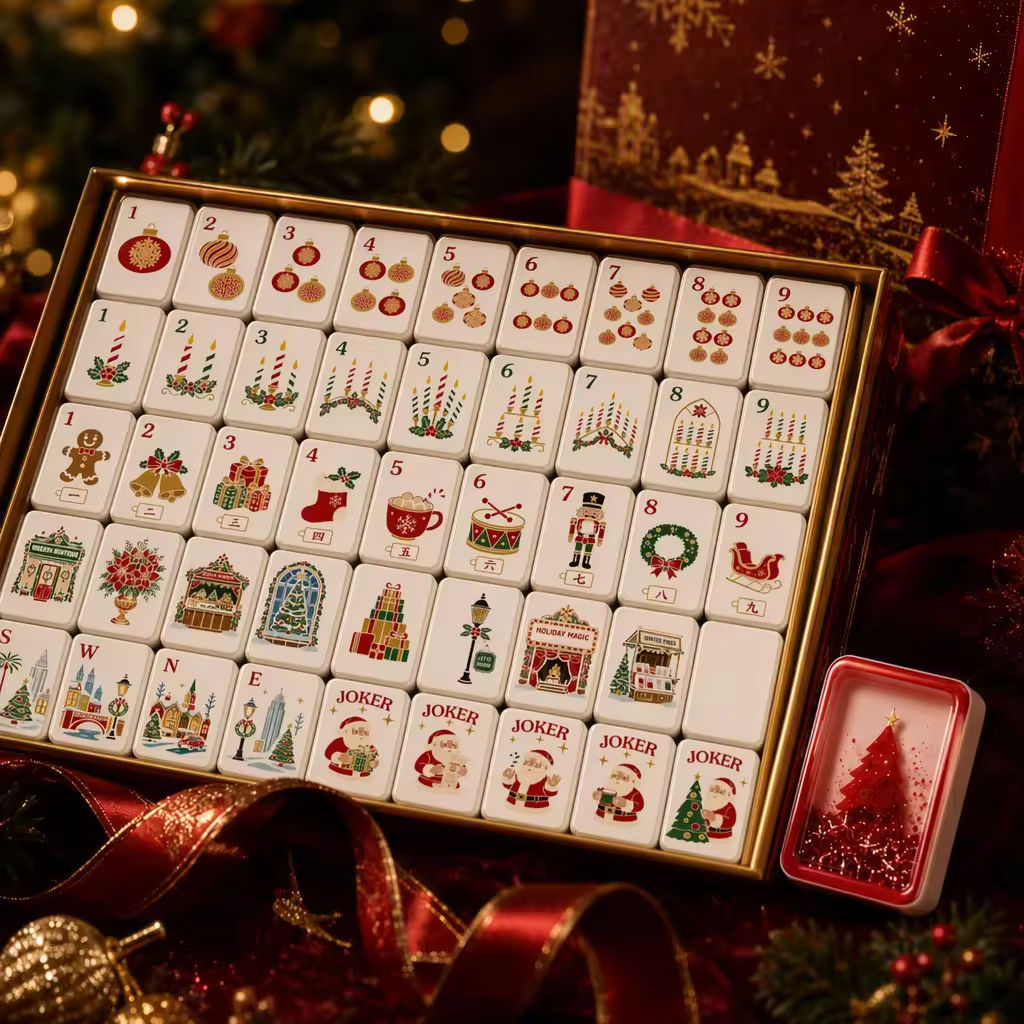
The Marvelous Mah Jongg card refers to the official National Mah Jongg League card issued each spring—the only reference card allowed in American mahjong play. It contains roughly 70+ named hand patterns (sections) that show which tile combinations count as winning hands; "Marvelous" is the name of one specific pattern section on that card. The card changes every year, so the hands you play in 2026 differ from 2025. You cannot win without matching a hand exactly from the current year's card. The card is organized by pattern type (like Consecutive, Like Numbers, Consecutive Like Numbers), and each section lists multiple winning combinations using jokers, pungs, kongs, and quints. You read it alongside your 152 tiles and your best-selling mahjong sets during play; learning to scan it quickly takes practice but is essential to the game's strategy and appeal.
What section is "Marvelous" actually on the card?
"Marvelous" is a named pattern category on the current National Mah Jongg League card, organized by rules that define which hands fit that section. The card divides winning hands into logical families—like "Like Numbers" (all tiles the same number), "Consecutive" (tiles in sequence), or combinations of those rules. Each section has a row of legal hands; you match your tiles to one specific hand in one specific section to win. The exact hands listed under Marvelous (or any section) rotate annually, so you always need the current year's printed or digital card in front of you.

How do I find a Marvelous hand on the card?
Locate the card's section headings (usually printed alphabetically or by type). Scan for "Marvelous" by name or the icon that marks it. Once you find the section, read across each row: each row shows one legal winning combination. Look for a pattern that matches your hand—the specific tiles, the number of pungs/kongs/quints, and how many jokers are used. If your hand matches a row exactly, you have a winning hand; if it doesn't match any row in that section, it's not Marvelous. Most players keep their card propped on a stand or hold it upright; familiarity with the card's layout cuts your lookup time from seconds to less than one.
🀄 Shop best-selling mahjong sets →
What tiles do you need to form a Marvelous hand?
The tiles required depend on which specific Marvelous hand you're playing. Each row on the card spells out the tile composition. For example, one Marvelous hand might require three pungs of specific numbers, a kong of winds, and two jokers. Another might ask for a quint, two pungs, and a pair—different tiles entirely. The card is the law: it tells you the exact number of Bams, Craks, Dots, dragons, winds, and jokers needed. You cannot substitute or guess. That's why learning how to read the mahjong card is your first step as a new player.
How many jokers can you use in a Marvelous hand?
Jokers are wildcards and can replace any tile in a pung, kong, quint, or sextet—but the card dictates exactly how many jokers each winning hand allows. A Marvelous hand might permit zero, one, two, three, or more jokers; the card shows this in each row, often using a J or joker symbol. You cannot use more jokers than the card specifies for that hand, even if you have them in your hand. Understanding how jokers work is critical because a hand with the "right" tiles but too many jokers is invalid. Study your card before each game to internalize joker limits per hand type.
Why does the card change every year?
The National Mah Jongg League updates the card annually to keep the game fresh and strategic. New hand combinations are added, others removed or relocated to different sections. This means a winning hand in 2025 might not exist in 2026, or it might move sections. Every player must use only the current year's card; using an old card invalidates your hand because the League's official hands for 2026 are different from 2025. This annual refresh is what keeps American mahjong challenging and community-focused: new players and veterans alike start equal every spring when the card drops.
How do I practice finding hands before playing?
Before your first game, get a current year's card and a set of best-selling mahjong sets with all 152 tiles. Spread tiles on a mat (or table) and draw hands at random. Pick up a hand, then scan the card to find which section it matches. Time yourself: most players improve from 30 seconds to under 5 seconds after a few hands. Ask an experienced player to quiz you: they call out a pattern name (like "Marvelous"), and you find it on the card. Many players also study the card without tiles, memorizing layout and section order. Digital versions of the card (available from the League) let you search by name, which helps during learning. The more you practice, the faster play flows when you're at the table.

What's the real difference between Marvelous and other sections?
Pattern Section | Typical Composition | Complexity | Spot-Recognition Speed |
Like Numbers | All tiles same number | Easy | 3–5 seconds |
Consecutive | Tiles in number order | Moderate | 5–8 seconds |
Like Numbers + Consecutive | Mix of both rules | Harder | 8–12 seconds |
Marvelous (varies yearly) | Named special patterns | Varies | Depends on hand |
Each section on the card has its own rule logic. Like Numbers hands are often quick to spot because you're looking for repeated numbers. Consecutive hands require you to check sequence. "Marvelous" is simply a named section; the pattern types inside it follow the card's rules for that year. The difference between sections is not in difficulty but in what tiles and arrangements the League has chosen to include that year. Your job is to match your physical tiles to the card, not to memorize patterns—the card is always your source of truth.
Do beginners struggle to read the Marvelous section?
New players often miss hands because they scan too fast, miscount jokers, or mix up suits (Bams, Craks, Dots look similar on acrylic tiles). The Marvelous section is no harder than any other—difficulty depends on hand density and how many jokers are allowed. What helps beginners is using high-contrast tiles and a well-lit mat. Many players recommend starting with mahjong mats that have printed numbers and a neutral background, so the tiles stand out. A good setup (mat, racks with pushers, and clear tiles) cuts errors and speeds learning. After 3–5 games, you stop thinking about reading and start thinking about strategy.
🎁 See our most-loved mahjong sets & accessories →
How long does a Marvelous hand typically take to form?
In a full four-player game, a hand usually completes in 10–15 minutes, depending on tile luck and player speed. A Marvelous hand is neither fast nor slow to assemble—it depends on which specific Marvelous combination you're chasing. Some Marvelous hands require common tiles (many pungs of Dots, for example), so you form them quickly. Others need rare combinations (like three Red dragons plus specific winds), so they take longer or never come. This is part of the game's strategy: you don't lock into one hand; you keep multiple hands visible and grab the first one that completes, wherever it appears on the card. Experienced players juggle 5–10 possible hands simultaneously, which is why the card scan is so fast once you learn it.
What if my hand doesn't match any Marvelous row exactly?
Your hand is not a Marvelous hand—keep playing and adjust your tiles. In American mahjong, a hand must match the card exactly; there is no partial credit or "close enough." If you have one joker too many, or one Bam instead of a Crak, the hand is invalid. This is not a flaw; it's the rule. Experienced players discard strategically to keep multiple potential hands alive, so if Marvelous doesn't complete, they pivot to a different section. The card has roughly 70+ named sections and hundreds of specific hands; the odds that no hand on the entire card fits your tiles are extremely low if you're looking at the full card, not just one section. Slow down, scan methodically, and check every section if needed.
When should you learn about Marvelous hands?
After you understand how to play American mahjong basics—the Charleston (tile pass), what pungs and kongs are, how the card works overall—then dive into specific sections like Marvelous. Learning the whole card at once overwhelms most beginners. Start with a mahjong for beginners guide, play 2–3 games focusing on ANY winning hand, then ask an experienced player to teach you one section at a time. Marvelous is just one pattern among dozens; there's no rush to memorize it. Once you grasp how the card is organized and how to spot matches, every section becomes interchangeable—just a different pattern to hunt for.
✨ Find your Mahstead set — free US shipping →
What to Check Before You Buy a Set and Start Playing Marvelous Hands
Current year's card. Get the 2026 card from the National Mah Jongg League or a local club. Old cards won't match this year's Marvelous section.
All 152 tiles present. Count your set; what's in an American mahjong set explains the full tile breakdown. Missing even one tile ruins play.
Clear tile markings. Ensure you can distinguish Bams, Craks, and Dots quickly. Engraved or printed numbers help.
Good lighting and a mat. A mahjong mat with contrast prevents misreads.
Racks with pushers.Mahjong racks with pushers keep tiles organized and speed up card scanning.

FAQ
Is "Marvelous" the same in Chinese mahjong?
No. Chinese mahjong has different hand types (Tanyao, Honroutsu, etc.) and no annual card. American mahjong is unique in using a yearly card with named sections like Marvelous. Each variant plays by its own rules.
Can I play Marvelous hands on an online mahjong platform?
Most online platforms don't support the National Mah Jongg League card or American mahjong rules; they run Chinese, Hong Kong, or Riichi variants. For American mahjong, play in person with a physical card and tile set.
What happens if two players both have a Marvelous hand at the same time?
The player whose turn it is (or who declares first, per your table's house rules) wins that round. American mahjong typically awards the hand to whoever reaches Mahj (a complete, valid hand from the card) first during that round.
Do I need to memorize the Marvelous section before playing?
No. Keep the card in front of you and scan it each hand. Memorization comes naturally after 10–20 games, but it's not required; the card is your legal reference.
How do I know if my hand matches a Marvelous row if I can't read the notation?
Ask an experienced player to teach you the card's shorthand (how it shows pungs, kongs, jokers, etc.). Once you understand the notation, you can decode any row in seconds.
What if the Marvelous section is blank or missing from my card?
It shouldn't be; the National Mah Jongg League card always includes all named sections. If your card seems incomplete, verify you have the current year's official card, not a photocopy or older edition.


View More
View More
View More
