
What Is Kong Box in Mahjong? American Rules Explained
Last updated: Nov 23, 2026
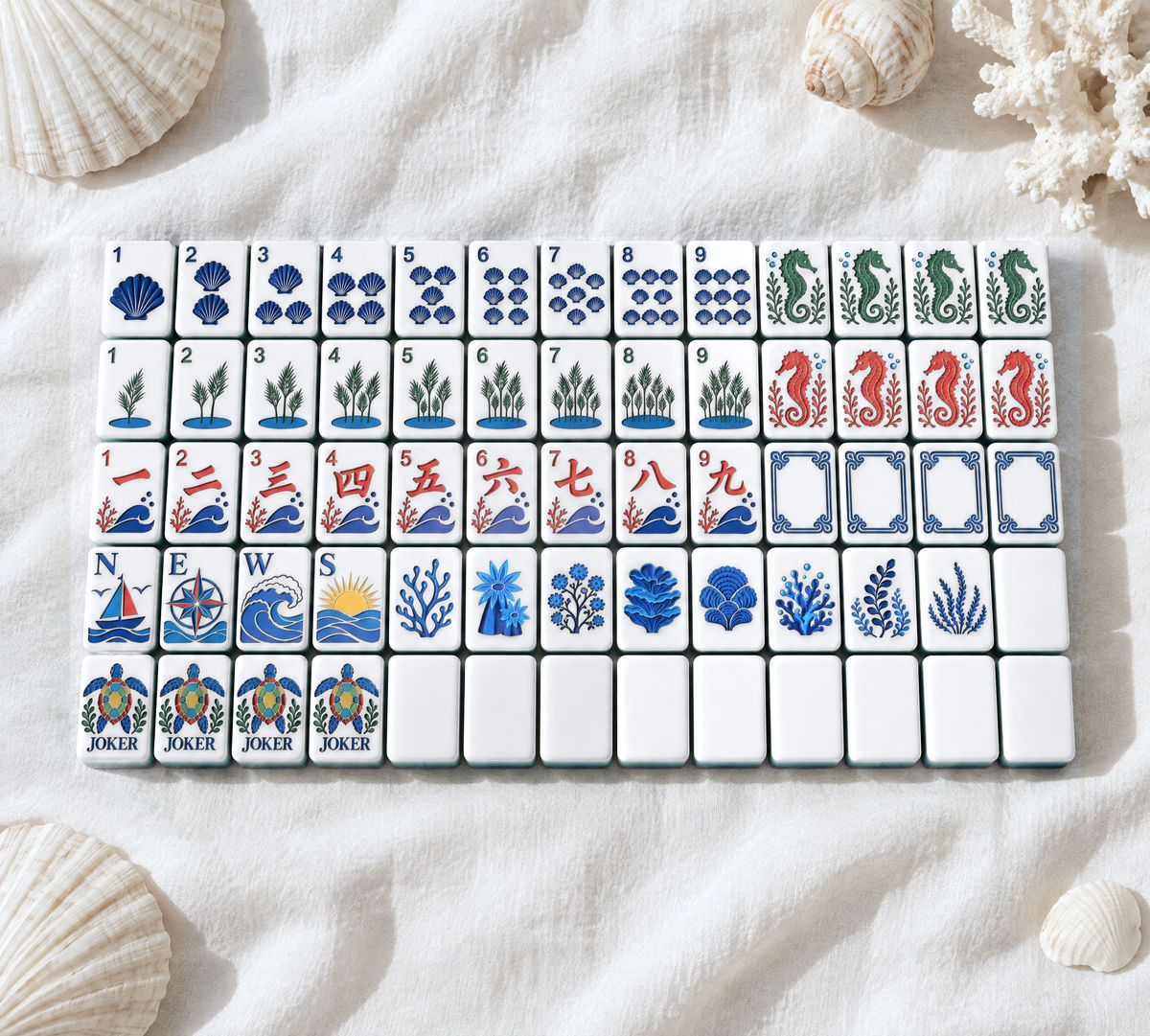
In American mahjong, a kong box is a recessed or marked area on the playing mat—usually near the center or along one edge—where you temporarily place a tile after drawing from the dead wall (the 14 remaining tiles at the end of the wall) when you have formed a kong. A kong is four identical tiles (e.g., four 5 Dots). When you expose it, you draw a replacement tile from the dead wall and set it in the kong box; you then decide which tile to discard before your next turn. Only American mahjong uses a physical kong box; Chinese, Hong Kong, and Riichi variants handle kongs differently. The box prevents tiles from mixing with your hand or rack, keeping the table legible.
🀄 Shop best-selling mahjong sets →
When do you actually place a tile in the kong box?
You place a tile in the kong box only after you have exposed a kong and drawn a replacement from the dead wall. Here's the exact sequence: you hold four identical tiles in your hand; you declare "Kong"; you place all four face-up on the table (exposed); you immediately draw one tile from the end of the dead wall and place it in the kong box; you then discard one tile from your hand (not from the kong box) and play continues. The kong box tile sits there until you discard; it's not yet part of your hand. If you draw a kong on your turn (from the regular wall, not the dead wall), you still expose it and draw from the dead wall, placing that replacement in the kong box. Never place a tile in the kong box for any reason other than a kong draw.

How is the kong box physically marked on a mat?
A quality mahjong mat has the kong box recessed or embossed—a small square or rectangular depression, usually 1–2 inches, positioned near the center of the mat or slightly toward one corner. Some mats print it as a simple outlined box; others indent it so the tile sits flush or slightly lowered, preventing it from sliding. The depth and size vary by mat design, but all mahjong mats sold for American play include a clearly marked kong box. When you set a tile there, it's visually separated from the four exposed tiles of the kong and from your hand, so all players instantly see which tile you drew. If your mat is worn or unmarked, the kong box becomes ambiguous—one reason to replace older mats.
What's the difference between a kong and other melds in American mahjong?
A kong is four identical tiles, exposed on the table. A pung is three identical tiles, also exposed. A quint is five identical tiles (four identical plus one joker, or two identical pairs plus one joker), exposed. A sextet is six identical tiles, exposed. Only kongs require a draw from the dead wall; pungs, quints, and sextets do not. When you form a pung, you simply expose it and continue play without drawing extra. Kongs trigger the dead wall draw, which is why the kong box exists—to hold that replacement tile until you choose your discard. Jokers can be used in pungs, kongs, quints, and sextets, but never in a single tile or a pair. The how jokers work guide covers this in detail.

How does the kong box work in other mahjong variants?
Chinese mahjong, Hong Kong mahjong, Taiwanese mahjong, and Riichi mahjong all allow kongs, but none use a physical kong box. In Riichi, you form a kong (four identical tiles) and draw from the back of the wall, but the replacement tile goes directly into your hand; there is no intermediate holding space. In Chinese variants, kongs are often concealed (drawn from your hand, not exposed during play) or exposed differently, and the replacement draw integrates into your rack without a dedicated box. The kong box is an American innovation that enforces clarity: every player sees exactly which tile came from the dead wall, preventing confusion over melds and draws. If you play multiple variants, switching from American to Chinese mahjong means unlearning the kong box habit; the tile sequences and hand-building logic differ significantly. Mahjong for beginners touches on variant differences.
What happens if you forget to use the kong box?
If you draw from the dead wall after a kong and place the tile directly into your hand without using the kong box, play can continue—but other players lose track of which tile you drew, creating disputes over hand validity and scoring. If you then discard and someone calls your hand, the group cannot verify whether your winning hand is legal (whether the tile you discarded came from your original hand or the dead wall). Serious games require the kong box for this reason. Casual home games sometimes skip it, but confusion always follows. The best practice: always place the dead wall tile in the kong box first, hold it there visibly, then move it into your hand when you discard. This one-second pause eliminates 90% of kong-related arguments. A mahjong mat with a well-defined kong box makes this automatic.
Scenario | What goes in kong box | When you remove it | Common mistake |
You expose a kong of your own tiles | Dead wall draw (1 tile) | When you discard from hand | Mixing it with hand before discarding |
Someone else exposes a kong | Nothing (you don't draw) | N/A | Assuming you draw a replacement |
You draw a kong from the regular wall | Dead wall draw (1 tile) | When you discard from hand | Forgetting the dead wall draw entirely |
You hold four tiles and a joker | Kong + quint rules apply; no extra draw | N/A | Confusing quint (5 tiles) with kong (4 tiles) |
🎁 See our most-loved mahjong sets & accessories →
What to check before you buy a mat with a kong box
Examine the kong box depth: a recessed box should be at least 0.5 inches deep so a tile won't slide out during play. Check the size—it must fit one standard tile without crowding. If the mat is printed rather than embossed, verify the box is labeled clearly; faded or small print becomes invisible during fast play. Measure your table and the mat dimensions; a mat too small for your group will make the kong box cramped and defeat its purpose. Test the mat material: vinyl with good grip prevents tiles from shifting, while slick fabrics cause frustration. If you host regular games, invest in a mat designed for repeated use; a thin mat wears out and the kong box depression flattens. How to choose a mahjong mat walks through size and material choices in depth.
✨ Find your Mahstead set — free US shipping →

FAQ
Can you put a joker in the kong box?
No. The kong box holds the tile you draw from the dead wall, which must be a regular numbered or honor tile. Jokers never come from the dead wall. If you need a joker for your hand, you draw it from the regular wall on a normal turn, not after a kong.
What if the kong box is too small for the tile?
Your tile won't fit properly, which means the mat is either worn, poorly designed, or not intended for American mahjong. Standard American mahjong tiles are uniform size; the kong box is sized to accommodate one comfortably. Replace the mat or use a temporary placeholder (e.g., a small dish or saucer) marked "kong box" nearby.
Do you discard from the kong box or from your hand?
You discard from your hand, not from the kong box. The kong box tile is temporary storage while you decide your discard. Move the kong box tile into your hand first, then remove a tile from your hand to discard. Never discard the kong box tile directly without incorporating it.
Is the kong box used in solitaire mahjong or two-player mahjong?
The kong box is used in any American mahjong game with four players and a standard ruleset. In two-player or three-player variants, the kong rule applies the same way; the kong box is still used. 2 and 3 player mahjong rules covers how kongs function in smaller games.
What if someone draws from the dead wall but forgets the kong box?
Call it out immediately and have them place the tile in the kong box before proceeding. If the tile has already entered their hand, ask all players to verify the discard came from the original hand, not the draw. In formal play, this is a table foul and may result in a misplay penalty. Prevention is easiest: announce "Kong box draw" when you pull from the dead wall.
Do engraved tiles affect kong box play?
No. Engraved or engraved American mahjong sets have the same physical dimensions and handling as standard tiles. The kong box works identically. Engraving is purely cosmetic and does not change the tile size or mat fit.


View More
View More
View More
