
What Is Flower Replacement in Mahjong? Rules & Variants Explained
Last updated: Nov 23, 2026
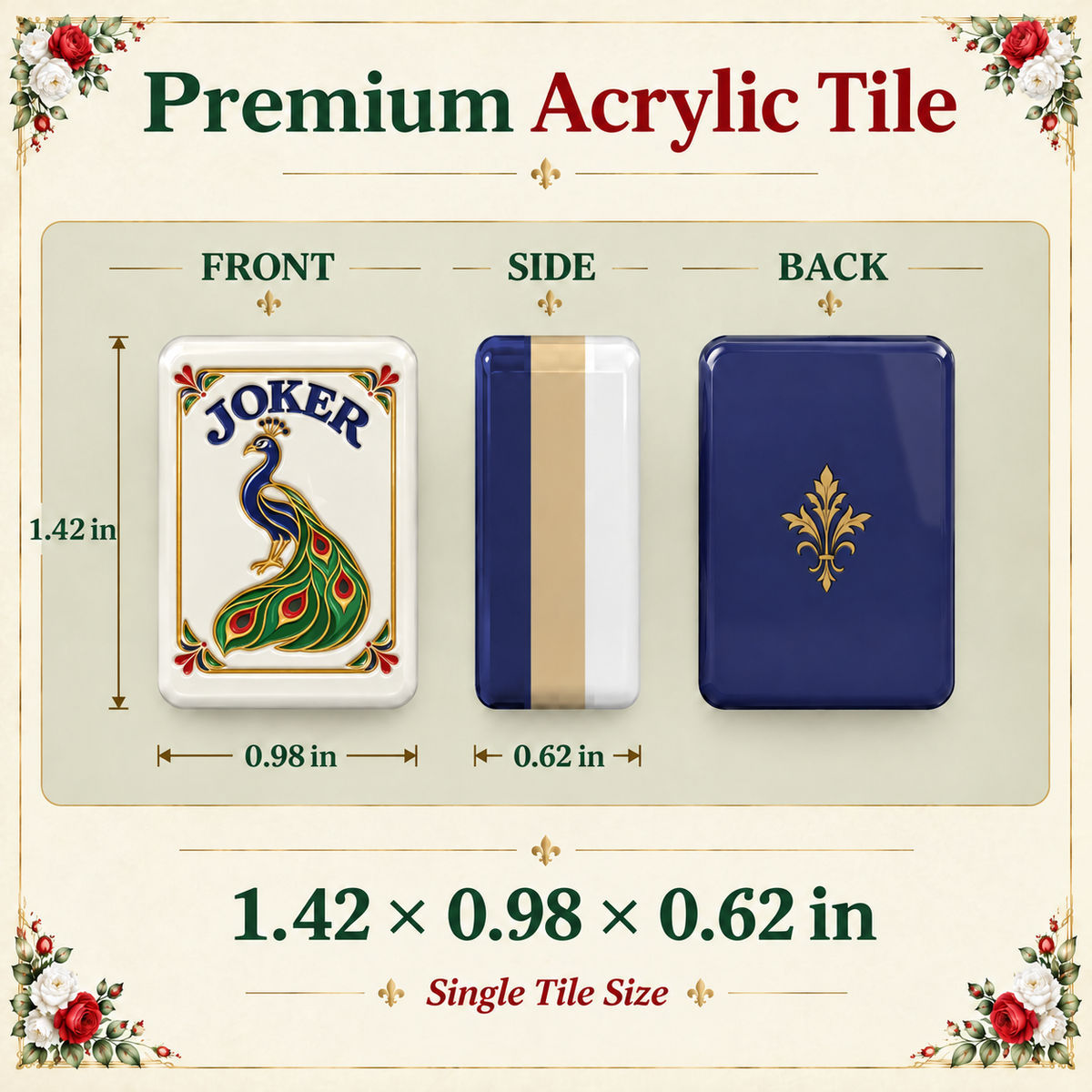
In American mahjong, flower replacement occurs when you draw a flower tile (of which there are eight in a standard set) either during the initial hand draw or from the wall during play. You must immediately draw a replacement tile from the end of the wall to maintain your hand size—flowers are never counted as part of your playable tiles. In Chinese and Hong Kong variants, the mechanic is similar but the timing and supplementary rules differ: flowers may award bonus points or trigger a reshuffle in some rulebooks. Taiwanese mahjong handles flowers differently, often treating them as scoring bonuses rather than tiles that require replacement. Riichi mahjong does not use flowers at all. The key across all variants is that flowers must be replaced instantly to prevent your hand from becoming unbalanced, and failure to do so can invalidate your hand or cause disputes at the table.
Why do flowers need replacement at all?
Flowers exist to add variety and scoring opportunity to the game, but they're not combinable into melds the way numbered tiles or dragons are. Replacing them immediately keeps your hand size steady: in American mahjong you always hold 13 tiles ready to play plus 1 tile you've just drawn (14 total), and if a flower sits in your hand unpaired, it throws off the math. The moment a flower enters your hand, the wall compensates by giving you a replacement tile from its end, preserving the 14-tile working state. This rule protects game integrity and prevents one player from gaining an unfair advantage by holding "dead" tiles that can't form melds.

How does flower replacement work in American mahjong?
When you draw any of the four flower tiles (one per wind, symbolizing East/South/West/North in some sets), expose it immediately to all players and state aloud that you've drawn a flower. Place the flower face-up on the table to your right so everyone sees it. Without delay, draw a replacement tile from the live end of the wall (not the dead end). Keep the replacement tile in your hand and continue your turn. If you drew the flower during the initial 13-tile hand deal (rare, but possible), the replacement comes from the wall in the same sequence—your hand still ends at 13, and play proceeds normally. Never count a flower toward your tile total: you hold 13 playable tiles plus the flower bonus, but for melding and hand-reading purposes, the flower is scored separately and removed from your hand before you declare a win.
How does flower replacement differ in Chinese and Hong Kong variants?
Chinese mahjong (particularly the Cantonese rule set) treats flowers similarly to American mahjong—draw a replacement immediately—but adds a scoring twist: each flower you hold at the end of a hand typically awards bonus points (1 or 2 points, depending on the specific house rules you've agreed on). Hong Kong mahjong uses four seasons (Spring, Summer, Autumn, Winter) in place of traditional flowers, and the replacement rule applies identically: draw and swap instantly. However, in some Hong Kong games, drawing a season may entitle you to an extra tile draw as a privilege, which American mahjong does not grant. The core mechanic—replace now, don't delay—stays the same, but the timing of bonuses is where confusion often creeps in. Always confirm house rules before the first hand if you're playing with a new group.
What happens if you forget to replace a flower?
If you forget to replace a flower and continue playing with an unbalanced hand, you've created a dispute: your hand now has only 13 tiles instead of 14 (or 12 if the flower was later discarded without replacement). Most rule sets say you must pause immediately when someone notices, draw the replacement tile, and resume—but in tournament play, a penalty hand or a "dead hand" (automatic loss for that round) may apply. In casual home games, the most graceful fix is to stop, acknowledge the mistake, draw the replacement tile, and keep playing; serious players should agree on a house penalty rule before the Charleston begins, so everyone knows the cost. This is why clear table setup and using a reference card throughout the game prevents needless conflict.
Do all mahjong variants use flowers?
No. Riichi mahjong (Japanese mahjong) contains no flowers; its 136-tile set uses only numbered suits, dragons, winds, and terminals—replacement rules don't apply. Taiwanese mahjong, by contrast, sometimes includes flowers but treats them as instant scoring bonuses rather than tiles that require a wall draw to replace; you count the flower points and set the tile aside without swapping. Singaporean and other Southeast Asian variants often blend Chinese and local house rules, so flowers may or may not appear and replacement timing varies. When learning a new regional variant, ask your group directly: Do we play with flowers? Do we replace them from the wall, or do we set them aside for points? This single question prevents most flower-related confusion and keeps the game moving smoothly.

Comparison: Flower Rules Across Variants
Variant | Flowers Present | Replacement Required | Bonus Points | Timing |
American | Yes (4) | Immediate from wall | No | Draw or deal |
Chinese (Cantonese) | Yes (4) | Immediate from wall | 1–2 per flower | Draw or deal |
Hong Kong | Yes (4 seasons) | Immediate from wall | Varies + extra draw | Draw or deal |
Taiwanese | Yes (4) | No—set aside | Yes (counted instantly) | Draw or deal |
Riichi (Japanese) | No | N/A | N/A | N/A |
🀄 Shop best-selling mahjong sets →
Common mistakes and how to avoid them
Mistake 1: Holding a flower in your hand as if it were a playable tile. Flowers cannot form melds. The moment you realize you're counting a flower toward a potential pung or kong, you've misread your hand. Always visually separate flowers on the table so you see only your 13 playing tiles.
Mistake 2: Drawing a replacement flower from the wrong end of the wall. Always draw from the live end (the end still being played). Drawing from the dead end breaks the wall sequence and invalidates the draw for the next player. If unsure which end is live, ask before drawing.
Mistake 3: Delaying replacement or forgetting flowers exist. New players sometimes set a flower aside mentally and forget it exists, then later claim they only have 12 tiles. Announce flowers aloud and draw your replacement before you pick up any other tile. Make it a ritual: flower appears → mouth opens → replacement drawn → table sees it.
Mistake 4: Confusing flowers with bonus tiles in variants that don't require replacement. In Taiwanese mahjong, flowers are bonus points, not tiles needing replacement. In American mahjong, flowers always need replacement. Know which rules you're playing before the game starts.
Setting up a flower-proof table
Start every game by laying out a quality mahjong set from our best-selling collection and doing a quick tile count: 108 numbered tiles (36 per suit), 16 winds, 12 dragons, and 8 flowers should be visible. During the Charleston and before the first draw, have one player call out "flowers" and confirm all four are in the wall. If you're hosting regularly, store your set in a dedicated bag or case so tiles don't go missing between games—missing a flower changes the math and will confuse players mid-hand.
When the game begins, use a mat with clearly marked positions for melds and flowers. Some players keep a small corner of the mat designated "flower zone" so the drawn flowers stay visible and don't get mixed with the live hand. If you're using racks with pushers, they keep your hand organized; flowers should sit outside the rack in that flower zone, never inside it, so you never accidentally play them.
🎁 See our most-loved mahjong sets & accessories →
What to check before you buy or teach
Confirm the variant with your group before you invest in a set or invite new players. American mahjong looks different (160 tiles, flowers, specific hand list) from Chinese (all variants vary by region).
Get a reference card specific to your variant. American players need the current National Mah Jongg League card; Chinese players need a chart of their local rules. Printing a copy and keeping it at the table prevents endless arguments.
Check your tile count when you unbox a new set. Count flowers specifically; if all four aren't there, replacement becomes impossible and a hand becomes invalid mid-game.
Establish house rules on penalties for forgotten flowers before the first hand. Decide: does a missed replacement cost a turn, end the hand, or just require a reset? Write it down.
Test the tiles underhand before inviting guests. Damaged or misaligned tiles can jam racks or confuse players about which tile is which. American acrylic sets from Mahstead's collection are cut to consistent spec and ship free across the US, so you get reliable play from game one.
✨ Find your Mahstead set — free US shipping →

FAQ
Can I use a joker instead of a flower if one is missing from my set?
No. Jokers are universal wild tiles used in melds; flowers are fixed hand-filling tiles that require replacement. If a flower is missing, your set is incomplete and play will eventually deadlock. Replace the missing flower or use a complete backup set.
If I draw a flower on my winning turn, do I still replace it?
Yes. In American mahjong, you replace the flower immediately, then continue drawing from the wall or checking your hand to declare the win. The flower replacement happens before you can claim mahjong; never skip this step, even on a winning hand.
Why does Riichi mahjong not use flowers?
Riichi (Japanese mahjong) evolved with 136 tiles and a different point structure. It uses numbered tiles, dragons, and winds only, making the game faster and eliminating replacement delay. If you're learning Riichi, there are no flowers to worry about—one less thing to learn.
In Chinese mahjong, do I have to replace a flower if we've agreed it's worth bonus points?
Yes, in most Chinese variants. The flower is replaced from the wall and scores bonus points at hand end. If your group plays "flowers stay in hand as bonus tiles without replacement," that's a house rule—confirm it explicitly before the Charleston.
What if someone draws a flower, replaces it, and the replacement tile is also a flower?
Immediately replace the second flower the same way. This is rare but possible. Keep drawing and replacing until you have a non-flower tile in hand. All replacements come from the live end of the wall in sequence.


View More
View More
View More
