
Mahjong Classes for Beginners in Greenwich: Where to Learn & What to Know
Last updated: Nov 23, 2026
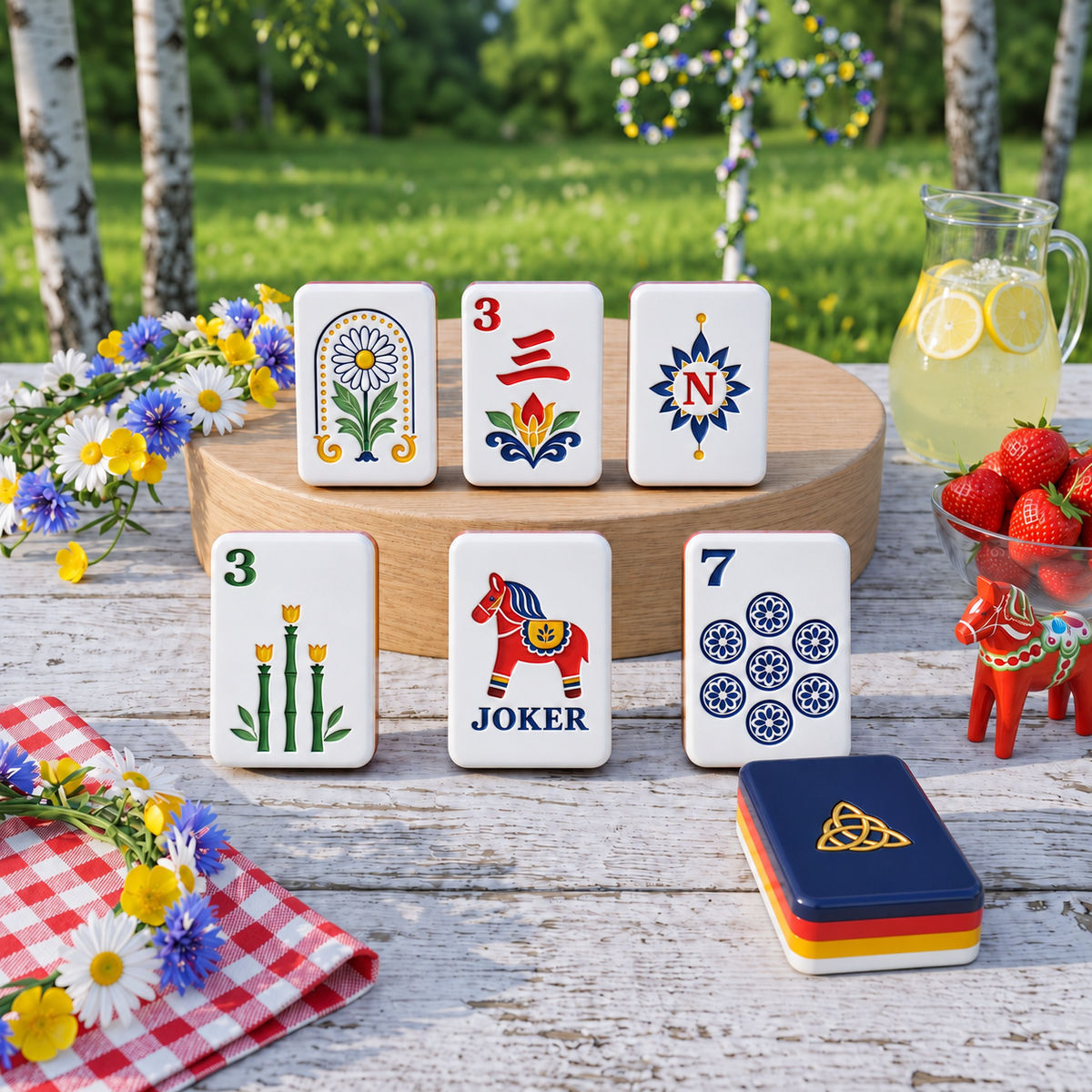
Greenwich beginners can find mahjong classes at community centers (check Parks & Recreation), public libraries (reference desk), country clubs, and Jewish community organizations—the most common venues for group instruction. Classes typically run 4–8 weeks, meeting once or twice weekly for 1.5–2 hours; expect to learn hand recognition, the Charleston tile-passing ritual, basic rules, and scoring in that sequence. Instruction is nearly always American mahjong (152 tiles, eight jokers, hands from the current-year National Mah Jongg League card). Cost varies by venue but rarely exceeds what a recreational class costs anywhere. Before signing up, confirm the instructor teaches American (not Chinese or Hong Kong variants), uses a current-year card, and welcomes absolute newcomers. You'll want best-selling American mahjong sets for home practice between lessons—the same tiles your class uses.
Where do beginners find mahjong classes in Greenwich?
Start with Greenwich Parks & Recreation: their website or call to ask if they offer mahjong instruction seasonally or annually. Public libraries (especially if they house a community room or partner with senior centers) often host groups; ask the reference desk. Country clubs, synagogues, and Masonic lodges in the area may run private or semi-private groups. Check Meetup or Facebook for "mahjong" + "Greenwich" or "Connecticut" to find informal game nights that welcome learners. Private instructors also advertise locally—word-of-mouth from existing players is often the fastest route. Never assume a class exists year-round; instructors and venues rotate, so confirm dates, level, and curriculum before committing.

What should you expect in your first class?
A beginner class starts with the tile set itself: instructors usually explain all 152 tiles (three suits—Bams, Craks, Dots—plus winds, dragons, flowers, and jokers) and why they matter. Lesson two typically covers the Charleston, the pre-game tile-passing exchange that sets the tone. Weeks 3–4 focus on reading the current-year National Mah Jongg League card and recognizing hand patterns (pungs, kongs, quints, sextets, pairs). By week 5–6, you'll play slow games with heavy coaching: expect frequent pauses to check the card, ask about joker placement, and verify winning conditions. A good instructor keeps a scorepad visible, explains each point decision, and never rushes. Bring a notebook; write down which suits go with which dragons, how the winds rotate, and common beginner mistakes. Plan to feel confused for the first two hours—that's universal and normal.
How long until you can play a full game?
Most beginners grasp the mechanics in 4–6 weeks of weekly instruction, but "playing" and "winning" are different. After four classes, you can follow along, spot legal hands on the card, and understand why a play works or fails. Playing independently (calling discards, deciding which tiles to keep, reading the card without prompting) takes 8–12 weeks of weekly class plus 2–3 home practice sessions weekly. Scoring fluency comes later—expect to ask "how many points?" for several months. The jump from "I know the rules" to "I feel like a real player" typically happens around month four or five. Don't expect to be competitive; enjoy learning the logic, the social rhythm, and the tile combinations. Weekly games with patient players accelerate learning far more than sporadic classes.
What's the difference between class instruction and self-teaching?
Classes compress learning: an instructor removes ambiguity (which tiles are which, what counts as a legal exposure, why one hand beats another) that would take weeks to resolve from books or videos alone. You also build a peer group—classmates become your game group, which is half the value of mahjong. Self-teaching via YouTube or blogs works for rules overview, but you'll hit dead ends on card reading and hand priority that a live teacher clarifies in seconds. However, classes alone won't make you fluent; self-study between classes (playing hands from the card, watching others on video, re-reading notes) is essential. Most experienced players spent time in both: a 4–6 week class, then years of twice-weekly games. If Greenwich classes are full or seasonal, start with how to play American mahjong and join a beginner-friendly game group as soon as you recognize the tiles.
What equipment do you need before or during a class?
Your instructor will provide or require a set, but owning one speeds your home practice enormously. A standard American set contains 152 tiles (eight jokers included) and typically comes with a mat, racks with pushers, and a carrying case. During class, you'll use all 152 tiles; after class, you practice hands at home using the same set. Engraved American mahjong sets are popular for their durability and clear markings; acrylic tile sets are lighter and easier to handle than bone or wood if you have hand strength concerns. A mahjong mat keeps tiles stable and sound dampened, which your housemates will appreciate. Racks with pushers are optional but helpful during class—they hold your hand upright so the instructor can see your tiles from across the table. Ask your instructor or class coordinator which brands integrate well with the sets your venue uses.
🀄 Shop best-selling mahjong sets →

How do you practice between classes?
Set aside 30 minutes, 2–3 times weekly. Shuffle all 152 tiles (plus jokers), lay them face-down, and draw 14. Flip the current-year National Mah Jongg League card to a random page and try to spot a hand that matches your tiles, including jokers. Don't worry about picking the best hand—just train your eye to recognize patterns: three identical tiles (a pung), four identical (a kong), a pair. Time yourself: Can you find a match in 2 minutes? In 1 minute? Faster recognition builds confidence in live games. After two weeks, repeat this drill but use a stopwatch; you're building speed without pressure. Once you feel comfortable, practice the Charleston with another player or simulate it (pass 6 tiles left, 3 more left, then right—exactly as you'd do in a real game). Play one slow hand with a partner each week. Don't track points; focus on calling the right discards and verifying your winning hand on the card.
What mistakes do beginners make, and how do you avoid them?
Confusing joker rules. Jokers can substitute for any tile except a single tile (if you need a 5 Dot, you must use a real 5 Dot, not a joker) or a pair. Many new players waste jokers early and regret it mid-hand. Drill the rule until it feels automatic: jokers are for building multiples (pungs, kongs, quints, sextets), never for singles or pairs. Ask your instructor to repeat this in week two.
Misreading the card. The National Mah Jongg League card has dozens of hand patterns, each marked by suit, number sequence, and exposure type. Beginners often spot a hand that looks like theirs but misses a key detail (e.g., one suit must use a dragon instead of a number). Slow down: trace your tiles against the card line by line, say each tile aloud, and check the exposure column. If you're unsure, ask another player—no penalty in practice.
Calling too early. You must have exactly 14 tiles (your hand of 13 plus one drawn from the wall or a discard). New players sometimes call "Mahjong" with 13. Count aloud before you announce. In live games, calling with the wrong tile count forfeits your hand.
Ignoring the wind rotation. After each game, the player who was East becomes South, South becomes West, etc. This changes which tiles are useful (because certain winds pair with certain dragons). Track this between hands so you're mentally ready.
Forgetting the current year's card. The card changes every spring. An old card's hands may not match this year's version, and you'll lose hands you didn't know were legal. Your instructor should provide the current card in week one; if not, ask. The National Mah Jongg League publishes it online and in print.
Beginner Mistake | Why It Happens | How to Avoid It |
Using jokers for singles | Jokers seem like wild cards (like poker) | Memorize: jokers = multiples only |
Calling with 13 tiles | Excitement, or miscounting | Count aloud: hand (13) + draw (1) = 14 always |
Misreading the card | Too many hands, quick scan | Trace each line with your finger; say tiles aloud |
Mixing old and new cards | Card changed, didn't notice | Confirm current year before each season |
Forgetting wind order | Unfamiliar rule | Write: E→S→W→N→E; review after each hand |
What to check before you buy your first set
Confirm the set includes 152 playable tiles plus eight jokers—this is standard for American mahjong. If you see "160 tiles" listed, that means 152 playable tiles plus extra spare jokers and/or blank tiles; those spares never enter play but ensure you have replacements if a tile cracks. Acrylic tiles are durable and affordable; bamboo or bone sets are heavier and more traditional but harder on hands if you have arthritis or tendonitis. A mat is essential—it dampens noise and keeps tiles from sliding off the table. Racks with pushers help during beginner play; many experienced players don't use them, so don't feel pressured. Check that the tiles are engraved (not just painted) so markings won't wear off with heavy play. Ask your instructor which local sets are most common at your venue; buying the same brand makes it easier to switch sets mid-class if needed. Avoid very cheap sets where the tile markings are unclear or jokers are hard to spot.
🎁 See our most-loved mahjong sets & accessories →
Why Greenwich's mahjong community is ideal for beginners
Greenwich's proximity to Manhattan and strong Jewish and country-club traditions mean mahjong classes and game groups are reasonably accessible compared to rural areas. You'll find both formal instruction (through Parks & Rec, libraries) and casual groups (Meetup, synagogue game nights), so you can choose a learning style. The social aspect is real: many Greenwich players have played together for decades, and they generally welcome newcomers during open game nights. Start with a class, transition to a weekly game group, and you'll have a hobby that lasts years.
Next steps: From class to regular play
After your class ends (typically 4–8 weeks), ask the instructor or classmates if anyone hosts a weekly game. Most established groups meet Thursday or Sunday afternoons. Start as a guest, observe one hand, then sit in for a full game. Bring your own set so you're familiar with your tiles. Play for fun, not money, until you've logged 20–30 games. By game fifteen, you'll feel like you belong. Invest in mahjong bags and cases to transport your set safely if you're traveling to weekly games. Keep the current-year National Mah Jongg League card at home and in your bag; reference it during play without hesitation. Experienced players expect questions and appreciate your commitment to learning correctly.
✨ Find your Mahstead set — free US shipping →

FAQ
Do I need to buy a mahjong set before my first class?
Not always—many instructors provide sets during class. Ask the venue before enrolling. However, buying one for home practice (even a mid-range acrylic set) accelerates learning dramatically.
Is American mahjong the only variant taught in Greenwich?
Almost certainly yes. Chinese and Hong Kong variants exist but are far less common in Connecticut. Confirm with the instructor that the class teaches American rules and uses the current-year National Mah Jongg League card.
How much does a beginner set cost?
Prices vary by brand and materials. See current price on our best-selling collection to compare options; acrylic sets are usually more affordable than bamboo or bone.
Will I be the only beginner in class?
No. Most beginner classes are cohorts of 4–8 people at the same level. If a class mixes levels, ask the instructor how they handle it; good instructors separate beginner drills from intermediate play.
How do I find the current-year National Mah Jongg League card?
The League publishes it every spring. Your instructor should provide it (or a link) in week one. If not, ask; it's essential for legal play.
Can I learn mahjong without a class?
Yes, but slowly. Self-teaching via blogs and videos covers rules, but live instruction removes ambiguity and builds confidence faster. Combine a short class with weekly practice games for best results.


View More
View More
View More
