
What Is Discard in American Mahjong—Rules and Strategy
Last updated: Nov 23, 2026
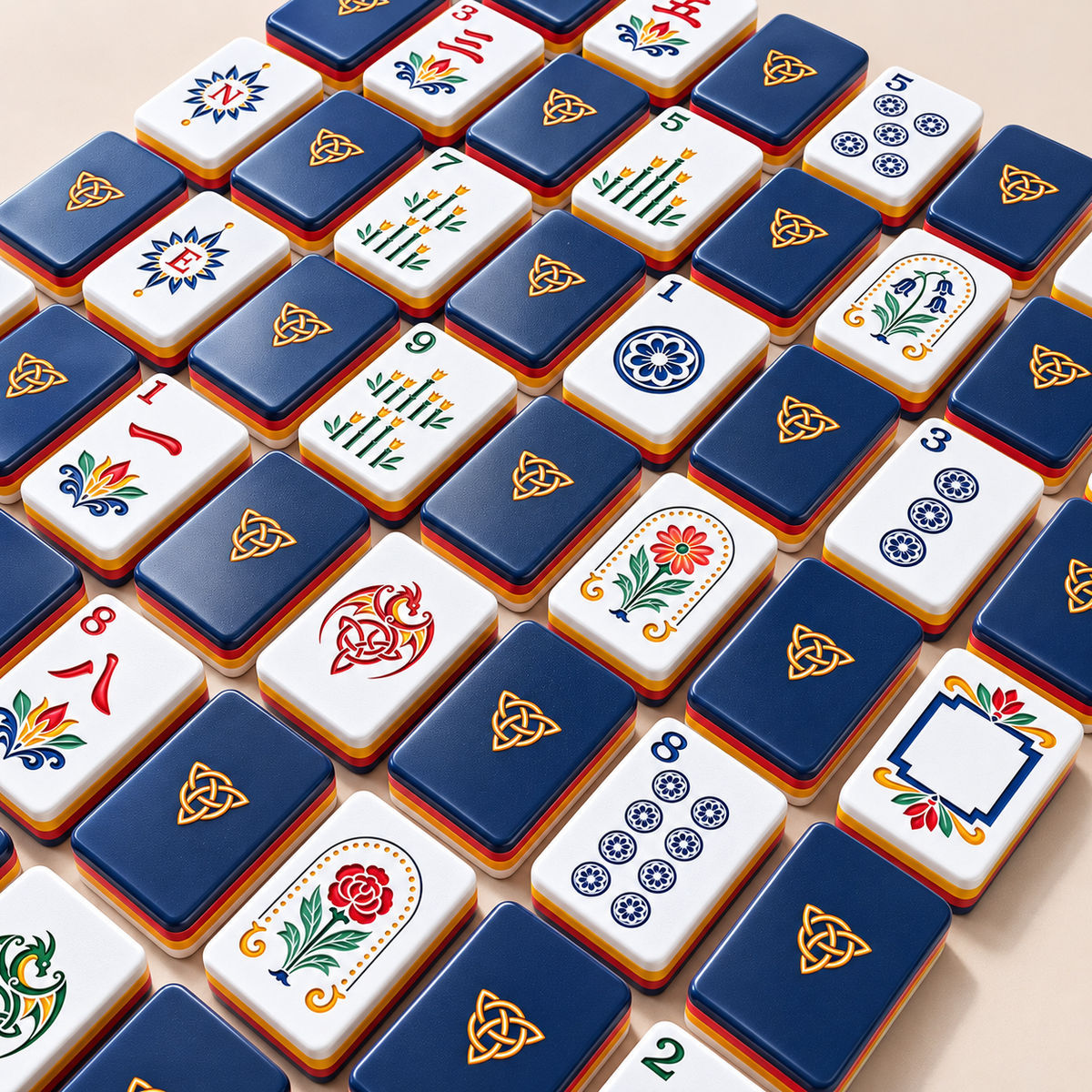
A discard in American mahjong is the tile you place face-up in the center of the table after drawing a new tile during your turn. Since the object is to complete a hand of 14 tiles (13 in your rack plus the drawn tile), you must discard one tile each turn to stay at 13 in your rack. Discards are the tiles your opponents will claim if they can complete a pung, kong, quint, or sextet—or if they have a winning hand. The discard tile sits in a row or zone visible to all players. Your discard strategy determines both your own hand's direction and your opponents' options. Mahstead's best-selling mahjong sets include layout guides on the matching mahjong mats that show proper discard zones, making it easier to play legally and read the table clearly.
What exactly happens when you discard?
When you draw a tile from the wall during your turn, your rack temporarily holds 14 tiles. You must place exactly one tile face-up on the discard zone—usually the center of the table or a dedicated area on the mat. That tile is now "live": any player at the table (not just the next player in turn order) can claim it if they need it for a pung, kong, quint, sextet, or a winning hand. Once claimed, the discard tile leaves the table and enters your opponent's exposed melds. If no one claims it, it stays in the discard zone as a record of what's been played. Your hand returns to 13 tiles in your rack.

Why does discard order matter for winning?
Your discard choices directly influence which hands remain possible for you and which tiles become "dead" (unclaimed and blocked from your opponents). If you need a 5 Bam for your hand and you see three 5 Bams already discarded, you know the fourth won't appear and you must pivot to a different hand pattern. The National Mah Jongg League card contains hundreds of legal hand patterns; players track discards to narrow down which patterns are still achievable. Discarding safely (tiles that few hands use) vs. aggressively (tiles others likely need) shapes the entire game rhythm.
🀄 Shop best-selling mahjong sets →
How should you order your discard strategy—safe vs. aggressive?
Safe discard strategy prioritizes throwing tiles that are least likely to help other players win. Typically, you start by discarding honors (winds and dragons) that don't appear in your chosen hand. Then you move to number suits, watching the discard pile to see which tiles appear repeatedly—those are safer because fewer copies remain in play. Aggressive discard strategy throws tiles that competitors likely need, hoping to block their hands even if it leaves you more exposed. Most winning players blend both: early turns favor safe play to narrow down your own options, and late turns become more aggressive once you're committed to a specific pattern. Track the discard pile from turn one—it's your roadmap to survival.
What's the difference between a legal and illegal discard?
A legal discard is any single tile from your rack placed face-up in the designated discard zone during your turn. It must be visible to all four players and remain on the table until claimed or passed over. An illegal discard is a violation: placing a tile in the wrong spot, discarding out of turn, throwing the wrong number of tiles, or (critically in American mahjong) attempting to discard a joker or a pair tile. Jokers cannot be discarded and must stay in your rack as wildcards for your melds. If you accidentally discard a joker, play stops, and house rules vary—some tables reset the hand, others penalize the player. The discard zone on a quality mahjong mat clearly marks where each player's discards belong, preventing accidental rule breaks during fast play.
How do you read what tiles are "cold" (no longer available)?
After every discard, the table's live discard pile grows. A tile is "cold" when all four copies have been discarded and taken or when three are visible and one remains unknown. You track coldness by watching the rows: if you see all three 7 Dots discarded in the center, the fourth is either in someone's rack, buried in the wall, or already part of an exposed pung on the table. Cold tiles cannot help you anymore; hands built around them must be abandoned. Experienced players maintain a mental tally of suit density: if seven Craks are visible and one is in an opponent's pung, only two remain in the wall—a critical fact if your hand needs three more Craks. Write down cold tiles on paper during practice; eventually, the pattern recognition becomes automatic.
Strategy | When to Use | Best For | Key Tip |
Safe discard first | Early turns (1–6) | Narrowing your options; avoiding early knockouts | Discard honors or extremes (1s and 9s) first |
Mixed tracking | Mid-game (turns 7–10) | Balancing offense with hand security | Discard one safe + one risky per cycle |
Cold-tile blocking | Late turns (11+) | Stopping opponents who are one tile away | Throw their most-needed suit entirely |
Aggressive offence | Down to last hand | Forcing a win race or draw | Accept higher risk to win quickly |

Common mistakes that cost games
Discarding without scanning the discard pile. New players often throw tiles without checking whether those tiles are already cold. If two 8 Dots are already discarded, throwing a third one wastes a turn and signals your hand direction to the table.
Holding pairs too long. A pair sits dead weight in your rack until you're ready to use it as your pair for the final hand. If your pair is visibly discarded three times and you're still holding a fourth, switch your hand strategy immediately instead of chasing a dead goal.
Telegraphing your hand through discard pattern. If you always discard Winds first, then Dragons, then low Craks, experienced players will read your hand before you finish building it. Mix up your early discards randomly to stay unpredictable.
Discarding too aggressively when leading. If you've built a winning hand and are one tile away, many players panic-discard risky tiles hoping to block others. Stick to safe discards when you're ahead; let the wall protect you.
What to check before you buy (equipment for legal play)
Discard zone clarity on your mat. Some mahjong mats lack clear center zones; verify the layout shows four distinct discard rows or a center pond where all four players can place tiles without overlap. A mat with engraved patterns often includes a rule diagram; check it before purchasing.
Tile visibility and face marking. Your best-selling sets should have large, clear characters so discarded tiles are legible from all seats. Acrylic tiles with deep engraving read faster than paint during rapid play.
Racks that keep tiles organized.Racks with pushers let you sort your hand so you spot discard candidates instantly—critical when 13 tiles are stacked in front of you.
Bag that fits your full set. If you play weekly and transport your set, a sturdy mahjong bag protects your tiles during travel so no pieces crack or go missing mid-season.
🎁 See our most-loved mahjong sets & accessories →
How discard differs across mahjong variants
American mahjong (four players, 14-tile hand, annual card). Discards are live only during your turn and can be claimed by anyone for melds or a win. The discard row is permanent and visible until the hand ends. Speed and tile-tracking matter intensely.
Chinese mahjong (four players, 13-tile hand, no card). Discards work the same way—one tile per turn—but players can form chows (1-2-3 sequences) in addition to pungs, making discard safety much harder. You cannot discard a tile and then have it claimed for a chow; chows must be formed before the discard turn begins.
Hong Kong mahjong (three or four players, 13-tile hand, no card). Discard zones are often unmarked, and play is faster. Many hands involve concealed melds (hidden pungs and kongs), so tracking discards becomes even more crucial to guess what your opponents hold.
Riichi (Japanese) mahjong (four players, 13-tile hand, no card). Once you declare "riichi," you freeze your hand and must discard in a straight line—no rearranging or switching strategy. Discards are arranged by turn order for all to see, making the discard pile a complete history of your hand's rigidity. It's a high-risk, high-reward variant.
Taiwanese mahjong (four players, 16-tile hand, no card). You draw two tiles per turn but discard only one, so your hand grows temporarily—and so does the discard pile pressure. Discards accumulate faster, and tile-reading becomes almost impossible for new players.
The core rules guide at Mahstead focuses on American rules; if you play a variant, confirm your local house rules for discard zones and claiming timing before your first game.
Real-table situations: when to break the safe-play rule
Situation 1: You spot a late-game win race. You have three tiles to draw and need one more specific tile to complete your hand. Your opponent, two seats away, has discarded three suit-related tiles and is likely building around a different suit. Throw your riskiest tile—the one that helps them most—because even if they win, you've lost anyway; your only path is speed.
Situation 2: A player is visibly one tile away. You see their exposed melds and recognize their hand pattern from the card. They're about to call. Discard a tile from their suit if you can, even if it's part of your backup plan. Blocking them is worth pivoting your own hand.
Situation 3: You've committed to a cold hand. Your pattern requires two specific 6 Craks, but three are already visible. Fold mentally: discard safely to stay alive, track other players' patterns, and prepare to call mah-jong on their winning tile (called a "dead hand" win or coverage win in some circles). You still score if someone else completes and you can call before the next draw.
✨ Find your Mahstead set — free US shipping →

FAQ
Can I discard a joker in American mahjong?
No. Jokers cannot be discarded and must remain in your rack as wildcards for your exposed melds only. Attempting to discard a joker is an illegal play; most tables reset the hand or apply a penalty.
What happens if no one claims my discard?
It stays in the discard zone as a permanent record of that turn. It is now "cold"—no one can claim it later. The next player draws from the wall and must discard, and play continues.
Can I look back at all the discards from earlier in the hand?
Yes. The entire discard pile remains visible on the mat for the entire hand. Reading old discards to track what's cold is a core skill. Never hide or remove discards during play (unless the hand has ended).
If I accidentally discard out of turn, what happens?
House rules vary. Some tables reset immediately; others penalize the player by forcing them to take back the tile and play again later. Agree on your table's penalty rule before the game starts.
How do I know if my discard tile was claimed for a pung or for a winning hand?
If the tile is claimed for a pung, kong, quint, or sextet, it stays visible in the center (exposed) as part of that player's melds. If it's claimed as the final tile for a winning hand (mah-jong), the hand ends immediately—play stops and scoring begins.
Should I ever discard a pair on purpose?
Only if you have a backup pair and your chosen hand is cold (all supporting tiles are gone). Otherwise, never throw a pair unless you're folding that hand pattern entirely.


View More
View More
View More
