
Sichuan vs. Filipino Mahjong: Key Differences & Rules
Last updated: Nov 23, 2026
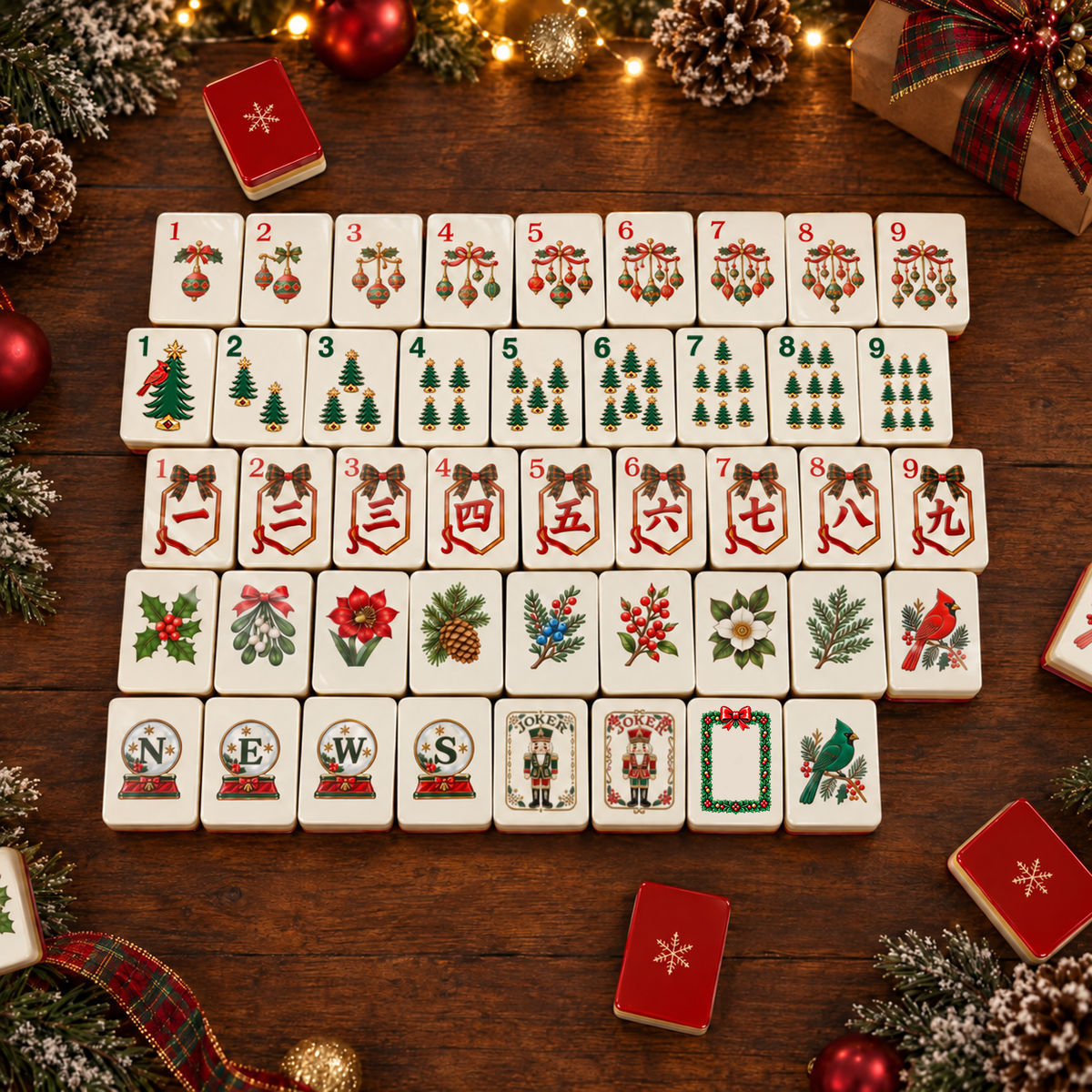
Sichuan mahjong uses 108 tiles (four copies each of 1–9 in three suits, winds, and dragons—no flowers or jokers) and rewards hands based on patterns and melds you declare and expose as you draw. Filipino mahjong, influenced by Chinese regional play, typically uses 144 tiles and focuses on declared melds and concealed hands, with winning often tied to hand composition (like three of a kind, sequences) rather than scoring multipliers. The core difference: Sichuan emphasizes mid-game meld announcements and betting; Filipino favors revealed pung/kong combinations and a final hand calculation. Both require you to track discard safety and opponent melds constantly. If you want to play multiple variants, you'll benefit from sets that work across traditions—like our best-selling mahjong sets—and clear, durable tiles that stand up to frequent play.
Sichuan mahjong and Filipino mahjong evolved from different regional Chinese traditions, each adapted to local preferences, betting patterns, and social game culture. Neither is "right"; they're simply different entry points into tile play. If you've learned American mahjong and want to explore variants, or you're a Chinese regional player curious about how Filipino rules adapted the game, this guide breaks down the mechanics, stopping points, and what gear helps you transition between them.
How many tiles does each variant actually use?
Sichuan mahjong uses a 108-tile set: four copies each of 1–9 in Bams, Craks, and Dots (108 tiles total), plus winds and dragons, but no flowers or jokers. Filipino mahjong typically uses 144 tiles: the same 108 base plus flowers, seasons, and additional joker or blank tiles depending on local house rules. This tile-count difference is the first hurdle: you can't play Sichuan rules with a Filipino set without removing tiles, and vice versa. American mahjong sets (152 tiles) don't fit either variant directly because they include jokers that neither Sichuan nor Filipino traditional play uses in the same way.

What's the main difference in how you win?
In Sichuan mahjong, you win by declaring a winning hand combination on your turn after drawing a tile—much like drawing a final card in Rummy. You announce your hand, show it, and the calculation is instant. The melds you've declared and exposed during play influence your final hand's value, but the win moment is singular and audible. In Filipino mahjong, winning also requires you to complete a valid hand, but the declaration process and scoring often center on the exposed meld pattern (three of a kind, sequences, flowers) rather than hidden combinations. Filipino play also allows more flexibility in how you name a winning tile—some regional rules let you call a win from the discard or only from a draw, depending on the hand type. The difference: Sichuan is "draw and declare"; Filipino is "expose melds strategically, then calculate."
How does the discard safety rule differ?
Both variants require you to pay attention to which tiles are safe to discard, but the risk profiles differ. In Sichuan mahjong, discarding a tile that another player can use to complete a winning hand is dangerous—the player who uses it typically wins and collects from all three others, so discarding carelessly early in the round can cost you heavily. Filipino mahjong uses a similar principle, but many regional rule sets allow a specific player (usually the one who threw the winning tile) to pay the winner alone, rather than all three splitting the loss. This makes Sichuan play more defensive and conservative; Filipino tends to allow slightly more aggressive melds because the payout structure is tighter. In both, watching the discard pile for patterns (what your opponents pick up, what they leave) is essential.
Which hands are actually allowed to win?
Sichuan mahjong recognizes a smaller set of legal winning hands than Filipino variants. Traditional Sichuan emphasizes "eyes" (a pair) plus four melds (usually pungs, kongs, or sequences called chows). Not all hand patterns are valid; the game depends on regional rule books to define legal combinations. Filipino mahjong, shaped by regional adaptation, often accepts a broader range of winning patterns—some versions allow "13 different tiles" (a single tile of each type), "pair of eyes plus melds," or "all concealed" hands, depending on the house rule set. This flexibility makes Filipino mahjong more approachable for newcomers but requires clear written rules before you sit down to play, because ambiguity about valid hands will derail a game fast.

What's the betting and payment structure?
In Sichuan mahjong, a single winner typically collects from all three players at the table—this is called a "pay three" or "win three" model. The payment is often a fixed amount per win, sometimes doubled if the winner drew their winning tile themselves (rather than winning on a discard). Some regional Sichuan rules add multipliers based on hand complexity, but the core payout is simple. Filipino mahjong varies by region, but many house games use a "pay to the winner" model where only the player who threw the winning tile pays, or all three pay but in equal shares. A few regional versions use "bonus" scoring where specific melds (like three of a kind in Craks) or hand types earn double payment. Before playing either variant for money, confirm the payment structure with the group—miscommunication here derails trust fast.
Aspect | Sichuan | Filipino | American (for reference) |
Tile count | 108 | 144 (typical) | 152 |
Jokers used? | No | Varies by region | Yes, 8 in play |
Flowers included? | No | Yes | Yes (8) |
Meld types | Pungs, kongs, chows | Pungs, kongs, chows | Pungs, kongs, quints, sextets (no chows) |
Win announcement | Draw and declare | Declare from draw or discard | Meld, call, or pung the discard |
Payout model | Winner takes from all three | Varies (winner-take-one or all-pay) | Winner takes from all three |
Game pace | Moderate; betting rounds | Varies; meld-driven | Slower; hand-card dependent |
Beginner-friendly? | Moderate | Moderate to high | High (one card per year) |
If you're learning Sichuan and want to transition to Filipino play (or vice versa), the biggest mental shift is the tile set size and the meld exposure rhythm. Sichuan feels tighter and faster; Filipino often allows more exposed play and negotiation. A durable, clearly marked tile set helps—you'll be handling the tiles frequently, and if the engravings wear or numbers blur, confusion spreads. Our best-selling mahjong sets use deep, permanent engraving so numbers stay legible through hundreds of games.
🀄 Shop best-selling mahjong sets →
What's the role of the "lucky tile" or final draw?
In Sichuan mahjong, the final draw (the last tile drawn from the wall before the discard pile is exhausted) is often marked as a "dead" or "lucky" tile depending on regional rule. Some versions forbid winning on the very last tile drawn; others allow it with a bonus payout. This rule prevents endless rounds and speeds up play. Filipino mahjong typically doesn't restrict the final draw in the same way—play continues until someone melds a winning hand or the wall is exhausted (a "draw" or "no winner" round). The difference reflects betting culture: Sichuan games often reset quickly with fixed payouts, so ending conditions matter less. Filipino games sometimes allow a "tally" or replay if no one wins, where players keep their hands and the next round is dealt. Check local rules before you sit down.
Do both variants use the same Charleston (tile-passing ritual)?
No. American mahjong includes the Charleston—a three-step ritual where players pass tiles left, right, and across before any melds are exposed—to randomize starting hands and set risk. Sichuan mahjong does not use a Charleston; tiles are dealt and play begins immediately, with no pre-game passing. Filipino mahjong practice varies: some regional games include a simplified tile-passing step (one or two passes), while others deal and play immediately like Sichuan. This matters because the Charleston in American play is required to start a legal game; skipping it invalidates the round. In Sichuan and most Filipino play, there's no equivalent step—the deal is the start. If you're hosting players who know multiple variants, clarify this upfront to avoid confusion.
How do you choose the right set if you play multiple variants?
The best approach: invest in a base set that handles multiple tile counts and can be modified easily. A 144-tile or larger set (like our 160-tile design) gives you enough tiles to play Sichuan (by removing flowers and jokers and setting aside extras), Filipino (using all tiles), and even American rules (with some adaptations). Avoid sets with glued or sealed tile counts—you need flexibility. Look for sets with durable engraving and clear markings that survive repeated play. Also consider storage: if you're swapping between variants weekly, you'll want a mat that protects tiles and a bag or case that keeps tiles organized by suit—that saves setup time and prevents misdeals.
🎁 See our most-loved mahjong sets & accessories →
What to check before you buy a set for variant play
Tile engraving clarity: Numbers and suits must be legible at arm's length after 50+ plays. Shallow or printed markings fade; deep engraving lasts.
Tile count flexibility: A 160-tile set lets you remove tiles for Sichuan (108), keep all for Filipino (144), or adapt to house rules. Check that the set includes enough extras.
Mat and rack compatibility: Sichuan and Filipino play often use exposed melds, so racks with pushers help organize your hand and melds clearly—critical for variant play where exposure rules vary.
Case or bag: Multi-variant players benefit from organized storage so you can quickly sort tiles by suit between games.
House rule documentation: Before buying, confirm your group's specific Sichuan or Filipino rules in writing—variants have regional sub-rules that affect tile removal and winning hands.
✨ Find your Mahstead set — free US shipping →

FAQ
Can I use an American mahjong set to play Sichuan mahjong?
Not directly. American sets include 8 jokers and flowers; Sichuan uses neither. You'd need to remove 60+ tiles, which defeats the purpose of owning a set. Buy or borrow a dedicated 108-tile Sichuan set instead.
Is Filipino mahjong easier to learn than Sichuan?
Not necessarily. Both have regional rule variations that beginners find confusing. Filipino's broader hand-winning patterns feel flexible, but that variability makes house rules critical. Sichuan's stricter pattern set is easier to memorize once you learn the official hands.
Do Sichuan and Filipino players ever play together?
Rarely, because the tile counts and payout structures conflict. If a mixed group wants to play, agree on one ruleset first—usually Sichuan if you're in China, Filipino or a simplified hybrid elsewhere.
What's the fastest variant to learn: Sichuan, Filipino, or American?
American mahjong is fastest for English speakers because one card (issued annually) defines all legal hands. Sichuan and Filipino require either a rule book or oral tradition from players, which takes longer to absorb.
Can I modify a 152-tile American set to play Sichuan or Filipino?
Technically yes, but it's awkward. You'd remove jokers (and flowers for Sichuan), leaving you with unused tiles taking up storage space. Better to own a dedicated set for each variant you play regularly.
Are Sichuan and Filipino tiles the same size?
Usually yes—both use standard bamboo or acrylic tiles roughly 1.25" × 0.75" × 0.5". This means racks, mats, and bags designed for one often fit the other. Check dimensions before buying accessories.


View More
View More
View More
