
What Is a Siamese Card in American Mahjong?
Last updated: Nov 23, 2026
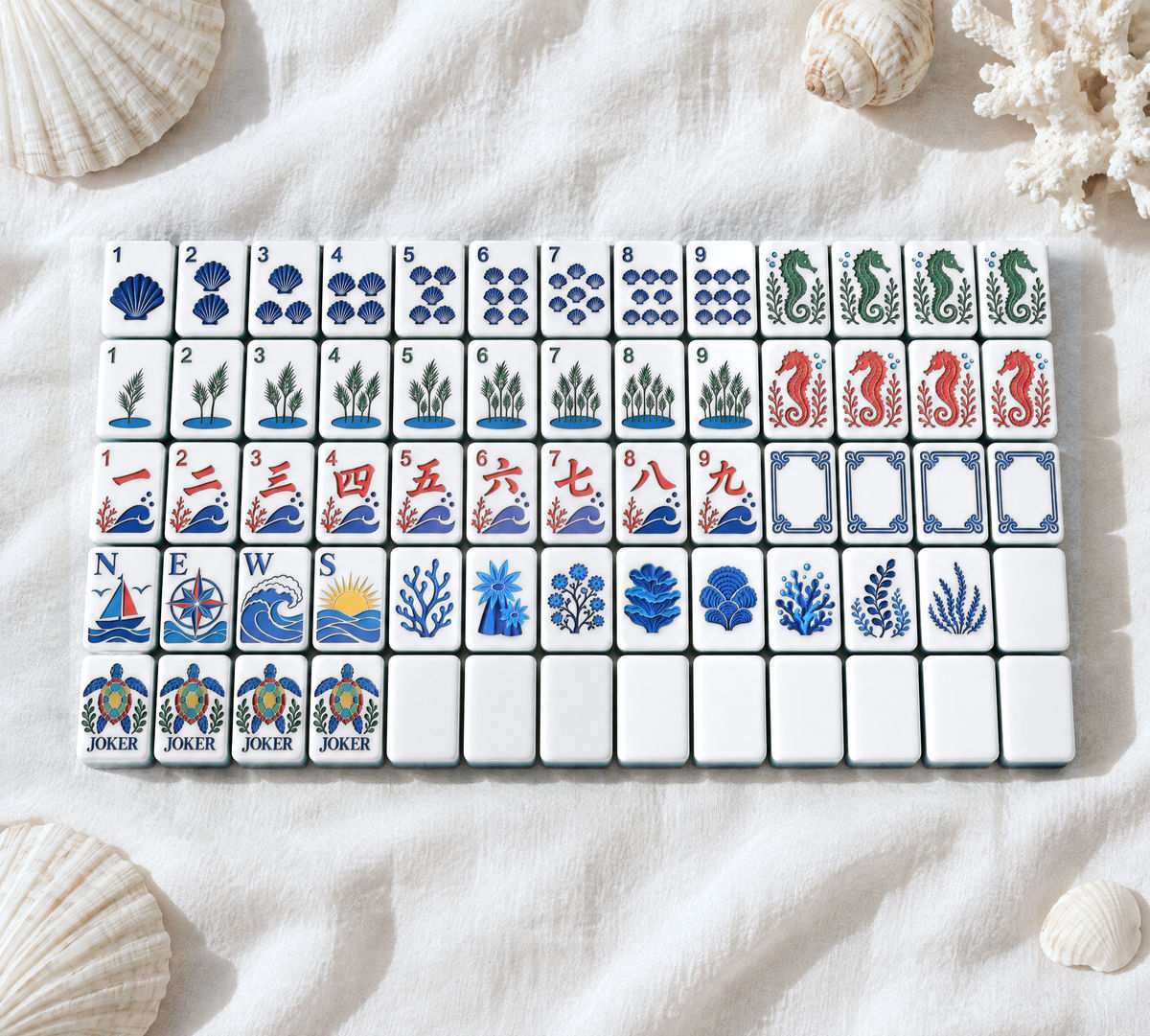
A Siamese card is one entry on the National Mah Jongg League hand card that qualifies for play using two or more distinct tile groupings or joker counts. For example, a single line might read "Pair + Pung + Kong + Kong" one way and "Pair + Chow + Kong + Kong" another, yet count as one valid hand. It appears in the official hand card issued every spring and is called "Siamese" (like Siamese twins) because it has two faces. American mahjong players must learn to read the card carefully to catch these dual-qualification hands and avoid claiming a hand that works only one way when a safer second option existed. When you win, you must name which version you're playing so the table can verify it against the card.
Why is it called a Siamese card?
The term "Siamese" refers to the old name of Thailand, and in vintage American card lingo, "Siamese twins" meant two distinct things joined as one. A Siamese mahjong hand is identical: one card entry with two separate winning paths, like twins sharing one body. This nickname stuck because it captures the feel of a hand that serves double duty. You learn the term from other players or experienced hosts, not from the League itself, so many newer players never hear it until they're deep into the game. Knowing the name helps you talk about strategy and hand-hunting at the table.

What do typical Siamese cards look like?
Most Siamese hands pair low-number winds or Soap (White Dragon) with multiple exposed melds, with the variation coming from joker count or suit. A hand might allow you to make a Kong of one suit or a Pung plus a Kong of another, both legal under one card number. Another common type uses an extra joker to swap a meld's composition: with joker, it's a Kong; without, it's a Pung. The card always shows the structure—the suits, numbers of jokers, and meld types—so nothing is ambiguous; your tiles either match the description or they don't. Spending five minutes learning a few common shapes before game night cuts your verification time in half.
How do you announce a Siamese hand when you win?
When you call mahjong, you must tell the table which version of the Siamese card you're using—for example, "Number 42, Kong version" or "Number 42, Pung version." The player opposite then matches your tiles to the card and confirms both that your tiles fit the named hand and that you have exactly 14 tiles, with no pair used in any meld. If your tiles match only one of the two card versions, you've still won—you simply announce the one that works. This clarity prevents disputes: everyone sees the card together, and disputes are rare if you name the path you took. Write down the hand number before you stand; memory slips happen faster than you'd expect.
What mistakes do players make with Siamese cards?
The biggest error is forgetting that a Siamese entry is one hand number, not two. New players sometimes believe they've chosen their version before drawing and must stick to it—wrong. You can use whichever version your tiles support; you name it only after you win. A second trap: assuming the card entry applies to both suits when only one is written. Read the card entry word for word. Third, some players confuse "Siamese" with hands that have optional jokers in the same meld (a Kong that can use a joker)—those are just flexible melds, not truly Siamese. Finally, don't assume a Siamese hand is rarer or easier; it's as valid as any other entry and appears on roughly 5–10 percent of most yearly cards based on player reports.

How should you plan for Siamese hands during the Charleston?
Treat a Siamese hand the same way you treat any other: note the discard and exposure strategy that gets you closer to it, whether you're chasing Version A or Version B. If one version needs jokers and the other doesn't, joker flow matters—watch how many jokers stay in play and plan accordingly. Some players deliberately leave one version open and push the other, knowing the hand will come if they stay flexible. The Charleston doesn't change; your mindset does. If your wall is young and two versions diverge by a single meld type, it's worth staying in both as long as table pressure lets you. Experience teaches you when to commit and when to float.
🀄 Shop best-selling mahjong sets →
Why do newer players miss Siamese cards altogether?
The National Mah Jongg League card doesn't label Siamese entries; that term lives in player culture and house rules. If you learned from a book or video without a teacher, no one may have mentioned it. Even experienced players sometimes overlook a second version because they read too fast or assume the card shows only one path per entry. This is exactly why sitting at a table with a long-time host matters: they'll catch a hand you almost discarded and point it out. If you're hosting a weekly game, knowing how to read the card fluently means you can teach newer players the difference and accelerate their confidence. Many clubs offer card-reading workshops in the spring when the new card drops.
Comparison: Siamese hands vs. standard entries
Feature | Siamese Card | Standard Card Entry |
Number of winning paths | Two or more distinct tile groupings | One specific path only |
How you announce it | Name which version you're using | Just call the hand number |
How common | ~5–10% of yearly card (player reports) | ~90–95% |
Verification speed | Slightly longer (table confirms both paths exist) | Faster |
Risk if you forget the other version | None (you use the version your tiles support) | N/A |
Best for | Players who hunt multiple patterns | Players who prefer clarity |
🎁 See our most-loved mahjong sets & accessories →
What to check before you play with a new card version
Print the current year's card in full color—faint text makes Siamese entries hard to spot.
Ask your host to point out 2–3 Siamese examples—this trains your eye in 90 seconds.
Review the card index to see which hands have multiple groupings listed.
Bring a highlighter to mark Siamese entries during play so you remember to chase both versions.
Take a photo of any hand you win (before reset) so you can verify your logic later at home.
Never assume a meld is a Siamese hand without seeing both versions on the card—some hands just look flexible but aren't.
If you're hosting a weekly game and want to invest in a quality set with durable acrylic tiles and a mat that shows the card clearly under lamplight, clarity cuts disputes and learning time. Mahstead's best-selling sets ship with a full-size card and organize tiles by suit, so spotting card entries—including Siamese—is faster.
✨ Find your Mahstead set — free US shipping →

FAQ
Can I use a Siamese card if I have only one of its versions in my tiles?
Yes. If your tiles match only one version, that version is legal and you win. You announce which one when you call mahjong, and the table verifies it against the card. Siamese doesn't mean you need both—it means both can be won, but only one must match your hand.
Is a Siamese hand worth more points than a standard hand?
No. Point value is determined by the hand number and the tiles used, not by whether the entry is Siamese. A Siamese hand pays the same as any other entry with the same number and meld structure. The dual paths are a strategy aid, not a scoring bonus.
Do all American mahjong cards have Siamese hands on them?
Yes, every official National Mah Jongg League card contains some Siamese entries. The exact count and distribution vary by year, but they're always present because they add strategy depth and use of jokers efficiently. Your yearly card includes them whether the term is explained or not.
How do I tell if a hand is Siamese or just flexible within one meld?
A true Siamese hand has two distinct winning paths shown as separate entries on the card—different meld names, different joker counts, or both. A flexible meld (like a Kong that can be broken into a Pung with joker) is all one path. Read the card entry: if it uses different language for two rows, it's Siamese. If it's one row with small variations, it's one hand.
What if my table doesn't know what a Siamese card is?
Explain it simply: "One card number that works two ways depending on your tiles." Then point to the card entry together and show both versions. Most players catch on in seconds and appreciate the clarity. If you're teaching, use a concrete example from the current card: "See? Kong here, or Pung there—same hand number, both legal."
Should I hunt Siamese hands differently from standard hands during the draw?
Not really. Chase the structure you see building (the melds), and if a Siamese version emerges, take it. The dual paths give you flexibility, not a separate strategy. Focus on tile flow and exposure first; Siamese awareness is a bonus that comes with reading the card carefully.


View More
View More
View More
