
Mahjong for Pickleball Players: Skills That Transfer
Last updated: Nov 23, 2026
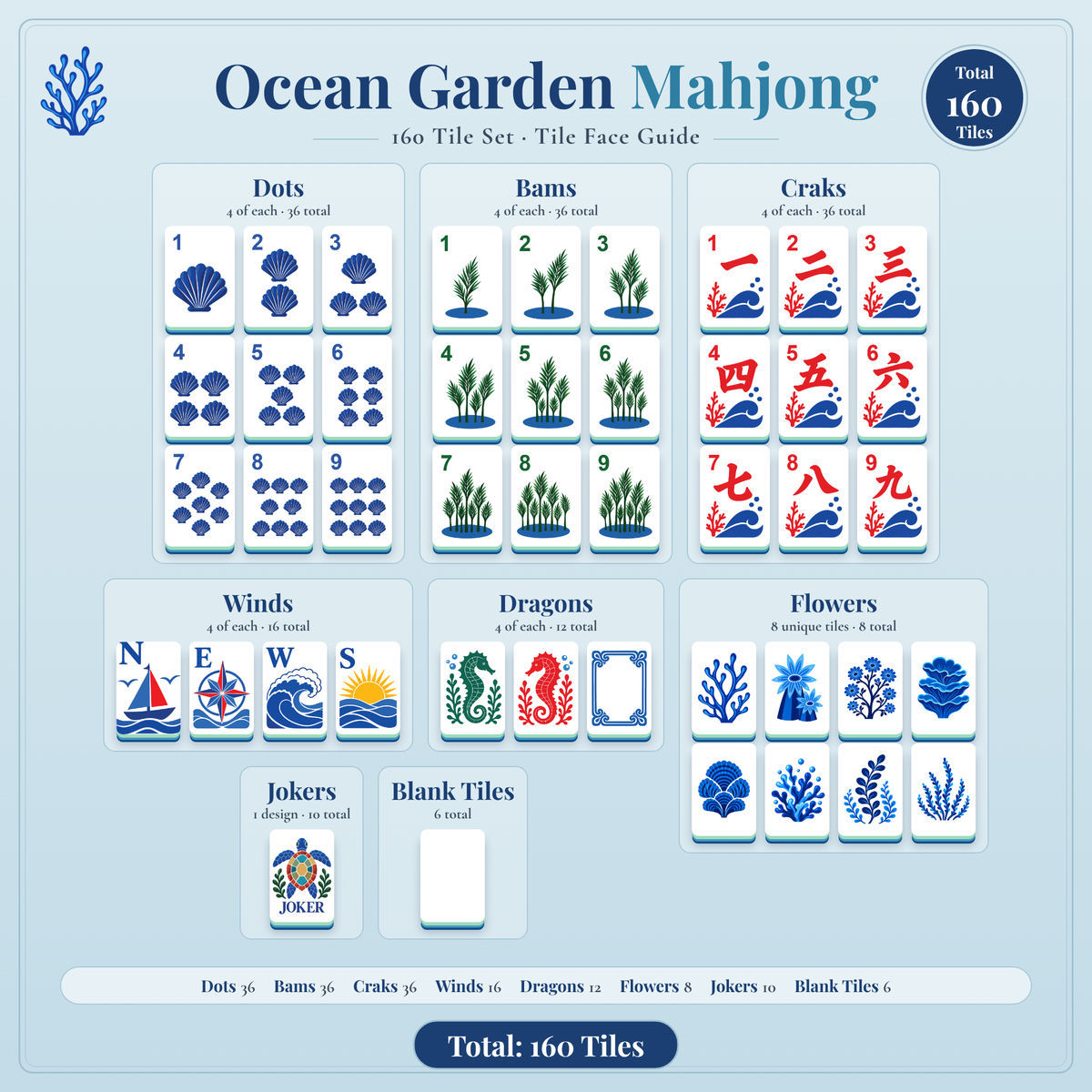
Pickleball and mahjong overlap in surprising ways: both require lightning-fast hand coordination, pattern recognition under time pressure, spatial memory, and the ability to read opponents' intentions. Pickleball's hand-eye sync translates directly to tile selection and placement speed. The competitive mentality—staying calm when points are on the line—is identical. Both reward conservative early play and aggressive finishes. Mahjong also demands no running, making it ideal cross-training during off-season or injury recovery. A standard American mahjong set costs no more than quality paddles and nets; our best-selling collections include everything you need to start in your home or club. You'll need four players, 152 tiles, 8 jokers, and one National Mah Jongg League card (updated yearly). A casual four-player game lasts 1–2 hours.
What Physical Skills Actually Transfer?
Hand-eye coordination is your biggest advantage. Pickleball trains you to track fast-moving objects and respond with precision—exactly what mahjong demands when sorting, drawing, and discarding tiles rapidly. Your eye speed makes tile sorting second nature. Finger dexterity from paddle control translates to shuffling and wall-building without fumbling. The muscle memory of competitive pacing—knowing when to rush and when to slow down—is identical in both games.

How Does Your Competitive Mindset Help?
Pickleball players already understand court positioning, risk assessment, and opponent psychology. In mahjong, you read the table the same way you read the court: which suit is your opponent chasing? Are they fishing for a specific number or type of tile? Do they play aggressively or defensively? Pickleball trains you to stay emotionally level during streaks of bad luck—crucial when the tile wall isn't cooperating. The mentality of "one point at a time" transfers directly to "one tile at a time," eliminating tilt.
What Will Feel Different and Why?
Mahjong has no movement; it's pure seated strategy. Your legs won't be involved, but your mind will work harder. You can't read a hand visually the way you read spin on a pickleball. Instead, you deduce hands from discard patterns and opponent body language. The game has a steep rule learning curve: American mahjong uses only the current year's National Mah Jongg League card, jokers work in ways that confuse beginners, and sequences (called chows) don't exist as they do in Chinese variants. You'll spend your first 3–5 games learning card navigation, not strategy. This feels slower than pickleball, where the rules are universal and timeless. Accept this lag; your court-honed attention span will crush this phase.
How to Start: A Beginner Pickleball Player's Checklist
Week 1–2: Learn the rules
Read how to play American mahjong in full.
Study the current National Mah Jongg League card for 15 minutes daily. Focus on the layout, not memorizing hands yet.
Watch one beginner video (search "NMJL American mahjong tutorial").
Week 2–3: Play with experienced players
Host your first game with three pickleball friends and one person who knows American mahjong.
Play for fun money or points only—no pressure. Your court competitor instinct will tempt you to optimize too early; resist it.
Ask questions between hands. Don't interrupt during play.
Week 3+: Develop table advantage
Attend weekly games at your local community center, library, synagogue, or country club (search "[your city] American mahjong games").
Play the same seat position (East, South, West, North) for four weeks so you internalize wind mechanics.
Keep a small notebook of hands you see others make. Patterns emerge fast.
Aspect | Pickleball | Mahjong | Your Edge |
Hand-eye speed | Critical | Critical | Transfer directly |
Decision time | <1 second | 5–10 seconds | Mahjong feels slow to you |
Reading opponents | Body, court position | Discards, pauses, patterns | Pickleball intuition works |
Emotional control | Win/loss streaks | Tile drought & rushing | Already trained |
Rule complexity | Low, universal | High, card-based | Learning curve, then mastery |
Physical endurance | High (movement) | Low (seated) | Rest opportunity |
Competitive season | Typically spring–fall | Year-round | Year-round play possible |
🀄 Shop best-selling mahjong sets →

What Equipment Do You Actually Need?
A standard 160-tile American mahjong set includes 152 playing tiles, 8 jokers, four racks, pushers, dice, and wind indicator—everything required. Sets sold by Mahstead arrive complete and ready to play. You'll also need:
The current year's National Mah Jongg League card (buy directly from the league each spring).
A mahjong mat to protect tiles and create a professional playing surface (not required, but essential if you're hosting at home on a regular table).
A travel bag or case if you plan to carry your set to clubs or friends' homes.
Many pickleball players underestimate how often they'll want to transport their set. A quality case protects tiles from damage and makes hosting at different locations seamless.
Common Mistakes Pickleball Players Make at the Table
Rushing the Charleston. This is the tile-passing ritual before play begins. Pickleball conditions you for speed; mahjong's Charleston requires deliberate, accurate hand-offs. Rushing leads to counting errors and game delays.
Optimizing too early. Your competitive brain wants to calculate odds and exploit patterns immediately. For your first 10 games, focus on not breaking rules, not winning.
Ignoring the card. Pickleball rules are oral and intuitive. The mahjong card is not; it's your Bible. Pickleball players often try to play by memory or logic rather than checking the card. This causes disputes and slows the table.
Playing too many hands. In pickleball, you play every point. In mahjong, discarding your tiles without making a hand is strategy—and it happens often. Resist the urge to "just go for it."
Underestimating luck. Pickleball rewards consistency and skill. Mahjong mixes skill and luck; sometimes the wall has your tiles, sometimes it doesn't. Accept this or you'll tilt.
Where to Find Weekly Games Near You
Community centers, public libraries, synagogues, country clubs, and senior centers host American mahjong in most cities. Search "[your city] + mahjong club" or "[your city] + community center + games." Meetup.com and Facebook groups ("Mahjong in [city]") are reliable. Call ahead; some groups have member fees or preferred skill levels. Most welcome beginners warmly, especially if you bring your own set.
🎁 See our most-loved mahjong sets & accessories →
What to Check Before You Buy a Set
Ensure the set includes all 152 tiles plus 8 jokers (a 160-tile set includes spares for replacements). Verify tiles are acrylic or bone—wood sets are beautiful but require care and are heavier to transport. Check that racks have pushers; many affordable sets omit them. Confirm the set ships complete with dice, wind indicator, and instruction sheet. If you plan to host weekly, invest in a mat and protective case simultaneously rather than upgrading later.
✨ Find your Mahstead set — free US shipping →

FAQ
Can I play mahjong seriously if I've only played pickleball casually?
Yes. Mahjong doesn't require athletic baseline ability; it requires pattern recognition and calm. Casual pickleball players often play competitive mahjong. The rule complexity is the learning curve, not your court background.
How long before I'm competitive at mahjong?
After 20–30 games (roughly 2–3 months of weekly play), you'll understand hand distribution and position strategy. Pickleball intuition accelerates this. True mastery takes years, as with any sport.
Do I need to play with other pickleball players?
No. The best learning environment is a mixed table: experienced mahjong players, one beginner, and you. You'll pick up patterns faster than a table of all beginners. Your pickleball peers are fun, but slower teachers.
Is mahjong better indoors only, or can I set up outside like pickleball?
Mahjong works anywhere with a flat surface, but wind and sunlight are hazards. Tiles blow easily; sun glare makes small numerals hard to read. Indoor play is standard. Covered outdoor tables work in calm conditions.
Should I buy engraved tiles with titles for a pickleball club set?
If you're hosting regularly for the same group, yes—personalized sets build identity and prevent mix-ups. Otherwise, standard sets are just as playable and cheaper.
What's the cost difference between a beginner set and a premium set?
Quality varies, but weight, tile finish, and case durability are the main drivers. See current price on Mahstead's product pages; the difference often justifies itself over 100+ games through durability and player comfort.


View More
View More
View More
