
What Is a Pair in American Mahjong? Rules & Examples
Last updated: Nov 23, 2026
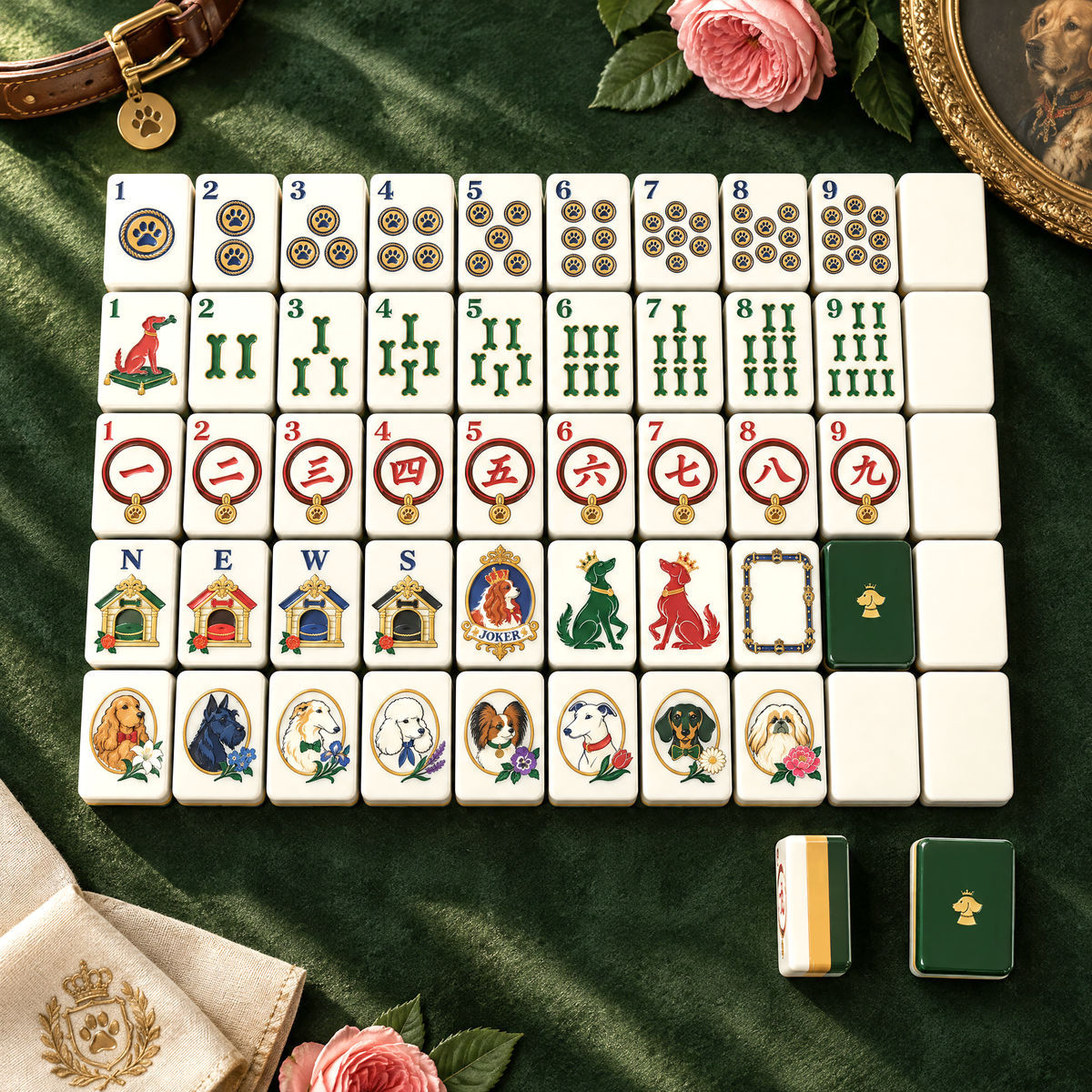
A pair in American mahjong is exactly two identical tiles—same suit, same number and direction (for honors). Every winning hand requires one pair plus melds (exposed or concealed pungs, kongs, quints, or sextets). Pairs cannot include jokers and are never called or exposed during play; they stay in your hand until you win. The pair is always the last meld you pick up or draw. On the National Mah Jongg League card (updated yearly), all legal hands are listed with pair notation at the end. If you hold two 5 Dots, two East winds, or two Red dragons, you have a valid pair. Pairs are different from the Charleston hand-passing ritual and from individual tile values—they're structural building blocks. At Mahstead, we help new players learn hand notation quickly using engraved sets with clear tile markings.
In American mahjong, the pair is the simplest yet most critical concept: two identical tiles that complete every winning hand. Without a pair, you cannot win, no matter how perfect your melds look. This section covers what pairs are, how they work in real play, how they differ from melds, and how to spot them on the official card.
What exactly counts as a valid pair?
A valid pair is two tiles that are completely identical in suit, number, and rank. If you hold two 3 Bams, two North winds, or two Green dragons, you have a pair. The tiles must match exactly—you cannot pair a 3 Bam with a 3 Crak, or a North wind with an East wind. Jokers cannot form a pair under any circumstances; learn how jokers work for more detail. Blanks (extra tiles in spare sets) also cannot form pairs. The pair must remain concealed in your hand; it is never called, exposed, or played during the hand—only revealed when you go out (win).
🀄 Shop best-selling mahjong sets →

How is a pair different from a pung or kong?
A pung is three identical tiles; a kong is four identical tiles. Both pungs and kongs can be called and exposed (played face-up on the table for all players to see). A pair, by contrast, is always hidden and is only revealed at the moment of winning. You cannot call a pair during play—if you see another player's exposed pung, you still hold your own pair separate in your hand. Pungs and kongs are melds; pairs are not. When you study a winning hand on the National Mah Jongg League card, you'll see the pair listed at the end of the notation, after all melds, to distinguish it from the exposed sets. This separation is crucial because it changes how you count points and validate your hand.
Where does a pair appear on the official mahjong card?
On the current year's National Mah Jongg League card, every legal hand is listed with a pair at the end. Hand notation typically looks like: Pung 1 Bam, Pung 2 Crak, Pung 3 Dot, Kong 5 Bam, Pair East—the pair is always the final element. The card's sections are organized by pattern (like "Like Numbers," "Consecutive Run," "All Terminals and Honors"), and within each pattern, hands are grouped by how many melds and what pair they require. To read a hand correctly, you scan left to right and identify each meld, then check the pair at the end. If your tiles do not match the card exactly—including the pair—the hand is not legal. This is why many players keep a current-year card at the table and invest in a clear mat or rack to organize and check tiles quickly.
Common mistakes beginners make with pairs
Mistake 1: Using a joker as part of a pair. Jokers can only substitute for a single missing tile within a meld (pung, kong, quint, or sextet). They cannot be used in a pair—ever. If you mistakenly place a joker with another tile as your pair, your hand is illegal.
Mistake 2: Calling a pair during play. Some new players, especially those switching from Chinese or Hong Kong mahjong, try to expose a pair. In American mahjong, you never call or show a pair until you go out. If you expose it early, you've declared your hand prematurely and can no longer win that round.
Mistake 3: Holding a pair that doesn't match the card. You may have a perfect pair of 7 Dots, but if the hand you're chasing requires a pair of Winds, your pair is illegal. The National Mah Jongg League card dictates which pair you must have; there is no freestyle pairing.
Mistake 4: Confusing pair with single tile or honor. Each hand requires exactly one pair—two tiles. Not one, not three. A single tile or "eye" is a pair in Chinese or Hong Kong mahjong, but in American mahjong, "pair" always means two.
Mistake 5: Forgetting the pair when counting melds. A winning hand has four melds (pungs, kongs, quints, or sextets) plus one pair = 14 tiles total. If you count only three melds and think you've won, you're missing a pair and your hand is incomplete.

How to spot and lock in your pair during play
Before the Charleston, glance at the card and identify what pairs are available. As tiles are dealt, start building toward one pair early. Keep your pair protected—do not discard it or expose it accidentally. If you're chasing a hand that requires a pair of 1 Bams (the bird tile) and you draw one 1 Bam early, keep it safe and look for the second. Many experienced players organize their tiles on a rack with pusher or mat so pairs are visually distinct from loose melds. If you pick a tile that completes your pair unexpectedly, do not announce it—just hold it and continue building melds. The pair stays hidden until the moment you draw or are dealt the final tile that completes all four melds, at which point you announce "Mahjong!" and reveal your hand, pair included.
Scenario | What You Have | Is It a Valid Pair? | Why or Why Not |
Two 5 Dots | Pair | Yes | Identical tiles, same suit and number |
One 5 Dot, one Joker | Joker covering a 5 Dot | No | Jokers cannot form a pair |
Two East Winds | Pair | Yes | Identical honors; direction matches |
East Wind + South Wind | Two honors | No | Different winds; not identical |
Two Red Dragons + one Red Dragon | Three Red Dragons | No | You have a pung, not a pair |
Blank tile + another Blank | Pair of blanks | No | Blanks are spares, not playable |
🎁 See our most-loved mahjong sets & accessories →
What to check before you buy a mahjong set
When choosing a set to learn and practice pairs, ensure the tiles are clearly marked so you can quickly identify identical pairs. Acrylic tiles with engraved characters and symbols are easiest to read, especially under low light. Check that the set includes a current-year National Mah Jongg League card—this is non-negotiable, as you cannot play legally without it. Verify that all four copies of each tile are present (152 playable tiles total). If you're new to the game, consider a set from our best-selling collection that ships with a mat or rack; organizing your tiles clearly helps you spot pairs and melds faster. Avoid sets with faint, hard-to-read characters or mixed tile sizes, which create confusion and slow play.
Why pairs matter beyond the rules
Understanding pairs deeply—not just mechanically—changes how you think strategically. A pair is your "anchor" hand element; it does not flex or change. Once you commit to a pair on the card, you know exactly what four melds you must build around it. This certainty lets you focus on which tiles to keep, which to discard, and which other players' discards might sabotage your pair. Beginners often waste mental energy trying to hold multiple possible pairs; experienced players lock one pair early and ignore the rest. This reduces decision fatigue and increases your win rate.
✨ Find your Mahstead set — free US shipping →

FAQ
Can a pair include one joker and one regular tile?
No. Jokers cannot be part of a pair. A pair must be two identical tiles with no jokers.
What if I draw a tile that matches my pair and I'm not ready to win?
Keep it hidden in your hand like any other tile. You do not have to declare or play it immediately. You can hold it until you draw the final meld tile that completes your hand.
Is a pair in American mahjong the same as in Chinese or Hong Kong mahjong?
No. American mahjong pairs are always two identical tiles and are concealed until you win. Chinese and Hong Kong mahjong use a single "eye" tile as part of the hand structure, and rules differ; learn about American mahjong basics for the full comparison.
Can I use a blank tile as part of my pair?
No. Blank tiles are spares included in sets with more than 152 tiles; they are never used in play, including in pairs.
If the card shows a hand with two different pairs, which one do I need?
The card lists one pair per hand. If you see two "pair" notations on separate hand rows, each hand has one pair. You choose which hand to pursue based on your tiles and melds.
What happens if I go out with the wrong pair?
Your hand is illegal. You cannot win. In friendly games, play stops and the hand is replayed; in league play, penalties apply.


View More
View More
View More
