
Second Charleston Mahjong Rule Explained
Last updated: Nov 23, 2026
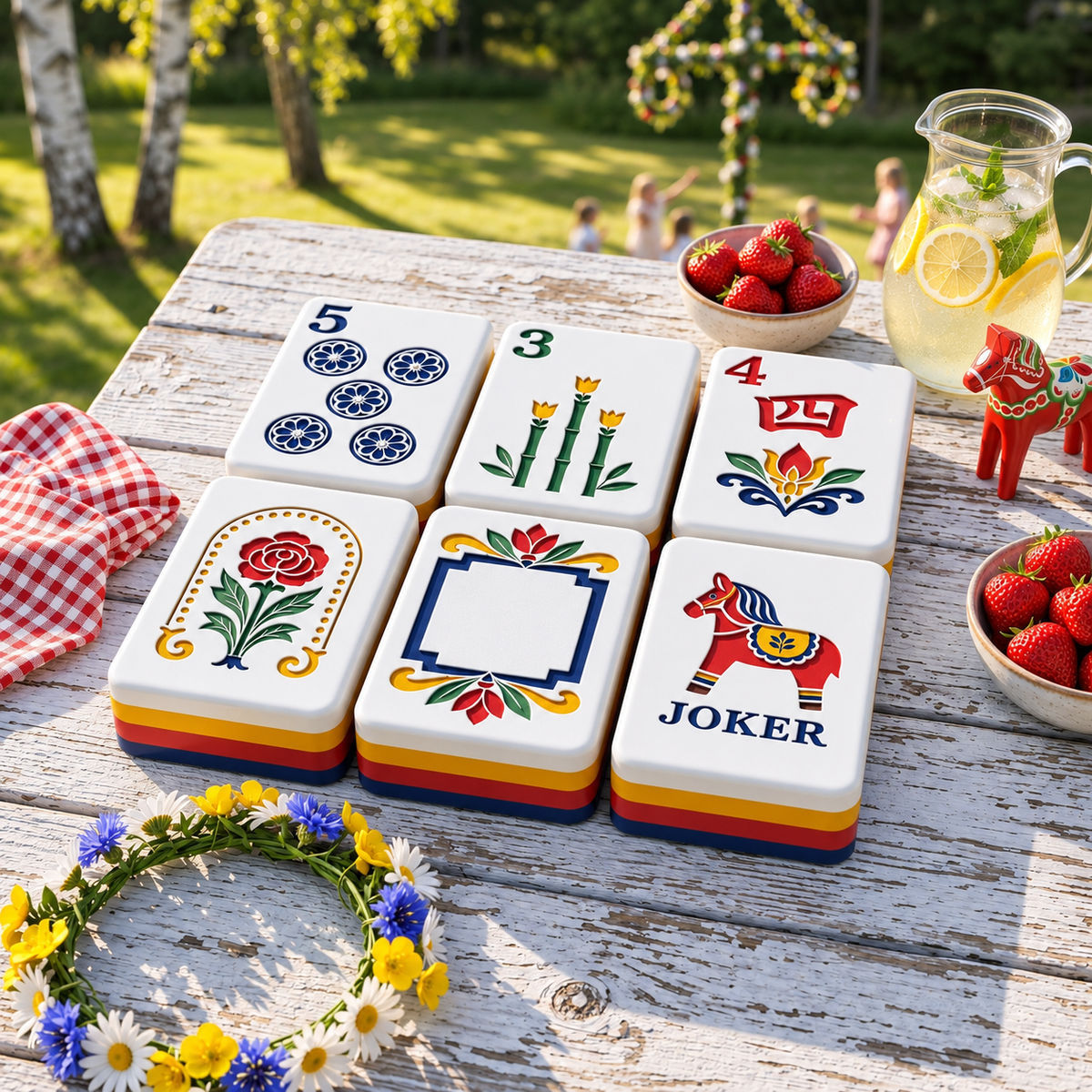
The second Charleston is the second of three tile-passing rounds before play begins in American mahjong. After the first Charleston (passing three tiles left), you now pass three tiles to the right—to the player on your right. Each player then passes three tiles to the right, simultaneously. The entire Charleston (first, second, and third passes) takes a few minutes and happens at the start of every hand, with all four players involved. Everyone passes at the same time: the whole table exchanges tiles in rhythm. The goal is to break up tile clusters that favor one player and randomize the starting position, keeping the game fair and strategic. No tiles enter or leave the table; you're trading only among the four of you. Mahstead players often set out a dedicated mat to keep track of the passing direction and timing, so no one loses a pass or passes the wrong way.
Why does the second Charleston pass right, not left?
The Charleston alternates direction intentionally: first pass left (counterclockwise), second pass right (clockwise), third pass left again. This double-reversal prevents any single player from holding the same tiles twice in a row—each player always trades away what they just received. If every pass went the same direction, you'd pass tiles forward, then receive from the same source, which defeats randomization. The rhythm—left, right, left—is burned into muscle memory after a few games. The direction change also matches the wind rotation in some traditional setups, though in American play it's purely practical.

How many tiles do you pass in the second Charleston?
You pass exactly three tiles in the second Charleston, just like the first and third passes. All four players select three tiles simultaneously, then exchange them clockwise. Count before you pass: if you pick up four by accident, you've grabbed one too many and must return one to your hand. The three tiles you pass should be chosen quickly but deliberately—usually tiles you're least likely to use, or duplicates that don't fit your hand strategy. Speed matters: if one player dawdles, the whole table waits. Many of us use a quick non-verbal signal (a nod or light tap) to show we're ready, then pass on count.
When does the second Charleston happen in the game order?
The second Charleston happens after the first pass (left) is complete and all four players have picked up their new tiles. The order is: first Charleston (pass left) → second Charleston (pass right) → third Charleston (pass left) → players draw to 14 tiles → first player discards → play begins. The entire Charleston is over before anyone calls a hand. From the moment tiles are dealt (usually by the dealer or East wind), to the end of the third Charleston, about 2–3 minutes pass. If anyone hasn't finished passing by the time the third pass ends, they must use the tiles already in hand—no do-overs. Set a mat with clear wall positions so no one loses track of the rotation.
What tiles should you pass in the second Charleston?
Choose tiles that don't fit together or that you have duplicates of. If you hold four 5 Dots and only need three, pass one. If you have a run of unconnected tiles (say, a 1 Bam, a 5 Crak, and an 8 Dot), they're not part of any pung or kong, so pass them to fish for something useful. Passing strategy in the second Charleston:
Pass broken pairs (mismatched tiles you drew in the first pass).
Pass the lowest or highest tile in your hand if you have more than one suit.
Pass tiles that block a likely pattern on the current year's card.
Never pass jokers or winds unless you have excess; they're gold.
Don't telegraph your strategy: pass with the same speed and calm you show for every pass.
The goal is to improve your hand's odds of matching a card pattern. Since the card changes every spring, your pass strategy shifts too: a 4 Bam might be useful one year and dead weight the next.
What's the most common mistake in the second Charleston?
The biggest blunder is passing the wrong direction. It's easy to zone out and pass left (the first pass direction) again, especially if you're distracted or new. Always announce or check the direction aloud before passing: "Second pass, going right." Another frequent mistake is hesitating mid-pass: if you're holding three tiles and someone passes to you before you're ready, tiles collide and get mixed up. Keep your pass ready in your hand, pointed outward. A third error is passing four tiles instead of three: count on your fingers, or place tiles on the table in front of you before they leave your hand. Finally, some players forget the second Charleston entirely and jump straight to the third, leaving everyone confused. The best-selling mahjong sets include enough tiles for all three passes, but organization matters—use a mat with zones for each wall so the rhythm stays smooth.
Scenario | Direction | Next Step | Common Trap |
First Charleston done, tiles picked up | Pass RIGHT (clockwise) | Receive from left, pick three new | Forgetting direction and passing left |
Second Charleston done | Pass LEFT (counterclockwise) | Receive from right, pick three new | Rushing and passing four tiles |
All three Charlestons complete | None | Draw to 14 tiles in hand | Forgetting third pass; passing too slow |

How do you keep the rhythm smooth at the table?
Synchronized passing is the key to speed. All four players should pass at roughly the same moment: pick your three tiles, hold them ready, make eye contact or nod with the table, then pass on a silent count or a soft tap on the table. If one person drags, everyone stalls. Here's what works:
Announce the pass: "Second Charleston, going right" so no one guesses.
Count down together: "Three… two… one… pass." A light rhythm keeps tempo.
Keep hands visible: Don't hide tiles in your lap; keep them on the table so no one fears a mistake.
Receive in the same zone: Always accept tiles into the same spot on your rack or mat, never mixed.
Confirm the count: After passing, quickly count the three tiles you received (should be three, always).
A mat with clear walls and zones helps enormously. Our mahjong mats include wall markers and push zones so each player knows where their tiles sit and when their turn is.
🀄 Shop best-selling mahjong sets →
How does the second Charleston differ in other mahjong variants?
In Chinese, Hong Kong, and Riichi mahjong, there is no Charleston at all. Tiles are dealt from a wall and drawn one at a time; players never trade tiles before play. The Charleston is unique to American mahjong and reflects the 1920s–1930s Western adaptation of the game—a deliberate shuffle to slow play and emphasize luck over pure position. Hong Kong mahjong uses a faster, more cutthroat draw where table position matters heavily; no equalization pass exists. Riichi (Japanese) mahjong also skips the Charleston and deals 13 tiles to each player before any trades. Taiwanese mahjong has a version of tile-trading but it's optional and happens during play, not before. If you ever switch between variants at your table, confirm whether a Charleston applies—it changes the entire pacing and strategy. The second pass's rightward direction is purely American; overseas versions have no directional pattern to learn.
✨ Find your Mahstead set — free US shipping →
What to check before you buy a mahjong set for proper Charleston play
Tile count: A full American set has 152 playing tiles plus spare tiles (our 160-tile sets are ideal for this). Never buy a 144-tile set; it's too few for the full 152-tile game.
Tile size and weight: Standard tiles should feel substantial and shuffle smoothly without bunching. Thin or warped tiles slow the passes and create jams.
Joker and blank visibility: Spare jokers and blanks should be clearly marked so they don't get mixed into play during the Charleston. Acrylic sets with engraved symbols solve this instantly.
Mat or surface: A good mat defines each player's wall zone, reducing confusion about where a pass lands. Our mahjong mats include wall lines and passing zones.
Racks with pushers: If you're new or hosting, racks with pushers keep tiles tidy and tilts visible, so you can focus on passing without fumbling.
Why learn the second Charleston first?
Many newcomers skip ahead to drawing and discarding, but mastering the Charleston—especially the second pass rhythm—builds the muscle memory that keeps your game fluid. It's the ritual that separates casual shuffling from real play. Once the second pass feels natural, the entire hand flows: you draw, you read the card, you call, you win. The Charleston is also where beginners often panic ("Wait, left or right?"), so learning it cold means you'll never lose focus mid-game. Our guide to how to play American mahjong covers the full setup, but the second Charleston is the pivot point. Spend a few hands drilling it with your group, and it becomes invisible—a smooth prelude to the strategy and luck that make mahjong addictive.
🎁 See our most-loved mahjong sets & accessories →

FAQ
Can I refuse the second Charleston pass and keep my own tiles?
No. All three Charleston passes are mandatory in American mahjong. You must pass and accept tiles. If you don't like what you receive, adjust your strategy for that hand.
What happens if I pass the wrong number of tiles in the second Charleston?
Stop immediately and announce it. Return extra tiles or add missing ones before the next pass. The game pauses until the count is correct—no penalty, just a reset.
Can a player pass the same tiles back to whoever passed them in the first Charleston?
Yes. There's no rule against it. The tile you pass right in Charleston two might have come from your right neighbor in Charleston one. That's the game.
How long should the second Charleston take?
About 30–40 seconds for all four players to pass and pick up. If it takes over a minute, someone is overthinking or hesitating; speed up the rhythm.
Is the second Charleston the same in 3-player mahjong?
No. 2- and 3-player mahjong rules modify or skip the Charleston entirely due to fewer players. Stick to 4-player for a full classic Charleston.
What if someone passes during the second Charleston while others are still deciding?
That's a foul. Wait for the silent count or signal. All four players should pass within a one-second window. If someone bolts early, pause and recount.
Does the second Charleston affect which player goes first?
No. The starting player (usually East wind, or the dealer) is determined before the Charleston begins. The Charleston randomizes tiles, not player order.
Can jokers be passed in the second Charleston?
Yes, but it's rare. Most players hold jokers and pass weaker tiles. If you pass a joker, you're betting the next tile you draw is worth more—usually a tactical move late in the round.


View More
View More
View More
