
What Does the 7 Bam Mean in American Mahjong?
Last updated: Nov 23, 2026
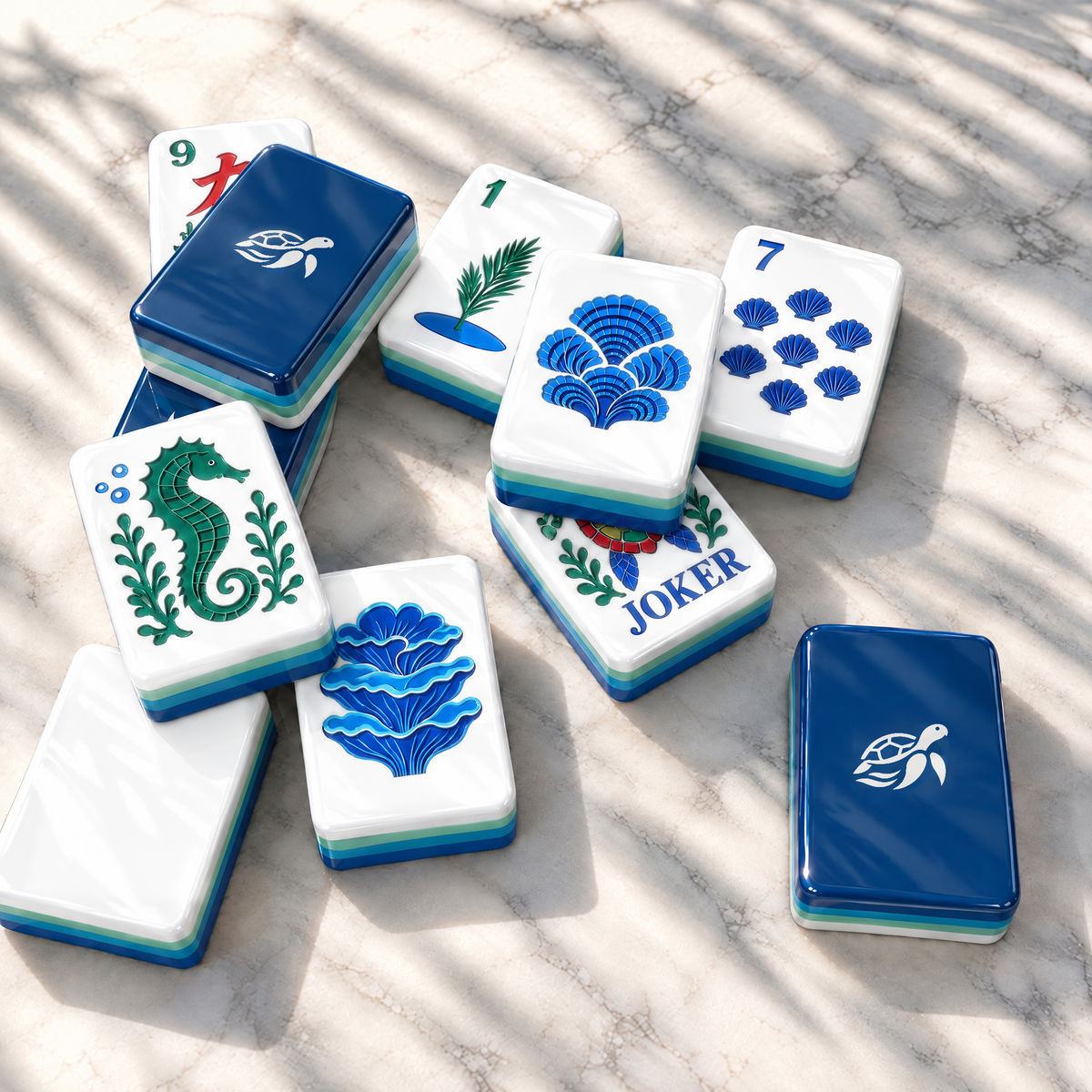
The 7 Bam is one of nine tiles in the Bam suit, numbered 1–9 with four copies of each in a standard 152-tile American mahjong set. It shows seven bamboo stalks (or circles representing bamboo) and functions as a regular number tile—not a special or honor tile like winds or dragons. On the National Mah Jongg League card, the 7 Bam appears in various hand patterns, often as part of pungs (three identical tiles), kongs (four identical), or in sequences when combined with other numbered tiles from the same suit. Unlike Chinese mahjong, American mahjong does not use sequences you can call or expose; the 7 Bam's main role is completing exposed sets or hidden hand combinations on the official year's card. Recognizing its symbol quickly helps you keep track of available tiles and spot whether hands are still achievable—critical when you're deciding whether to pass a tile to the discard wall. Check what's in an American mahjong set for the full breakdown of how all 152 tiles work together.
What do the numbers and suits mean in American mahjong?
American mahjong uses three number suits—Bams, Craks, and Dots—each running from 1 to 9 with four identical copies per number. The 7 Bam is simply the tile labeled "7" in the Bam suit; its visual design (bamboo stalks) matches traditional Chinese symbolism but holds no special power or score bonus. All number tiles function identically in terms of game mechanics; rank and value come only from the hand pattern listed on the current year's card, not from individual tile traits. The 7 Bam, 5 Crak, and 3 Dot are interchangeable in how they play—they matter only because the card says "one pung of 7 Bams" or similar.
🀄 Shop best-selling mahjong sets →

How do you spot the 7 Bam on your tiles?
On acrylic tiles, the 7 Bam appears as "7B" or a numeral "7" with bamboo imagery (typically seven vertical stalks or dot patterns in a bamboo-like arrangement). On bone or bamboo sets, the symbol is carved or painted. The Bam suit is traditionally green-tinted or marked with a bamboo glyph in the corner of the tile. If your set is engraved or custom-designed, the 7 Bam will still carry its number and suit identifier clearly—this matters because worn or poorly printed tiles can be hard to read during play, especially if you're hosting a weekly game and tiles have seen many seasons. High-quality acrylic sets from our best-selling collection have crisp, durable markings that stay legible for years.
Why does the 7 Bam appear in certain hand patterns?
The National Mah Jongg League issues a new official card every spring showing which 72 winning hand patterns are legal that year. The 7 Bam appears in many of these patterns because number tiles fill the most hands—they form pungs, kongs, and (in theory) sequences. The card's designers balance distribution so no single tile number feels "lucky" or "dead"; every number 1–9 in every suit shows up roughly equally across the patterns. When the 7 Bam appears in multiple patterns on the card, your odds of using it increase, which affects strategy during the Charleston (the tile-passing ritual before play begins). Studying the current card helps you plan which tiles to keep and pass.
🎁 See our most-loved mahjong sets & accessories →

Can you use the 7 Bam with jokers?
Yes, but only carefully. In American mahjong, jokers are wild tiles that can substitute for any tile you need—but never in a single tile (a pair that needs 7 Bams cannot use one joker and one 7 Bam) and never as part of a pair itself. If you need three 7 Bams to complete a pung, you can use two 7 Bams and one joker. You cannot use a joker as the pair (second tile) in your winning hand. This rule prevents players from relying too heavily on luck and keeps the game skill-focused. Understanding joker limits is crucial before your first game—for detailed rules, read how jokers work.
What's the difference between the 7 Bam and 7 Crak or 7 Dot?
Each suit has its own 7—the 7 Bam, 7 Crak (showing seven characters or symbols), and 7 Dot (seven circles or dots). They are completely separate tiles and cannot substitute for one another. A hand requiring "one pung of 7 Bams" needs three identical 7 Bams, not three sevens from mixed suits. This distinction is fundamental to American mahjong strategy; beginners often confuse suits and lose track of what they're collecting. When you're reading the card and planning your hand, always note both the number and the suit. How to read the mahjong card walks you through card notation so this becomes second nature.
Comparison: Tile Recognition Across Set Types
Set Type | 7 Bam Marking | Durability | Best For |
Acrylic (engraved) | Crisp number + bamboo glyph, full color | 10+ years, won't fade | Weekly hosts, clubs |
Acrylic (printed) | Number + color, can wear with use | 5–8 years | Casual home play |
Bone/bamboo traditional | Hand-carved symbol, subtle detail | Varies; prone to cracks | Collectors, display |
Resin or plastic (budget) | Flat printing, may blur over time | 2–4 years | First-time buyers |
Engraved acrylic sets deliver legibility and longevity—crucial if you play weekly and want tiles to remain readable after a hundred games.
Common Mistakes When Learning Tile Values
Confusing suits with numbers: Beginners often think "7" means the same thing across all suits. It doesn't. Three 7s (one from each suit) is not a pung; you need three identical 7 Bams.
Forgetting the 7 Bam appears on the card: New players sometimes discard tiles they haven't checked against the current year's card. If the 7 Bam is in multiple patterns, discarding it early is costly. Always scan the card before passing in the Charleston.
Misreading worn tiles: If your 7 Bam's marking is faded or scratched, you might mistake it for a 1 Bam or misidentify the suit. Invest in a clear, well-marked set—explore our engraved designs for sets that stay legible.
Mixing up jokers and the 7 Bam: The 7 Bam is a fixed tile; a joker can stand in for it, but they're not the same. This matters during gameplay when you're counting tiles and assessing what's still available on the wall.
What to Check Before You Buy a Mahjong Set
Tile marking clarity: Can you read "7B" or "7 Bam" easily under table lighting? Request a close-up photo if buying online.
Suit color consistency: Are Bams (typically bamboo/green), Craks (characters/red), and Dots (circles/white) visually distinct across all 36 tiles?
160-tile count: Standard American play uses 152 tiles plus 8 jokers. Confirm your set includes all three suits × nine numbers × four copies, plus winds, dragons, flowers, and jokers.
Joker and flower design: Some sets use art or jokes on jokers and flowers—verify the design matches your table's style before committing.
Storage & protection: Does the set include a mat, bag, or rack? A travel bag or mahjong racks with pushers protect tiles during transport and display.
✨ Find your Mahstead set — free US shipping →
Our Pick: Sets That Make the 7 Bam (and Every Tile) Easy to Read
If you host weekly games or are serious about learning, an engraved acrylic set is worth the investment. Engraving locks the number, suit, and symbol into the tile surface; it won't fade after 50 games or blur under a wet glass. Paired with a quality mahjong mat and racks with pushers, you have a setup that lasts. For gifting or casual play, best-selling sets offer reliability without premium pricing. All Mahstead sets ship free across the US.

FAQ
Does the 7 Bam have a lucky or unlucky meaning?
No. In American mahjong, number tiles have no inherent luck or penalty. The 7 Bam is as neutral as any other number. Its value depends entirely on the hand patterns listed on the current year's National Mah Jongg League card.
Can I use a 7 Bam as a pair to win?
Yes, if the hand card requires a pair of 7 Bams. However, if the hand calls for a pair of winds or dragons, you cannot use 7 Bams as a substitute. Always match the pair to the card's exact specification.
How many 7 Bams are in a complete set?
Four. A standard 152-tile American mahjong set includes four copies each of every numbered tile (1–9 in three suits), plus winds, dragons, flowers, and jokers, for a total of exactly 152 playing tiles.
Why do some sets show 7 Bams differently than others?
Design variation is common. Bone sets may show carved bamboo stalks; acrylic sets might use colored ink or engraving. The key is legibility—your 7 Bam must be clearly distinguishable from other Bam numbers and from 7 Craks and 7 Dots.
Is the 7 Bam retired if it appears in no winning hands that year?
No. All 152 tiles remain in active play regardless of the current year's card. However, if the 7 Bam doesn't appear in any 72 winning patterns, it is less strategically valuable and may be discarded more freely during play.
How do I remember which suit each 7 belongs to during the Charleston?
Practice. During the tile-passing ritual before play, handle tiles consciously and name the suit aloud ("7 Bam going left"). This builds muscle memory. After a few games, your eye will spot suits instantly without thinking.


View More
View More
View More
