
Mahjong Tile Tray: Racks & Pushers for American Sets
Last updated: Nov 23, 2026
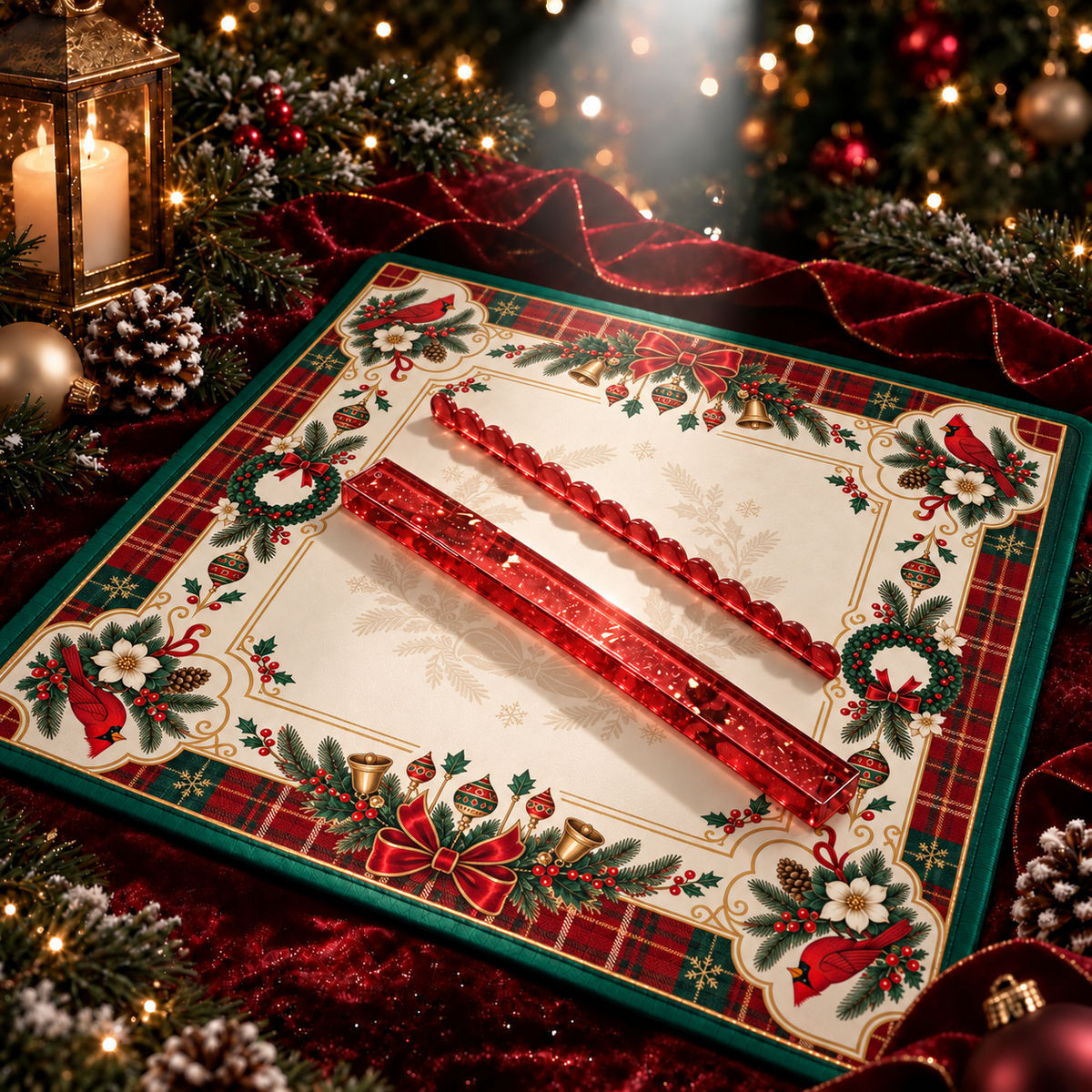
A mahjong tile tray—also called a rack with pushers—is a tiered or angled holder that sits in front of you during American mahjong, cradling 15–17 tiles in a line while pushers (small sticks) help you organize and conceal your hand from other players. Racks range from simple bamboo or acrylic trays to tall dividing stands with individual slot separators. Most fit tiles from standard 160-tile sets and rest flat on the table or in your lap. The primary reasons to use one: privacy (other players can't see your tiles), comfort (you don't pinch tiles or crane your neck), and speed (you sort and count quickly). We recommend checking the dimensions against your tile size (standard American tiles are roughly 1 × 1 × 0.25 inches), the material's grip (acrylic can be slippery when tiles are cold), and whether the rack suits your hand span. The mahjong racks with pushers collection includes designs with engraved pushers, joker slots, and different heights for comfort. 🀄 Shop best-selling mahjong sets →
What is a mahjong tile tray, and why do I need one?
A tile tray is a personal tile holder—a small, often tiered platform that holds and displays your 15–17 tiles in a neat line during play, with pushers (narrow sticks or slats) that let you shift and separate tiles without fumbling. It keeps your hand private from the other three players, prevents tiles from sliding off the table, and speeds up play by letting you organize by suit and number at a glance. The rack sits flat on the table in front of you, held at a slight angle (usually 10–20 degrees) so tiles stay put. Players who host weekly games find that even casual players play faster and make fewer errors with a proper rack.
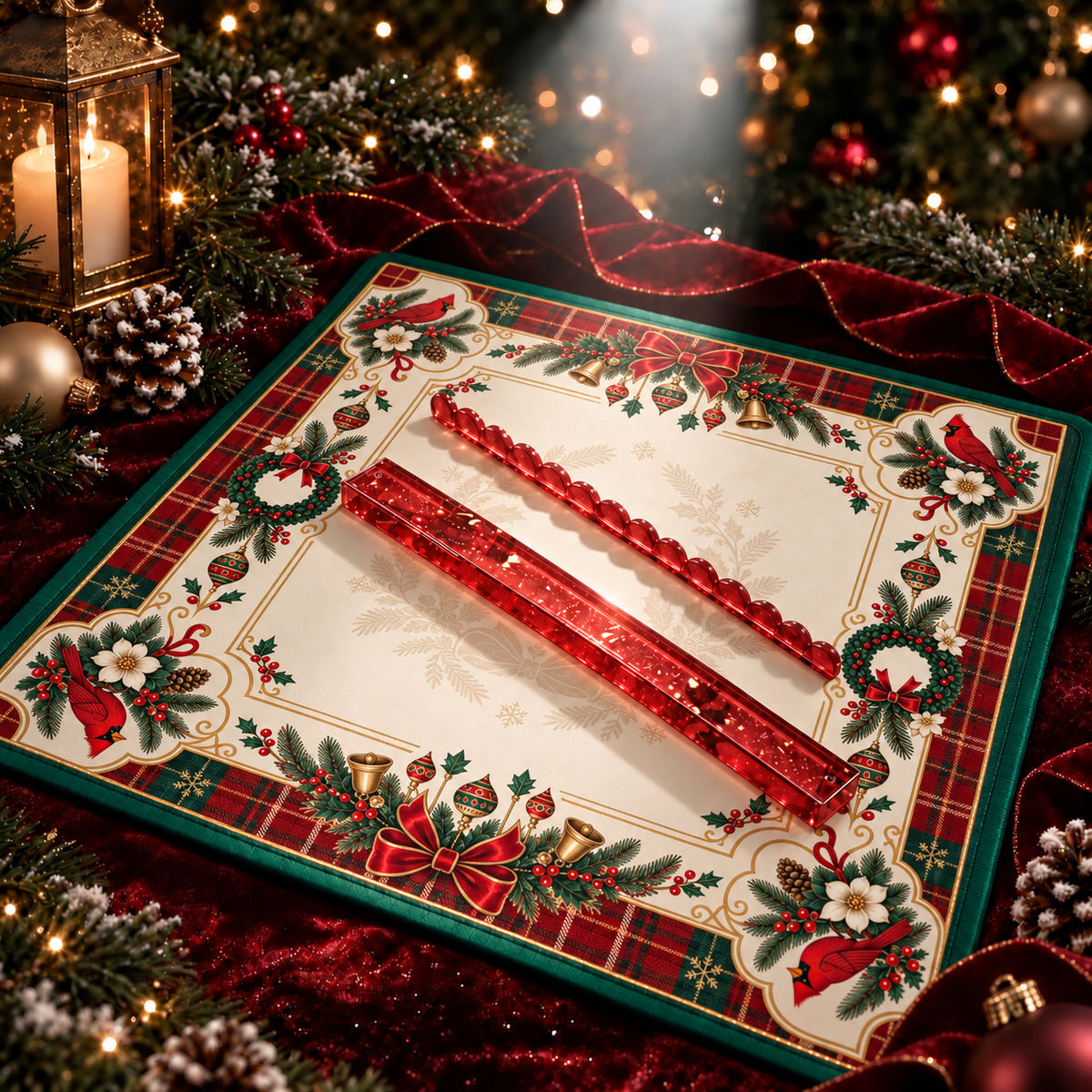
What size and style of rack fits your American mahjong set?
Standard American mahjong sets use uniform tile sizes (approximately 1 × 1 × 0.25 inches per tile). Most racks are designed for this standard and will hold all 17 tiles comfortably; some narrower designs hold 15. Measure your tiles before ordering to confirm fit—if your set is a vintage collectible or has extra-large hand-painted tiles, a standard rack may be too snug. Width matters: if you have a small hand, a compact 12–14-inch rack is easier to manage; if you have a larger hand span or play with four other people who shade each other's racks, a 16–18-inch width gives room. Height is personal: low racks (2–3 inches) keep tiles within arm's reach and work well on low tables; tall racks (4–6 inches) reduce neck strain if you sit farther back. The best-selling collection includes sets paired with mid-height racks that work for most players.
Bamboo vs. acrylic: which material works best for your game?
Bamboo racks are lightweight, warm to the touch, and traditional—tiles grip better on bamboo, especially on cold winter nights or when hands are dry. Bamboo can splinter over time and stain if tiles are dusty or humid. Acrylic racks are durable, easy to clean, and look sleek; they often come engraved with suits or joker symbols to help you organize. Acrylic can be slippery if tiles are smooth or polished, and it can scratch. For beginners or casual weekly games, either works; for serious players who move tiles often, bamboo offers better friction. If you travel frequently or store the rack damp, acrylic is lower-maintenance. Some players prefer a rack with a felt or cork bottom to prevent slipping on the table surface.
How do pushers help you organize and play faster?
Pushers are thin sticks (usually 5–8 inches long) that you use to nudge tiles into place or separate groups without touching them directly. In a standard American hand, you might keep four groups of three identical tiles (three pungs or a pung plus a kong) and a pair visible at one end of your rack. Pushers let you slide the pair to the far right, pull the group you just drew forward, and keep your discards in a rough order without moving your hand. Good pushers are smooth, tapered, and not too sharp (so they don't nick acrylic). Some sets come with pushers engraved with bamboo or floral patterns—purely aesthetic, but they make the setup feel complete. Most racks come with two pushers; having three is useful if you lose one or want to mark positions during a long game.
What should you check before ordering a rack for your tiles?
Before purchasing, verify three things: (1) Tile compatibility—measure your tiles (length, width, thickness) and compare to the rack's internal width and slot depth; most standard American tiles fit a 14–17-inch-wide rack, but ornamental or hand-painted sets may be thicker. (2) Table height and your body—if you sit at a 28-inch-high dining table, a 4-inch rack keeps tiles at eye level; if you play on a mahjong table (usually 30 inches) or in your lap, a lower 2–3-inch rack is better. (3) Hand span and sorting style—if you like to keep all 17 tiles visible at once, choose a wider rack; if you prefer to hide tiles in a tall narrow holder (sometimes called a bridge or wall), pick a vertical design. Check product photos or descriptions for the number of pushers and whether dividers are fixed (one slot per tile) or adjustable (you move dividers to group tiles however you want).
✨ Find your Mahstead set — free US shipping →
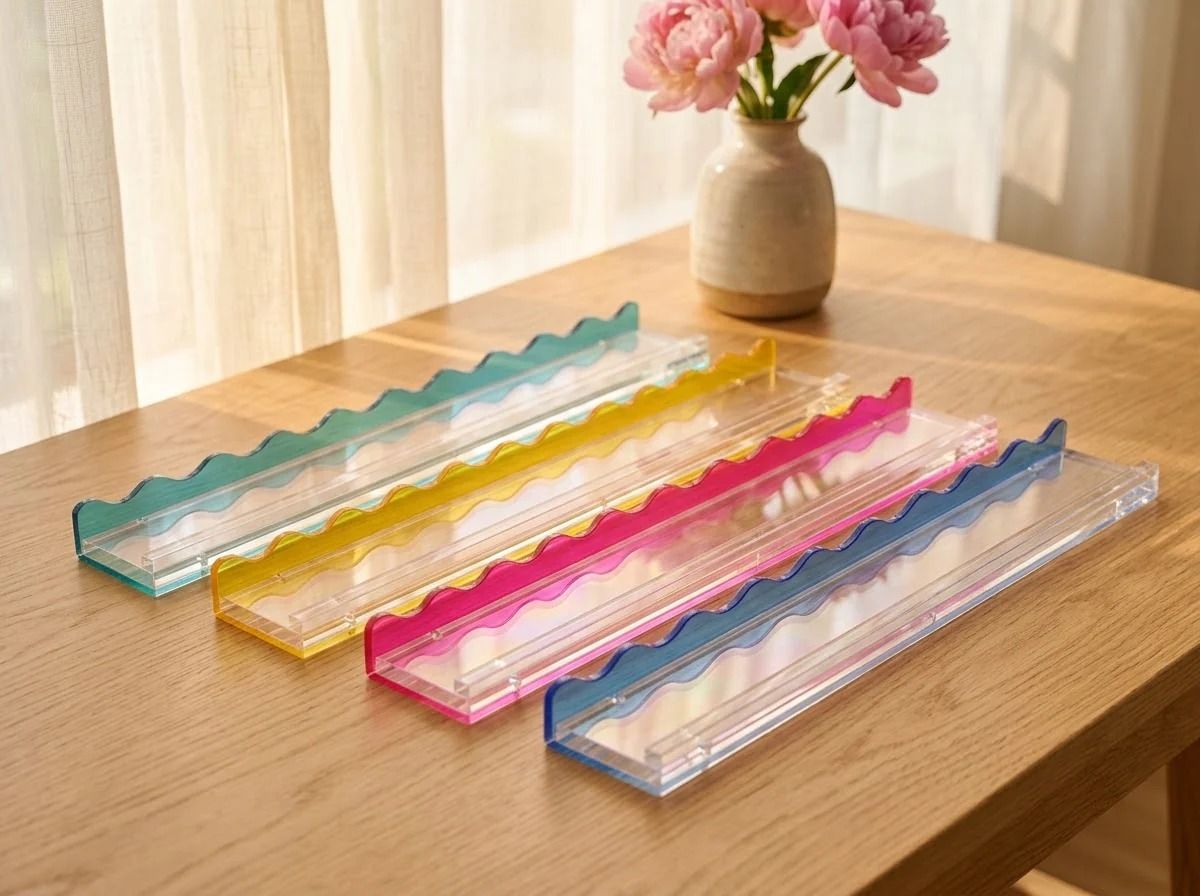
Which styles of racks are best for gifts and home hosting?
Engraved racks with suit symbols, zodiac animals, or seasonal designs make excellent gifts for players who love the aesthetic side of the game. A set of four matching racks (one for each player) creates a cohesive, professional look at your weekly table. Racks with joker slots—small notches or compartments labeled "jokers"—are practical for players who organize all 8 jokers in view and rotate which ones they use during a hand. Travel-friendly racks are lightweight, often foldable or disassembled, and fit easily into a mahjong bag or case alongside your tiles and mat. Racks with matching pushers (engraved, colored, or personalized) add a personal touch without compromising function. If you host regularly, buy four racks at once so every player has the same comfort level; mismatched heights and materials can slow the game down.
How do racks fit into a complete hosting setup?
A good hosting setup combines a quality mahjong set (160 tiles including jokers), a playing mat to define the table boundary and protect the surface, one rack per player, and a bag or case for storage. The mat defines the play area and holds the tile wall during the draw phase; the racks keep hands private and off the mat. Most serious players also use dice to determine seating and the opening wall. For a group of four, budget for four racks (one per player, so everyone has equal comfort), a mat sized to your table (typically 36 × 36 or 48 × 48 inches), a set of tiles, and a small bag to transport everything to weekly games.
Setup Component | Purpose | Why it matters |
160-tile set | 152 playable tiles + 8 jokers | Every hand requires exactly 152; extras replace damaged tiles |
Mahjong mat | Defines boundary, holds tile wall, protects table | Keeps game organized and table dust-free |
One rack per player | Holds and organizes your 15–17 tiles | Prevents errors, speeds play, keeps hand private |
Pushers (2–3 per player) | Separates and aligns tiles without touching | Reduces fumbling, improves table flow |
Dice (included in most sets) | Determines seating and opening wall position | Ensures fair, consistent game start |
🎁 See our most-loved mahjong sets & accessories →
Common mistakes: what not to do when choosing or using a rack
Buying a rack that's too small: A 12-inch rack feels cramped after a few hands, especially if you have larger hands or play with newer players who need to see all tiles clearly. Measure first. Ordering a rack without checking tile thickness: Ornamental or thick hand-painted tiles won't fit into slots designed for standard thin acrylic. Using a rack on a smooth, slippery table: Tiles slide forward if the rack base isn't gripped; place a felt mat or rubber feet underneath. Storing a rack in a damp environment: Bamboo warps, acrylic can cloud. Keep it dry and flat. Forgetting to clean pushers after play: Dust on pushers scratches acrylic racks and makes sliding difficult. A quick wipe with a soft cloth after each game prevents buildup. Misplacing pushers mid-game: Buy a set of four racks with matching engraved pushers so if one goes missing, you have a spare.
Buying Guide: Choosing Your Perfect Rack
Rack Type | Best for | Considerations |
Low bamboo, 2–3 inches | Casual home games, players with short arm reach, lap play | Warm feel, traditional look; splinters over time; needs regular cleaning |
Mid-height acrylic, 3–4 inches | Weekly hosting, mixed skill levels, quick play | Durable, easy to clean, engraved designs; can be slippery on smooth tables |
Tall vertical or bridge, 5–6 inches | Serious players, neck strain relief, tournament-style privacy | Reduces visibility of other players' tiles; requires steady table; not portable |
Compact with joker slot, 12–14 inches | Smaller hands, compact tables, travel games | Less surface area; only fits 14–15 tiles comfortably |
Full-width with dividers, 16–18 inches | Large hands, professional hosting, teaching new players | Shows all 17 tiles at once; may overhang small tables; requires large hands to manage |
What to check before you buy
Measure your tiles (length, width, thickness) and compare to the rack's slot width and depth.
Know your table height (28–30 inches is standard) and choose a rack height that keeps tiles at eye level.
Count your hand span: If you can comfortably touch the far ends of a 16-inch span, a full-width rack works; if not, choose 14 inches or less.
Check the material: Bamboo for grip and warmth, acrylic for durability and easy cleaning. Pick based on your storage and climate.
Verify the pushers: Count them (2–3 is standard) and confirm they're smooth and not chipped.
Review the base: Look for felt, cork, or rubber feet that prevent sliding on your table.
Test compatibility with your mat: If you use a mahjong mat, ensure the rack sits flat on the mat's border or your table without lifting or tilting.
FAQ
Can I use an American mahjong set without a rack?
Yes—many casual players hold tiles in their hands or keep them loose on the table. A rack is not required by the rules; it's a comfort and privacy tool that speeds up organized play and reduces accidental tile exposure.
Do all mahjong racks fit standard American tiles?
Most racks designed for American sets fit the standard 1 × 1 × 0.25-inch tile size. Vintage, hand-painted, or oversized decorative tiles may be thicker or wider and require a custom or adjustable-slot rack. Always measure before ordering.
How many racks do I need for a game?
You need one rack per player; a full game of four players requires four racks. If you host regularly, buy a matched set of four so everyone has the same comfort and table appearance.
What's the difference between a rack, a tray, and a bridge?
A rack is a tiered holder (2–6 inches tall) that rests on the table. A tray is typically flat (1–2 inches) and may be more portable. A bridge is a tall vertical holder (5–8 inches) that provides maximum privacy by blocking the view of other players' tiles. All three serve the same purpose; the choice is comfort and style.
Are pushers necessary?
No, but they're highly recommended. Pushers let you separate and align tiles without using your fingers, which speeds up play and prevents accidental tile misalignment. Most racks come with two pushers; having a third is useful if one goes missing or breaks.
What material is best: bamboo, wood, or acrylic?
Bamboo offers traditional warmth and better grip; acrylic is durable and easy to clean. For weekly home games, either works. For frequent travel or humid storage, acrylic is more practical. Choose based on your climate, storage space, and preference for aesthetic warmth or modern simplicity.
Can I use a rack on a mahjong mat?
Yes. Position the rack on the mat's border (usually the outer printed zone) or rest it on the table surface beside the mat, so tiles drawn from the wall land on the mat and your hand rests safely on your rack.
How do I prevent my rack from sliding on a smooth table?
Use felt pads, cork feet, or a rubber base underneath the rack's footers. Alternatively, place the rack on a small non-slip mat or towel. Test the grip before play begins.


View More
View More
View More
