
Wall Game in Mahjong: Examples, Rules & When to Call
Last updated: Nov 23, 2026
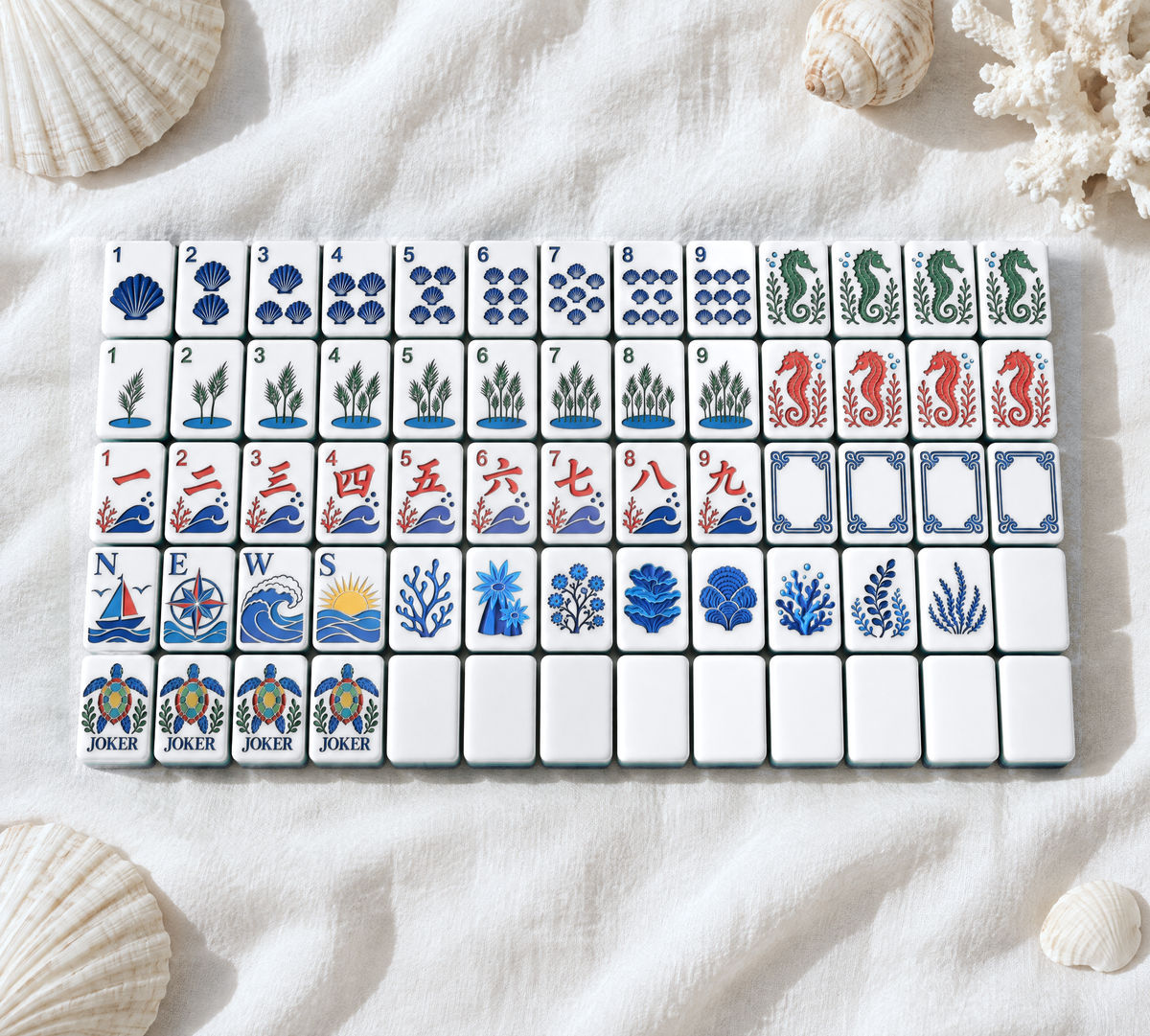
A wall game occurs in American mahjong when the live wall is exhausted and no player has declared mahjong. The hand ends, no one scores, and play moves to the next hand.
What tiles trigger a wall game call?
In American mahjong, the wall shrinks predictably during each hand. After the initial draw and the Charleston (the three-pass tile exchange before play begins), each player holds 13 tiles. On your turn, you draw one tile from the wall and discard one—so the wall decreases by exactly one tile per turn. After roughly 14–16 draws from the wall (depending on the number of active players and how fast the game moves), the wall becomes too small to continue safely. When only 14 tiles remain in the wall and no one has won yet, the hand is declared dead and ends as a wall game. Some tables use a house rule to draw one more tile; check your group's preference before starting. Learn the full rules of American mahjong play.

Why do wall games happen more often than you'd expect?
Wall games feel frustrating because they seem random, but they're actually predictable: the tighter the current year's card, the longer hands take. When hands on the card require unusual tile combinations—many high-number tiles, rare quints, or complex pung-kong sequences—fewer players hold legal melds mid-hand, so fewer people call. Meanwhile, the wall shrinks steadily. A player with four Bams and three Craks might hold those tiles hoping for a perfect pung or quint, but if the card offers no hand using exactly those colors that year, the wall empties before she finds her match. Experienced players memorize patterns on the card early in the season; newer players often don't recognize their own hand until the wall is nearly gone. This is why studying how to read the mahjong card in advance cuts wall games for your group significantly.
🀄 Shop best-selling mahjong sets →
How does scoring work if the hand doesn't end?
In American mahjong, a wall game results in zero points for every player—there is no winner and no loser. If your table uses a hand fee (a small chip or cash payment placed before each hand), that pool is either carried forward to the next hand, split equally among all players, or forfeited, depending on house rules. Most casual weekly games simply discard the hand fee and move on; tournament or higher-stakes games often have explicit rules written into their house agreement. The key rule: no hand payout occurs if no one melds a legal card-hand. This is why understanding American mahjong scoring before you sit down is critical—it tells you exactly what happens when a wall game is called at your table. Never assume all groups follow the same wall-game payout convention; ask before money changes hands.
What are real examples of hands that lead to wall games?
A wall game often results when players pursue hands that require specific, rare tile combinations. Here's a concrete scenario:
Example 1: The "All Pung" trap The current year's card includes a hand pattern requiring five pungs (three identical tiles each). Four players at the table all hold partial pungs—say, two Bams, two Dots, two Craks—and keep discarding the "odd" tiles they don't need. Because none of them has completed all five pungs simultaneously, no one calls. The wall shrinks. Eventually, someone discards the exact tile the next player needs for her fifth pung, but by then only 10 tiles remain in the wall. Too risky to continue. Hand is dead.
Example 2: The "Wrong Season" hand A player holds three 2 Bams, four 5 Dots, three 1 Craks, and two Winds. On paper, this looks close to a hand. But when she looks at the card for this year, she realizes that no valid combination of those exact tiles appears on the card. She can't call without a card match. She keeps waiting, hoping to draw or receive a tile that unlocks a card hand. The wall empties. Game over.
Example 3: The "Joker Bluff" A player misreads the card and thinks she can substitute a joker for a tile she doesn't have. But jokers in American mahjong can only replace tiles in exposed melds (pungs, kongs, quints, sextets)—never in a single tile or a pair. When the wall is down to the last handful of tiles, she realizes her "hand" is illegal. No mahjong. Wall game.
These examples show why wall games aren't bad luck—they're often the natural result of tight card patterns and rushed reads.
🎁 See our most-loved mahjong sets & accessories →

How do advanced players avoid wall games?
Veteran players reduce wall games through three disciplines: early card study, tile tracking, and strategic discard discipline.
Early card study: Before the Charleston, experienced players spend 30 seconds scanning the current year's National Mah Jongg League card to note the highest-value hands (most points) and the simplest patterns (fewest rare tiles). This mental anchor helps them recognize their own hand faster if it appears during play. A new player might hold a valid hand without knowing it; a veteran spots it instantly.
Tile tracking: As the hand unfolds, skilled players watch which tiles are discarded and by whom. If you see three 1 Bams hit the table in the first four turns, you instantly know no one at this table is building a hand that needs all four 1 Bams. This narrows the universe of possible card hands being pursued. You adjust your discard strategy accordingly.
Strategic discard discipline: Instead of discarding the tile you least need, consider discarding the tile that would most help your opponents' likely hands. If three players have passed green dragons multiple times, avoid discarding any tile that pairs well with green dragons. This slows their progress toward a complete hand—and if everyone slows down together, the wall game is less likely.
None of these tactics eliminate wall games entirely; they simply make them rarer. Check our guide on how to choose a mahjong mat with large print-friendly scorecards—tracking tiles is easier when your scoring surface is clear and organized.
Decision table: Wall game vs. live hand—what to look for
Situation | Sign of Live Hand | Sign of Dead Hand | Next Action |
Wall depth | 20+ tiles remain | 14 or fewer | Continue or call dead |
Your hand count | Matches card exactly | 3+ tiles unmatched | Discard risky tiles only |
Opponent discards | None repeat; varied | Same tile twice | They're stalled; likely wall game |
Card pattern rarity | Simple (e.g., 3 pungs + pair) | Complex (5+ rare melds) | High wall-game risk; play tight |
Joker availability | 3+ jokers in play | Jokers in only one hand | Wall game likely soon |
This table assumes you've already learned how jokers work in American mahjong and understand that jokers can only fill exposed melds, not single tiles or pairs. If your group plays with different joker rules (which some do), adjust the "joker availability" row accordingly.
What to check before you buy a set to host regular wall-game practice
Wall games happen naturally at every table; they're not a sign of bad play. If you're hosting a weekly game and want to minimize disputes when a wall game is called:
Tile quality matters. If your tiles are warped, cracked, or have unclear markings, players mis-read their hands and miscount the wall. A clean, high-contrast engraved set with crisp symbols reduces read errors and speeds up card checks. Mahstead sets use acrylic with bold printing, so even players with vision challenges can read tiles quickly under typical table lighting.
Organize your discard area. Use a mahjong mat with defined discard rows or a cloth mat with printed grid lines. When discards are neatly arranged, players can count the wall depth accurately by subtracting discards + exposed melds from 152. Clear mat zones eliminate the "Did we already call wall?" confusion.
Agree on wall-game house rules in advance. Write them down or verbally confirm before the first hand of each session. Examples: "Hand fee carries to next hand" or "Wall game = everyone splits the pool." Post rules on your phone or next to your scoring area so new players can see them immediately.
Track the house card. Keep the current year's National Mah Jongg League card visible to all players at all times. If someone questions whether a hand matches the card, anyone at the table can verify it in real-time. Disputes disappear when the card is on the table.
✨ Find your Mahstead set — free US shipping →

FAQ
Is a wall game the same as a draw in other mahjong variants?
No. In Hong Kong or Chinese mahjong, a draw might occur if the wall is exhausted but players can still win by robbing a tile from an opponent's meld. American mahjong has no robbing; the hand is simply dead and scores zero for everyone.
Can you call mahjong on the last tile in the wall?
Yes—if you draw the very last tile and it completes a legal card hand, you win. Once the wall is down to 14 tiles, no more draws are allowed, and the hand is called dead.
How many wall games should we expect in a typical 8-hand session?
Most casual weekly tables experience 1–3 wall games per 8-hand session, depending on player skill and the tightness of the current year's card. If you're seeing 4+ wall games, your group may need to review card patterns or slow down discard pace.
What happens to the discard pile when a wall game is called?
The discard pile remains on the table until someone verifies the tile count (often the player who called wall game). Then all 152 tiles are reshuffled, and the next hand begins with a new Charleston.
Should I re-enter the Charleston differently after a wall game?
No. A wall game doesn't affect the next hand's rules. After a wall game is called, clear the table, reshuffle all tiles, and proceed with a normal Charleston before the next hand begins. The wall game has no carry-over effect on subsequent hands.
How do I know if a player is intentionally stalling to trigger a wall game?
Intentional stalling is rare at casual tables but can happen in high-stakes games. If a player repeatedly holds the same unmatched tiles while the wall shrinks, and no one has called yet, check the card together. If they're holding a hand that could match a card pattern, they're not stalling—they're just waiting. If their hand can't match anything on the card, they're obligated to discard more aggressively. House rule: players should discard within 10 seconds of their turn to keep pace.


View More
View More
View More
