
Vietnamese Mahjong vs. Mahjong Solitaire: Key Differences
Last updated: Nov 23, 2026
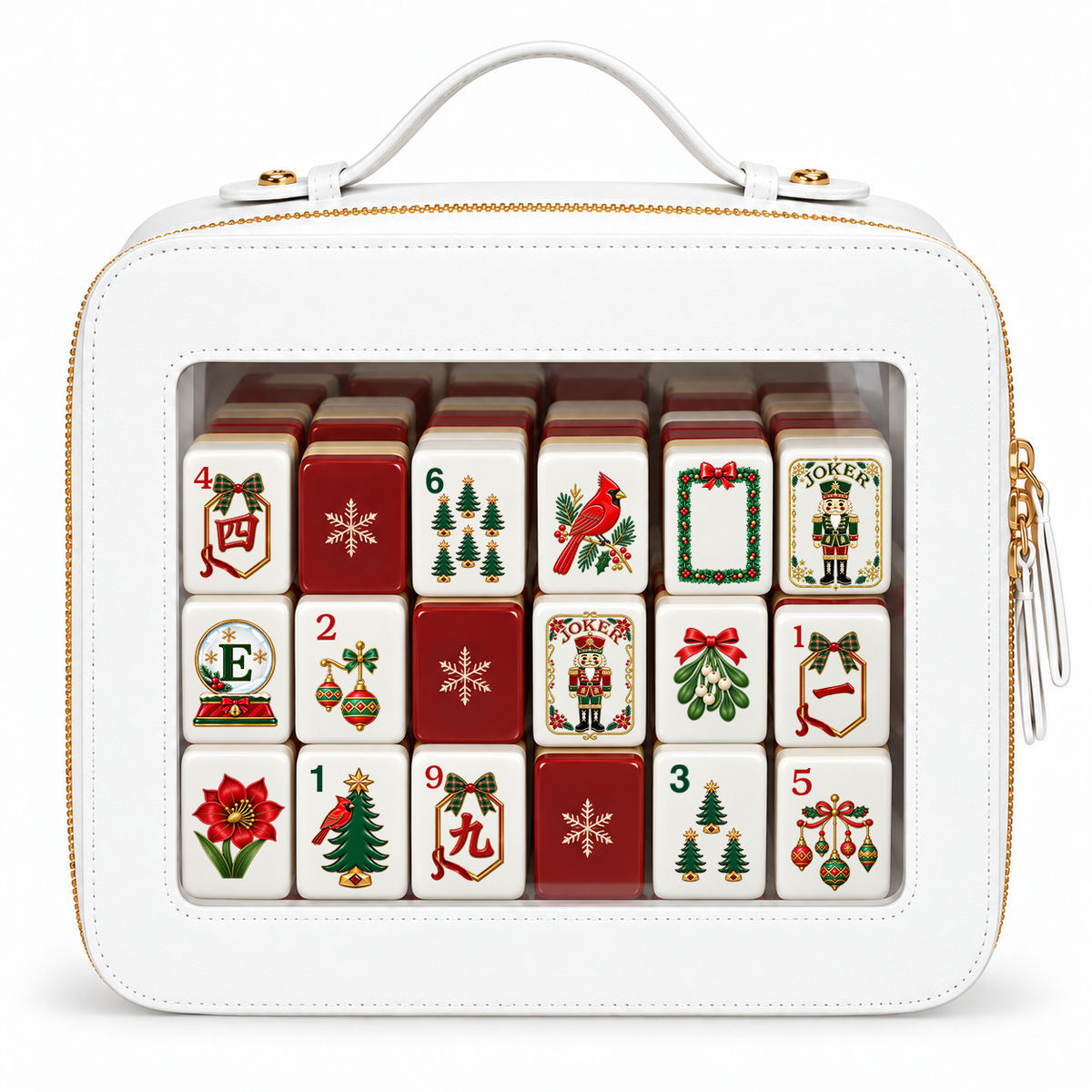
Vietnamese mahjong is a four-player tile game played with 144 tiles (no American jokers), using Chinese-style draws and melds, with hand patterns that shift weekly and betting common. Mahjong solitaire—often called Mahjong, Mahjong Connect, or Shanghai—is a single-player matching puzzle where you remove pairs of identical tiles from a pyramid or grid layout until none remain; no hand exists, no dealer, no scoring. They share a tile heritage but play by completely different rules. American mahjong, by contrast, uses 152 tiles plus 8 jokers and calls only from the current year's NMJL card. If you want social multiplayer play, Vietnamese mahjong works; if you want a solo relaxation game, solitaire fits. Knowing which appeals to your group prevents buying the wrong set or learning a game nobody at your table plays.
🀄 Shop best-selling mahjong sets →
Is Vietnamese mahjong the same as solitaire?
No. Vietnamese mahjong is multiplayer—four players draw and meld tiles to form hands. Solitaire is single-player: you match and remove pairs from a static board layout. Vietnamese uses a 144-tile set; solitaire is just one tile set played as a puzzle game. They share tiles but are fundamentally different games with no overlap in rules or play style.

How many players can play each variant?
Vietnamese mahjong requires exactly four players—one per wind (East, South, West, North). Solitaire is one player only; the computer or a puzzle book shows the starting layout. American mahjong also needs four players. If your group has two or three players and wants American rules, 2 and 3 player mahjong rules exist but require house modifications; for solitaire, player count is irrelevant.
What tiles do you use in Vietnamese mahjong?
Vietnamese mahjong uses 144 tiles: three suits (Bams, Craks, Dots) numbered 1–9 with four copies each (108 tiles), plus 16 winds and 12 dragons—no jokers and no flowers. American mahjong adds 8 flowers and 8 jokers (152 tiles total in a standard set). This difference means you cannot use an American set for Vietnamese play; Vietnamese sets are smaller and do not include American-specific tiles.
How do you win at solitaire versus Vietnamese mahjong?
In solitaire, you win by removing all tiles from the board by matching identical pairs. There is no scoring, dealer, or hand. In Vietnamese mahjong, you win by being the first player to form a complete hand (usually 14 tiles in sets and a pair) and declare it; winning is tied to the dealer and scoring round. Solitaire is puzzle-focused; Vietnamese is strategy and speed.
Can you play solitaire mahjong with friends?
Technically, yes—you can take turns on one solitaire board or each play a separate puzzle and race. But it is not designed for simultaneous multiplayer like Vietnamese or American mahjong. Solitaire removes the core appeal of mahjong: table talk, tile-reading, bluffing, and collective strategy. For group play, learn Vietnamese or American rules instead.
Comparing the Three Games: A Quick Reference
Aspect | Vietnamese Mahjong | Mahjong Solitaire | American Mahjong |
Players | 4 only | 1 | 4 only |
Tile count | 144 | 144 (varies by layout) | 152 + 8 jokers |
Jokers | None | None | 8 required |
Hand-based | Yes—form melds | No—match pairs | Yes—call from card |
Dealer | Yes (rotates) | No | Yes (always East) |
Turn order | Sequential draws | N/A | Sequential; pass Charleston first |
Betting | Common | No | Varies by house |
Learning curve | Moderate | Very easy | Steep (needs current card) |
Social factor | High | Solo relaxation | Very high |

Why people confuse these games
Many players use "mahjong" as a catch-all term. Solitaire apps and websites often brand themselves as "mahjong" even though they bear little resemblance to the social tile games. Vietnamese mahjong is less visible in North America than American or Chinese (Hong Kong) mahjong, so newer players hear the name but assume it is a minor rule tweak rather than a distinct game. If you search for "mahjong rules" without specifying a variant, search results mix all three, deepening confusion.
The tiles look similar across variants—same suit symbols, winds, and dragons—but how you use them is radically different. A solitaire player who watches a Vietnamese game sees: four people drawing in sequence, sets forming on racks, no "matching" in the solitaire sense, and rapid calling. They seem unrelated because the core mechanic—drawing, melds, and hand completion—is absent in solitaire.
What to choose for your game nights
Choose Vietnamese mahjong if your group wants live social play with four people, respects Chinese tradition, and enjoys weekly pattern rotation. You'll need to source a 144-tile Vietnamese set (not an American one) and teach the American mahjong ruleset does not apply—Vietnamese has its own hand lists and scoring.
Choose American mahjong if your group plays in North America, can commit to four players weekly, and wants a structured modern game using the annual NMJL card. You'll need a standard 160-tile set (152 playing tiles plus spares), the current year's card, and practice reading the card layout. American mahjong has a steeper learning curve but a strong active community.
Choose solitaire if you want a solo daily relaxation game, not a social event. Download a free app or buy a paper puzzle book. Solitaire needs no partner commitment, teaches no house rules, and plays in 15 minutes.
What to check before you buy
Before investing in tiles and learning, ask your group:
How many people will play? (Solitaire = 1; Vietnamese and American = 4)
Do you want betting or points? (American and Vietnamese; solitaire = no)
Can you commit to a weekly game? (Social mahjong requires consistency; solitaire is on-demand)
Is the learning curve a dealbreaker? (American is hardest; solitaire is easiest; Vietnamese is moderate)
Do you want a tile set or a digital app? (Physical tiles for Vietnamese or American; solitaire is usually digital or a puzzle book)
If you choose American or Vietnamese, buy a proper set early; cheap plastic tiles crack and peel. Best-selling acrylic sets from Mahstead ship free across the US and last years with house play. For American play, you'll also want a mat to keep tiles from sliding and racks with pushers to hold your hand securely.
🎁 See our most-loved mahjong sets & accessories →
One honest note on learning
Vietnamese mahjong rule books are sparse in English; most players learn by watching or sitting in on games. If you choose Vietnamese, expect a steep verbal learning phase. American mahjong has published rules, YouTube tutorials, and clubs in most US cities. Solitaire needs no learning—you match two tiles and click next.
For your first social mahjong experience, American is easier to resource; for cultural immersion and a smaller, tighter community, Vietnamese rewards the effort. Solitaire is never a bad choice if you're solo and want peace.
✨ Find your Mahstead set — free US shipping →

FAQ
Can I play Vietnamese mahjong with an American mahjong set?
No. Vietnamese uses 144 tiles with no jokers or flowers; American uses 152 tiles plus 8 jokers. The tile counts and distribution differ, making the sets incompatible.
Is mahjong solitaire real mahjong?
No—it is a puzzle game using mahjong-style tiles. Real mahjong (Vietnamese, American, Chinese) is multiplayer, turn-based, and hand-forming. Solitaire has no hand or scoring, only pair-matching.
Which game should a beginner start with?
Solitaire is easiest (no rules to learn). American mahjong is accessible in the US with online tutorials. Vietnamese requires in-person teaching and commitment to four players.
Do all three games use the same tile symbols?
Yes—Bams, Craks, Dots, winds, and dragons are standard across variants. But how tiles are used, counted, and melded differs radically between games.
Can I learn Vietnamese mahjong from a book or video?
Partially. Videos help, but Vietnamese mahjong is traditionally taught by sitting in at the table. Rule books exist but are rare in English; most players learn by observation and feedback during play.
What is the best set to buy if I am unsure which game to play?
Buy an American 160-tile set first—it is the most accessible and well-documented in North America. Once you confirm your group plays weekly, you can invest in a Vietnamese 144-tile set or branch into other variants.


View More
View More
View More
