
Siamese Mahjong with 3 Players: Rules and How to Set Up
Last updated: Nov 23, 2026
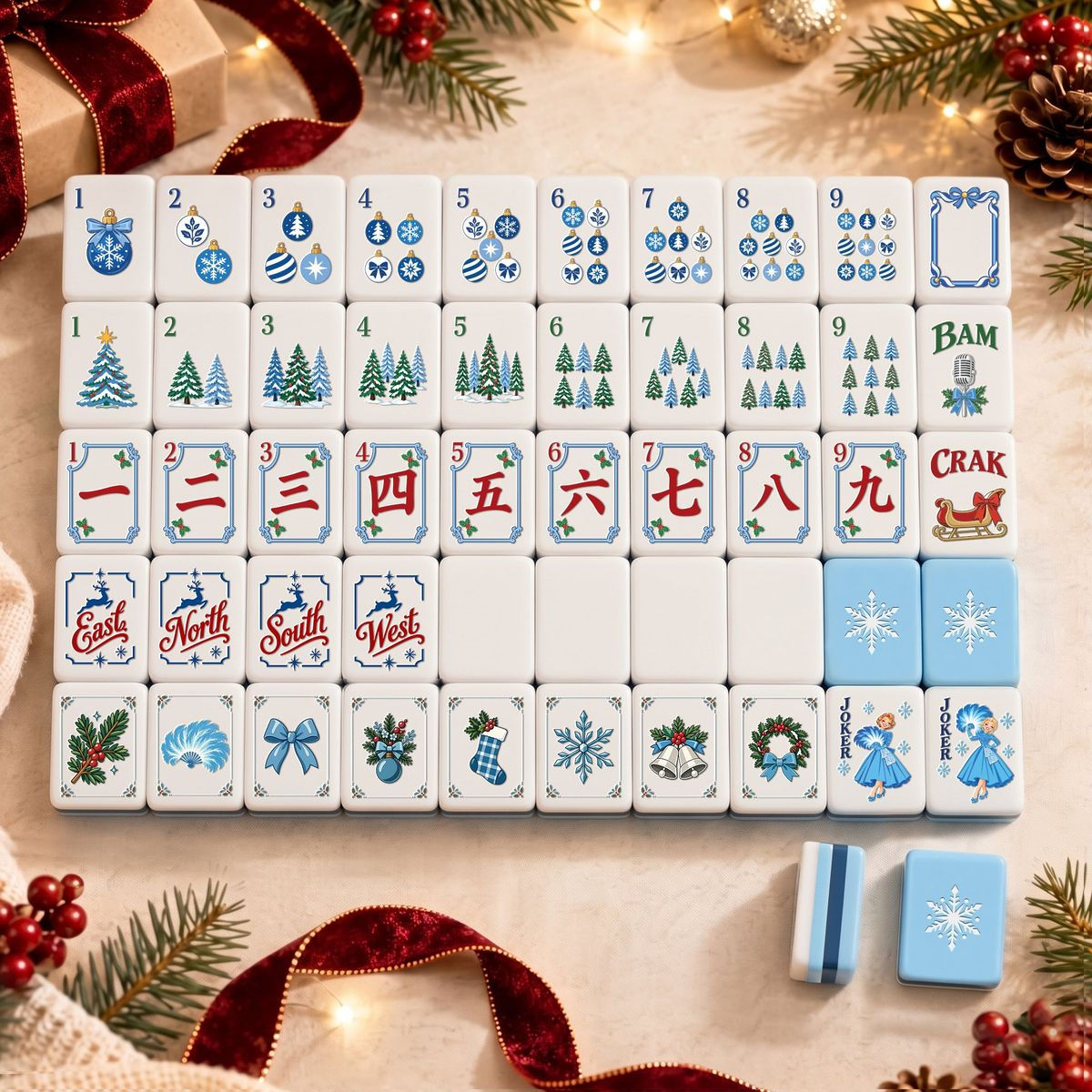
Siamese mahjong is a three-player variant of American mahjong that removes the North wind (leaving 12 winds instead of 16), resulting in 148 playing tiles instead of 152. Players sit at three corners of the table; no fourth player or wall position exists. The hand structure and winning combinations follow the current National Mah Jongg League card, but the discard rule differs: instead of one player discarding per turn, each of three players discards once per rotation, meaning 12 tiles leave the wall per complete cycle instead of 16. East remains the power position. A game plays faster than four-player American mahjong because fewer tiles exist in play.
How does Siamese mahjong differ from standard American four-player rules?
Siamese play compresses the table to three positions (East, South, West) and removes North entirely. The fundamental difference is the discard cycle: all three players draw and discard in one complete turn, rather than one player acting while three watch. This means the wall shrinks by four tiles per cycle, accelerating hand completion. The 148-tile deck also changes how many dead tiles you expect and how often you'll see quints and sextets. The National Mah Jongg League card is still valid—you must find hands from the current year's card—but exposure rules and joker usage remain unchanged from four-player American.

What tiles do you remove and how does the wall change?
Remove all four North wind tiles, leaving 148 playing tiles total (12 winds, 108 from three suits, 12 dragons, 8 flowers, 8 jokers). The wall is built from 148 tiles instead of 152 and still includes all 8 jokers. In four-player, the wall measures 36 tiles per side (144 tiles) plus dead wall. In Siamese, you typically arrange 37 tiles per side to use all 148. Because fewer tiles circulate, the probability of completing a hand shifts: pairings and runs deplete faster, so long games become rarer. Dead tile pulls and joker density feel slightly different to experienced players.
Who acts and discards during each turn in Siamese three-player?
Each turn consists of exactly three actions: East draws, discards, and passes to South; South draws, discards, and passes to West; West draws, discards, and passes to East. One complete cycle = three draws, three discards, and 12 tiles removed. This rhythm differs sharply from four-player, where one action happens per turn and three players pass. The discard order is the same every rotation, so tracking who needs what tile becomes easier. Calling ("Mah!") or a meld interrupt work as in four-player American—they break the turn cycle and restart from the caller.
How do winning hands work—are the card patterns the same?
Yes. You must claim a winning hand from the current year's National Mah Jongg League card, and all card rules apply: no pung/kong sequences, exposure rules, joker limits in melds, and the pair must be suited (same suit as at least one meld or honor combination). The only constraint is that fewer tiles exist, so hands with six sextets or rare quint combinations may take longer to achieve. Hand validity, limit values, and scoring remain identical. Learn how to read the mahjong card for a refresher on pattern recognition.
What equipment do you need to host a Siamese three-player game?
You need a set with at least 148 tiles (some three-player sets include 152 tiles plus 8 spares), a mat designed for three corners, and three racks with pushers. Mahstead's best-selling mahjong sets work well for Siamese if you omit the North tiles or order a set specifically built for three-player. A three-corner mat is narrower than a four-corner mat and seats three people comfortably. Standard mahjong racks with pushers hold 13 tiles per player and are essential for organizing your hand. You'll also want a small cup to shuffle tiles and a scorepad. Unlike four-player, you don't need a wind indicator or wall position marker.
🀄 Shop best-selling mahjong sets →

Siamese Mahjong Setup: Decision Framework
Step | Four-Player | Siamese Three-Player | Why it Matters |
Tile Count | 152 (all winds) | 148 (no North) | Fewer tiles = faster game |
Table Seats | 4 (E, S, W, N) | 3 (E, S, W) | Compact, intimate, lower noise |
Turn Cycle | 1 discard per turn | 3 discards per cycle | Faster tile flow, tighter play |
Mat Size | Square, 4 corners | Triangular, 3 corners | Proper sightlines for three players |
Hand Duration | 20–45 min | 15–35 min | Accelerated rhythm |
Card Valid? | Current NMJL card | Current NMJL card | No variant-specific hands needed |
Starting a Siamese game: step-by-step
Verify player count and winds. Confirm all three players understand that North wind is removed and only 148 tiles are in use. If your set includes 152 tiles, set the four North wind tiles aside before building the wall.
Build the wall. Arrange 148 tiles face-down into four walls; uneven walls are acceptable (e.g., 37–37–37–37). No fourth wall position exists, so no dead wall is drawn—all tiles go into active play.
Seat the players. East (first dealer) sits at the head. South sits to East's left. West sits to East's right. Do not seat a fourth player or leave a North chair empty.
Execute the Charleston—three times. Each player passes 6 tiles across, then passes 6 tiles diagonally, then passes 6 tiles back. The third pass is mandatory in Siamese (some variants skip it; we include it). This distributes randomness fairly.
Deal 13 tiles to each player. East draws 13, South draws 13, West draws 13. No player draws a 14th. Only East's first draw is called "drawing the wall."
Announce the starting hand. East begins by drawing one tile from the wall (the 14th tile for East). East then discards. This completes East's turn. South draws the next tile and discards. West draws and discards. Now one complete cycle is done, and 12 tiles have left the wall.
Play continues until someone calls a winning hand from the current year's National Mah Jongg League card or the wall is depleted (a draw game).
🎁 See our most-loved mahjong sets & accessories →
Common mistakes in Siamese three-player mahjong
Mistake: Forgetting to remove North wind and playing with 152 tiles. Fix: Before the game, separate and count the four North wind tiles and place them outside the playing area.
Mistake: Having only East draw and discard per turn (as in four-player). Fix: Enforce the three-discard cycle: East acts, then South, then West, each drawing one tile from the wall and discarding one tile.
Mistake: Building a wall for four players (36 tiles per side = 144 total). Fix: Distribute 148 tiles into four walls of roughly equal size (37–37–37–37 is ideal).
Mistake: Calling a winning hand that is not on the current year's card. Fix: Cross-reference the hand against the NMJL card before declaring. If it's not on the card, play continues.
Mistake: Allowing a player to discard out of turn. Fix: Maintain strict turn order: East → South → West → East. Interrupt only for a call.
What to check before you buy a three-player set
Tile count: Confirm the set has either exactly 148 tiles (true Siamese) or 152 tiles with spares. Mahstead's best-selling sets are built for 152 playing tiles; you remove North manually.
Tile size and readability: Siamese games are fast; ensure tiles are large enough (standard American is 1¼ inch) so you don't miss a discard.
Mat and rack fit: A three-corner mat should have 13-tile racks on three sides, not four. Confirm the rack pushers work smoothly—they speed up your draw and discard.
Joker count: Your set must include 8 jokers (not fewer). Check the product description on the best-selling collection page.
Carrying case: If you'll transport tiles to clubs or hosts, consider a mahjong bag or case that fits three racks and a mat without crushing tiles.
✨ Find your Mahstead set — free US shipping →
Where to find regular Siamese three-player games
Three-player mahjong is common in Siamese, Chinese, and Vietnamese communities and growing in the US. Search community centers, libraries, and Buddhist temples in your area for "mahjong" or "mah-jong" groups. Asian cultural organizations often host weekend games. Online meetup boards and local Facebook groups ("Mahjong Near Me" + your city) connect players. Some country clubs and retirement communities offer lessons. Ask if they play American (four-player) or three-player; if only four-player is available, you can host your own Siamese night at home and invite players interested in learning. Start with one game per week and grow from there.

FAQ
Can I use a standard four-player American mahjong set for Siamese three-player?
Yes. Remove all four North wind tiles before building the wall. You'll have 148 tiles in play and 4 North tiles as unused spares. This is common in clubs that own only one set size.
Is Siamese three-player mahjong recognized by the National Mah Jongg League?
The NMJL focuses on four-player American mahjong. Siamese is a regional and community variant, valid in clubs and home games but not in official NMJL tournaments. Your hands must still come from the current year's card.
How long does a typical Siamese three-player game take?
15–35 minutes per game, depending on hand availability and luck. Four-player games typically run 20–45 minutes. The smaller tile pool and three-discard cycle speed up play.
Do the Charleston rules change for three players?
No, the Charleston (tile-passing ritual) remains the same: pass 6 across, pass 6 diagonal, pass 6 back. All three players participate. It takes about 2–3 minutes and ensures fair randomization.
What if no one wins in Siamese three-player—is it a draw?
Yes. When the wall is depleted and no winning hand has been called, the game is a draw. East typically remains dealer, or you rotate positions. Scoring rules for draws vary by club; agree on this before you start.
Can I play Siamese mahjong online?
Some digital mahjong apps support three-player variants, though most default to four-player or Chinese mahjong. Check app descriptions. Many experienced players prefer in-person, physical-tile games for the tactile and social experience.


View More
View More
View More
