
Three Player Mahjong Scoring Chart Explained
Last updated: Nov 23, 2026
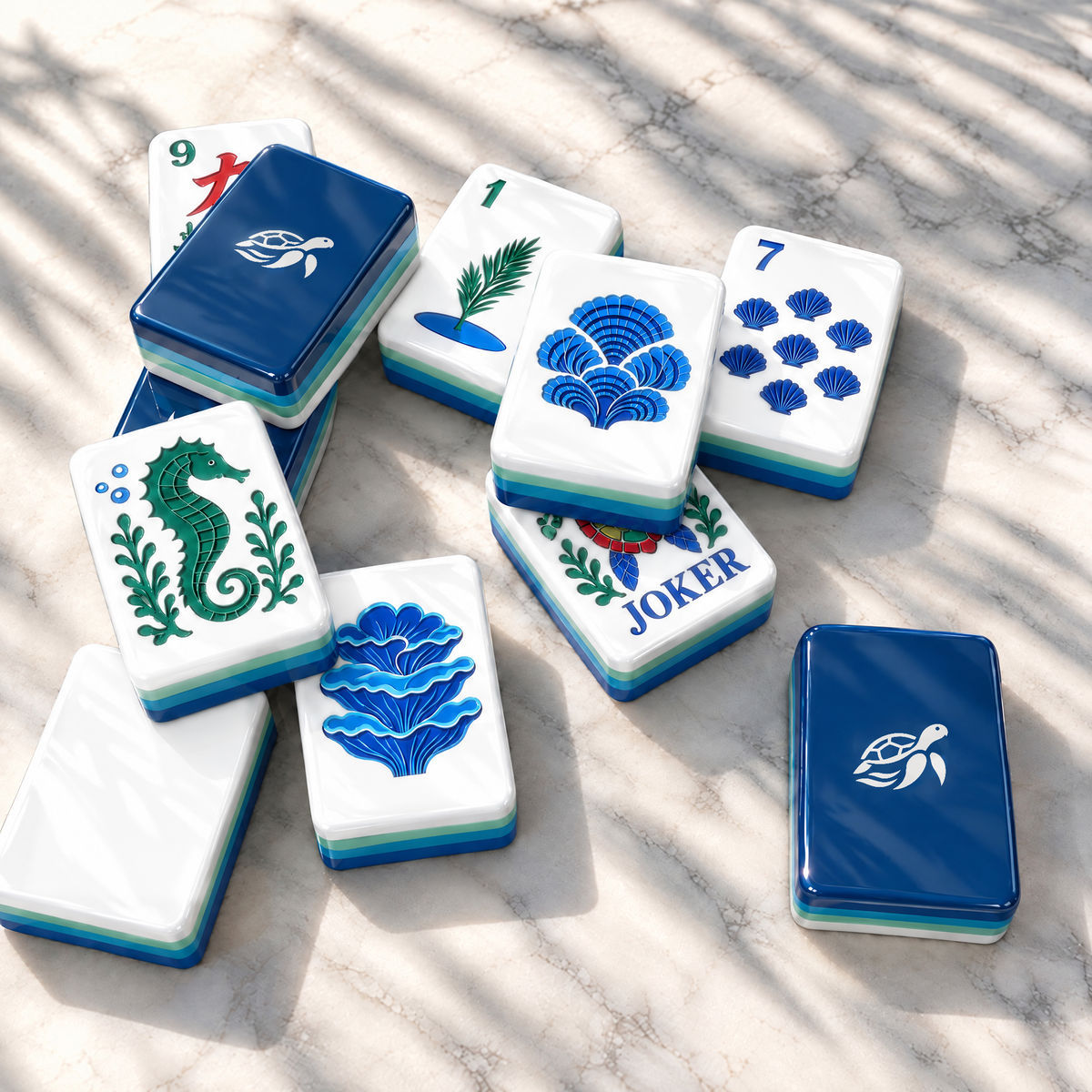
Three-player American mahjong uses the standard hand list from the current National Mah Jongg League card but modifies payouts because no player sits East on every rotation. The winning player collects points from the three other players—except only two pay in three-player. Most commonly: winners collect double points from the dealer and single points from each non-dealer; losers who are not the dealer pay single points only. The dealer varies: typically the winner holds the position for the next hand, or position rotates clockwise regardless of outcome. Point amounts stay the same as four-player (e.g., a 30-point hand pays 30), but who pays whom changes. You need a 160-tile American set, three players, the current League card, and a scoring sheet to track rotations. The main mistake: forgetting to double the dealer's payment—or mixing up dealer duty. Always confirm your group's dealer-rotation rule before the first hand.
How does three-player point distribution differ from four-player?
In four-player, a winner collects a fixed amount from each of the three other players. In three-player, typically the winner takes double points from the active dealer and single points from each other player. Some groups split the payout evenly across all three payers, so a 30-point hand means 10 points per player instead of the full 30. Confirm your table's rule before you deal—it changes the math dramatically.

Why do players rotate dealer position differently in three-player?
With only three seats, each player cannot hold the dealer (East) position every fourth hand as in four-player. The rotation usually cycles: Player A is dealer for hand 1, Player B for hand 2, Player C for hand 3, then repeat. Some groups keep the dealer position only if that player wins; otherwise it passes to the next player clockwise regardless. Write it on your score pad before starting—switching mid-game causes arguments.
What's the step-by-step process to keep score on a three-player sheet?
First, note the dealer and which hand number you are playing. After someone wins, identify the payout: if the dealer won, non-dealers each pay the full hand value. If a non-dealer won, the dealer pays double and the other non-dealer pays single. Write down who paid whom and the amount. Rotate the dealer position according to your table's rule—write the next dealer's name. Move to the next row and repeat. At the end of the session, sum each player's net (wins paid minus losses paid) to confirm the math. Most disputes come from unclear dealer rotation, so be ruthlessly explicit on the sheet.
What scoring mistakes do new three-player groups make most often?
The number-one error: forgetting that the dealer pays or collects double in three-player, then adding single points when they should add double. Second: confusing whether the dealer rotates after every hand or only when someone wins. Third: losing track of who sits where after tiles are shuffled—seat identity matters more in three-player because dealer duty is so valuable. Fourth: using four-player payouts without adjustment, so a winning hand pays triple instead of the intended split. Fix these by writing a one-line house rule on a whiteboard before the first hand: "Dealer always rotates. Dealer pays/collects double. Non-dealers single." Refer back to it every hand until it's automatic.
Can you use the same National Mah Jongg League card for three-player as four-player?
Yes—the hand patterns are identical. The card itself doesn't change. What changes is only the payout rule: you follow the same hand list, but the point distribution among players shifts. For example, a hand marked "30" on the card still counts as 30 points, but in three-player the dealer might collect 60 from one player and 30 from the other, or all players contribute 10 each. Never rewrite hand values; adjust payouts only. This is where players who learned four-player first often stumble: they assume the card rules the money. It doesn't—your table rule does. Refer to our guide on how to read the mahjong card to understand the card layout, then apply your three-player payout rule on top.

What happens if the dealer wins multiple hands in a row in three-player?
Dealer position typically stays with whoever holds it (or rotates, depending on your rule). If your group rotates dealer every hand regardless of outcome, the position moves to the next player even if the current dealer won. If your group keeps the dealer position until someone else wins, that dealer stays put and collects double again. The second rule favors the strongest player; the first distributes power more evenly. Many casual groups use the "rotate every hand" rule to keep the game lighter and give everyone a chance to feel East wind advantage. Decide this upfront or you'll have three players arguing over a hand payout. Write it on your score sheet's header row: "Dealer rotates every hand" or "Dealer stays until displaced."
Comparison: Three-Player vs. Four-Player Scoring at a Glance
Rule | Four-Player | Three-Player (Dealer Rotates) | Three-Player (Dealer Stays) |
Players | 4 | 3 | 3 |
Winner collects from | 3 players | 2 players | 2 players |
Dealer pays double? | No—equal from all | Yes, dealer pays or collects 2× | Yes, dealer pays or collects 2× |
Dealer rotates | Every hand | Every hand | Only if someone else wins |
Payout complexity | Low | Medium | Medium |
Best for | Balanced play | Casual groups | Competitive groups |
What score-tracking setup works best for three-player sessions?
Use a paper pad with four columns: hand number, dealer, winner, and net points per player. Write the dealer name prominently so no one forgets who collects double. After each hand, write the point total, then mark "double" next to the dealer's name if they're in the payout. Sum columns at the end of the session. Some groups use a whiteboard with player names across the top and cumulative scores below—update after each hand so everyone can see their position. The clearest systems have a separate row for dealer identity before the payout row, so a glance tells you who's in power. If you're hosting, bring a printed three-player score sheet template with dealer and payout columns pre-labeled; it cuts setup time and prevents confusion. Our best-selling mahjong sets come with acrylic tiles that are easy to see, but clear scorekeeping is the real game-changer in three-player.
🀄 Shop best-selling mahjong sets →
How do you handle the Charleston pass in three-player?
The Charleston—the tile-passing ritual before play—adapts naturally to three players. Typically, three players sit at 90° angles around a table. Each player passes 14 tiles to their left, then 14 to their right (or the pattern your group uses), then a smaller pass across. With three players, the math works if you pass 14 left, 14 right, and then 6 across, totaling 34 tiles per player (three passes). The dealer is still the first player to pass. Some groups simplify and do one pass per direction (left, right, across) instead of three rounds. Learn the full Charleston steps here and adapt the three-player version by counting tiles carefully so each player ends with the right number before the draw. Always practice the Charleston mechanics twice before dealing the first hand so no one is confused mid-pass.
What if a player goes out incorrectly or calls a false win in three-player?
If a player claims a win but their hand doesn't match the card, the hand is dead—that player cannot win on that deal, and play continues. The hand continues until another player wins or the wall empties (no winners). The player with the false claim typically pays a penalty to all players (check your group's rule—often it's a small fixed amount like 5 points per player). Record the dead hand clearly on your score sheet so no one forgets it happened. In three-player, miscalls are rarer because fewer players means fewer distractions, but always have someone other than the claimant verify the hand against the card. Never assume a win is correct just because the winner is experienced. This single rule prevents 90% of three-player disputes.
Quick Checklist: Before Your First Three-Player Game
☐ Confirm dealer rotation rule (every hand or until displaced?)
☐ Confirm payout rule (dealer double, non-dealers single, or other?)
☐ Gather a 160-tile American mahjong set with all pieces
☐ Get the current year's National Mah Jongg League card
☐ Write your house rules on a sheet of paper or whiteboard
☐ Prepare a score pad with columns for hand #, dealer, winner, payouts
☐ Do one full practice Charleston (pass, discard, draw) before real play
☐ Assign someone to verify every win against the card before payout
If you're hosting regular three-player games, our engraved acrylic sets make tiles readable at a glance, and a good [mahjong mat keeps the play area organized for three players seated around one side.
🎁 See our most-loved mahjong sets & accessories →
Are there regional or online versions of three-player American mahjong scoring?
Most three-player variants follow the rules above, but some online platforms or local clubs use house tweaks: a few groups adjust hand values themselves (marking certain hands as "60 points in three-player" instead of 30), and others use a rotating "dummy" seat—a fourth imaginary player who has no role but ensures rotation symmetry. Online play often automates payout calculations, so you don't need to track it manually. However, if you're playing in person with our acrylic American mahjong sets, stick to the standard three-player rules above and avoid house variants until your group is solid on the basics. Regional tournaments (if you find one) will announce their specific payout rule before play starts. Always ask your host's scoring system before you sit down—don't assume.
✨ Find your Mahstead set — free US shipping →

FAQ
Is three-player American mahjong an official variant?
Not officially in the National Mah Jongg League rulebook, which assumes four players. However, three-player is widely played in casual settings. You follow the League card but adjust payouts—the game itself is real and fair.
Can you play three-player with a standard four-player set?
Yes. A 160-tile set contains extra jokers and tiles beyond the 152 needed for play. Use exactly 152 tiles and 8 jokers per hand, just as in four-player. You simply leave one dealer seat empty or rotate through three seats instead of four.
What if one player runs out of tiles early in three-player?
That player is discard-heavy or drew poorly. They're still in the game—play continues. In three-player, fewer players means slower tile circulation, so dry hands are normal. Don't add tiles; let the hand play out.
Does the dealer win more often in three-player?
Not necessarily. Dealer is simply a rotation role. Because three-player uses only two non-dealer payers instead of three, dealer payouts are higher per hand, but frequency depends on tile luck and skill, not position.
How do you handle the initial seating in three-player?
Agree on three seats around the table (typically at 0°, 120°, and 240° around a round table or along one side of a rectangular table). Assign player names to North, West, and South seats (East is empty or serves as the dealer marker). Use a score sheet to track who sits where and rotates dealer duty.
Can you play three-player on a standard mahjong table?
Yes. Most mahjong tables seat four, but three players occupy three seats and leave one empty. The dealer marker (often a small wind tile or chip) rotates through the three active seats. No special table is needed.


View More
View More
View More
