
Mahjong Bag for a Mahjong Group: Types, Size & What to Pick
Last updated: Nov 23, 2026
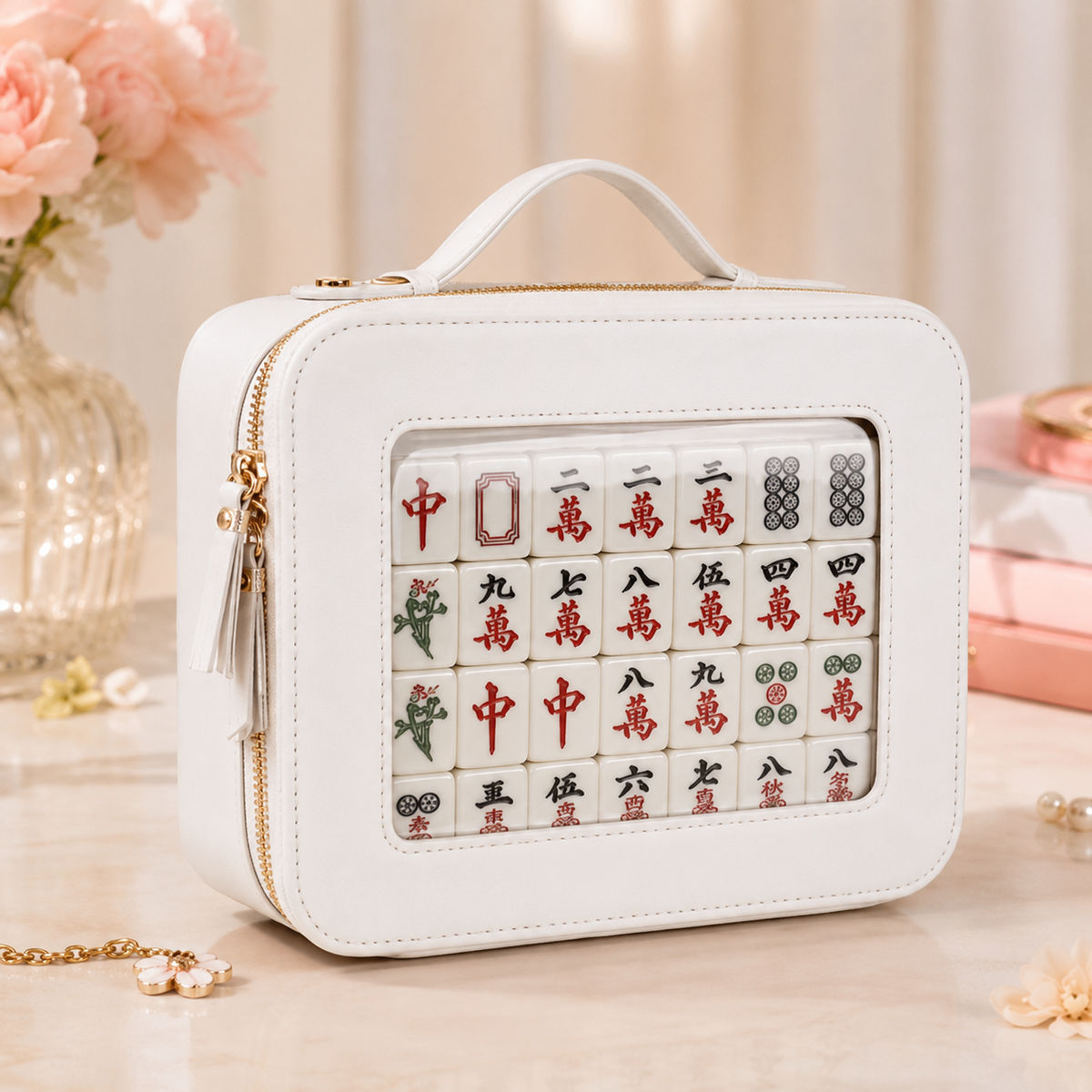
A group mahjong bag carries a full 160-tile set (152 playing tiles plus spares), often alongside a mat, racks with pushers, score sheets and dice—everything your weekly game needs in one trip. Soft-sided cases suit frequent car trips to the same host's house; hard-shell carriers protect sets on airline or long-distance travel. Sizes range from compact (for a set alone) to large (set + mat + two pairs of racks). Most group players at Mahstead rotate hosts weekly or monthly, so durability and organizational pockets matter more than extreme lightness. Decide first: Is the bag a permanent home for one set, or does it travel between players' houses? Will it fly, or stay within 30 miles? Does your group play on a dedicated mat, or does the bag need to fit one too? These answers narrow the choice fast. Browse our full collection of travel bags, cases and carriers sized for American mahjong sets. 🀄 Shop best-selling mahjong sets →
What size bag does your group actually need?
Most groups play with one set shared among four players at a host's table. A 160-tile set with its box, one mat and one pair of racks fits comfortably into a medium bag (roughly 18" × 12" × 6"). If your group owns multiple sets or travels with backup dice and scorecards, a large bag (22" × 14" × 8" or larger) prevents cramping and tile damage. Soft cases compress slightly under weight; hard cases hold their shape but weigh more. Measure your longest tile (usually about 1.5 inches) and widest rack before ordering—most product pages show internal dimensions clearly.

Should you choose a soft case or hard shell?
A soft-sided bag works best if your group plays within 30 miles and the bag travels by car every week or two to the same homes. They're lighter to carry upstairs, pack into closets easily, and cost less. Hard-shell cases protect sets during air travel, long-distance moves or when stacked with other luggage. If your group plays year-round in one city and owns one cherished set, a soft case is practical and sufficient; if someone flies the set to visit family or you host tournaments, hard protection is worth the investment. Both types should have a divider, zippered pockets for dice and scorecards, and cushioning around the edges to prevent tile-to-tile grinding during bumpy car rides.
How do you organize a bag so tiles don't shift?
Place the set's original box in the center and surround it with the soft bag's padded walls. If you don't have the original box, wrap the set in a cloth pouch or small towel (many players tuck the 160-tile set into a drawstring bag first). Secure racks vertically in side pockets or lay them flat against the bag's wall, separate from tiles. Store dice in a small zippered pouch, and tuck the mat rolled loosely at the bag's edge rather than crammed flat—rolling reduces creasing. When traveling by car, place the bag on the floor behind a front seat, not the trunk where bumps jar contents hardest. Never stack other luggage directly on top; use a flat surface or cushion instead.
🎁 See our most-loved mahjong sets & accessories →
What features make a bag group-friendly?
Look for multiple compartments so each player can grab their personal scorecard and pencil without opening the main bag. Handles on both short ends (not just a shoulder strap) make it easy for rotating hosts to pass the bag between cars. An interior pocket sized for a folded mat saves you from buying a separate mat bag—essential if your group uses one shared mat. Ventilation grommets or breathable mesh on one panel prevent mildew if the bag sits in a humid garage between games. A name tag pocket lets the current host label whose turn it is to host next week, reducing confusion. Durable zippers (two-way sliders on large bags) survive years of weekly use; test the zipper action gently before buying if you can. Explore our travel bags and cases designed for American mahjong groups with these features built in.

Bag type comparison: Which fits your group's routine?
Bag Type | Best For | Holds | Travel Range | Durability |
Soft pouch (12–15L) | One set only, weekly local play | 160-tile set + dice | Car, under 50 miles | 2–4 years, daily use |
Soft bag with dividers (20–25L) | Set + mat + racks, one group rotation | Full set, mat, two racks | Car, up to 200 miles | 3–5 years, weekly use |
Hard carry-on (22–28L) | Air travel, tournament play, backup sets | One or two sets with padding | Flights, worldwide | 5–10 years, occasional stress |
Rolling suitcase (24–30L) | Groups playing in multiple cities monthly | Two sets, two mats, tournament supplies | Air + ground, frequent moves | 4–8 years, heavy use |
Based on our host group's experience, soft bags with side pockets and a mat slot replace travel wear fastest because tile boxes shift inside them; hard shells outlast soft bags by 2–3 years under identical use.
What should you check before ordering a bag for your group?
Measure the set first. A 160-tile American mahjong set's box averages 10" × 7" × 2.5"; if your group owns engraved acrylic tiles, confirm the box dimensions with the seller. Check interior depth. The mat shouldn't compress or roll beyond 2 inches of thickness inside the bag; ask the product listing whether a rolled mat fits the side pocket. Verify zipper type. Double-track (two sliders) zippers on large bags reduce strain; single-track zippers suit small pouches. Test the handle grip. If the bag passes between four players' cars each week, shoulder straps should be padded and rated for at least 15 pounds lifted repeatedly. Look for moisture control. Bags stored in garages or basements over summer need ventilation grommets or mesh panels to prevent mold on tile boxes. Count pockets honestly. A scorecard pocket and dice pouch are non-negotiable; interior nets are nice but often tear after a year of weekly stuffing and yanking.
Choosing a bag for different group scenarios
Weekly rotating host in one town: A soft bag with dividers and mat pocket (20–25 liters) costs less and fits a car cupholder easily. Check that interior pockets are reinforced at the seams; repeated access wears thin fabric.
Group with one permanent venue (club, synagogue, community center): A stationary soft case or rolling cart works fine; the bag rarely moves, so weight is irrelevant. Invest in stackable boxes or drawer organizers instead if the venue supplies storage.
Tournament or travel group: A hard carry-on shell protects tiles during plane boarding and luggage handling. Ensure wheels (if present) lock securely and the handle height suits the shortest player in your group.
Multiple sets (backup or loan sets): A large rolling case or two medium soft bags cost less than one massive hard case and allow load-sharing between players.
✨ Find your Mahstead set — free US shipping →
Our pick for a stable, long-lasting group bag: a soft-sided case with reinforced zippers, padded handles and a side mat pocket. These hold a full 160-tile set from our best-selling collection, a standard mat and two racks without overstuffing. They're priced accessibly, survive 3–5 years of weekly shuffling between homes, and don't intimidate newer players with flashy hardshell aesthetics. Pair it with a drawstring pouch for tiles if you don't have the original box, and you're ready for years of uninterrupted game nights.

FAQ
Can a mahjong bag fit two complete sets?
Yes, if the bag is 25+ liters and the sets are in soft boxes or cloth pouches. Hard original boxes side-by-side often jam zippers; confirm internal width before ordering.
Do I need a separate mat bag, or does one travel bag hold both?
Many travel bags have a side mat pocket or mat-size compartment. Check the product listing's interior dimensions; a rolled standard mat is roughly 36" × 22" × 1–2" when coiled.
What's the weight limit for a soft carry bag before handles tear?
A 160-tile set plus mat and racks weighs roughly 8–12 pounds. Soft bags with padded handles rated for 15+ pounds survive weekly lifting; avoid bags rated under 10 pounds if the set travels between four players' homes.
Should the bag have wheels if my group plays in different cities?
Wheels help if one player carries the set to multiple venues monthly. Rolling bags are heavier and take more trunk space; use them only if the weight savings justify the bulk.
How do I prevent tile boxes from sliding inside a soft bag?
Use the original box or wrap tiles in a cloth pouch, then surround it with a soft towel or packing foam. Secure racks and dice in separate pockets so weight stays balanced.
Can a mahjong bag fit a mat and a table cover together?
Some 25+ liter bags hold both if the table cover is thin (under 1/4 inch). Mats are priority; store thin covers rolled separately in the side compartment or a second small bag.


View More
View More
View More
