
Three Player Mahjong for Beginners: Rules, Setup & Strategy
Last updated: Nov 23, 2026
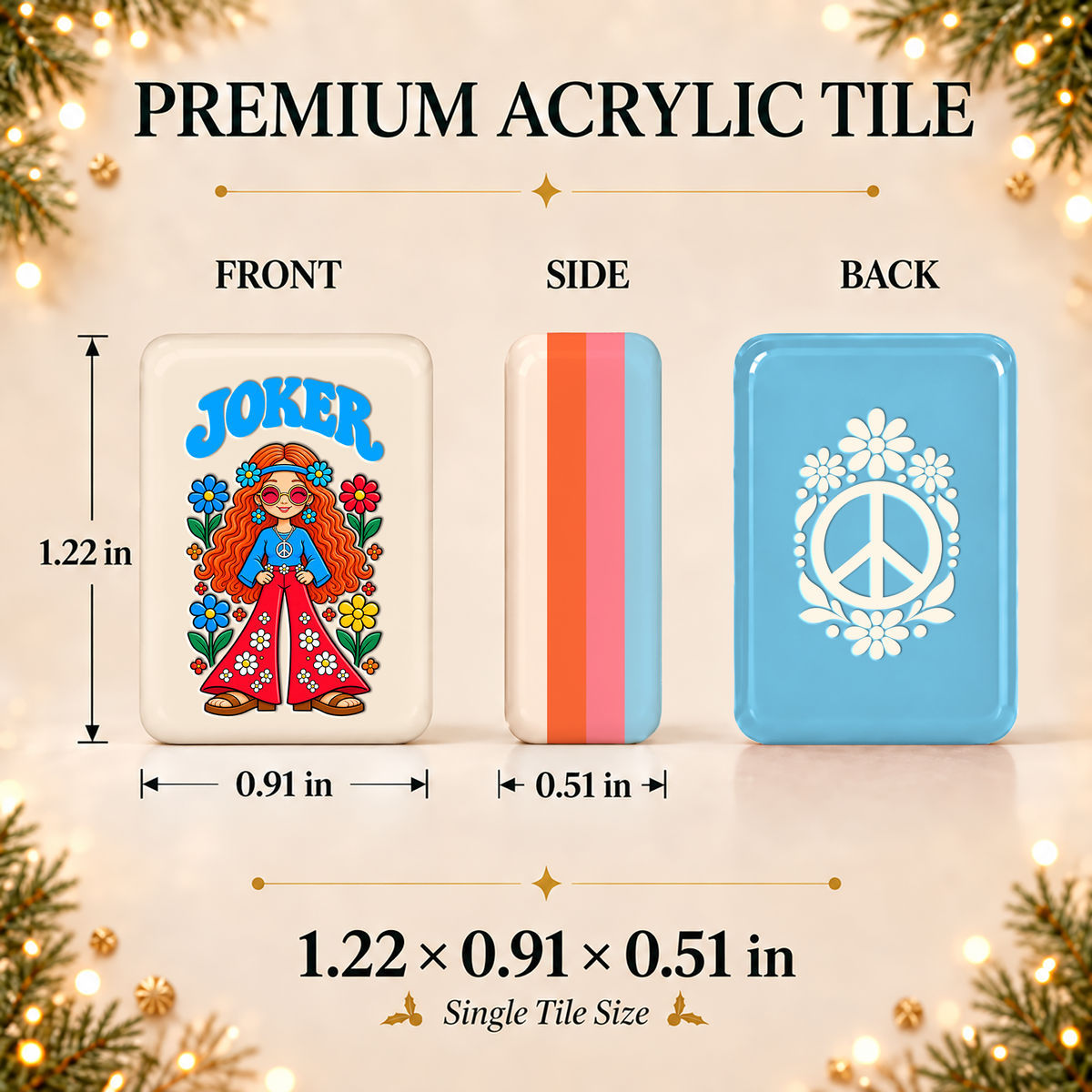
Three-player American mahjong uses 108 of the standard 152 tiles, removing one complete player's wall. You remove the North wall entirely (36 tiles) and deal 13 tiles per player instead of 14. Play proceeds East-South-West, skipping North, with draw order adjusted so each player draws equally. The hand structure stays the same—you still play from the current year's National Mah Jongg League card, still use the Charleston (modified to three passes per direction), and still need jokers and honor tiles. A game lasts 15–30 minutes per round. Most beginners adapt within one or two hands. You'll need our best-selling mahjong sets, which work perfectly at any table size; three-player is the most common variant after four-player in American homes.
What changes when you remove one player?
The core rule: you're playing with 108 active tiles instead of 152. Remove the entire North wall (36 tiles), which means North Wind never enters play, and the North position sits empty. Each player takes a seat at East, South, or West. The dealer rotates the same way (East → South → West → East), and the winning hand still comes from the current year's card. No tiles "disappear" conceptually—the North wall simply doesn't get built. Your first discard happens after 13 tiles, not 14, because no tile draws from the fourth wall.

How do you modify the Charleston for three players?
The Charleston—the pre-game tile-passing ritual—changes shape but keeps its spirit. With three players, you pass left, pass right, and pass across three times each (instead of four). Each pass moves tiles between the same three positions: you pass left to South, right to West, and across to West again (since there's no North to cycle through). Some groups simplify to one-two-three passes per direction; whichever you choose, all three players must use the same count. Declare your chosen format before the first hand. The Charleston ends when the last player picks from the wall, exactly as in four-player.
What's the draw order after someone plays a tile?
After a discard, priority flows East → South → West → East. If East discards and no one calls it, South draws first from the wall, then West, then East again. This means no player sits idle—everyone stays active every turn. The draw happens in real time, not speed-queued. Unlike four-player, where a fourth wall exists in reserve, three-player draws from one continuous wall in a tighter, more aggressive flow. Hands move faster because fewer tiles cycle the table.
Can you use a regular four-player mahjong set?
Yes—and we recommend it. American mahjong sets contain 152 tiles and 8 jokers; you simply set aside 36 unused tiles (the North wall) and play. Our sets with racks and pushers make this even easier because you store the unused tiles in the rack's side pocket or bag them separately. A mahjong mat designed for tile organization keeps the three active walls clearly marked and prevents confusion about which tiles are in play. Many players tell us they prefer mats for three-player because they prevent dead-tile accidents.
Comparison Table: Three-Player Setup vs. Four-Player Setup
Feature | Three-Player | Four-Player | Why It Matters |
Total tiles played | 108 | 152 | Faster rounds, tighter hand |
Tiles per player | 13 initial | 14 initial | Affects pung/kong balance |
Wall sides used | 3 (E/S/W) | 4 (E/S/W/N) | Simpler rotation, fewer distractions |
Charleston passes | 3 per direction | 4 per direction | Shorter pre-game ritual |
Game duration | 15–30 min/round | 20–40 min/round | Beginner-friendly, quicker learning |
Hand options from card | Same (all hands) | Same (all hands) | No rule restrictions, same skill |
Draw priority after discard | 3-player cycle | 4-player cycle | Faster play, more engagement |
Setup difficulty | Easiest | Moderate | Best for new groups |

How do you score and track wins in three-player?
Scoring follows the same National Mah Jongg League card as four-player—no modifications to point values. When someone wins, they score the full amount listed on the card from each opponent (not divided among fewer players). Some home groups use a simple chip system: each player starts with chips equal to a set amount, and the winner takes chips from losers at game end. Because three players mean every chip flow is bilateral, tracking stays cleaner than in four-player with three-way splits. After each hand, East passes right; if East wins, East stays. The losing players each pay East equally. Keep a running total on paper or with a scoring app to avoid disputes, especially in your first five games.
🀄 Shop best-selling mahjong sets →
What mistakes do three-player beginners make most often?
Forgetting the North wall is gone: New players sometimes try to build it or draw from it on turn one. To avoid this, physically place those 36 tiles in a separate pile off the table—label it "North (unused)" so everyone sees it.
Miscounting tiles after the Charleston: Because the ritual is shorter (9 passes vs. 12), players sometimes lose track. Count tiles in front of you aloud before the first hand: "I have 13—correct." Pause for confirmation.
Confusing draw order on the first discards: Mark East with a marker or chip so the 3-player cycle (E → S → W → E) is always visible. Call the next player's name before they draw.
Playing a hand off the four-player card without checking for three-player adjustments: The National Mah Jongg League card does not have a "three-player" section—you play any valid hand from the standard card, but verify that hand is physically achievable with only 108 tiles and three walls. A hand requiring 13 wind tiles is impossible; check the card legend carefully before committing.
Using blanks as jokers: Three-player sets should never include blank tiles in active play. If your set has spare blanks, leave them in the box.
What equipment works best for three players?
A mahjong mat with three labeled sections (one per wall) prevents mid-game confusion about which tiles belong where. Racks with pushers let each player organize their hand and track discards without errors—the pusher bar especially helps beginners keep tiles aligned. Because three-player games are quieter and require fewer tile shuffles than four-player, a mat is often enough; racks are optional but highly useful if anyone in your group is visually sensitive to clutter or tile noise.
Store unused tiles (the North wall) in a travel bag or case so they don't mix back into play mid-game. We see many three-player groups use one set for multiple games a week; a case keeps the spare tiles protected and labeled.
Before you buy or start: a checklist
✓ Confirm all three players have access to the current year's National Mah Jongg League card (required for any American mahjong game).
✓ Verify your set contains all 152 tiles plus jokers; count before the first hand.
✓ Set the North wall aside visibly—do not store it in the rack during play.
✓ Agree on Charleston pass count (3 left, 3 right, 3 across is standard) before anyone begins.
✓ Mark or name the East player clearly; write East's initial on a tile or chip.
✓ Decide on scoring: full card value per opponent, or chip-based; announce it before round one.
✓ Play two or three hands in silence to establish rhythm before you invite a fourth player.
🎁 See our most-loved mahjong sets & accessories →
Getting more help
If you're new to American mahjong itself, not just three-player, read our guide to how to play American mahjong first. Our beginner guide covers hand-reading and basic strategy. For detailed three-player and two-player rules—including scoring variations—see our page on 2 and 3 player mahjong rules, which covers edge cases and house-rule options many groups adopt. Understanding jokers is especially important in three-player because fewer tiles mean jokers cycle faster and control more hands.

FAQ
Can I play three-player American mahjong without buying a new set?
Yes. Any standard American set (152 tiles) works—simply set aside the North wall (36 tiles) and play with three walls. No purchase needed; one set serves both three- and four-player games.
Is three-player considered an "official" variant or a house rule?
The National Mah Jongg League does not publish three-player hands on its card, but three-player American mahjong is widely played in homes and clubs. You use the same official card; you just skip the fourth wall. It's as legitimate as any variant.
How much shorter is a three-player game than four-player?
Roughly 40–50 percent shorter. A four-player round often runs 25–40 minutes; three-player averages 15–30 minutes per round because 44 fewer tiles cycle the table and one full wall is absent.
Do I need special tiles or a special mat for three-player?
No, but a mat with three labeled walls and racks with pushers make organization easier, especially for beginners. A standard mat and rack set designed for four-player adapts perfectly to three because you just ignore one wall section.
What happens if someone calls a tile and wants to declare a win on turn one of three-player?
Apply the same rules as four-player: the player must have 13 tiles that form a valid hand from the current year's card, and all exposed melds (pungs, kongs, etc.) must be identical and legal. Three-player doesn't change the hand-validity rules—only the tile count and wall layout.
If I'm learning, should I start with three-player or four-player?
Three-player is often easier for beginners because games are shorter, rotations are simpler, and confusion clears faster. However, four-player teaches you the full American game; many groups learn four-player first, then try three when one player can't attend. Both work—choose based on how many people you have at your table. --- ✨ Find your Mahstead set — free US shipping →


View More
View More
View More
