
Stealing a Pass Mahjong Rule Explained
Last updated: Nov 23, 2026
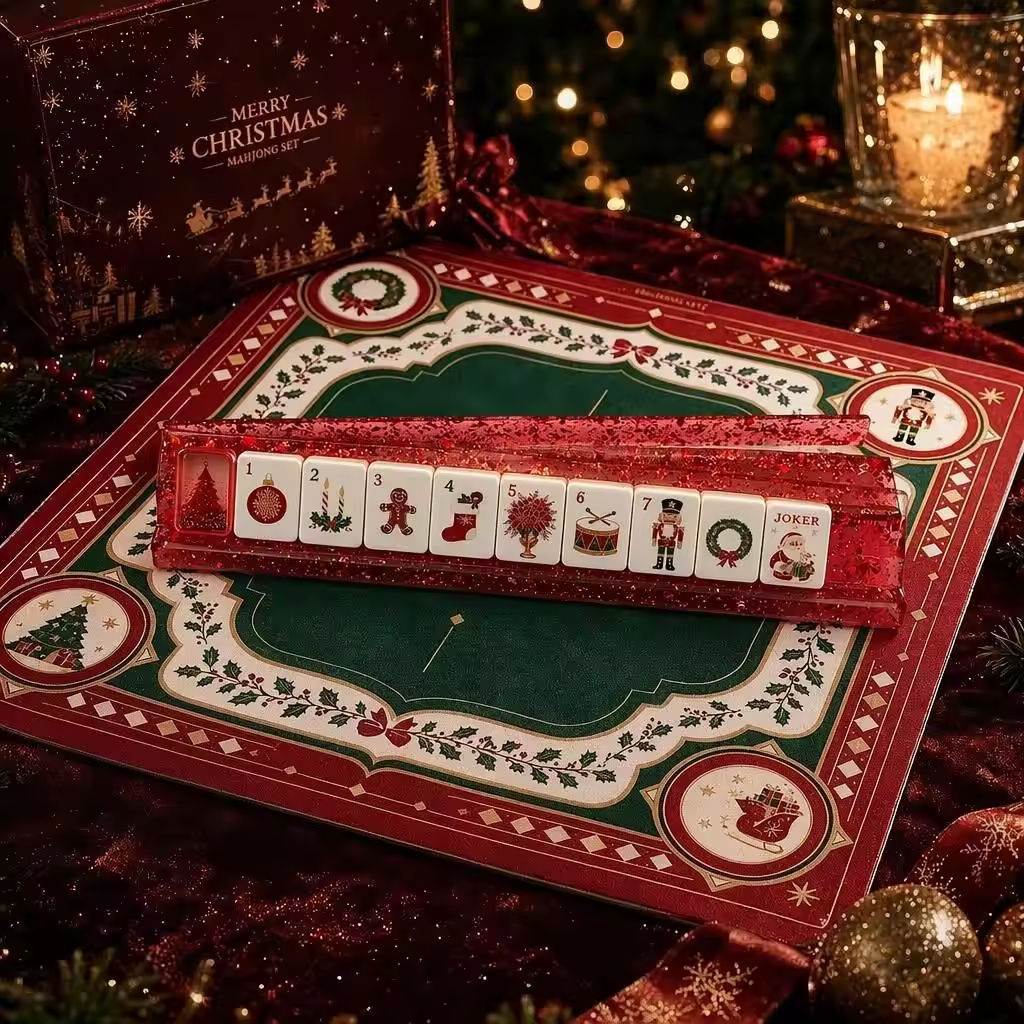
In American mahjong, stealing a pass means claiming an opponent's discard out of turn to expose a pung (3 identical tiles), kong (4 identical), quint (5), or sextet (6 of the same tile). The rule applies only to exposed melds that appear on the current National Mah Jongg League card for the active hand being played. You cannot steal a pass to form a pair, and if jokers are in the meld, specific joker-placement rules apply—for instance, jokers cannot occupy the single-tile position. Stealing interrupts turn order: after you expose the meld, play passes to the player whose turn would come next, not back to you. This rule is unique to American mahjong; Chinese and other variants do not allow called discards mid-hand. The meld must match the hand exactly as written on the card to be valid, and if it doesn't, you cannot steal. Our players verify hands on the card before claiming any discard, and we recommend keeping a best-selling mahjong set with clear, legible tiles so tile identity is never ambiguous at the table.
Stealing a pass transforms a mahjong hand from a quiet, waiting game into a dynamic, table-aware rhythm. When you understand when and how to call a discard, you shift from passive to active play—and you avoid costly mistakes that can stall the table or spark disputes. Let's walk through the rule, the gotchas, and how to use it without breaking stride.
What tiles can you steal a pass on?
You can steal a discard only to expose a pung (three identical tiles), kong (four identical), quint (five), or sextet (six). You cannot steal to form a single tile, a pair, or any sequence like 1–2–3—American mahjong has no chows, and no called sequences at all. The discard you steal must allow you to complete one of those four meld types exactly as it appears on the current year's National Mah Jongg League card. If the hand requires the meld with jokers in specific positions, and the discard would put a joker in the wrong spot, or would require a joker in a single-tile slot (which is illegal), the steal is invalid. Check the card before you call; a quick glance saves argument time and keeps the game flowing.

When does stealing interrupt turn order?
Once you steal a pass and expose your meld, the turn does not pass back to you. Instead, play moves to the next player in rotation after the player whose tile you claimed. For example: North discards; you are East and steal the pass; play now moves to South, not back to you. This means stealing can hurt you tactically—you lose your next turn. The player who discards after the steal then starts the normal discard rotation, and you wait for your next proper turn. Understanding this delay is crucial: new players often steal aggressively without realizing they've handed the turn to an opponent who may be closer to winning. Pause before you call; ask yourself whether the meld is worth losing your turn.
How do jokers affect stealing a pass?
Jokers are wildcards in exposed melds, but they have strict rules. In a pung, kong, quint, or sextet, a joker can replace any of the tiles—but never a single-tile meld and never as a pair. If the hand card shows a meld with a joker in a specific position (for example, a 5 Dot pung where the middle tile is a joker), the real 5 Dots and the two other tiles in that pung must match exactly. When you steal a discard to complete such a meld, you must have the real tiles and jokers arranged on your rack before you call—you cannot steal and then hunt for jokers. If the card shows a meld with no jokers, you cannot add one during the steal; the meld must be all real tiles. Our experience shows that joker confusion causes most stealing disputes. Before you sit down, review the how jokers work guide to clarify joker placement rules for your group.
🀄 Shop best-selling mahjong sets →
What makes a stolen pass meld illegal?
A steal is invalid if: (1) the meld is not on the current year's card as a valid hand pattern, (2) the meld requires a chow or sequence (illegal in American mahjong), (3) it forms a pair or single tile, (4) jokers are placed in forbidden positions, (5) the discard tile, combined with your existing tiles, does not complete the exact meld shown on the card, or (6) you lack all the required tiles in your rack before you steal. Many inexperienced players try to steal a pass and then search their rack for matching tiles, then announce "wait, I don't have it"—this causes delays and erodes table confidence. Instead, always verify you have the exact tile set ready before you call. If you steal and expose an illegal meld, the hand may be voided, or penalties apply depending on your group's rules. Have a written house rule on your table about illegal steals so no one disputes the outcome.
How stealing differs from joker substitution in other variants
In Chinese or Hong Kong mahjong, discards cannot be claimed mid-hand for exposed melds—play is much stricter and more about draws, not calls. In Riichi (Japanese) mahjong, there are no exposed melds at all; all hands are concealed until the win. American mahjong's stealing rule is unique: it's a called discard mechanic that allows you to interrupt turn order and expose a meld instantly. This speed and flexibility—and the strategic tension of knowing when to steal—is one reason American mahjong is distinct. If you play across variants, keep straight that stealing a pass is an American-only rule. Our how to play American mahjong guide covers the full ruleset; use it to onboard new players and settle variant disputes quickly.

Real table example: when to steal and when to hold back
Scenario: It's East's turn. North discards a 7 Crak. You (East) hold two 7 Craks, three 1 Bams, a Red Dragon, and two jokers. The hand card shows a pung of 7 Craks as part of the winning pattern. North's discard completes your 7 Crak pung; you can steal and expose it.
Decision: Before you steal, check: (1) Does the current card show 7 Crak pung as a valid meld? Yes. (2) Do you have two real 7 Craks already in your rack? Yes. (3) After you steal, does your remaining hand still work toward the final win? You have seven tiles left; you need to draw or claim two more tiles to complete the pattern. Doable. (4) Is the player about to take your turn (South) dangerous—close to winning? If yes, stealing may be reckless. If no, call it.
Action: Call the steal, expose the 7 Crak pung, and pass the turn to South. You've revealed one third of a potential winning hand, which signals your tiles to the table—a tactical trade-off. If the pung isn't on a prominent winning line, or if you're fishing for a throw-off tile, stealing might draw unwanted attention. Experienced players watch who steals what; they track your exposed melds and discard patterns to predict your hand.
🎁 See our most-loved mahjong sets & accessories →
What to check before you buy or play
Before you host a game at home, confirm your group's house rules on stealing in writing. Some clubs penalize illegal steals heavily; others allow a "take-back." Make sure everyone at the table understands that a steal interrupts turn order—new players often think the turn comes back to them, causing confusion. Have a current-year National Mah Jongg League card visible so any disputed meld can be verified instantly. If you're buying a mahjong set for regular play, choose one with high-contrast tile faces so no one misreads a tile during a steal—mistakes compound when melds are exposed quickly. Use a mahjong mat marked with clear player positions so turn order is always obvious when a steal happens.
Common mistakes when stealing
Mistake | Why it breaks the game | How to avoid it |
Stealing a chow or sequence | American mahjong has no chows; calling a steal on 1–2–3 is invalid. | Verify only pungs, kongs, quints, sexets are legal steals. Check the card. |
Stealing before you have the tiles in hand | You call a steal, then fish in your rack for the matching tiles. | Audit your rack before calling; know you have the exact set ready. |
Forgetting turn order passes to the next player, not back to you | You steal, expect your turn next, then lose focus when play skips you. | Announce whose turn is next after your steal; confirm aloud before play resumes. |
Using a joker in an illegal position (single tile, pair) | Joker rules are rigid; the card shows exactly where jokers go in each meld. | Review the card meld before you steal; never improvise joker placement. |
Stealing a meld that isn't on this year's card | The National Mah Jongg League card changes every spring; old patterns may not be valid. | Verify the card is current-year and that the meld is listed as a valid hand. |
Why table etiquette matters in stealing
Stealing a pass is legal and strategic—but it can also feel aggressive if done carelessly. Always call clearly: "Steal," or "I take," then announce which meld you're exposing and show the tiles immediately. Don't leave ambiguity; don't take a tile and mutter quietly. Fast, loud, clear calls make the game flow and prevent disputes. If you steal and another player questions the meld's validity, stop the hand, check the card together, and resolve it calmly. Respect the time pressure: if you're going to steal, decide fast—don't steal, pause, then hand the turn back. These courtesies keep the table friendly and the game sharp. Our best-selling mahjong sets are designed for speed and clarity; large, legible tile faces and a sturdy carrying system mean your group can set up, play, and reset quickly between hands without losing rhythm.
✨ Find your Mahstead set — free US shipping →

FAQ
Can I steal a pass to make a pair?
No. Stealing is only for exposed melds—pung, kong, quint, or sextet. Pairs are concealed in American mahjong and cannot be called.
What happens if I steal illegally and the meld is wrong?
Rules vary by group. Some void the hand; others impose a penalty. Agree on your house rule in advance and write it down so there's no argument mid-game.
If I steal a pass, do I draw a tile on my next turn, or do I sit out?
You sit out your next regular turn. After you steal and expose, play moves to the next player in rotation. When your turn comes around normally again, you draw as usual.
Can I steal a discard that has a joker in it?
Jokers are not discarded in American mahjong; they stay in racks until they're part of an exposed meld. You can steal a real tile and use jokers already in your rack to complete the meld.
Does the player whose tile I steal get upset because I called their discard?
Not in principle. Stealing is a normal part of American mahjong. The player simply discards their next tile (or sits out if another player's turn comes first). No penalty to them; it's just how the game flows.
If the hand card shows a meld with a joker, can I steal using only real tiles, no joker?
No. The card specifies where jokers go. If the card shows a joker in the meld, your exposed tiles must include a joker in that position. Otherwise, it doesn't match the hand, and the steal is invalid.


View More
View More
View More
