
Mahjong Tournaments in Alabama: Where to Play & How to Compete
Last updated: Nov 23, 2026
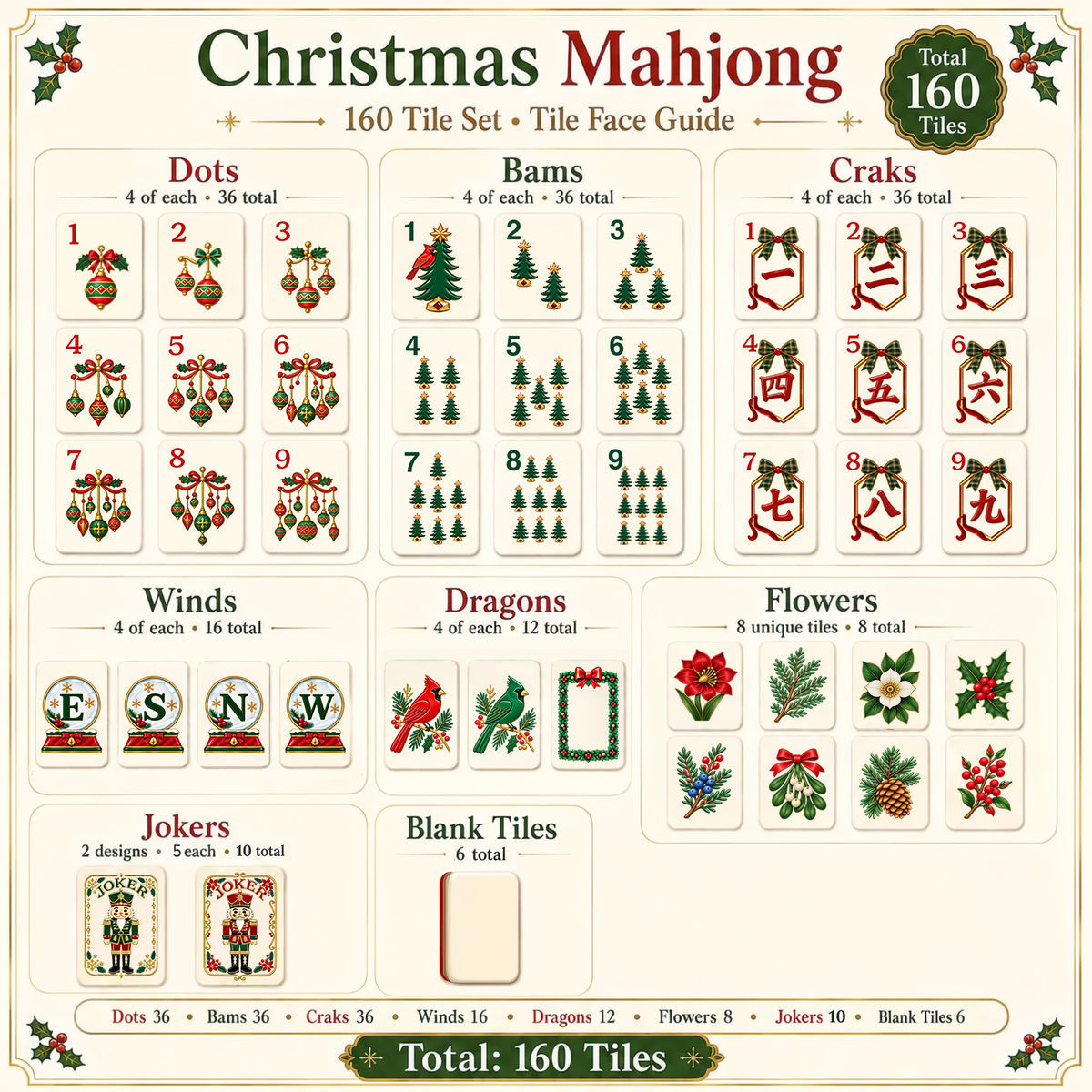
Alabama mahjong tournaments happen regularly in Birmingham, Montgomery, Huntsville, and Mobile through synagogues, senior centers, libraries, and Mah Jongg League-affiliated clubs. Most tournaments follow American mahjong rules (152 tiles, 8 jokers, hands from the current-year National Mah Jongg League card). Tournaments typically run on weekends, last 4–6 hours, and charge a modest entry fee; you'll find them advertised on community bulletin boards, Meetup, or by contacting local synagogues and senior services. Beginners and experienced players compete in separate sections. Before entering, familiarize yourself with how to play American mahjong and have a reliable set—tournament players often bring engraved acrylic sets for durability and clear tile visibility under competition pressure.
How do I find tournaments near me in Alabama?
Start with synagogues in your city—they host or know about mahjong clubs and league tournaments. Call the main office and ask for the mahjong coordinator or check their events calendar. Community centers, senior centers, and libraries often post tournament flyers or keep lists of affiliated game groups. Meetup.com and Facebook community groups cover many Alabama towns; search "mahjong Birmingham" or "mahjong [your city]." The National Mah Jongg League publishes an annual tournament schedule; check their website for sanctioned events in your region. Personal introductions matter: attend a casual club game first to learn the local tournament circuit directly from regulars.

What rules apply in Alabama tournaments?
Alabama tournaments follow National Mah Jongg League (NMJL) rules for American mahjong. You play with 152 tiles (three suits—Bams, Craks, Dots—plus winds, dragons, flowers, and jokers). Hands come only from the current year's League card; you cannot invent or play hands from previous years. No chows (sequences like 1-2-3) can be called or exposed—only pungs (3 identical tiles), kongs (4), quints (5), and sextets (6). Jokers may never be used as a single tile or a pair. The game opens with the Charleston, a three-pass tile exchange ritual. Most clubs play four-handed, and rounds last about 12 minutes per hand. Scoring follows League tables; winners are determined by speed of going mah jongg (winning) and hand value. Always ask the tournament organizer for any house rules before play begins.
What's the difference between casual play and tournament play?
Aspect | Casual Game | Tournament |
Pacing | Relaxed, social | Timed, recorded |
Card | Usually current year | Always current year |
Scoring | House rules vary | Strict NMJL rules |
Joker availability | Flexible | Set count (8 only) |
Chat/breaks | Frequent | Minimal |
Entry cost | Free or small pot | Fee per event |
Tile tracking | Informal | Official scorecards |
Casual games let you play however your group agrees; tournament play enforces NMJL rules uniformly. In casual settings, you might add house rules or play older cards; tournaments reject that. Tournament speed matters—hands advance quickly, and you must track your tiles and discards carefully. Scores are posted publicly. Casual play is forgiving if you miscount a pung; tournaments penalize mistakes with scoring corrections or hand voids. Most players start casual to learn, then enter tournaments for the challenge and camaraderie.
How do I prepare for my first tournament?
Master the National Mah Jongg League card before tournament day. Understand every section and pattern so you recognize hands instantly under pressure. Practice the Charleston—the opening tile-pass ritual—until it feels automatic; tournaments move fast and fumbles here waste everyone's time. Know how jokers work in hands: they substitute for any tile except in single-tile or pair positions. Attend one or two casual games with experienced players to learn the rhythm and local etiquette. Bring a comfortable mahjong set with readable tiles; acrylic sets are durable and popular in tournaments. Consider bringing a mat to organize your hand so tiles don't slide during play. Arrive early to meet the organizer and confirm the format. Most tournaments pair or draw players to mixed tables so you'll play strangers—stay friendly and focus on your own hand, not others' pace.
What should I expect on tournament day?
Tournaments typically start with check-in 15–30 minutes early. You'll pay the entry fee, receive a number or table assignment, and be seated with three other players at a table. A round supervisor or timer calls "tiles" to begin the Charleston. Most Alabama tournaments run 8–12 rounds (hands), each lasting 10–15 minutes; breaks occur every two or three rounds. Scoring is tracked on paper or by an app and posted between rounds. Winners may receive small prizes (gift certificates, tournament credits) or recognition; entry fees usually cover organizer costs and prize funds rather than guaranteeing large payouts. You'll play against different opponents each round. Atmosphere is competitive but social—many players have been coming for years and welcome newcomers. Bring water, wear comfortable shoes, and be prepared to sit for 4–6 hours total.

Which Alabama cities host regular tournaments?
Birmingham has the most active scene, with multiple clubs meeting weekly or monthly and regular tournament events. Montgomery, Huntsville, and Mobile each have smaller established groups that host quarterly tournaments or special events. Auburn and Tuscaloosa sometimes run university-affiliated or community events. Dothan and Gadsden have casual clubs that occasionally organize tournaments. COVID changed some schedules; current frequency varies by venue. Your best move: contact a synagogue, senior center, or library in your city and ask when the next game or tournament is scheduled. Online, Meetup sometimes lists these gatherings by region; ask other players for current dates. Many organizers use email lists or WhatsApp to coordinate, so once you join one group, you'll hear about other events nearby.
🀄 Shop best-selling mahjong sets →
What equipment do I need for a tournament?
A standard 160-tile American mahjong set is essential—it includes 152 playing tiles plus spares. Choose acrylic sets for durability; they don't chip or dent under tournament handling and tile faces remain crisp after years of play. A mat organizes your hand and prevents tiles from sliding on the table. Racks with pushers help you draw tiles smoothly from the wall and keep your hand neat. Bring the current-year League card (usually provided by the organizer, but bring your own copy to study before play). A notebook or small pen helps you track other players' discards if you're new to tournament play. Some venues allow bags or cases to transport your set safely. Most tournament tables provide a revolving wind indicator and a dice pair.
What if I'm a complete beginner?
Many Alabama tournaments split players into beginner and intermediate/advanced sections so you compete fairly. Before your first tournament, learn the rules and card at home—play a few casual games with friends or a club. Attend a weekly club meeting (free or low-cost) for one or two sessions to watch hands and ask questions. Clubs are welcoming to beginners; regulars remember their first tournament and often offer tips. Don't worry about speed—you'll get faster. Start with a beginner section or a low-pressure league game. Remember: everyone at the table is there for the game, not to judge you. Mistakes happen; you'll learn them and avoid them next time. Your first tournament is about fun and learning, not winning.
🎁 See our most-loved mahjong sets & accessories →
What to check before you buy or borrow equipment for a tournament
Set completeness: Confirm it has 152 tiles (8 jokers included) plus spares. Missing tiles void a hand mid-game.
Tile readability: Check that numbers and suit symbols are engraved or printed clearly; dim tiles slow you down.
Tile stability: Drop or shake a tile—does it crack? Tournaments are long; durability matters.
Mat fit: If bringing your own mat, ensure your tiles fit comfortably and the mat doesn't slip on the table.
Card currency: Bring the current-year National Mah Jongg League card. Old cards are not legal in tournaments.
Organizer approval: Ask the tournament host if your set meets their standards before game day.
Many newcomers borrow a set for their first tournament—that's fine, but verify the tiles are all there and readable. Broken or stained tiles frustrate other players. If you're uncertain about your set's condition, ask a club member to inspect it.
✨ Find your Mahstead set — free US shipping →

FAQ
Can I play mahjong tournaments in Alabama if I'm not from there originally?
Yes. Tournaments are open to anyone who follows the rules. Many Alabama players have moved from other states; clubs welcome visitors and newcomers. Arrive early to introduce yourself to the organizer.
Do I need to join a club to enter a tournament?
Most tournaments welcome unaffiliated players, but membership in a local club or the NMJL may give you priority entry or discounts. Ask the tournament organizer if membership is required or optional.
What's the cost to enter an Alabama mahjong tournament?
Entry fees vary by venue and organizer. Contact your local tournament host for current pricing; fees typically cover organizer costs and prize funds rather than guarantee large payouts.
Are there online resources for Alabama mahjong tournament schedules?
Meetup.com sometimes lists local games. The National Mah Jongg League website publishes sanctioned tournament dates. Synagogues, senior centers, and community libraries maintain current schedules; call or email them directly.
What if I've only played Chinese or Hong Kong mahjong—can I compete in an Alabama tournament?
American mahjong rules differ significantly (no chows, jokers as wild tiles, hands from a licensed card). You'll need to learn American rules before entering a sanctioned tournament. Start with casual American games to transition.
Do tournaments in Alabama run year-round?
Most run fall through spring; summer often sees fewer events due to heat and vacation. Check with your local club or organizer for their seasonal schedule and any special summer tournaments.


View More
View More
View More
