
Sichuan Mahjong With 2 Players: Rules, Setup & How to Play
Last updated: Nov 23, 2026
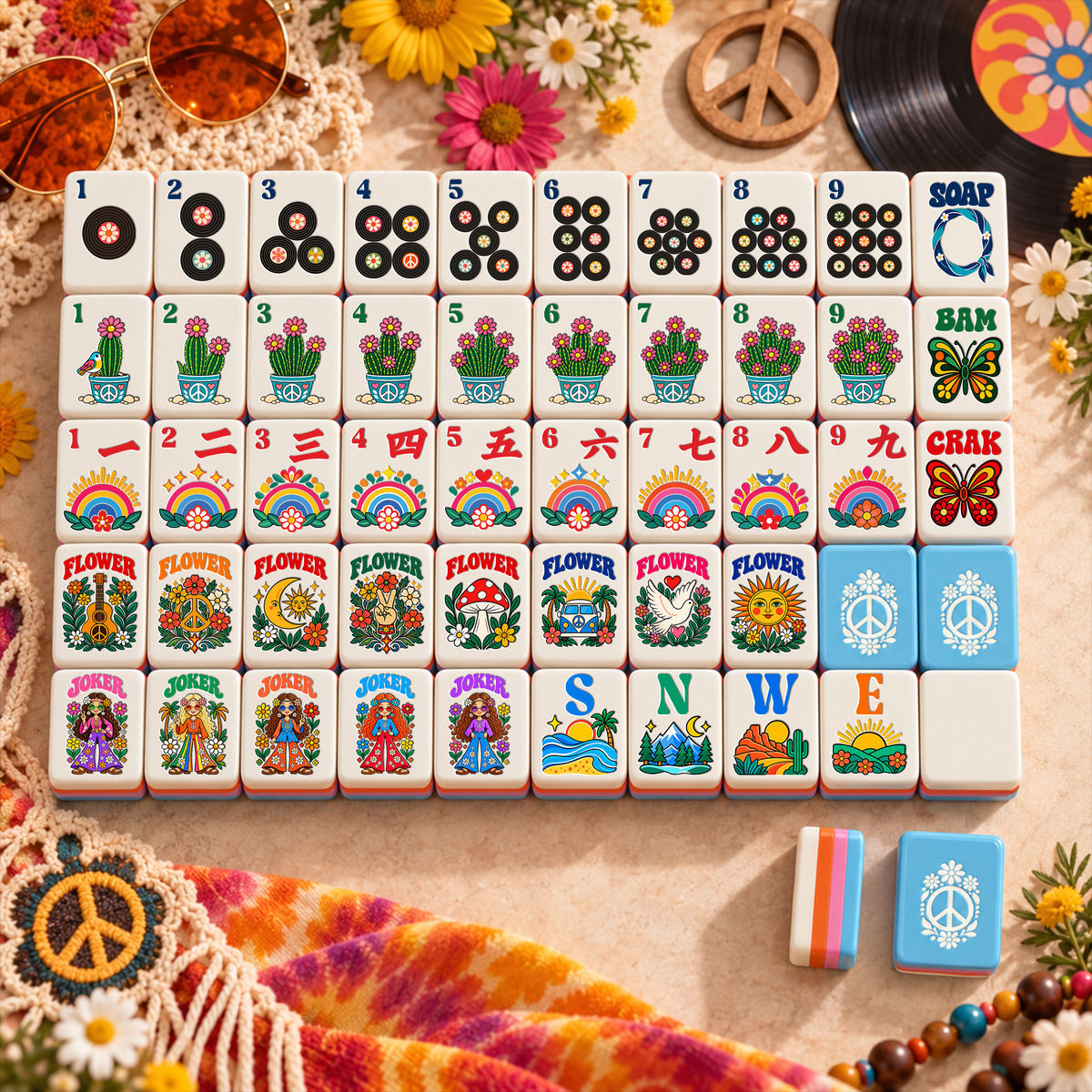
Sichuan mahjong differs fundamentally from American mahjong: it uses 108 tiles (one suit of 1–9 in each of three suits—Bams, Craks, Dots—plus winds and dragons, four copies each), permits chow sequences (1-2-3, 8-9-10), and has no jokers. Two-player Sichuan mahjong is rare in formal play because the game was designed for four players and hand patterns break down severely with fewer. If you play it with two, each player draws 25 tiles, the wall is shuffled to 52 tiles per side, and you must modify winning patterns to exclude hands requiring three or four distinct melds (since exposure and draws become impractical). Scoring shifts to a points-per-hand system rather than settlement by wind position. A 108-tile set (sold separately from American 160-tile sets) is required; Mahstead carries American mahjong sets for the more common four-player game. Two-player Sichuan mahjong works best as a casual variant for experienced players who understand hand composition and are willing to house-rule outcomes.
Does Sichuan mahjong even work with two players?
Technically, yes—but not well. Sichuan mahjong assumes four active players rotating turns, discarding, and reading hands. With two players, the wall shrinks, tiles are drawn too quickly, and hands designed for pung/kong/chow combinations become mathematically impossible to achieve. Most serious Sichuan players consider two-player versions a fun experiment rather than a proper game. You can play it; expect faster rounds, more dead hands, and frequent need to house-rule outcomes like who wins a draw or how to handle a wall run-out.

What tile set do you need for Sichuan mahjong?
Sichuan mahjong requires a 108-tile Chinese set: 36 tiles each in Bams, Craks, and Dots (numbers 1–9, four copies each), plus 16 winds (four each: North, East, West, South) and 12 dragons (four each: Red, Green, White). Many traditional sets also include flowers and seasons, but these are often house-ruled out or treated as wildcard draws. You cannot use an American 160-tile set; American mahjong includes jokers and a fundamentally different tile distribution that breaks Sichuan patterns. If you're learning Sichuan or teaching others, buy a dedicated 108-tile set clearly labeled for Chinese or Sichuan play—mixing set types mid-game causes confusion and rule disputes.
How do you distribute tiles for two-player Sichuan mahjong?
In standard four-player Sichuan, each player draws 13 tiles and one player draws 14 (the dealer). With two players, you must adapt: each player typically draws 25 tiles from a 108-tile wall, leaving 58 tiles to draw from during play. Shuffle the wall into four stacks of 27 tiles (or two stacks of 54, depending on your house rules) and place them in the center, turned face-down. Player one draws first, discards one tile face-up, then player two draws and discards. This continues until one player forms a winning hand (a specific combination of melds and a pair) or the wall runs out. Because the wall depletes so quickly with only two players, draw speed becomes critical—most two-player games end within 10–15 rounds, far faster than four-player rounds which can run 20–30. House-rule in advance whether a wall run-out is a draw, a loss for the player who cannot form a hand, or a reshuffle.
What winning hands are realistic for two players?
Standard Sichuan winning hands require four melds (three of pung/kong/chow) plus one pair, totaling 14 tiles. With two players and rapid draws, hands should be simplified: some players allow a win with only three melds plus a pair (11 tiles) or two melds plus a pair (8 tiles), depending on how fast you want play to move. Avoid hands that require exact sequences or specific wind/dragon combinations because tiles are drawn too quickly and competitively for precise hand control. "Waiting" (ting) on a single tile becomes rarer in two-player play because the discard pool is smaller and the opponent reads your hand more easily. Focus on flexible hands that can be completed by multiple tiles (e.g., a pung of 5 Bams, any three consecutive Craks, any pung of winds) rather than rigid patterns. This keeps the game playable and unpredictable.
How does scoring change with two players?
Sichuan mahjong scoring in four-player mode uses settlement: if you win, each other player pays you a base amount (often 1 point per meld type, doubled for kong, adjusted for dragon/flower bonuses). With two players, settlement doesn't work—you need a points-per-hand system instead. Example: a two-pung hand = 2 points, a hand with a kong = 4 points, a hand with a dragon pung = 6 points, and so on. At the end of a session, tally total points: the player with more points wins the difference. Alternatively, some two-player groups play "winner takes all": the first player to win a hand claims a fixed stake, and play resets. Decide your scoring rule before play begins and write it down so both players can reference it during disputes. Most two-player games feel less like "real" mahjong because the traditional four-player settlement dynamic—where losers split a payout—is absent, making two-player Sichuan feel more like a tile-matching puzzle than a gambling or highly competitive game.
🀄 Shop best-selling mahjong sets →

Common mistakes and how to avoid them
Mistake | What goes wrong | How to fix it |
Using an American 160-tile set | Jokers, wrong tile distribution; hands won't form. | Buy a dedicated 108-tile Sichuan/Chinese set only. |
Not pre-agreeing on winning hand types | One player claims a win you don't recognize; argument stops play. | House-rule and write down which hands are valid before game one. |
Drawing too fast from a small wall | Wall empties by round 8–10; most hands unfinished. | Agree in advance: is a wall run-out a draw, a loss, or a reshuffle? |
Mixing chow/sequence rules with pung-only rules | Confusion about what combinations are allowed mid-hand. | Clarify: are chows (1-2-3, 8-9-10) valid? Can you call/expose them? Decide upfront. |
Losing track of what the other player has discarded | You miss a tile they need; they win unexpectedly or you miss a steal. | Keep a small notebook; write each discard in order so you can review what's been played. |
🎁 See our most-loved mahjong sets & accessories →
Should you play two-player Sichuan mahjong at all?
Two-player Sichuan mahjong is a niche experiment, not a standard game format. It works best if you and one opponent are experienced Sichuan players, enjoy house-ruling on the fly, and treat it as a casual tile-matching game rather than a serious competition. If you're looking for an actual two-player mahjong experience, American mahjong offers established 2-player variant rules with published guidelines and a clear hand card—far easier to follow and more widely recognized than improvised two-player Sichuan. Sichuan's real strength is four-player mode, where hand formation, discard reading, and settlement create the depth and social tension that make the game rewarding. If only two of you are available, consider learning a two-player variant designed for that player count, or wait until you have a third and fourth player to experience Sichuan as it was meant to be played.
What you'll need if you do play two-player Sichuan
If you commit to two-player Sichuan mahjong, invest in tools that speed setup and reduce disputes:
A dedicated 108-tile Sichuan/Chinese mahjong set (not American): ensures tile counts are correct and no jokers appear mid-hand.
A score pad or notebook: track each discard in order and record points per hand so scoring disputes don't derail play.
A printed house-rule sheet: write your variant rules (which hands are valid, how wall run-outs are handled, scoring) and post it at the table so both players can reference it without debate.
A small timer (optional): enforce a 60–90-second turn limit so play doesn't stall while waiting for a draw.
For standard four-player American mahjong—the more accessible and widely recognized variant—our best-selling mahjong sets include everything you need: 160 acrylic tiles, engraved for easy reading, with spare jokers included, plus options for custom-engraved sets if you want to personalize your game. We also offer mahjong mats to protect play surfaces and racks with pushers for comfortable tile organization.
✨ Find your Mahstead set — free US shipping →
What to check before you buy a Sichuan mahjong set
Before purchasing a 108-tile Sichuan set from any vendor, verify these details:
Tile count: confirm it's exactly 108 tiles (36 per suit, 16 winds, 12 dragons, optional flowers/seasons); if you see 144 or 160 tiles, it's American, not Sichuan.
Suit marking clarity: each Bam, Crak, and Dot tile should have a distinct symbol; if markings are faint or illegible after a few plays, readability suffers.
Material and weight: acrylic or resin tiles are standard; avoid lightweight plastic sets that wear quickly or sound hollow.
Tile size consistency: all tiles should be the same size; mismatched tiles jam in racks with pushers or slide unevenly.
Lack of instruction for two-player variants: most Sichuan sets come with four-player rules; if a seller claims "optimized for two players," ask for specific rule modifications, as this is extremely rare.

FAQ
Can I play two-player Sichuan mahjong with an American mahjong set?
No. American sets include jokers and 152 tiles with a different tile distribution (16 winds, 12 dragons, 8 flowers). Sichuan uses 108 tiles with four of each rank and no jokers. The hand patterns and winning conditions are incompatible; using an American set will cause immediate rule conflicts and unfinished hands.
What's the minimum player count Sichuan mahjong actually works well for?
Sichuan mahjong is designed for four players. Three players is playable with adjusted tile draws and wall sizes. Two players is possible but creates a fast, unpredictable game where house rules dominate. Most experienced Sichuan players recommend waiting for a fourth.
How long does a two-player Sichuan game last?
A single hand typically lasts 8–15 minutes depending on how fast you draw and discard. A full session (best-of-three or best-of-five hands) usually runs 30–60 minutes. Four-player games typically last 45–90 minutes because more players mean slower turns and deeper strategy.
Do chows (sequences like 1-2-3) count in Sichuan mahjong?
Yes. Sichuan mahjong permits chows in addition to pungs (three identical tiles) and kongs (four identical tiles). A winning hand requires four melds (any combination of chows, pungs, or kongs) plus one pair. Two-player variants sometimes simplify this to three melds plus a pair to speed play.
Is two-player Sichuan mahjong officially recognized, or is it just house rules?
It's entirely house rules. Sichuan mahjong has no official two-player ruleset published by any governing body. Any two-player version you play is a local variant you and your opponent agree on. Write your rules down before play so disputes don't interrupt the game.
Where can I find a 108-tile Sichuan mahjong set?
Specialized tile retailers and online vendors selling Chinese or Sichuan mahjong sets carry 108-tile versions. Verify the tile count (not 144 or 160) and suit markings before purchase. American mahjong stores like Mahstead focus on 160-tile American sets, so for Sichuan you'll need a vendor specializing in Chinese variants.


View More
View More
View More
