
Wall in Mahjong Examples: Building Winning Hands
Last updated: Nov 23, 2026
The wall in American mahjong is the centerpiece of tile management—yet many newer players draw from it incorrectly or don't understand why its size matters. We've hosted hundreds of weekly games and watched the same mistakes happen: players reaching across others' sections, drawing two tiles by accident, or panicking when the wall gets shallow. Let's walk through exactly what the wall is, how it's built, when you draw from it, and why it affects your strategy and scoring odds.
What is the wall and why does it matter?
The wall is simply the reserve of undrawn tiles sitting face-down in the center of the table. Each player controls one "section" of the wall (often marked by a divider or understood by position), typically containing about 38 tiles at the start. Why does it matter? Because every tile you draw comes from the wall, and the wall's size tells you how many hands remain possible in that round. A shallow wall means fewer draws ahead—your chances to complete a hand shrink. A full wall after the Charleston means players have many opportunities to build and adjust. The wall also determines when the "dead wall" activates (the final 14 tiles reserved for kong replacements and end-game draws). Respecting wall structure prevents arguments over whose turn it is and whether a draw was legal.

How is the wall built and divided?
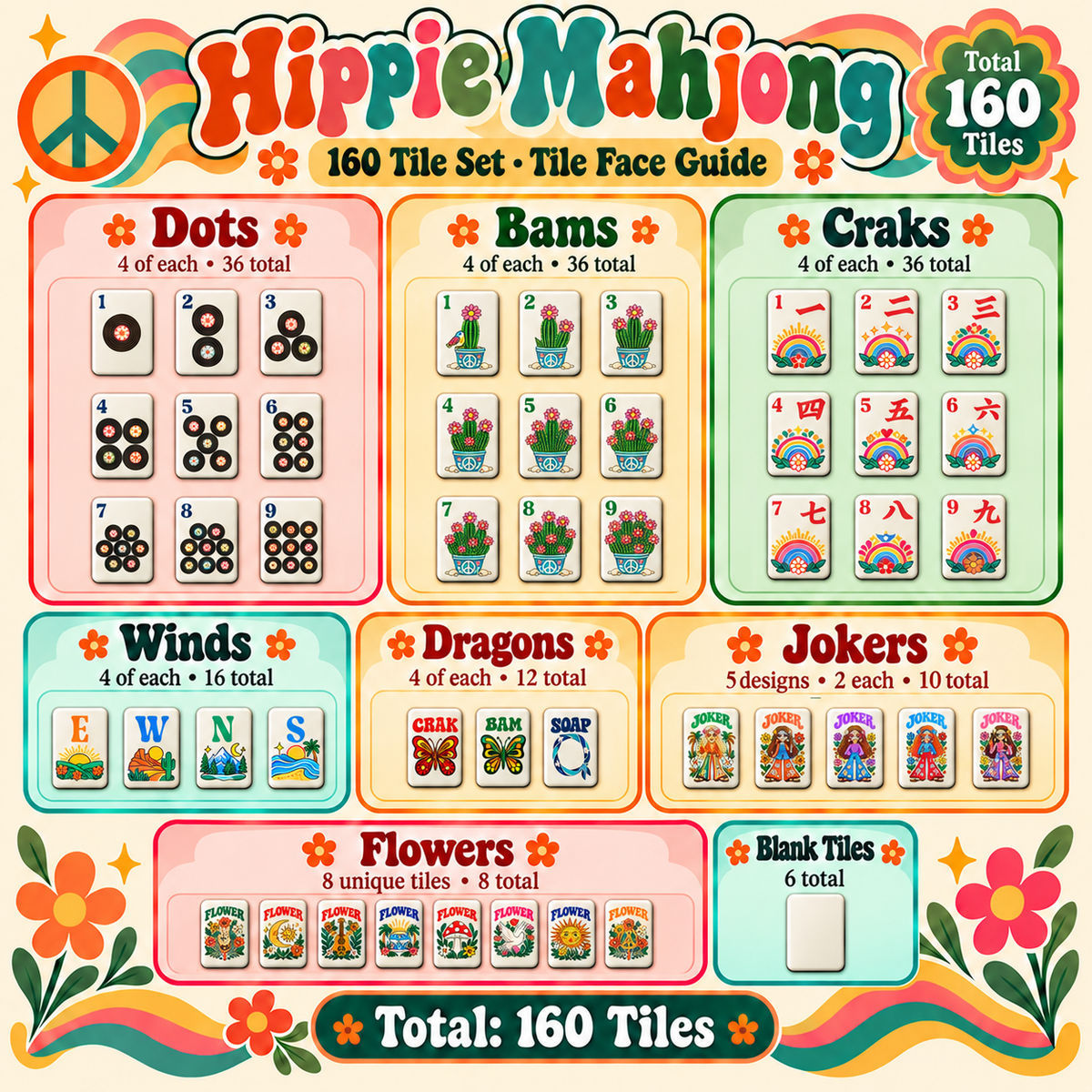
Before the first hand, players shuffle all 152 tiles and 8 jokers together on the table, then stack them face-down into a wall. The wall is divided into four sections of roughly 40 tiles each, one section assigned to each player. Traditionally, the wall runs horizontally on two sides of the table, or stands in a compact stack in the center with a marker or divider between players' sections. When the dealer is chosen, players position themselves: the dealer takes one corner, and the other three players sit to the dealer's left, across, and right. The wall is always built from the full 160-tile set minus the spare jokers and blanks; only the 152 playing tiles and 8 jokers are shuffled in. The order of tiles in the wall is randomized before the first hand begins and remains random (never reshuffled mid-hand unless a hand is declared a draw or a cheating violation occurs). Using high-quality, uniform best-selling mahjong sets ensures the wall shuffles evenly and tiles stack consistently.
When does each player draw from the wall?
The sequence of draws follows a strict pattern:
Before the Charleston: No one draws; the wall is merely stacked.
After the Charleston (start of play): The dealer draws the first tile from their section of the wall, completing their hand to 14 tiles. All other players have already received 13 tiles during the distribution.
Each subsequent turn: The player whose turn it is (starting with the dealer, then moving left) draws one tile from the wall and discards one tile face-up to discard pile.
When a pung, kong, quint, or sextet is claimed: The player who claimed it draws from the wall immediately after the claim is resolved.
When the dead wall is active: Certain draws (e.g., replacements after a kong is melded) come from the dead wall instead of the regular wall.
Draws always happen in turn order (dealer → left → across → right, then repeat). Draws out of turn—a common mistake—must be corrected immediately by returning the tile to the wall (face-down, in the correct position) and resuming normal play.
🀄 Shop best-selling mahjong sets →
What is the dead wall and when is it used?
When exactly 14 tiles remain in the wall, play transitions into the "dead wall" phase. The dead wall is reserved for two specific scenarios:
Kong replacements: When a player melds a kong (four identical tiles), they draw one replacement tile from the dead wall instead of the regular wall. This keeps the total tiles in the game constant and prevents the wall from emptying unexpectedly.
Final hand completion: If a hand reaches the point where only the dead wall remains and no player has won yet, draws come from the dead wall until it, too, is exhausted. If the dead wall runs out without a winner, the hand is a draw.
The dead wall typically contains 14 tiles (no jokers in the dead wall—all jokers are part of the regular 152 playing tiles). Some players mark the dead wall visually with a stack orientation or a small sign to avoid confusion. A shallow wall (fewer than 15 tiles left) signals that the hand is nearing its end and increases the urgency of completing or claiming tiles. Knowing when the dead wall is active prevents illegal draws and keeps scoring honest. For detailed scoring rules and wall impact, refer to the official National Mah Jongg League guidance or your group's house rules.
How does wall size affect your strategy and winning odds?
A deeper wall (more tiles remaining) means more draws ahead, which increases the odds that the specific tiles you need will appear. A shallow wall (14+ tiles left but fewer than 25) raises the stakes: fewer opportunities mean you must commit to a hand strategy earlier and watch discards more carefully for competitor clues.
Here's a practical decision table we use at weekly games:
Tiles Left in Wall | Round Phase | Your Strategy | Risk Level |
30+ | Early (first 5 draws) | Explore; flexibility is high | Low—adjust hand easily |
20–29 | Mid (draws 6–10) | Focus on 1–2 target hands | Medium—commit to one path |
14–19 | Late (draws 11–13) | Aggressive: call or discard for points | High—fewer do-overs |
Dead wall (≤14) | Endgame | Win or draw is imminent | Critical—every tile counts |
A shallow wall also affects how you read opponents' discards. If three tiles are discarded and the wall is thin, that player may be in a rush to win and will likely discard risky tiles next turn. Conversely, in an early-game deep wall, a single discard is less urgent. Wall awareness separates casual players from consistent winners.
What mistakes do players make with the wall?
We see these errors almost every session:
Drawing out of turn: Player A sees the wall and draws before Player C's turn. Illegal. The tile must go back, face-down, in its original position.
Drawing two tiles at once: Reaching too fast and grabbing a neighbor's tile. Result: confusion and, if not caught, a mis-count at the end of the hand.
Not respecting wall sections: Reaching across another player's wall section. This is rude and can cause disputes about which wall section is "used up" first.
Forgetting the dead wall: Continuing to draw from the regular wall after it should have transitioned to the dead wall, causing a shortage and a misdeal.
Reshuffling mid-hand: Some players try to "shuffle the wall" to get better tiles. Never legal. The wall order is fixed at the start of the hand.
Not marking the wall's boundary: In casual play, players forget which tiles are the dead wall, leading to draws from the wrong section.
To avoid these, agree on wall markers before you begin (a small tower, a line of spare tiles, or a designated player to "manage" the wall). Establish a rule: "No one touches the wall except the player whose turn it is to draw." And always announce when the dead wall is reached: "Dead wall now active—14 tiles left." Our guide to reading the mahjong card covers hand recognition; proper wall management ensures every hand is played fairly.
🎁 See our most-loved mahjong sets & accessories →
What to check before you buy a mahjong set to ensure a smooth wall experience:
Tile uniformity: All tiles should be identical in size and weight so they shuffle and stack evenly in the wall.
Joker clarity: Ensure jokers are visually distinct so you don't accidentally stack one as a regular tile (they're part of the shuffled mix but easy to spot).
Durable stack: Acrylic tiles hold their shape when stacked and don't warp, keeping the wall stable during play.
Complete count: Verify your set has exactly 152 playing tiles and 8 jokers (160-tile sets include spare tiles, which stay off the table).
A well-made engraved American mahjong set with clear suit markings and uniform tiles makes wall-building and drawing smooth, especially during faster games when multiple draws happen in quick succession.
What you'll need for a proper wall setup:
A full American mahjong set (152 tiles + 8 jokers)
A flat table or mat large enough for a wall and discard pile
Optional: A wall marker or divider (spare tiles or a small sign)
Optional: A mahjong mat to define the play area and protect the wall from spills
A quality mahjong mat with a clear layout helps players understand wall sections and keeps the game organized, especially if you host weekly games and need a repeatable setup.
✨ Find your Mahstead set — free US shipping →

FAQ
Can a player draw from a wall section that isn't theirs?
No. In American mahjong, each player draws only from their own wall section (dealer's left, across, right, then dealer). Reaching across another player's section is unsportsmanlike and can disrupt play. If a player draws from the wrong section by accident, the tile must be returned and play corrected.
What happens if the wall runs out before anyone wins?
If all tiles are drawn (regular wall + dead wall) and no player has won, the hand is a draw or "wash"—no one scores, and the deal passes to the next player. This is rare but possible in defensive play or when no one has a viable hand.
Are jokers part of the wall or separate?
Jokers are shuffled into the wall along with the 152 regular tiles. They're not separate; they're part of the 160-tile mix (152 playing + 8 jokers). When you draw from the wall, you might draw a joker, which acts as a wildcard in exposed melds.
Is the wall always divided equally among four players?
Yes, the wall is divided into four roughly equal sections, one per player. If one section is depleted faster than others, players take turns drawing from the available wall in rotation. The dead wall (final 14 tiles) is shared and managed by the group, not divided by player.
Can you shuffle the wall during a hand if you don't like the tiles?
No. The wall is set at the start of the hand and never reshuffled until the next hand begins. Reshuffling mid-hand is cheating. If a player suspects cheating, the hand is typically declared a draw and the deal passes.


View More
View More
View More
