
Riichi Mahjong Etiquette: Rules, Calls & Table Courtesy
Last updated: Nov 23, 2026
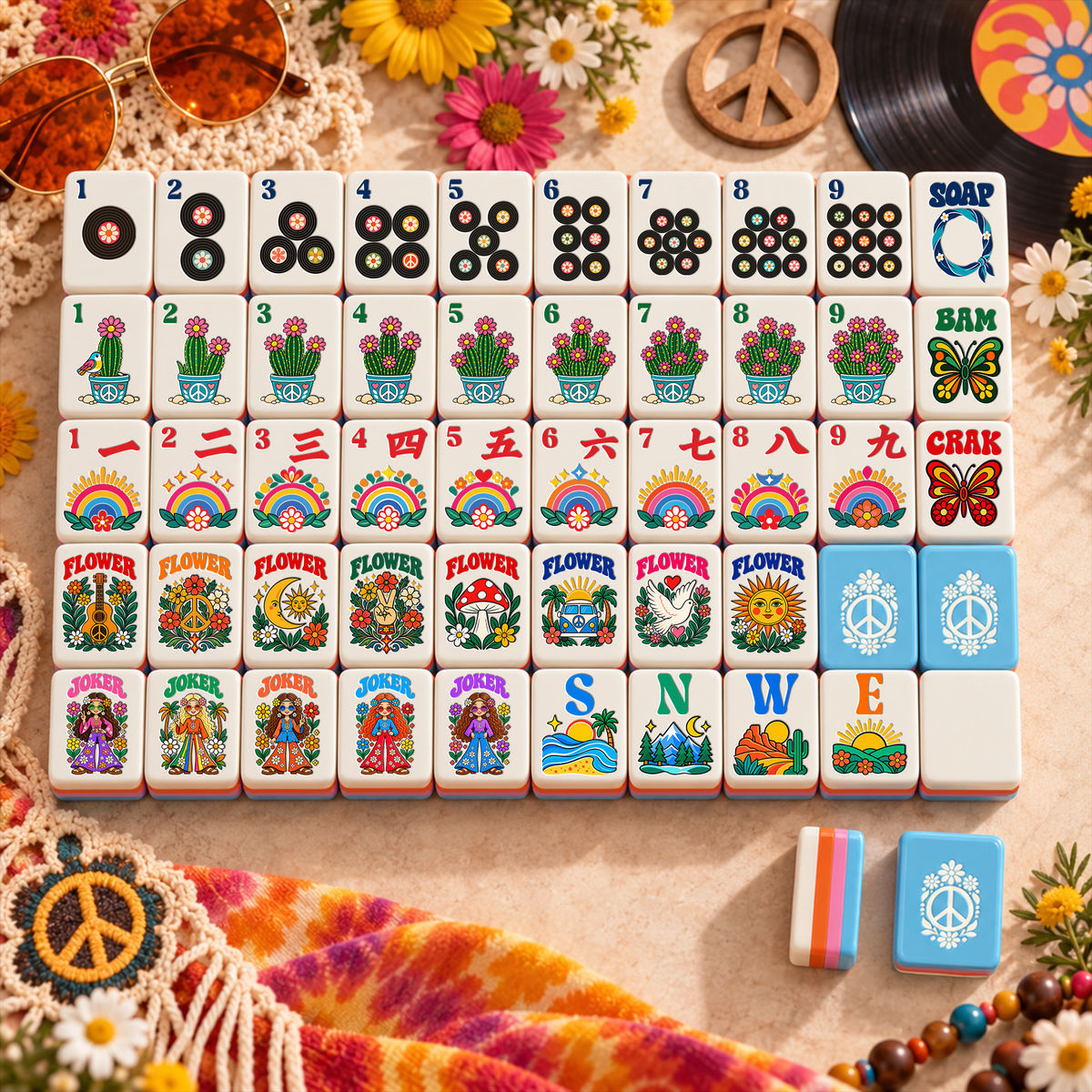
Riichi mahjong etiquette is the formal set of rules governing how you announce draws, declare your ready hand (riichi), call tiles, discard, and claim a win. Unlike American mahjong—which relies on exposing melds and consulting the League card—riichi play keeps your hand hidden, demands vocal and gestural calls, and requires you to follow strict discard placement and tile-calling order. A standard game uses 136 tiles (four suits: Honors, Bams, Craks, Dots; each 1–9, plus winds and dragons). You announce riichi by paying 1,000 points and placing a stick sideways on your discard pile to signal you're one tile away from winning and locked into your hand shape. Violations—false calls, premature claims, incorrect discard order—result in penalties or hand voiding. If you're new to riichi, focus first on calling (saying the meld type aloud), discarding in a line, and waiting silently after riichi to avoid confusion.
Riichi mahjong etiquette evolved in Japan to keep play fast, audible, and fair across thousands of clubs and tournaments. Every gesture and word carries meaning. Master these customs and you'll fit seamlessly into any table—whether online, in a local club, or abroad.
Why does riichi mahjong demand so much silence and ceremony?
Riichi is designed for speed and transparency. With your hand hidden from other players, voice calls and physical placement of tiles are your only language. Silence after riichi protects the integrity of the ready declaration—chatter could be interpreted as signaling or coaching. Ceremony (ritual discard placement, specific meld ordering) removes ambiguity: everyone knows exactly what tile was played, when, and from which hand. This formality also creates a respectful rhythm; the game feels less chaotic than American mahjong because every action has its moment.
🀄 Shop best-selling mahjong sets →

What do you actually say when you call a meld in riichi?
You announce the meld type in Japanese—or the English equivalent, depending on your table's convention. When you draw a tile that completes a pung (three identical), you call "pon" (ポン) aloud, then arrange the three identical tiles horizontally in front of you, placing the claimed tile at the end. For a chow (1-2-3 sequence), you call "chī" (チ) and display it. For a kong (four identical), you call "kan" (カン) and arrange all four. The meld must be complete and legal before you speak—you cannot call a meld you cannot immediately show. Announcing is mandatory; silent melds are invalid. Timing matters: you call immediately upon drawing or receiving the tile, before your next turn action.
How does riichi itself—the ready declaration—work?
Riichi (リーチ) is a formal announcement that you're one tile away from winning and will not change your hand shape. To declare riichi, you pay 1,000 points from your score stick and place one of the ceremonial "riichi sticks" sideways on top of your discard pile, at the corner nearest your position. You then discard a tile face-up as normal. Once riichi is declared, you must accept any tile that completes a winning hand—you cannot refuse it. Your hand is now locked: you cannot add new melds; you can only draw and discard. If you draw your winning tile on your next turn, you immediately declare "tsumo" (self-draw win). If another player discards your winning tile, you call "ron" (opponent discard win) and the hand ends. Riichi sticks are returned to the center pool and divided at the end of the round among winners. Declaring riichi when you are not actually one tile away is a foul and results in penalty or hand voiding.
What are the rules for discarding—placement, order, and timing?
Discard order is sacred in riichi. You place each discard in front of you in a line, left to right, then downward in rows of six tiles, creating a visible record. The first tile sits closest to the center of the table; subsequent tiles build rightward, then wrap below. This creates a "river" unique to your hand that everyone can read. Tiles are placed face-up and must remain undisturbed; you cannot pick up a discard once released. Timing: you must discard after drawing (or immediately after melding, if you called a kong), and you cannot delay beyond a few seconds—hesitation is considered slow play and is discouraged. Never discard out of order or place a tile in the wrong spot; this creates confusion and can trigger a misdeal or penalty. If you accidentally discard the wrong tile, some tables allow you to take it back if unclaimed, but this is at the arbiter's discretion and best avoided.

What happens if you break an etiquette rule—and how do you avoid it?
Common violations include calling a meld without showing it, declaring riichi when not genuinely one tile away, discarding out of order, touching another player's tiles, or claiming a win when your hand is not valid. Penalties range from mild (warning, loss of points) to severe (hand voiding, ejection from the table). Prevention is simpler: speak clearly and immediately when melding, verify your hand before declaring riichi, place discards methodically in sequence, keep your hands off other players' tiles and tiles in play, and double-check your winning hand before announcing "tsumo" or "ron." At casual tables, the group will gently correct you; at tournaments, an arbiter enforces rules. When in doubt, ask before acting—hesitation is better than a penalty.
How does riichi etiquette differ from American mahjong?
American mahjong and riichi mahjong are fundamentally different games with opposite etiquette philosophies. American mahjong exposes pungs, kongs, and quints during play, uses jokers, and consults the National Mah Jongg League card to validate hands—play is collaborative and visual. Riichi keeps your hand hidden, uses no jokers, forbids melding sequences (chows) that are claimed by others, and plays by a fixed set of winning patterns learned by heart. In American mahjong, you can take back a discard if no one has claimed it; in riichi, a discard is final. American mahjong allows strategic discussion during play; riichi demands silence after riichi. American games feel slower and more social; riichi feels faster and more formal. If you've only played American, expect riichi's precision and reserve to feel strict at first—but that structure is what makes riichi so elegant.
Aspect | American Mahjong | Riichi Mahjong |
Hand visibility | Melds exposed during play | Hand hidden until win |
Winning patterns | Come from current League card | Memorized fixed list (yaku) |
Tile count | 152 playing tiles (8 jokers) | 136 tiles (no jokers) |
Chow rule | Can be called and exposed | Cannot be claimed from discard |
Riichi/ready | No equivalent | Declared aloud with 1,000-point stick |
Discard placement | Casual, unmarked | Strict river order, face-up line |
Calling melds | Often silent, shown by meld type | Voiced in Japanese (pon, chī, kan) |
Silence protocol | Chatting during play is normal | Silence mandatory after riichi |
Scoring | Point sticks, add/subtract | Point sticks, standardized formula |
Play feel | Social, collaborative | Formal, competitive |
🎁 See our most-loved mahjong sets & accessories →
What to check before you join a riichi game
Before sitting down at a riichi table, confirm a few details to avoid surprises:
House rules on disputes: Does the table use an arbiter or resolve by consensus?
Language: Will calls be in Japanese or English? If you're new, ask if simplified English is acceptable.
Tile speed and pace: Is the table fast, casual, or competitive? Riichi moves briskly, and hesitation is frowned upon.
Payment/scoring system: Are you playing for points (casual) or money (cash games)? Know the conversion rate.
Starting hand: Does the game begin with a Charleston-style pass (uncommon in riichi, more American) or direct draw?
Winning hand validity: Some tables enforce strict yaku (hand patterns); others allow variations. Ask upfront.
If you're hosting a weekly riichi group or introducing friends to the game, clarity on these rules before the first tile is drawn saves friction later.
✨ Find your Mahstead set — free US shipping →

FAQ
Is riichi mahjong played with the same tiles as American mahjong?
No. Riichi uses 136 tiles (no jokers); American uses 152 tiles plus 8 jokers. Riichi has no blank tiles. Suit names and honor tiles are the same, but riichi never uses tiles beyond the base 136.
What does "riichi" actually mean?
Riichi (リーチ) means "reach" or "ready." It's a formal announcement that you're one tile away from a winning hand and have locked your hand shape. You pay 1,000 points and place a stick to declare it.
Can you take back a discard in riichi after you've placed it?
No. Once a discard leaves your hand and is placed in the river, it is final. You cannot retrieve it. American mahjong allows retrieval if unclaimed; riichi does not.
What happens if you call "ron" (win) on a discard but your hand isn't actually valid?
You have made a misdeclaration. Penalties vary: loss of points, hand voiding, or disqualification, depending on the table or tournament rules. Always verify your hand before calling.
Can you talk or give hints to another player in riichi after someone declares riichi?
No. Riichi play demands silence, especially after riichi is declared. Coaching, signaling, or discussing play is considered interference and can result in penalties or ejection.
How do you know which hands are legal winning patterns (yaku) in riichi?
Yaku are memorized patterns taught by instructors or learned through study guides. Unlike American mahjong's annual League card, riichi yaku are fixed and universal. Common yaku include all-simples, mixed terminal and honor, all-honors, and specific sequences. A riichi club or online tutorial can teach the standard 13 basic yaku.


View More
View More
View More
