
Chinese Mahjong Tips: Rules, Strategy, and Setup
Last updated: Nov 23, 2026
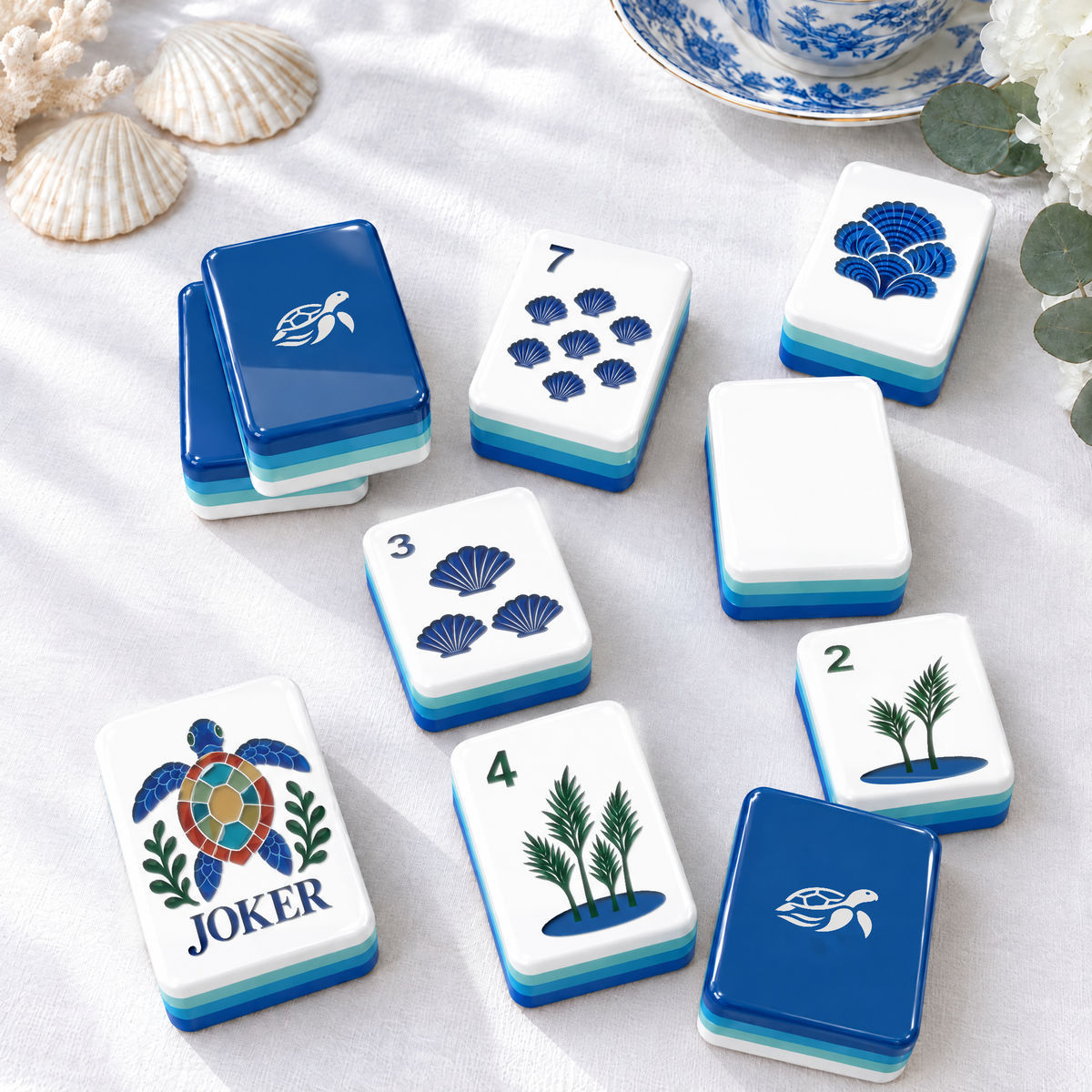
Chinese mahjong uses 144 tiles (36 per suit: Bams, Craks, Dots numbered 1–9 in four copies each, plus 16 winds, 12 dragons, and 8 flowers) and is played by four players drawing from a wall. Unlike American mahjong, Chinese play allows chows (three consecutive numbers in one suit), calls hand melds mid-game, and scores based on points rather than matching a yearly card—no jokers exist in classical Chinese mahjong. A winning hand (called "mahjong" or "hu") needs four melds (pung, kong, or chow) plus a pair; play rotates counterclockwise, East (dealer) plays first and wins if tied. Wins range from simple (no bonus) to "limit hands" worth maximum points. Learning Chinese mahjong demands focus on hand probability, tile reading, and fast decision-making. Our best-selling mahjong sets work best for American play, but if you're drawn to Chinese rules, understanding the tile structure first—what you'll need to build any hand—matters more than the set itself. 🀄 Shop best-selling mahjong sets →
How does Chinese mahjong differ from American mahjong?
American mahjong locks hands to a yearly published card, forbids chows entirely, and adds jokers and flowers; you win by matching a printed pattern with exposed melds. Chinese mahjong has no card, allows chows as callable melds, uses 144 tiles only, and you win by completing four melds plus a pair—any valid combination counts. American games are slower and rule-heavy; Chinese games flow faster because players call melds on their turn and discard openly, building from the wall in real time. Both use four players and identical suit names (Bam, Crak, Dot), but Chinese scoring is points-based (with limit hands capping maximum wins) while American scoring multiplies by hand type and tile count. If you've played American mahjong, expect Chinese play to feel more interactive and less dependent on memorizing a card.

What tiles make up a Chinese mahjong set?
A full Chinese mahjong set contains 144 tiles: three honor suits (winds, dragons) and three number suits (Bams, Craks, Dots). Specifically, you'll see four copies each of Bam 1–9 (36 tiles), Crak 1–9 (36 tiles), Dot 1–9 (36 tiles), North/East/South/West winds (16 tiles), and Red/Green/White dragons (12 tiles), plus eight flower tiles (one through eight, typically depicting seasons or plum, orchid, bamboo, chrysanthemum). That's 108 + 16 + 12 + 8 = 144 tiles total. During setup, tiles are shuffled and built into a wall four tiles high and 18 tiles wide on each side, then the dealer breaches the wall and begins the draw. Each player draws and discards in sequence, and melds are exposed as they're completed. Counting tiles as you play helps you estimate remaining dangerous tiles; this skill is earned only by playing live games, not by studying alone.
Can you call melds on any turn in Chinese mahjong?
Yes, and that's the core rhythm difference from American play. In Chinese mahjong, any player can call a discard to form a pung (three identical tiles), kong (four identical tiles), or chow (three consecutive tiles in one suit)—but the called tile must complete the meld, and the call pauses the current player's turn. If multiple players claim the same discard, the player closest to the discarder (in draw order) wins it; if no one calls, the next player draws from the wall. Once a meld is called and exposed, all other players can see it and adjust their strategy. Calling a chow is the riskiest move because it reveals your suit preference and narrows your winning options; experienced players call chows sparingly and only when building a specific win pattern. In contrast, American mahjong never allows chows or mid-turn calls—all melds are built in hand and exposed only when you've assembled a complete valid hand from the yearly card.
🎁 See our most-loved mahjong sets & accessories →
What is a winning hand in Chinese mahjong?
A winning hand ("mahjong" or "hu") consists of four melds (pung, kong, or chow) plus one pair (two identical tiles). For example: a pung of 5 Dots, a chow of 2–3–4 Bams, a kong of East winds, a pung of White dragons, and a pair of 7 Craks = a valid win. The pair cannot be a wind or dragon unless the entire hand is melds of winds and dragons only (an "all-honors" hand, worth more points). After declaring a win, the player who drew the winning tile (or who discarded it, if another player claimed it) scores points based on the hand's composition: simple hands score low, while pattern hands (all one suit, all pungs, sequences of the same chow pattern) earn higher scores capped by limit hands (maximum payoff). A key strategy is not to rush for a quick win—playing defensively and discarding safe tiles while watching others' calls often yields a higher-scoring hand later. Beginners often discard wildly and lose before they can recognize their own winning patterns emerging.

What strategy should a beginner focus on first?
Start by watching the discard pile and learning which tiles are "dead" (already exposed in melds or discarded by three players). This narrows the remaining tiles in the wall and helps you estimate whether your hand can still win or should pivot. Second, observe what melds other players are building—if East called a Crak chow, don't hold middle Craks (4–5–6) hoping to draw the missing tile; the odds are lower than your seat realized. Third, discard the highest and lowest tiles early (terminals and honors), keeping middle values (4–6) to build flexible chows; this buys you time to see what develops. Fourth, count how many winning tiles remain available—if you need the 5 Bam to win and three are already exposed, fold mentally and shift to a safer pattern. A tactical mistake is hoarding tiles too long: if you're waiting for two tiles to complete your hand and your turn comes around six times without drawing either, discard something safe and reset. The rhythm of the game (roughly 15–20 minutes per round) demands quick judgment, not perfect play.
Beginner Strategy Tip | Why It Works | Common Mistake |
Watch the discard pile | Dead tiles guide your odds | Drawing blind without reading the pile |
Call melds only when building a fast win | Speed vs. caution; one wrong call loses the round | Calling every possible meld and telegraphing your hand |
Keep middle tiles (4–6), discard terminals first | Chows need flexibility; terminals are harder to use | Holding only 1s and 9s and missing chow pairs |
Pivot hand strategy if winning tiles dry up | Adaptability beats stubbornness | Chasing one winning tile and losing time |
Discard the most common tile after three plays | Probability trumps hope | Holding a tile because you "might need it" |
✨ Find your Mahstead set — free US shipping →
How do limit hands and scoring work?
Chinese mahjong scoring assigns base points to winning hands, then multiplies by "fans" (bonus units) based on hand patterns. A simple win (one meld type, say all chows) might earn 2 fans = 8 points base × 2 = 16 points from each player. A "limit hand" (all one suit, all dragons, all terminals, or similar rare patterns) is capped at maximum points—often double or triple the table limit—no matter how many fans it technically contains. The dealer (East) wins and loses double: if East wins, each player pays double points; if East loses, East pays double. After 16 rounds (each player dealing four times), the player with the highest total wins the session. Scoring rules vary by region (Cantonese, Shanghai, Sichuan styles each differ), so always agree on your scoring system before play begins—don't learn mid-game. A common beginner error is calculating fans incorrectly; keep a scoring guide visible or nominate one player to verify. If you're new to scoring, play "fastest hand wins" rounds first (no points tracking) to master the hand-building rules alone.
What should you check before you buy a Chinese mahjong set?
Ensure the set contains all 144 tiles and no jokers (Chinese sets never include them). Verify the tiles are clearly marked: Bams show distinct pip clusters, Craks display clear symbols, Dots are obviously circular, winds show the Chinese character or English label, and dragons are clearly marked Red, Green, and White. Test the shuffle feel—heavier tiles (bone and bamboo, or quality acrylic) move more predictably than lightweight plastic, which bunches unpredictably. Check the dimensions: standard tiles are roughly 1¼ × 1 inch, fitting comfortably in the palm and stacking neatly. If the set arrives with a carrying bag, ensure it's padded and separates tiles by type; loose tiles rattling in a bag will crack or chip over seasons. For Chinese mahjong specifically, you don't need a mat (as you do for American sets), but a soft surface like a felt mat reduces noise and tile slip. Avoid sets marketed as "universal Chinese/American" unless they explicitly state 144 tiles—mixing tile counts or tile types ruins both games. If you're hosting regular games, invest in a quality set you'll enjoy looking at; tiles are tools you'll handle thousands of times.
What to Check Before You Buy
Tile count: 144 tiles, zero jokers.
Markings clarity: Pips, characters, and suit colors visible under table light.
Tile weight and texture: Smooth, substantial feel (bone/bamboo or acrylic).
Bag interior: Padded compartments to prevent chipping.
Set origin: Verify it's marketed as a Chinese mahjong set, not a hybrid.
Storage longevity: A dedicated tile box or bag extends the set's life far beyond loose storage.
For hosting weekly games, explore our collection of mahjong sets and accessories designed for durability and regular play in any variant—from travel sets you can carry to engraved designs that mark your game as your own.

FAQ
Is Chinese mahjong harder than American mahjong?
Not harder—just different. Chinese mahjong demands faster tile reading and live calling; American requires memorizing the yearly card and pattern recognition. Most players find Chinese mahjong more intuitive after 2–3 games because there's no arbitrary card to study.
Can I use an American mahjong set to play Chinese mahjong?
No. American sets contain 152+ tiles (with jokers and extra flowers); Chinese sets are exactly 144 tiles with no jokers. The tile distribution and absence of jokers are non-negotiable for authentic Chinese play.
How long does a Chinese mahjong game take?
One round (one dealer) takes 10–20 minutes depending on hand complexity and player speed. A full session of 16 rounds (each player dealing four times) typically lasts 3–4 hours with breaks.
What's the best way to learn Chinese mahjong rules?
Play with one experienced player who explains each hand live. Reading rules alone is useless; the game logic only clicks after you've seen hands develop in real time over 3–4 rounds.
Do I need a mat to play Chinese mahjong?
No, but a soft felt surface protects tiles from noise and slip. American mahjong mats include racks and pushers (which Chinese play doesn't use); for Chinese games, a simple felt mat or even a tablecloth suffices.
What's the difference between a pung and a chow?
A pung is three identical tiles (e.g., three 5 Bams); a chow is three consecutive tiles in one suit (e.g., 4–5–6 Bams). Only chows allow sequences; pungs are always the same number.


View More
View More
View More
