
Sichuan Mahjong vs. Mahjong Solitaire: Key Differences
Last updated: Nov 23, 2026
Sichuan mahjong is a fast, four-player Chinese card game played with 108 cards (not tiles), scored by melds and winning combinations, complete in 15–30 minutes per hand. Mahjong solitaire is a single-player tile-matching puzzle where you remove matching pairs from a random layout until the board clears—no opponents, no luck of the draw beyond initial shuffle, no scoring system. The two share the word "mahjong" because solitaire borrowed the tile imagery; they share almost no rules. Sichuan mahjong is social, strategic, and competitive; solitaire is meditative and self-paced. If you host weekly games with friends, you want Sichuan mahjong rules and a deck. If you're unwinding alone on your phone or tablet, you're playing mahjong solitaire. American mahjong, by contrast, is a four-player tile game played with 152 tiles and an annual card—a third category entirely, widely played in the U.S. and what we focus on at Mahstead.
Sichuan mahjong and mahjong solitaire share a name and tile imagery, but they are fundamentally different experiences. One is a fast, social card game; the other is a meditative solo puzzle. Understanding the distinction helps you choose the right activity—and the right equipment—for what you actually want to do.
What exactly is Sichuan mahjong?
Sichuan mahjong is a Chinese card game played with 108 cards in four suits (numbered 1–9 in each suit, four copies of each). Players draw and discard in turn, forming melds (pungs, kongs, or sequences) to win a hand. A typical round lasts 15–30 minutes. Gameplay is fast, loud, competitive, and social—players call melds aloud, respond to missed opportunities, and settle scores quickly. Betting (for money, chips, or bragging rights) is common. The ruleset emphasizes speed and luck of the draw. Sichuan mahjong is played primarily in Sichuan Province and surrounding regions of China; variants exist across Asia with slight rule differences, but the core identity is the same: a four-player, real-time, social card game.

What is mahjong solitaire, and how does it work?
Mahjong solitaire is a single-player, computer-based tile-matching puzzle. The game starts with tiles arranged in a random (or preset) layout on screen. Your goal is to remove all tiles by matching identical pairs, but only if each tile in the pair has at least one unblocked edge (top, left, or right—not bottom in most versions). When you successfully match and remove a pair, the tiles above may fall to fill the gap, opening new matches. The game ends when either all tiles are cleared (you win) or no more matches are possible (you lose or restart). There is no scoring, no opponent, no time pressure, and no luck beyond the initial shuffle. Gameplay is meditative, self-paced, and endless—you can quit and replay anytime. Mahjong solitaire is free or low-cost on smartphones, tablets, and web browsers worldwide.
How are Sichuan mahjong and mahjong solitaire different?
Aspect | Sichuan Mahjong | Mahjong Solitaire |
Players | Four | One |
Equipment | 108 cards (or tiles) | Digital board or tile set |
Game length | 15–30 minutes per hand | 5–15 minutes per puzzle |
Interaction | Competitive, real-time, social | Solo, self-paced, meditative |
Winning condition | First to complete a legal meld set (rules vary by region) | Matching and removing all tiles |
Luck factor | High (draw-dependent) | Low (initial layout only) |
Skill factor | Moderate (reading opponents, memory) | Moderate (tile-pair recognition, planning) |
Scoring | Complex; depends on hand type and region | None; binary win/loss |
Betting | Common in social play | Not applicable |
The fundamental difference: Sichuan mahjong is a game with opponents; mahjong solitaire is a puzzle with no opponents. You cannot play Sichuan mahjong alone, and you cannot play mahjong solitaire competitively.

How does American mahjong fit into this distinction?
American mahjong is a fourth category: a four-player tile game (not a card game) using 152 tiles, hand sets from an annual National Mah Jongg League card, and a specific Charleston (tile-passing ritual). It is social and competitive like Sichuan mahjong but slower-paced, more strategic, and rule-bound. American mahjong requires physical tiles, a printed card, a mat, and racks. How to play American mahjong and Sichuan mahjong are distinct games with different tiles, rules, and play patterns. Sichuan mahjong is faster and louder; American mahjong is deliberate and quiet. If you play mahjong solitaire and want to try a social game, American mahjong is a more structured entry point than Sichuan mahjong for Western players.
Can you play Sichuan mahjong with American mahjong tiles?
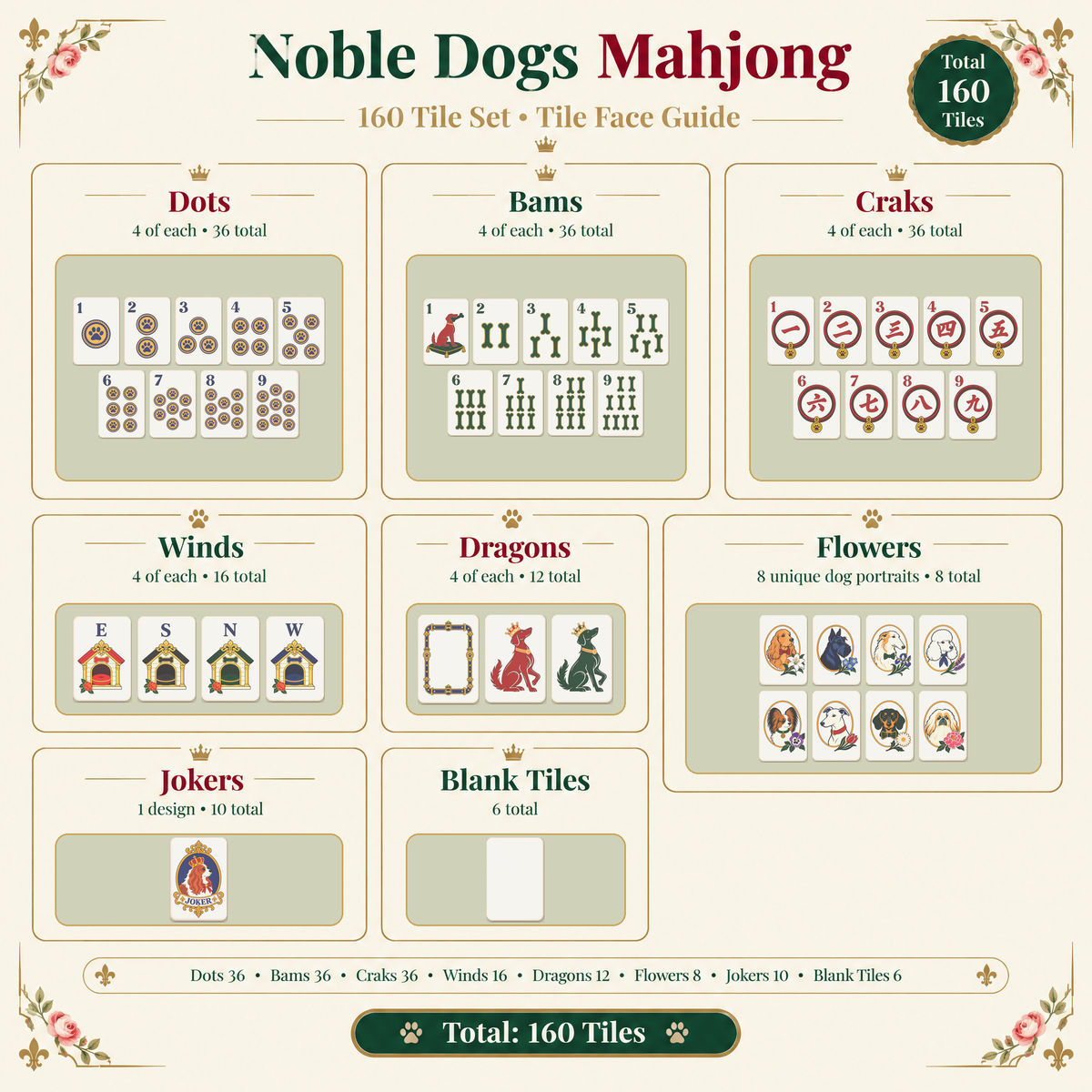
Not easily. American mahjong tiles include dragons, winds, flowers, and jokers—108 tiles total for the game, plus 44 extra (160-tile sets). Sichuan mahjong uses only numbered cards (1–9 in each suit, four copies each). The tile counts, suits, and rules don't align. Some enthusiasts use Chinese regional mahjong tiles (108 base tiles) to play Sichuan mahjong, but these are not American mahjong sets. If you want to host a Sichuan mahjong game, buy a dedicated Sichuan mahjong card deck; if you want to host American mahjong weekly games, invest in quality best-selling American mahjong sets with mahjong mats and racks to keep the game organized.
🀄 Shop best-selling mahjong sets →
Which should you choose: Sichuan mahjong or mahjong solitaire?
Choose Sichuan mahjong if you have three friends, 30 minutes free, and want a loud, competitive card game. Choose mahjong solitaire if you're alone, have 10 minutes, and want a meditative puzzle. Choose American mahjong if you're in the U.S., prefer structured rules, want a game that lasts 45–90 minutes, and enjoy strategic depth with a repeating annual card. Each serves a different need. Sichuan mahjong is ephemeral and social; mahjong solitaire is solitary and infinite; American mahjong is ritual and family. None is "better"—they're different. If you're reading this and hosting a weekly mahjong group, you likely want American mahjong, which benefits from dedicated mahjong racks with pushers to organize your hand and travel-friendly mahjong bags if you rotate venues.
🎁 See our most-loved mahjong sets & accessories →
What to check before you buy
If you're drawn to mahjong solitaire from an app, don't assume a physical mahjong tile set will feel the same—it won't. Solitaire is designed for screen interaction; physical mahjong requires real players. If you want to try Sichuan mahjong with friends from China or a region where it's popular, ask a player to teach you the ruleset specific to their city (Sichuan rules vary). If you're starting American mahjong, confirm that what's in an American mahjong set meets your group's expectations—160-tile sets include spares so you always have a complete, playable game. Don't buy a set until you know which variant (American, Sichuan, Hong Kong, or Taiwanese) your group actually plays.
✨ Find your Mahstead set — free US shipping →

FAQ
Can I play Sichuan mahjong on my phone?
Yes. Many apps replicate Sichuan mahjong rules for solo or online multiplayer play. However, in-person Sichuan mahjong with physical cards remains the traditional and more competitive format in Asia. Digital versions are convenient but lack the social texture of live play.
Is mahjong solitaire the same as American mahjong?
No. Mahjong solitaire is a solo tile-matching puzzle with no rules or strategy beyond matching pairs. American mahjong is a four-player strategic game played with 152 tiles and an official annual card. They share tile imagery but not gameplay.
Which mahjong variant is easiest to learn?
Mahjong solitaire is easiest because there are no rules—only match pairs. Sichuan mahjong and American mahjong both require memorizing hand patterns and regional rule variations, which takes practice. For total beginners interested in social play, American mahjong's structured card system offers a gentler learning curve than Sichuan mahjong's fast-paced, score-dependent format.
Do I need special tiles for Sichuan mahjong?
Yes. Sichuan mahjong uses 108 cards in four numbered suits. American mahjong tiles (which include dragons, winds, flowers, and jokers) won't work for Sichuan mahjong. If you want to play Sichuan mahjong, buy a dedicated Sichuan mahjong card deck from an Asian games supplier.
Can mahjong solitaire help me learn American mahjong?
Partially. Mahjong solitaire teaches you tile recognition and visual scanning but not the rules, scoring, hand patterns, or strategy of American mahjong. Playing solitaire might make you comfortable with tiles, but you'll need to learn American mahjong rules separately—how to read a mahjong card is a better starting point.
Is Sichuan mahjong played in the U.S.?
Yes, in communities with Chinese heritage or expat populations, particularly in major cities. However, it's much less common than American mahjong in the U.S. If you're interested in Sichuan mahjong, local Chinese cultural centers, restaurants, or community boards are good places to find games or teachers.


View More
View More
View More
