
Taiwanese Mahjong Cheat Sheet: Rules, Tiles & Quick-Start Guide
Last updated: Nov 23, 2026
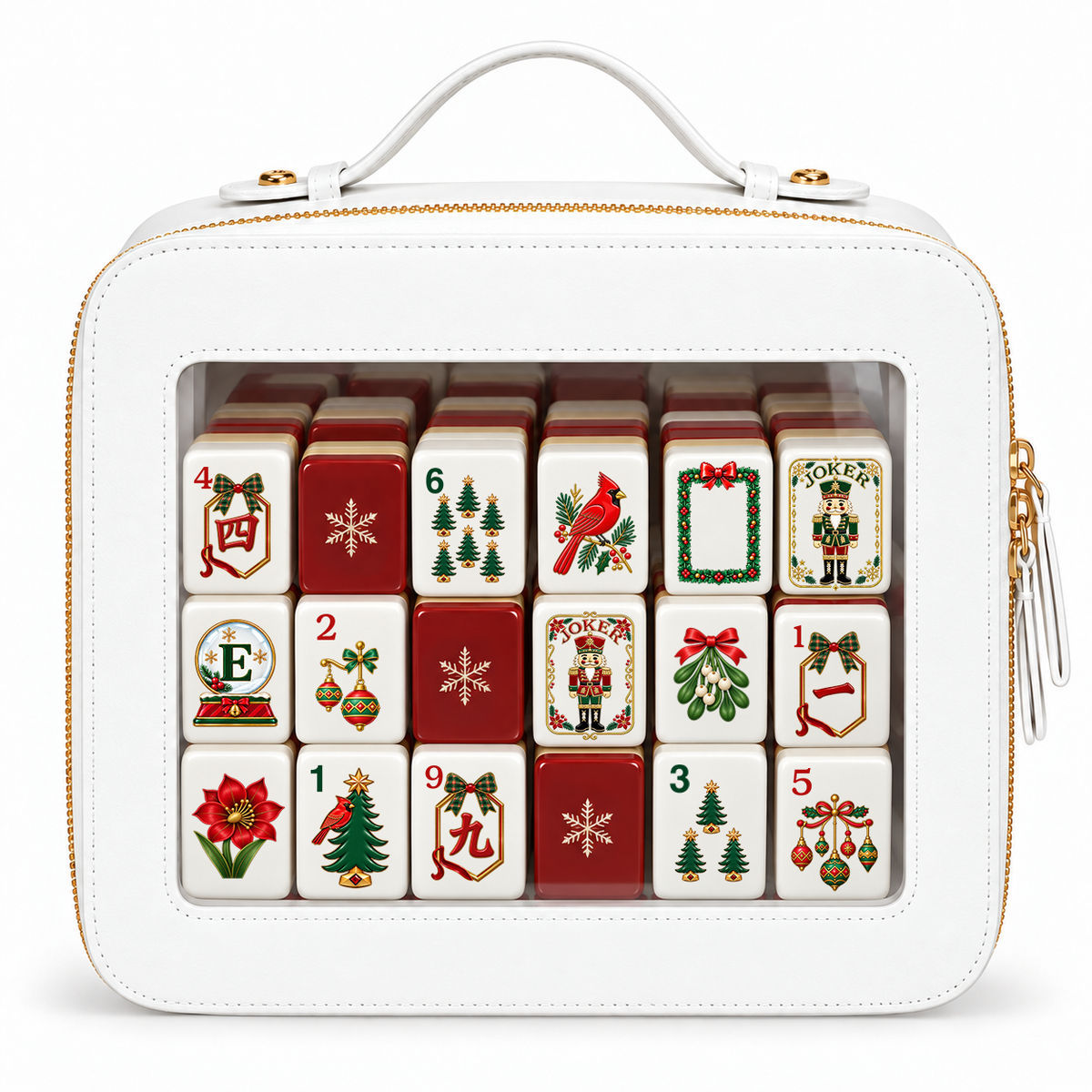
Taiwanese mahjong is a four-player, 13-tile draw-and-discard game using 144 tiles (Bams, Craks, Dots 1–9, four Winds, three Dragons). Unlike American mahjong—which plays from an annual card and has no melds during play—Taiwanese allows you to call and expose melds (pung, kong, chow) immediately. A hand wins by completing four melds plus a pair; winning off your own draw is "going out" (self-drawn), and winning off a discard is "robbing" a tile. Each hand takes 10–20 minutes. Most casual groups play using simplified hand charts or no chart at all. Scoring varies by region and player agreement. You don't need special acrylic tiles; standard bone-and-bamboo sets work fine, though our best-selling acrylic sets are durable for regular play.
What's the core difference between Taiwanese and American mahjong?
American mahjong plays 152 tiles from a yearly card; no melds show until you win. Taiwanese mahjong uses 144 tiles, allows melds to be called and exposed live, and anyone can claim a discarded tile to complete a pung, kong, or chow immediately. Taiwanese is continuous and interactive; American is closed-hand and formulaic. Both are four-player games played to completion in one session, but Taiwanese hands typically finish faster and feel more like rummy or bridge.

How many tiles does Taiwanese mahjong use, and what's in the set?
Taiwanese mahjong uses exactly 144 tiles: three suits (Bams, Craks, Dots) × nine numbers × four copies each = 108 tiles. Add four each of four Winds (North, East, South, West) = 16 tiles, plus four each of three Dragons (usually Red, Green, White) = 12 tiles. Total: 108 + 16 + 12 = 136 playable tiles. Some sets include eight Flower tiles and jokers (extras), but the standard playable deck is 136–144 tiles depending on regional rules. There are no Flowers or jokers in core Taiwanese play.
Tile Type | Count | Purpose | Notes |
Bams (1–9) | 4 each = 36 | Suit tiles | Bird on 1 Bam |
Craks (1–9) | 4 each = 36 | Suit tiles | All numbered |
Dots (1–9) | 4 each = 36 | Suit tiles | All numbered |
Winds (N/E/S/W) | 4 each = 16 | Honor tiles | Called "Dragons" sometimes in casual play |
Dragons (R/G/W) | 4 each = 12 | Honor tiles | Red, Green, White; Red Crak suit affinity |
Total | 144 | Full game | Some sets add flowers/blanks as spares |
What are the winning hand patterns in Taiwanese mahjong?
A winning hand has four melds plus one pair. A meld is either:
Pung: three identical tiles (e.g., three 5 Dots).
Kong: four identical tiles.
Chow: three consecutive tiles of the same suit (e.g., 4 Bam, 5 Bam, 6 Bam).
Pair: two identical tiles.
For example: three 5 Dots (pung) + three 7 Craks (pung) + 2–3–4 Bams (chow) + 8–9–1 Dots (chow) + two Red Dragons (pair) = winning hand. Honor tiles (Winds, Dragons) cannot form chows—only pungs or kongs. The hand must be "ready" (waiting for exactly one tile type to win), then you either draw it yourself or claim it from another player's discard.
How do you claim tiles from other players?
When a player discards, you can immediately call and claim that tile if it completes a pung, kong, or chow for you. You expose the meld on the table in front of you. Only the player whose turn is next can claim a discard for a chow; any player can claim for a pung or kong. If multiple players claim the same tile, priority usually goes: pung/kong claim > chow claim > player closest to the discarder's left. Claiming breaks turn order and passes play to the player after the claimer. If no one claims, play resumes to the left.
What does "going out" mean, and how is it scored?
"Going out" means completing your winning hand by drawing a tile yourself (self-drawn, often higher-scoring) or by claiming a discard. Scoring varies by group and region. Common systems award points based on: number of melds, honor tiles (Winds, Dragons), melds with consecutive number tiles, pairs, and whether you won self-drawn or off a discard. Some groups use a flat points-per-hand system; others calculate by multiplying base points by doubles. Winner collects from all three opponents. Most casual players agree on scoring before the game starts or follow a printed regional cheat sheet.
How is a Taiwanese mahjong hand dealt and played?
Setup: Four players sit around a table. Build a wall of 36 tiles per side (144 total), with tiles stacked in pairs, creating two levels. Dealer is chosen (often by rolling dice). Dealer draws 14 tiles; other players draw 13 each—this is done by "breaking" the wall at a random point, then drawing from left to right. Dealer discards one tile first.
Turn order: Players draw and discard in counterclockwise rotation (East, South, West, North). When you draw, you have 13 tiles in hand. You discard one, leaving 13. If you claim a discard, you expose the meld and pull your hand back to 13.
Hand length: Most hands end in 10–20 minutes. If all tiles are drawn and no one has won, the hand is a draw (no payment). The deal typically passes to the next player after the hand ends.
🀄 Shop best-selling mahjong sets →

How do you keep score and settle payments?
Score recording depends on the system your group uses. In simplified regional play, the winner receives a fixed amount (e.g., 1 point) from each losing player. In point-based systems, you calculate: base points (often 2 or 4) × a multiplier (number of "doubles") based on hand composition. Common doubles include: all Honors (Winds/Dragons only), all Bams, all Craks, all Dots, self-drawn win, etc. Losers pay the winner; in some variants, each loser pays an equal share; in others, the discarder (if applicable) pays extra. Always agree on the scoring rule and settlement method before starting the session.
What common mistakes should new players avoid?
Claiming too slowly: Call immediately or you lose the right to that tile. A moment's hesitation can result in the tile passing to the next player or the turn moving on.
Forgetting chows are suit-only: Chows cannot mix suits or use honor tiles. You can't make a chow with a Wind or Dragon.
Exposing too many melds: While melds are shown immediately when claimed, players sometimes prematurely expose tiles they're not yet ready to claim, giving away hand strategy.
Misreading the pair requirement: A winning hand must have exactly one pair. Three or more identical tiles still counts as only one pung (three) plus tiles left over—you need a separate pair.
Unclear discard rules: Some groups require verbal confirmation ("claim" or "pass"); others use silence as a pass. Agree on this before play starts.
Taiwanese vs. American mahjong: a quick comparison
Aspect | Taiwanese | American |
Tile count | 144 | 152 (+ 8 jokers) |
Melds during play | Yes; call & expose immediately | No; closed hand only |
Hand source | Player agreement or region chart | Official National League card (yearly) |
Chows allowed | Yes; three consecutive same suit | No; not in standard American rules |
Winds & Dragons | Four Winds, three Dragons; Honors only | Four Winds, four Dragons; one is "Soap" (zero) |
Winning condition | Four melds + pair | Hand matches current year's card patterns |
Scoring | Regional or flat system | Point-based; calculated per card |
Hand time | 10–20 minutes | 15–30 minutes |
Gameplay feel | Fast, interactive, similar to rummy | Slower, strategic, chart-dependent |
Both games are played with four players and require skill, memory, and a good social group. Neither is "harder" than the other—they're simply different rule systems that appeal to different player communities.
🎁 See our most-loved mahjong sets & accessories →
What to check before you buy a set to play Taiwanese mahjong
Tile durability: If you plan regular weekly games, choose acrylic or resin tiles over plastic. They won't chip and remain legible for years.
Tile size and weight: Lighter tiles (bamboo/bone) are traditional; heavier acrylic tiles are easier to handle and stack reliably during wall-building.
Complete count: Verify you have 144 playable tiles (or your group's agreed count). Spare tiles or jokers beyond 144 are not used in play.
Suit clarity: Make sure Bam, Crak, and Dot tiles are easily distinguished, especially under variable lighting.
Carrying case: If you travel to games, a padded bag or case protects tiles from damage and keeps sets organized.
Rack quality: Racks with pushers help conceal your hand and speed up play, especially useful when learning.
Setting up your first Taiwanese game
Choose four players and one table (minimum 60 cm × 60 cm, ideally 75 cm × 75 cm).
Agree on scoring rules and settlement amount per hand (e.g., 1 point, or points calculated by doubles).
Build the wall: each player stacks 36 tiles in front of them (two high, 18 wide) to form a 72-tile square perimeter.
Decide dealer (highest roll of dice, or first host).
Break the wall at random; deal 14 tiles to dealer, 13 to each other player (drawing from the broken wall, moving left).
Dealer discards first; play proceeds counterclockwise.
After each hand, rotate dealer (usually to the left).
Play until everyone is ready to stop (typical session: 2–4 hours for 8–15 hands).
A quality mahjong mat with a clearly marked dealer position and discard area speeds up setup and keeps the table organized, especially if you host regularly.
✨ Find your Mahstead set — free US shipping →
#

FAQ
Can I use an American mahjong set to play Taiwanese mahjong?
Only partially. American sets have 152 tiles + jokers and usually include eight Flowers. Taiwanese uses 144 tiles (no Flowers, no jokers in core play). You'd have to remove eight tiles to get 144. The suits and Honors are compatible, but the tile count mismatch makes it awkward. Dedicated Taiwanese sets are inexpensive and worth purchasing if you play regularly.
Do I need an annual card like in American mahjong?
No. Taiwanese mahjong doesn't use a card. Winning hands are defined by simple rules—four melds plus a pair. Some regions have printed hand guides for reference, but they're optional and vary by location. Most groups play by verbal agreement on what counts as a valid win.
What happens if I draw a tile I don't need?
You must discard one tile from your hand, bringing your count back to 13. You cannot hold 14 tiles. The discarded tile goes into the center and is available for other players to claim for melds. Discard strategy is crucial—revealing weak tiles gives opponents information about your hand.
Can honor tiles (Winds, Dragons) be part of a chow?
No. Chows (sequences) can only be formed from numbered suit tiles (Bams, Craks, Dots). Winds and Dragons can only form pungs (three identical) or kongs (four identical). This is a fundamental rule that affects hand-building strategy.
How is self-drawn winning different from winning off a discard?
Self-drawn (drawing your own winning tile from the wall) is often worth more points than robbing a discard because it requires luck and is harder to predict. The exact point difference depends on your group's scoring system, but self-drawn is universally treated as a premium win. Settle on this before the session starts.
What's the penalty if someone doesn't discard in time?
In casual play, there usually isn't a formal penalty—players just move on. In organized play, a player who doesn't discard within a reasonable time (e.g., 10 seconds) may forfeit their turn or face a small point penalty. Agree on this rule beforehand to keep the game flowing smoothly.


View More
View More
View More
