
Sextet Mahjong Rule Explained: When & How to Use It
Last updated: Nov 23, 2026
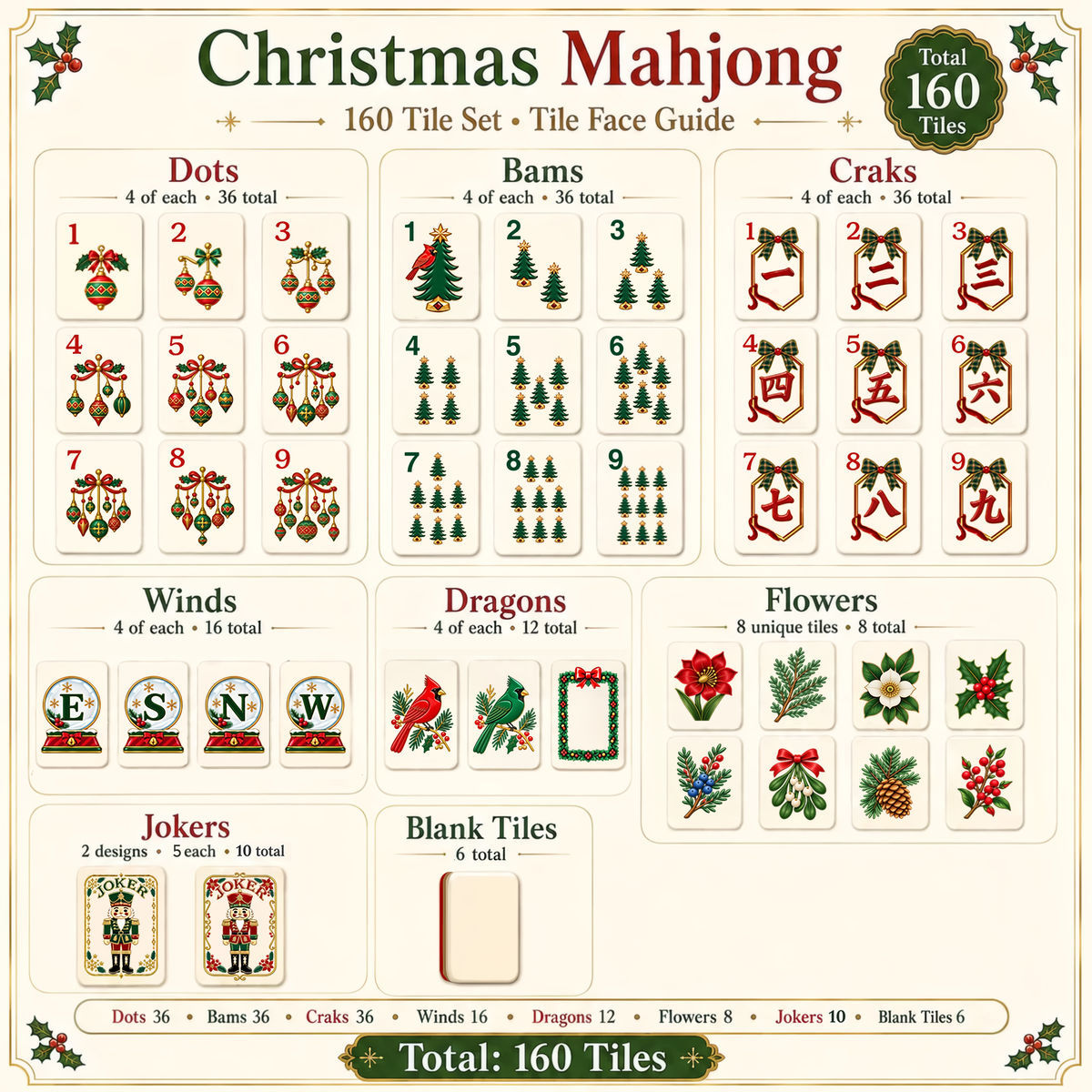
A sextet in American mahjong is an exposed group of six identical tiles (e.g., six 4 Craks or six East Winds). It ranks among the highest-scoring melds on the current year's National Mah Jongg League card. Unlike pungs (3 identical tiles), kongs (4), or quints (5), sextets are rare patterns that typically appear only in specific card sections and are worth considerably more points. You form a sextet by exposing tiles as you draw them or by collecting them in your hand and declaring the exposure when your turn allows. Jokers can substitute for missing tiles within a sextet, but the underlying pattern must match a valid hand on the card. Sextets demand careful attention: miscounting tiles, misplacing jokers, or exposing an invalid pattern costs your hand.
🀄 Shop best-selling mahjong sets →
What counts as a valid sextet on the card?
A valid sextet appears in a specific hand line on the current year's National Mah Jongg League card. The card shows sections with tile patterns; sextets are marked as six-tile exposures, always of identical tiles. You must match the exact suit, number, and count shown on the card—no improvisation. A sextet is never a mixed group (like three 3 Dots + three 5 Bams). It's always six of the exact same tile: six 3 Dots, six North Winds, six Green Dragons. Check your card under sections labeled for six-tile melds; most years, sextets appear in only a handful of hand patterns. If you're unsure whether your pattern is a sextet or a quint plus a pair, consult the card immediately before exposing.

How do you form a sextet during play?
You collect six identical tiles in your hand over several turns, then expose all six at once when it's your turn to do so. Alternatively, as you draw tiles, you may expose a sextet incrementally if your hand calls for it—though most players collect them privately first to avoid telegraph signals. Once you have all six tiles (or the equivalent with jokers), you place them face-up in your rack area, separated from your closed hand, and announce "Sextet" or your hand name. The tiles stay exposed for the rest of the hand, and you draw replacements from the wall or the remaining tiles. Your hand must still have a valid path to "Mahjong" (winning) that incorporates this exposed sextet. If the exposed sextet doesn't lead to a win—or doesn't appear on any valid winning hand on the current card—the exposure is void and your hand is dead.
Can you use jokers in a sextet?
Yes, but with strict limits. A joker can replace any one tile within a sextet of six identical tiles, so you could have five 2 Dots and one joker standing in for a sixth 2 Dot. However, the sextet must still consist of six tiles total: you cannot use a joker as the entire sextet, and you cannot use more than one joker per sextet—that would create ambiguity about which tile it represents. The joker counts toward your exposed tile count, not your closed hand count. Once a joker is locked into a sextet, it is fixed in that position for the rest of the hand. A common mistake: using two jokers in a single sextet hoping to "fill in" two gaps. That's illegal. One joker per sextet, full stop.
🎁 See our most-loved mahjong sets & accessories →
How does a sextet fit into your overall winning hand?
Your entire hand on Mahjong consists of a hand pattern on the card, which may include one or more exposures (pungs, kongs, quints, or sextets) and a closed pair. A sextet is one meld type; a single winning hand might have a sextet plus a pung plus a quint, or a sextet plus a kong plus a pair, depending on what the card shows. The sextet doesn't replace your need for other melds—it's one piece of the puzzle. You win when all tiles in your hand align with a single valid pattern on the card: every exposure must be legal, every closed tile must fit, and the winning draw (from the wall or a discard) must complete the final tile. If your sextet exposure doesn't lead to a matching hand on the card after you've drawn your Mahjong tile, that sextet has wasted space and blocked other hands. This is why sextets are high-risk: they commit you to a narrow set of card patterns, and if those patterns fall through, you've locked yourself into a dead hand.

What are the most common sextet mistakes?
Miscounting identical tiles. You think you have six 3 Craks, but one is actually a 3 Dot or a damaged tile that looks similar under table lighting. Always count twice before exposing. Exposing too early. You have five 4 Bams and a joker, and you expose "a sextet" hoping to draw the sixth 4 Bam—but the card you're chasing requires all six tiles to be identical natural tiles, not one joker. The exposure is void and your hand is dead. Misreading the card. You see a pattern that looks like a sextet, but it's actually a quint plus a pair, or three separate pairs. Read the card section closely: the grouping markers (horizontal lines, font styling) tell you where tile counts begin and end. Using two jokers. Illegal—one joker per sextet. Forgetting the pair. A sextet is six tiles; you still need a separate closed pair (two identical tiles) to win. Some newer players expose a sextet, then draw what they think is the winning tile, but that tile is the start of a pair, not the Mahjong draw.
Mistake | What Happens | How to Avoid |
Miscount: one tile is wrong suit | Exposure is void; hand dies immediately | Count three times, check lighting, touch each tile |
Expose without matching card pattern | No valid winning hand; exposure fails | Check card before exposing; call out the hand pattern aloud |
Two jokers in sextet | Illegal exposure; hand is dead | Use only one joker per sextet; use natural tiles where possible |
Sextet + no pair = no Mahjong | Exposure is sound but you can't win | Verify you have a separate closed pair before exposing |
Expose too early (hoping for draw) | Exposure locked; if draw fails, hand is dead | Collect all six tiles or equivalent before exposing |
✨ Find your Mahstead set — free US shipping →
Why sextets matter in high-scoring hands
Sextets appear on the card in hands worth more points than those with quints or fewer-tile exposures. Because they're rarer and harder to form (you need six of the same tile), the card rewards them with higher hand values. In competitive play, a player chasing a sextet hand is signaling that they're willing to take a high-risk path to a big score. Other players will pay attention: if you expose a sextet, they'll note which hand you're building and may guard their discards or accelerate their own play. Sextets also consume many tiles from one rank, which can be a resource drain. If you're using four natural 5 Bams plus one joker in a sextet, you've committed a large portion of the 5 Bams available in play, making it harder for other players to build hands with that rank. This is why understanding how jokers work and how to read the mahjong card are essential before you pursue a sextet strategy.
What to check before you expose a sextet
Count all six tiles visibly. Place them side by side, touch each one, name the suit and number aloud.
Check the current year's card. Find the exact hand pattern you're chasing. Confirm it shows six identical tiles—not five plus a pair, not mixed groups.
Verify your pair. You must have a separate closed pair (two identical tiles) to win. Never assume the pair will come.
Check joker rules. If you're using a joker, confirm you're using only one. The underlying pattern must show six tiles of the same rank.
Announce your hand pattern clearly. Say the suit, number, and count: "Six 3 Craks" or "Six East Winds." This creates a table record and prevents disputes.
Confirm no other player objects. A player may call "Stop" if they believe the exposure is invalid. Resolve the dispute with the card before play continues.
How sextets differ from other American mahjong exposures
A pung is three identical tiles (natural or with jokers, but no more than one joker per pung). A kong is four identical tiles (natural or with one joker). A quint is five identical tiles (natural or with one joker). A sextet is six identical tiles, with the same one-joker rule. The higher the tile count, the rarer the exposure and the more points it's worth on the card. Joker rules remain consistent across all four exposure types: at most one joker per exposure, and the joker must represent a single missing tile, never a gap in the middle or the entire exposure. If you're learning American mahjong from scratch, we recommend mastering pungs and kongs first, then quints, then sextets—each one builds confidence and discipline for the next.
Setting up a weekly game? A high-quality American mahjong set with clear tile markings and a sturdy rack makes it easier to count and verify exposures like sextets. Poor lighting or worn tiles lead to miscounts. Our engraved sets with custom titles help you keep track of your hand name when you announce an exposure, and many players appreciate a mat with pushing guides to keep tiles organized and prevent accidents during play.

FAQ
What is a sextet in American mahjong?
A sextet is six identical tiles exposed on the table at once. It must appear as a valid pattern on the current year's National Mah Jongg League card and typically scores higher than pungs, kongs, or quints. Once exposed, it stays visible for the rest of the hand.
Can a sextet contain mixed tiles or different numbers?
No. A sextet is always six of the exact same tile: six 4 Craks, six North Winds, six Red Dragons. Mixed groups are not sextets. If you try to expose a mixed sextet, the exposure is invalid and your hand is dead.
How many jokers can I use in a sextet?
One joker maximum per sextet. A sextet of six 3 Dots could be five natural 3 Dots and one joker. Using two jokers in one sextet is illegal and voids the exposure.
What happens if I expose a sextet but it doesn't lead to Mahjong?
Your exposure stands, but your hand is dead—you cannot win. The tiles remain exposed for the rest of the hand, and play continues with other players. This is why reading the card and confirming your winning path is critical before you expose.
How often do sextets appear on the mahjong card?
Sextets are rare. Most years, only a handful of hand patterns include a sextet, typically in higher-scoring sections of the card. You might see one sextet per 10 to 20 hands in casual play, depending on the year's card and table strategy.
Do sextets work differently in Chinese or Riichi mahjong?
Yes. American mahjong sextets follow the National Mah Jongg League card rules. Chinese and Hong Kong mahjong use sequences (chows) and different exposure rules entirely. Riichi mahjong has no exposed sets and plays to different winning patterns. Always clarify which variant is being played before the game begins.


View More
View More
View More
