
Curtsy in Mahjong: Examples, Rules & When to Use It
Last updated: Nov 23, 2026
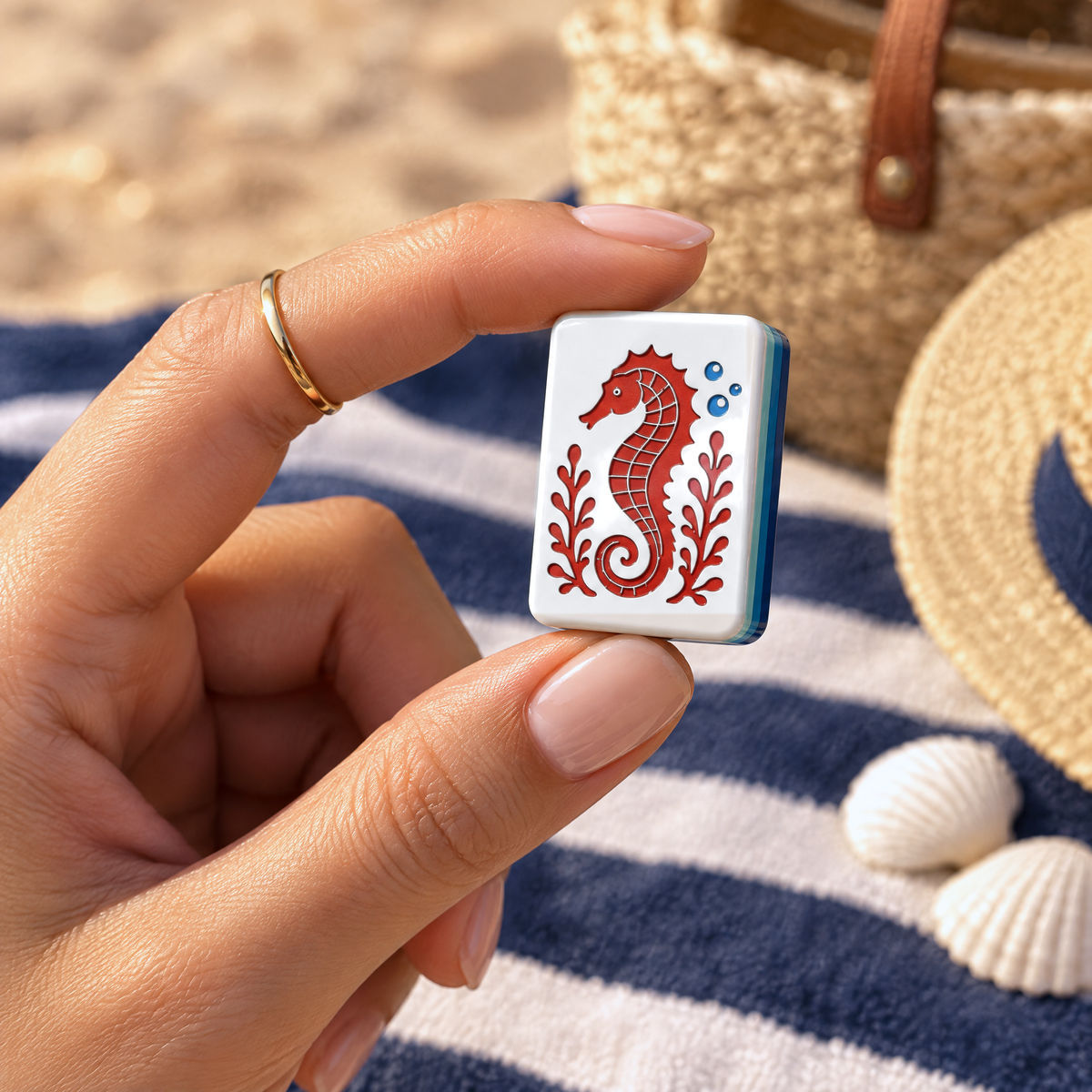
A curtsy (also called a courtesy or pass) is when you're one tile short of a winning hand and you signal that you're ready to take the next matching discard another player throws. Unlike a pung or kong call, a curtsy isn't an exposed claim—it's purely declarative: you announce it (by saying "curtsy" or raising your hand) and wait for someone to discard the tile you need. It only works in American mahjong; Chinese and Hong Kong variants don't use it. The curtsy expires instantly if the next discard doesn't match your need or if play moves past you. You cannot curtsy twice for the same hand—once you've declared it, you're committed. Many newer players confuse curtsy with a pung call or mistake timing; the curtsy must happen before the tile hits the table as a discard, not after.
A curtsy in American mahjong is when you're one tile short of a winning hand and you signal that you're ready to take the next matching discard another player throws. Unlike a pung or kong call, a curtsy isn't an exposed claim—it's purely declarative: you announce it (by saying "curtsy" or raising your hand) and wait for someone to discard the tile you need. It only works in American mahjong; Chinese and Hong Kong variants don't use it. The curtsy expires instantly if the next discard doesn't match your need or if play moves past you. You cannot curtsy twice for the same hand—once you've declared it, you're committed. Many newer players confuse curtsy with a pung call or mistake timing; the curtsy must happen before the tile hits the table as a discard, not after.
What exactly does a curtsy do in a hand?
A curtsy reserves your right to win on the very next matching discard. You're telling the table: "I need exactly one more tile, and I will take it if any of you throws it." The curtsy creates urgency—other players know you're close, so they may play more defensively. The moment a matching tile lands as a discard, you claim it, complete your hand, and win immediately. If no one throws your tile, the curtsy expires and play continues. You cannot change your mind once you've curtsied, and you cannot curtsy a second time for a different tile in the same hand.

When do you call a curtsy—before or after the tile is discarded?
You must curtsy before the tile hits the table. The proper sequence is: a player picks from the wall, you see they might discard your tile, you raise your hand or say "curtsy" to claim it. If you wait until the tile is already on the table as a discard, you've missed your window—that's too late. Some casual groups allow a brief grace period, but league play and serious games enforce the pre-discard rule strictly. The player who threw the tile has no say in whether you get it once you've curtsied; the curtsy overrides normal turn order. Timing is everything: hesitate and you lose the privilege.
Real examples: three common curtsy scenarios
Scenario 1: The obvious wait. You hold three Bams (1, 2, 3), two Red Dragons, and two Winds. You complete a pung of 1 Bams and a quint of Red Dragons, leaving you one Wind short of a pair. You curtsy. East throws a Wind. You win. Simple.
Scenario 2: The blocked curtsy. You have a pung of 5 Craks, a quint of Dots (7, 7, 7, 7, 7), and you're holding 4 Bams, 4 Bams, and 6 Bams as your remaining exposed tiles. You curtsy for a 5 Bam to pair. South discards a 3 Bam, not a 5. Your curtsy is still active. North discards a different tile. Your curtsy expires when play moves to you and you draw instead. You cannot curtsy again for the same hand.
Scenario 3: The concealed tiles trap. You've curtsied, but the tile you need is no longer in play (three copies already exposed in other players' pungs, one copy in the discard pile). A fourth copy doesn't exist—you're waiting on a phantom tile. Your curtsy remains active, but it will never be satisfied. This is why you must track the best-selling mahjong sets carefully: knowing all 152 tiles and where they are reduces the risk of a phantom-tile curtsy.
🀄 Shop best-selling mahjong sets →
What's the difference between a curtsy and calling a pung or kong?
Action | Exposed? | When Called | Tile Source | Reversible? |
Curtsy | No | Before discard lands | Must be discarded by opponent | No—only once per hand |
Pung call | Yes | On an opponent's discard | Opponent's throw | No—claims immediately |
Kong call | Yes | On an opponent's discard OR your own draw | Opponent's throw or wall draw | No—claims immediately |
Self-draw win | No | After you draw from wall | Wall only | N/A—hand is over |
A curtsy is a promise, not a claim. You expose nothing; you stay hidden. A pung or kong call is a grab: the tile becomes visible in your rack right away, and the hand moves on. If you curtsy and no one throws your tile, nothing is claimed. If you call a pung on a discard, you've locked in three identical tiles and play resumes with the next player. The curtsy is gentler—it just warns the table. A pung call is final.

How do you avoid common curtsy mistakes?
Mistake 1: Curtsying too early. You have two tiles left in your hand, but you're not yet one tile away because your melds aren't complete. A curtsy must mean you have a finished hand waiting for one specific tile. If you curtsy before your melds lock in, you risk being stuck—you cannot uncurtsy if your plan changes.
Mistake 2: Calling curtsy after the discard lands. If the tile is already on the table, you've missed the window. Some tables give a grace period for absolute beginners, but competitive play does not. Practice the reflex: watch the picker, anticipate the discard, curtsy in advance.
Mistake 3: Confusing curtsy with a ready hand. Being "ready" (one tile away) is not the same as announcing a curtsy. Many players hold ready hands without curtseying—they wait silently for someone to throw their tile and then win without warning. A curtsy is optional; it alerts the table. Use it strategically: if you're only slightly ahead of other players, stay silent. If you're clearly in the lead, curtsy to accelerate the game.
Mistake 4: Curtsying for a hand that violates the year's card. Before you curtsy, verify that your intended hand actually appears on the current year's National Mah Jongg League card. If your meld pattern isn't legal, your win doesn't count, and you lose the hand. Newer players often curtsy before checking the card—expensive error.
Mistake 5: Forgetting you've already curtsied. Once a curtsy is declared, you cannot curtsy again for a different tile in the same hand. Some players get confused and try to switch targets mid-hand. You're locked in. Know exactly which tile you need before you open your mouth.
🎁 See our most-loved mahjong sets & accessories →
Why don't other mahjong variants use the curtsy?
Chinese, Hong Kong, Taiwanese, and Riichi mahjong don't have curtsies because their rule systems handle ready hands differently. In Chinese mahjong, a "ready" hand (tingpai) is a state of play—players watch for calls and can win on any matching discard without advance notice. Hong Kong uses a similar silent-ready system. Riichi mahjong has the "riichi" declaration, which is somewhat analogous—you declare that you're one tile away—but it triggers specific scoring bonuses and penalties that don't exist in American mahjong. American mahjong invented the curtsy to add a layer of social signaling and strategy to casual play. It slows the game slightly, gives other players time to react, and reduces surprise wins. It's one of the quirks that makes American mahjong more collaborative and less purely competitive than Asian variants.
What to check before you curtsy at your next game
Verify your hand is on the card. Look up your meld pattern on the current year's National Mah Jongg League card before you curtsy. A hand that isn't listed is not a legal win.
Count the tile you need. Is it still in play? Have you seen three copies already exposed? If the fourth copy is in the wall or someone's hand, keep your eyes open—but don't curtsy for a phantom tile.
Know your timing. Curtsy before the discard lands on the table, not after. If you hesitate, you lose the right.
Lock in your melds. All your exposed tiles (pungs, kongs, quints, sextets) must be complete and valid before you curtsy. No partial plays.
Accept you're committed. Once you curtsy, you cannot switch targets or uncurtsy. If no one throws your tile, your hand dies and you begin the next round.
Track jokers. Count how many jokers are in play and where they're being used. A joker standing in for your needed tile on an opponent's pung means that actual tile might still be available elsewhere.
✨ Find your Mahstead set — free US shipping →
Learning the curtsy takes practice, but it's one of the most rewarding moments in American mahjong—when you see the table shift because everyone knows you're one tile from winning. The tension, the strategy of other players' discards, the sudden reveal of your hand: that's the magic of curtsy play. Our best-selling mahjong sets come with clear acrylic tiles that are easy to track during tense moments like these, and if you're hosting weekly games, a quality mahjong mat with dividers keeps every player's area organized and readable. Start mastering the curtsy, and your game will level up.

FAQ
Can you curtsy twice in the same hand?
No. Once you declare a curtsy for one specific tile, you're locked in. If that tile doesn't come, your curtsy expires and the hand is over. You cannot switch to a different tile or curtsy again.
What happens if two players curtsy for the same tile?
The player whose turn it is before the discard is thrown takes priority. If both have already curtsied, the player sitting closer to the thrower (based on turn order) claims the tile. If both are equidistant, house rules apply—usually the player who curtsied first wins.
Can you curtsy for a tile you're not sure is still in play?
Technically yes, but it's a poor strategy. If the tile you need is already in three exposures or in the discard pile, you're waiting on a phantom. Track tiles carefully before you curtsy; otherwise you'll hold a dead hand and lose.
Is curtsy the same as saying "I'm ready"?
No. "Ready" is informal and non-binding—you're just thinking aloud. A curtsy is an official declaration that commits you to one specific tile. Use curtsy only when you're certain.
Do you have to curtsy if you're one tile away?
No. Curtsy is optional. Many strong players stay silent and wait for their tile, keeping opponents guessing. Curtsy strategically: use it to speed up the game or when you want other players to know you're close.
What's the penalty if you curtsy for an illegal hand?
You lose the hand—it's a dead hand and play passes to the next player. No points. This is why checking the card before you curtsy is critical.


View More
View More
View More
