
How Long Does a Game of Riichi Mahjong Take?
Last updated: Nov 23, 2026
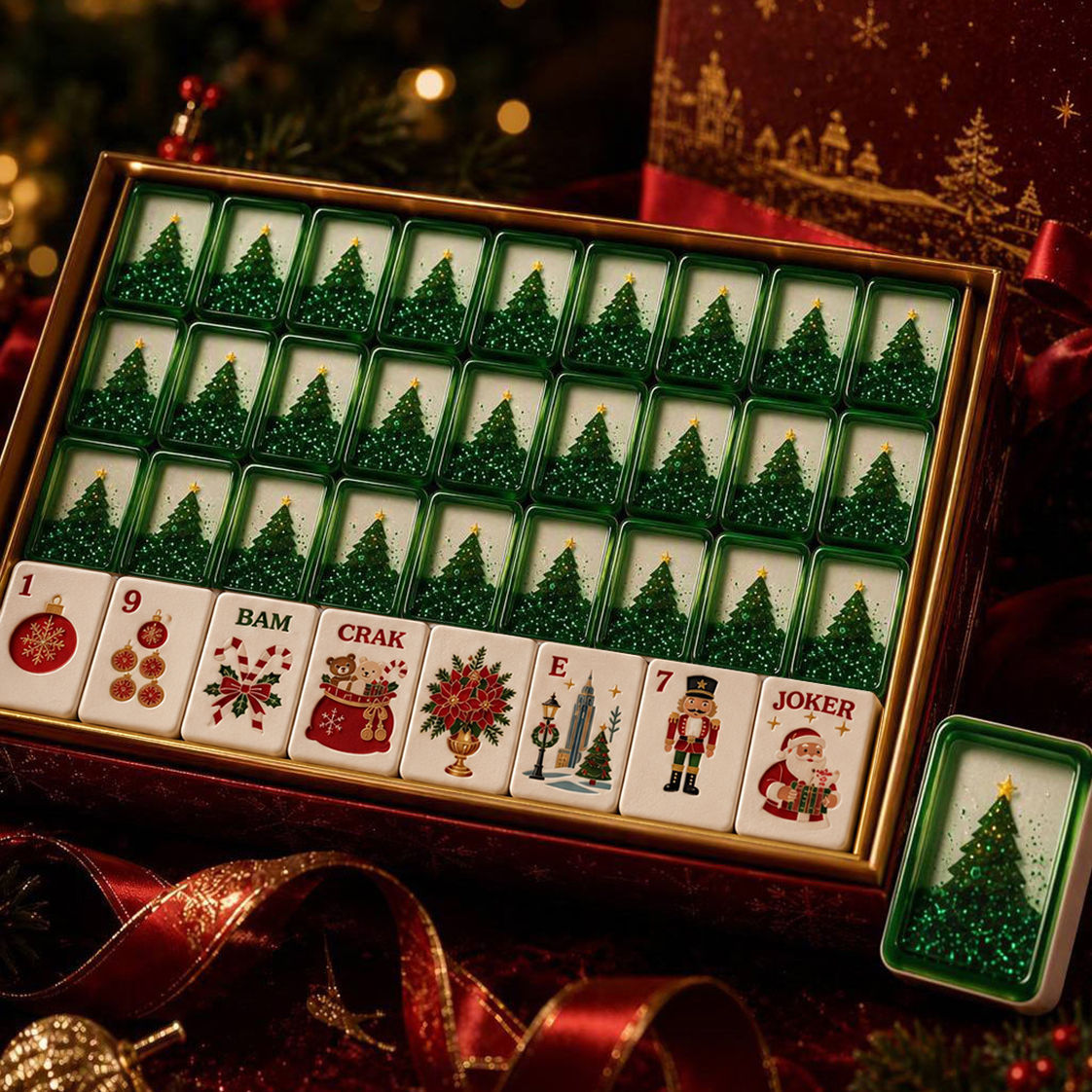
A single round of riichi mahjong takes 12–15 minutes on average, with a full game (usually four rounds) lasting 1–2 hours total. Riichi differs fundamentally from American mahjong: players draw and discard constantly, calling sequences (chows) and pungs (pongs) as they play unfolds, rather than building hidden hands to match a seasonal card. Play tempo depends on rule variant (Japanese, Hong Kong, or Taiwanese riichi), player experience, and whether optional betting or kibitzing slows the table. Beginners may stretch a round to 20–25 minutes; fast, silent tables with experienced players finish in 10 minutes. The Charleston (tile-passing ritual used only in American mahjong) does not exist in riichi, so setup is rapid. To host riichi properly, you need tiles marked with numbers and suits in multiple languages, a discard area mat to track the river clearly, and racks or pushers to manage hand organization—all available from our best-selling mahjong sets collection. 🀄 Shop best-selling mahjong sets →
What is riichi mahjong and why is it faster than American mahjong?
Riichi (or Japanese mahjong) is the live-play variant where sequences matter—you call melds openly as you draw, discard, and watch the river grow. American mahjong is a pattern-matching game played with concealed hands against a yearly card; it has no called sequences, no betting, and a formal tile-passing ritual. Riichi is faster because the game loop—draw, look, discard, react—runs continuously without the ceremonial pauses American players need to consult the card or manage joker placement. A riichi round with four experienced players completes in 10–12 minutes; American equivalent takes 15–20 because hands are private and scoring involves card lookup.

How many rounds make up a full riichi game?
A full riichi game (called a hanchan or half-game, or a tonpuusen for a short format) consists of four rounds: East, South, West, North. Each player sits at a compass position and plays that role once. Each round includes a dealer (the tsumo player) and three others, and rounds continue until all four positions have dealt once. Total time: roughly 50–80 minutes for a standard game, depending on play speed and any pause between rounds. Some groups play an eight-round tonpuusen (two full rotations) to build a larger lead and reduce luck variance, extending the session to 90–120 minutes.
What factors slow down or speed up a riichi game?
Player experience is the primary driver: beginners hesitate over tile values, pung vs. quint recognition, and hand evaluation, adding 3–5 minutes per round. Silent play (no table talk, minimal betting) runs 30% faster than casual gaming with commentary or alcohol. Rule complexity matters—Hong Kong and Taiwanese variants introduce more scoring categories and special hands, which can add 1–2 minutes to settlement per round if a player declares a rare winning hand. Table setup—whether tiles are on a proper mat, racks are worn and slow to push, or players fumble in a discard pile—adds 2–3 minutes of overhead. Experienced, quiet tables with clear equipment finish rounds in 10 minutes; casual or beginner tables stretch to 18–20 per round.
Do different riichi variants (Japanese, Hong Kong, Taiwanese) affect game length?
Yes, significantly. Japanese riichi has a streamlined scoring system—points are largely predetermined by hand type and dealer status—so settlement takes 30–45 seconds per win. Hong Kong and Taiwanese mahjong include more special hands and bonus scoring (like all simples or all terminals), requiring players to cross-check against house rules or printed charts; settlement can stretch to 2–3 minutes if a complex hand is declared. Taiwanese mahjong also allows more flexibility in melds and quints, which can prolong the hand-building phase as players reconsider strategy. If speed is your priority, Japanese riichi is typically 15–20% faster than Hong Kong or Taiwanese play at the same table.

What equipment helps you keep riichi games moving smoothly?
A quality mat with marked river zones keeps the discard pile organized and visible—players read the state of play faster without searching a chaotic pile. Mahjong racks with pushers prevent fumbling when drawing and discarding; a smooth pusher can cut hand organization time in half compared to manually rearranging tiles. Acrylic or bone tiles with clear suit symbols (Bam, Crak, Dot, Honor) in readable fonts accelerate tile recognition for non-native speakers or new players. A timer (often a smartphone app) signals round time-limits for casual groups and eliminates ambiguity about when a round has lingered too long. From our best-selling collection, sets with clear, large pips and professional mahjong mats designed for riichi or mixed-variant play reduce hesitation and keep pace brisk.
🎁 See our most-loved mahjong sets & accessories →
How does betting or side games affect total play time?
Optional betting (where players wager on hand outcome or ranking) can extend a round by 1–3 minutes if the group is unfamiliar with odds or disputes arise. Side games like uma (a post-game scoring adjustment based on final standing) add 3–5 minutes total at the end of a session. Friendly kibitzing—one or more non-players watching and commenting—slows live decision-making by 20–30%, especially if the table pauses to explain holdings or strategy. Competitive, silent play without betting finishes a full game in 50–70 minutes; casual gaming with side bets and side commentary stretches to 2–2.5 hours. Choose equipment like a travel bag or case if you rotate hosts and want a portable setup that fits in a car—portability often reduces setup chatter and gets play moving faster.
Scenario | Players | Typical Round Time | Full Game (4 rounds) | Best For |
Experienced, silent, Japanese rules | 4 | 10–12 min | 50–65 min | Tournaments, serious play |
Intermediate, casual, Japanese rules | 4 | 14–16 min | 60–75 min | Weekly clubs, home games |
Beginners or mixed experience | 4 | 18–22 min | 75–90 min | Learning groups, family intro |
Hong Kong rules, experienced | 4 | 14–18 min | 65–80 min | Regional variant play |
Taiwanese rules, mixed play | 4 | 16–20 min | 70–85 min | Open community groups |
Any variant with betting/side play | 4 | +2–5 min per round | +8–20 min total | Social gaming, stakes |
How to set up for optimal riichi game speed: a practical checklist
Before the first tile is drawn:
✓ Use a mat with clearly marked river zones (discard area, kong area). Confusion about where tiles belong kills 2–3 minutes per round.
✓ Test all racks and pushers for stiffness; replace any that stick or crack. Smooth, effortless pushers save 30+ seconds per player per round.
✓ Ensure tiles are readable from arm's length—no faded pips, no small fonts. Beginners squint for 5+ seconds per unfamiliar tile; clarity is speed.
✓ Agree on house rules (variant, scoring system, special hands) before shuffling. Rules disputes mid-game add 2–3 minutes per occurrence.
✓ Designate a scorekeeper if settling points is complex; one person recording prevents three-way negotiation.
✓ Set a round timer (apps like Chess.com or standard kitchen timers) if the group is prone to analysis paralysis. Time pressure sharpens decisions and keeps pace.
✓ Clear the table of non-essential items (phones, snacks that require hands). Distractions fragment focus and slow turns.
What to check before you buy:
Tiles should be uniform in size (typically 1.25" × 1" × 0.75" for standard play), printed clearly on both sides (pips and suit names), and smooth to the touch. Racks must slide easily without binding; test a pusher in hand if possible—stiff or narrow pushers frustrate players and invite shortcuts (rearranging by hand instead). Mats should show river zones in contrasting color or stitching; a plain mat leaves discard piles ambiguous and forces players to ask "whose tile is that?" repeatedly. If you host mixed-variant play (riichi one week, American another), choose a mat and set that work for both—acrylic tiles read well in any ruleset, and a full-court mat accommodates American tile racks and riichi river formats. Bags should protect tiles from moisture and dust; tiles stored in humid basements or car trunks can swell or warp, slowing shuffles and melds.
✨ Find your Mahstead set — free US shipping →

FAQ
Can a riichi game finish in under 1 hour?
Yes, if players are experienced, rules are simple (Japanese riichi, no betting), and equipment is quality. Four rounds of 12–13 minutes each totals 48–52 minutes plus 5–10 minutes setup/settlement, landing just under an hour. Silent play, no kibitzing, and smooth racks are critical.
Is riichi faster than American mahjong for beginners?
Not always. Beginners struggle equally with tile recognition and hand evaluation in both games. However, riichi has continuous discard feedback (the river grows visibly), which some learners find easier to track than American mahjong's hidden hands. A beginner riichi game typically runs 75–90 minutes; beginner American mahjong runs 80–100 minutes.
What's the shortest possible riichi game?
A tonpuusen (short format, four rounds, no replay) with four experienced silent players using quality equipment can complete in 40–50 minutes total. However, 1–1.5 hours is the practical realistic minimum for any social setting where players chat or eat between rounds.
Do I need special equipment to play riichi faster?
Quality racks, a proper mat, and clear tiles accelerate play by 15–20% compared to cheap or worn equipment. You can play without them, but hesitation and fumbling add minutes per round. A mat with river zones is the single biggest investment that pays off in speed and clarity.
How do I speed up a riichi game without rushing players unfairly?
Set a round timer (3–5 minutes per turn for casual play, 2–3 for experienced tables), use a scorekeeper to eliminate settlement debates, and agree on house rules in advance. Assign a "turn moderator" to politely enforce the timer. Play-speed comes from clear expectations, not pressure.
Can a game of riichi take longer than 2 hours?
Yes, if players are very new, rules are complex (Hong Kong or Taiwanese), betting is involved, or the table is very social. Add alcohol, side games, or long settlement disputes, and a four-round game can stretch to 2.5–3 hours. Casual social play often runs this long intentionally.


View More
View More
View More
