
Seven Pairs Mahjong: Meaning, Scoring & Hand Strategy
Last updated: Nov 23, 2026
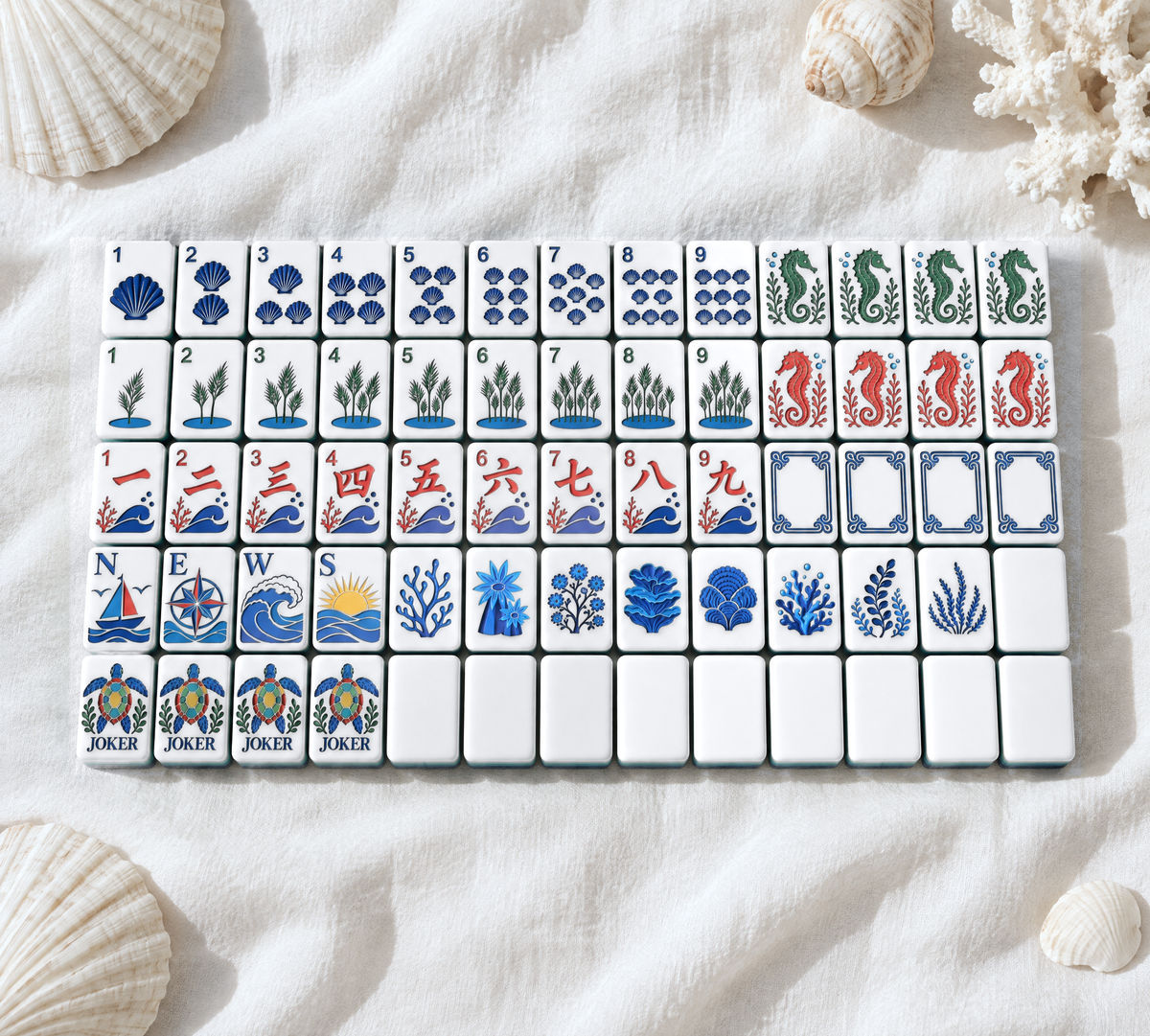
In American mahjong, a seven pairs hand consists of exactly seven identical pairs (14 tiles), with no exposed melds—all tiles stay concealed until you win. The seven pairs appears on the current year's National Mah Jongg League card and scores 40 points if you go out first (called "going mah" or "going out"). If someone else goes out first and you have seven pairs, you score 0 points and pay the winner. Seven pairs works with any tiles: winds, dragons, numbers, or flowers. You draw one extra tile per turn (like any hand) and discard one until you're holding exactly 14 matching pairs at game end. Because you need no melds, no jokers count in seven pairs—only identical tiles. It's one of the fastest hands to learn and popular among newer players.
Why is seven pairs considered an easy hand for beginners?
Seven pairs requires no melds (exposed runs or sets) and no jokers—just seven matching pairs. You don't have to understand complex card patterns or memorize pung/kong combinations. Count to fourteen matching tiles and you're done. The simplicity makes it less intimidating for players learning American mahjong after grasping how to play American mahjong rules. Many beginners focus on collecting pairs early in the game, and seven pairs legitimizes that strategy.

How does seven pairs scoring work compared to other hands?
Seven pairs scores 40 points when you go out first (the hand winner receives points from all three opponents). If you hold seven pairs but someone else goes mah before you, your hand scores zero and you pay the winner. Most other American mahjong hands on the card score differently: some award 30, 50, or even 60+ points depending on tile type and whether you went first. Seven pairs' 40-point value sits in the middle range, making it neither the highest nor lowest reward. Scoring is fixed by the National Mah Jongg League card issued every spring—you cannot negotiate or adjust points mid-game.
Can you use jokers in a seven pairs hand?
No. In American mahjong, jokers cannot be used in a single tile or a pair—the rule is absolute. Since seven pairs consists entirely of pairs, jokers are completely forbidden in this hand. This differs from pungs, kongs, and longer melds where jokers can substitute for missing tiles. If you're holding seven pairs and you draw a joker, you must discard it; it cannot help you go out. This constraint is why seven pairs remains purely about matching identical tiles, no wildcards. Understanding this rule prevents costly mistakes at the table.
What tiles work best for building a seven pairs hand?
Any tiles qualify: winds (North, East, South, West), dragons (Red, Green, White), numbers (1–9 Bams, Craks, or Dots), or flowers. Early in the game, keep any pairs that appear in your hand or that you draw. Winds and dragons are often easier to pair because all four copies look identical and are less likely to be called for melds by other players. Number pairs work equally well if you're collecting them anyway for other hands you haven't committed to yet. Flowers (eight total in a set, two of each design) can form pairs but are rarer. Many experienced players discard lower numbers early if they're not building a specific card hand, leaving more dragon and wind pairs available for grabs. Your best strategy: stay flexible until mid-game, then commit to seven pairs if you have four or five pairs in hand.
How do you know if seven pairs is worth chasing mid-game?
By turn 8–10, count the pairs you're holding and estimate how many you're likely to draw before someone goes out. If you have three solid pairs and others are discarding tiles that match them, seven pairs is viable. If opponents are going aggressive and calling melds, the game will end sooner; seven pairs requires time to build. Look at which tiles are gone from the wall (discarded or in melds). If most of your pair candidates have already been played, abandon seven pairs and switch to a hand using available tiles. Don't fall in love with a seven pairs strategy if the game state changes—flexibility wins more games than stubbornness. How to read the mahjong card teaches you to scan for multiple hand options simultaneously.
🀄 Shop best-selling mahjong sets →
Seven Pairs vs. Other Low-Scoring Hands: When to Switch
Hand Type | Tiles Needed | Melds? | Jokers Allowed? | Typical Points | Speed to Win |
Seven Pairs | 14 identical pairs | No | No | 40 | Medium |
Hand with one pung | 3 identical + 11 others | Yes (pung exposed) | Yes (in exposed melds) | 30–50+ | Varies |
Hand with one kong | 4 identical + 10 others | Yes (kong exposed) | Yes (in exposed melds) | 40–60+ | Varies |
Like Number hand | 3 like-numbered tiles + 11 others | Yes | Yes | 30–50 | Medium–Fast |
This table shows why seven pairs stands out: it's one of the only hands that requires no melds, making it invisible to other players until you go out. By contrast, exposed pungs and kongs signal your intent and invite disruption. Seven pairs also forbids jokers entirely, which means you're competing purely for natural matching tiles—a constraint that rewards patience and observation.

Seven Pairs Strategy: A Step-by-Step Approach
Early game (turns 1–6):
Keep any pairs you draw; don't discard matching tiles.
Watch which tiles opponents discard; note the counts.
Stay open to two or three different hands simultaneously.
Mid-game (turns 7–12):
If you have four pairs, commit to seven pairs and pursue it.
If you have only two pairs, abandon seven pairs and build a card hand instead.
Discard tiles that break pairs only if they're not on the card for other hands.
Late game (turns 13+):
If you have five or six pairs, push hard—you're close.
If you have fewer than four, fold and minimize your loss.
Watch the discard pile for clues about what pairs are still in the wall.
Going out:
Draw one tile, check if it completes a pair.
If yes, discard any single tile and announce "mah!"
If no, discard the tile and wait for your next turn.
🎁 See our most-loved mahjong sets & accessories →
What to Check Before You Buy (or Play)
Is the current year's card available? Seven pairs must appear on this year's National Mah Jongg League card (issued every spring). Older cards don't guarantee seven pairs in the same location or format.
Are your tiles clearly marked? With seven pairs, you're matching tiles repeatedly; sets with faint or inconsistent printing slow you down. Engraved American mahjong sets with legible numbers and suit symbols prevent confusion mid-game.
Do you have exactly 152 playing tiles and 8 jokers? American mahjong always uses all 152 tiles (no extras added). Verify your set includes winds, dragons, flowers, and all four copies of each number tile.
Are you playing with experienced players or beginners? Seven pairs is beginner-friendly, but if everyone at the table is new, someone may misunderstand the "no jokers" rule—clarify before starting.
Common Seven Pairs Mistakes to Avoid
Mistake 1: Using a joker in a pair. It's illegal. Jokers don't count in single tiles or pairs, full stop. Many new players try this and must be stopped by the group.
Mistake 2: Mixing tile counts. Seven pairs means exactly 14 tiles forming seven identical pairs, not seven different pairs or seven pairs of mixed types. All fourteen must be tiles you're holding at once.
Mistake 3: Going out before the 13th turn. In American mahjong, you cannot go out on your first draw (turn 1). Wait until at least turn 2 or later to declare mah.
Mistake 4: Holding seven pairs but forgetting to go out. If you complete seven pairs, call mah immediately. If you discard another tile, you've signaled you don't have it, and that turn is over—you must wait for your next draw.
Mistake 5: Chasing seven pairs too long. If by turn 12 you have only three pairs, abandon the hand. Other players' aggressive calls and exposed melds mean the game is ending soon; switch to a realistic hand and minimize your payment.
✨ Find your Mahstead set — free US shipping →
How Seven Pairs Differs Across Mahjong Variants
American mahjong (the focus here): Seven pairs scores 40 points, requires no melds or jokers, and appears only on the current year's card. Each hand is a unique pattern that players look up on the card every turn. It's rigid but social—everyone agrees on the same valid hands each year.
Chinese mahjong: Pairs (called "eyes") are part of every hand but not a standalone strategy. You need a melds-plus-pair structure; a "eyes only" concept doesn't exist. Points vary by region and ruleset.
Hong Kong mahjong: Similar to Chinese but with different point calculations and tile counts (usually 108 tiles, not 152). Seven pairs isn't a special hand category; pairs serve as the final component.
Riichi mahjong: Uses 136 tiles and focuses on sequences (chows) and sets. Pairs are required to win but aren't the whole hand. Scoring is complex and based on patterns, not a simple table.
Taiwanese mahjong: Hybrid ruleset with elements of Chinese and American styles. Pairs alone don't form a valid hand; melds are always involved.
If you're learning American mahjong specifically, seven pairs is a legitimate, frequent hand on the League card. If you're playing other variants, check your rulebook—seven pairs may not be recognized at all.
Seven Pairs as a Teaching Hand for New Players
Many mahjong for beginners guides recommend starting with seven pairs because it removes the complexity of melds. Beginners can focus on:
Counting tiles.
Understanding the card lookup process.
Learning when to keep vs. discard.
Recognizing game pacing and when opponents are close to winning.
After playing seven pairs a few times, newer players feel more confident tackling hands with pungs, kongs, or "like" patterns. Seven pairs builds fundamental habits: tracking discards, observing other players' strategies, and making discard decisions under time pressure. It's a low-stakes confidence builder.

FAQ
Can seven pairs include jokers as substitutes if I'm one tile short?
No. Jokers cannot be used in a single tile or a pair in American mahjong. If you have only six pairs and one joker, you cannot go out. You must have seven identical pairs—no jokers, no exceptions.
What happens if I go out with seven pairs but I miscounted and actually have six pairs and two different tiles?
Your hand is invalid, and you do not score. You typically pay a penalty (often double the hand value) to all three opponents. Always count twice before announcing mah.
If someone else goes out, do I still score my seven pairs if I'm holding it?
No. You score zero and pay the winner. Seven pairs (and all other hands) score only if you go out first. Being close doesn't matter.
Can I expose a pair face-up on the table during my turn?
No. Seven pairs must stay entirely concealed in your hand until you win. The moment you call mah, you reveal all fourteen tiles to prove the hand is valid.
How many turns does a seven pairs hand usually take to complete?
Typically 8–15 turns, depending on luck and how fast opponents draw tiles you need. If the game ends around turn 13–14, seven pairs is often competitive; if it ends by turn 8, you're unlikely to have it in time.
Does the Mahstead set I buy matter for playing seven pairs?
Yes. Clear, consistent tile markings reduce mistakes when you're matching pairs repeatedly. Sets with engraved or high-contrast designs help you spot pairs quickly, especially under game pressure or dim lighting.
Is seven pairs played in casinos or official tournaments?
In North America, American mahjong tournaments use the National Mah Jongg League card, which includes seven pairs. Casinos in Asia typically play Chinese, Hong Kong, or Riichi mahjong, where seven pairs is either not a hand or structured very differently.
What's the strategic difference between seven pairs and a hand that has one pung or kong?
Seven pairs exposes nothing, keeping your strategy secret until the end. A hand with melds forces you to expose tiles early, revealing your intent. Seven pairs rewards patience; melds reward speed and boldness.


View More
View More
View More
