
Self Pick in Mahjong: Examples & Strategy for Beginners
Last updated: Nov 23, 2026
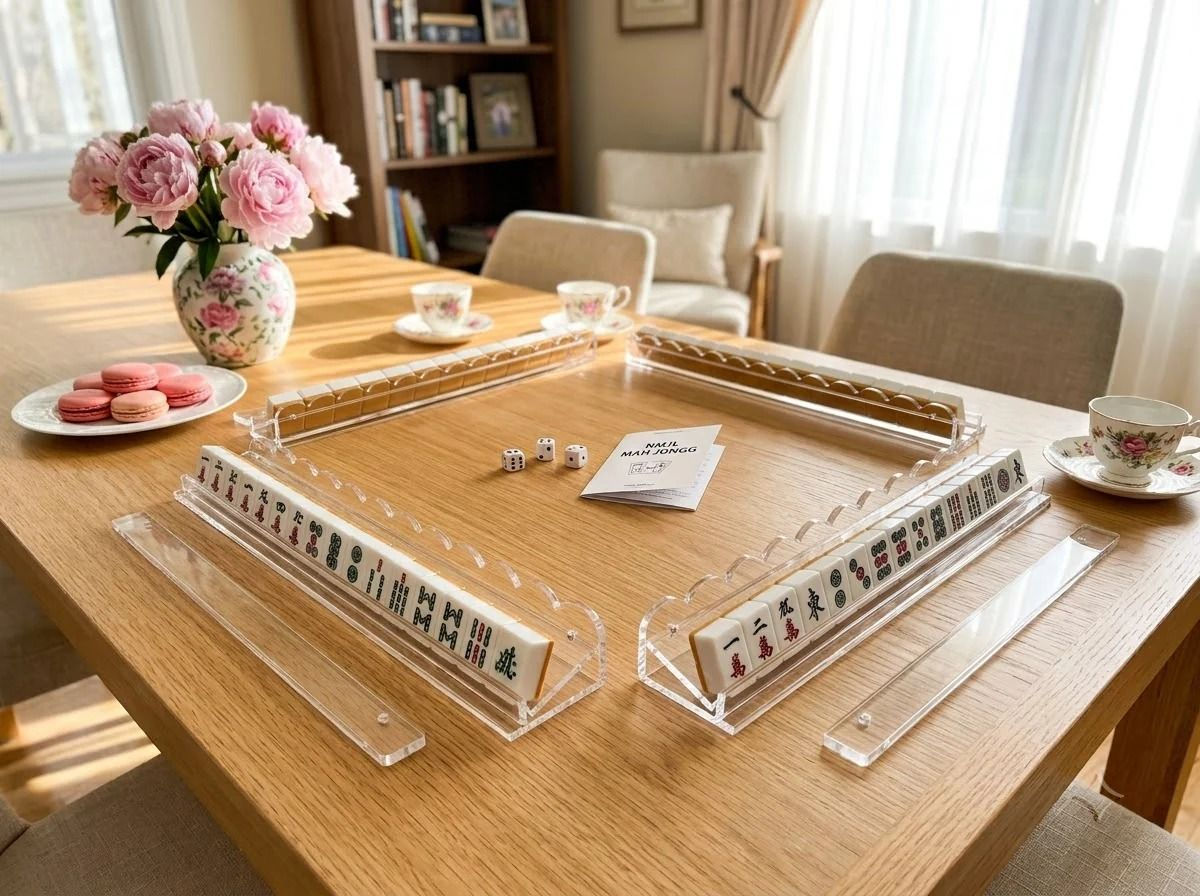
Self pick (also called "going mahjong off the wall" or "self-drawn") occurs when you draw the final tile you need directly from the wall during your turn to win the hand. In American mahjong, you can win only by picking from the wall or by calling a discard from another player; self-drawn wins are scored at the standard hand value listed on that year's National Mah Jongg League card. Unlike Hong Kong or Chinese mahjong, American mahjong does not typically award bonus points for a self-drawn win—the hand value remains constant. Every hand on the card can be won by self pick if you reach it before another player discards the tile you need. The key difference from a called/discard win is that no one else has an opportunity to play the same tile, so self pick is purely a timing and draw advantage, not a scoring multiplier. 🀄 Shop best-selling mahjong sets →
How does self pick differ from a discard win?
In American mahjong, a self-drawn win and a called discard win score identically—both pay the hand value shown on the current year's League card. The only meaningful difference is mechanics: on your turn, you draw from the wall and complete your hand before discarding, while a called win happens when you claim someone else's discard. Both are valid. No bonus, no doubling, no special scoring tier—the hand is the hand.
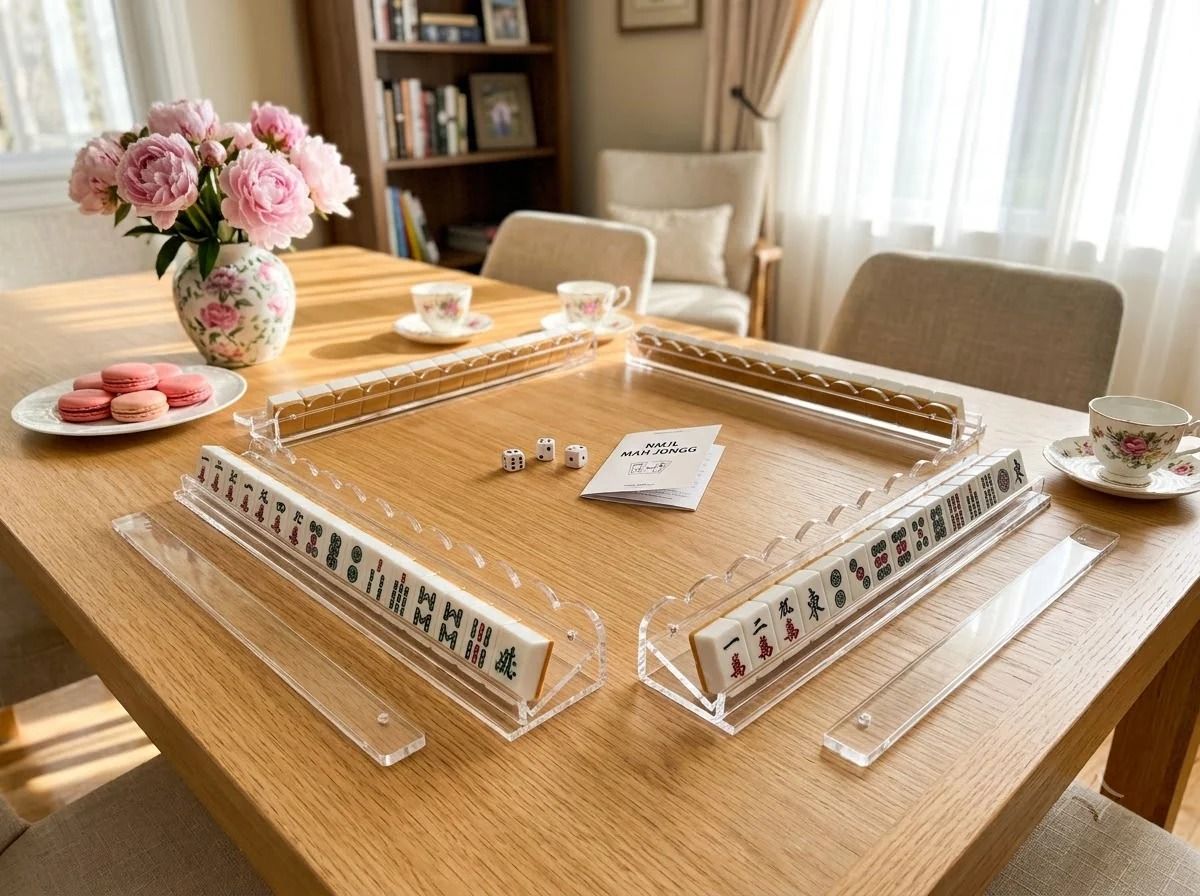
What does self pick look like at the table?
You're holding a hand (say, three Bams, four Craks, and a pair of White Dragons pending one more 5 Crak). On your draw turn, you pick a tile from the wall—and it's the 5 Crak. You immediately declare "Mahjong!" (or "Ready!" depending on house rules), arrange your tiles to show the complete hand, and the hand is scored. No one discarded it; you drew it cold. That's self pick. It's the simplest, most straightforward winning moment: you needed it, you got it, game over.
Why does self pick matter strategically?
Self pick rarely determines strategy, because hand values don't change. However, it affects hand selection and risk. If you're holding a hand that can only be won by self pick (rare on the modern card, but it happens with very specific tile requirements), you're betting on luck—no one can help you discard into you. Conversely, hands that accept a wide range of discards give you more paths to win (both self-pick and called). When choosing which hand to pursue mid-game, prioritize hands with multiple winning tiles, because they can come from the wall or a discard—doubling your odds. Self-picked hands are secondary options, not primary targets.
Can all hands be won by self pick?
Yes—by the rules of American mahjong, every hand on the League card can theoretically be won by self pick. The card doesn't distinguish "self-pick only" hands; any hand is valid if you have the complete set of tiles and no jokers in the pair. The real constraint is board state: if someone discards a tile you need before you draw it, you can call that discard instead. If no one discards it, you must pick it from the wall. Neither path is easier or harder in the rulebook—it's just what happens first.
What's the most common self-pick mistake?
The most common mistake is premature declaration. Players sometimes say "Mahjong!" the instant they draw the winning tile, before fully verifying the hand against the card. You must always double-check: Are the melds correct? Is the pair in the right place? Does the winning tile actually complete this hand from the card? Declare too fast and you can be penalized or forced to pass. Take three seconds to verify before you announce. The other mistake is confusing self pick with a kong discard: when you add a joker or steal a tile during a kong, the next player's draw is not a self pick for them—it's still within the normal turn sequence. Self pick specifically means drawing from the wall during your own regular turn.
How do self picks affect game pace?
Self-pick wins typically end a hand faster than drawn-out multi-round games where players cycle many discards. If someone completes a hand on their first or second turn, everyone gets fewer turns and fewer opportunities to build. This is neutral—it's luck, not skill. However, experienced players track tile frequency: if early players are drawing fast, the wall is depleting quickly, which increases everyone's odds of a self pick later. Games with early self picks often feel snappier overall. Neither pace is better; it's just variance.
Scenario | Self Pick or Called? | Who Wins? | Time to End |
You draw the 7 Dot on turn 4 and mahjong immediately | Self pick | You | ~5 minutes |
You hold a hand, player 2 discards 7 Dot, you call it | Called | You | ~5–8 minutes |
You hold a hand waiting for 7 Dot, player 3 draws it and passes | Neither | Player 3 | ~2–10 minutes |
Hand sits uncalled for 2 rounds, wall depletes, no 7 Dot drawn | Dead hand | Discard | ~10 minutes |
The table shows how self pick vs. called has identical scoring but slightly different timing psychology.

Real examples from play
Example 1: The clean self pick You need: 1 Bam–2 Bam–3 Bam (pung), 4 Crak–5 Crak–6 Crak (pung), 7 Dot–8 Dot–9 Dot (pung), 1 Crak–2 Crak–3 Crak (pung), and a pair of Red Dragons. You have four melds complete; you're waiting for one Red Dragon. On your turn, you draw from the wall and get a Red Dragon. Mahjong by self pick. Hand scores at the value shown on the card—no multiplier, no bonus.
Example 2: Self pick vs. called—same hand, same payout The previous example: you're still waiting for one Red Dragon. Instead, player to your right discards a Red Dragon, and you call it before anyone else can. Same hand, same melds, same pair—same score. The only difference is when you won (on someone else's turn vs. your own). Payout is identical.
Example 3: Dead hand despite self-pick availability You're pursuing a hand that requires two 5 Craks (as a pair). You need it by self pick because no one will discard a pair—pairs are terminal, discarded only when hopeless. The wall depletes, no second 5 Crak surfaces, and eventually all four copies are visible in other players' hands or on the discard pile. Hand dies. No self pick possible. This is rare but illustrates the strategic risk of self-pick-only hands.
What you'll need
If you're hosting a weekly mahjong game and want to play confidently, you'll benefit from a complete, durable set and a mat for clear tile visibility. Our best-selling mahjong sets come with all 160 tiles (152 playing plus spares), racks, and pushers—everything to host four players smoothly. Pair it with a quality mat from our mahjong mats collection to organize the wall and keep tiles from sliding during draws. A mat also helps you see the wall structure clearly, so you draw from the correct position and reduce fumbles or mis-picks.
🎁 See our most-loved mahjong sets & accessories →
What to check before you buy
Tile size and readability: Acrylic tiles are easier to grip and see than bamboo, especially under indoor lighting. If you play weekly, prioritize comfort and clarity over aesthetics alone.
Rack and pusher quality: Pushers should move smoothly; rough racks make it hard to organize melds and slow down verification before declaring mahjong. Test the fit if possible.
Spare tiles: A 160-tile set includes spares. Check what your set includes so you know how to replace a lost or damaged tile during the season.
Mat fit: Measure your table width. Our mats come in standard sizes; confirm your mat fits your table before the first game.
Why this matters for your game
Understanding self pick clarifies the rulebook and removes the anxiety around "Did I win correctly?" The answer is yes—if you drew it and it completes a hand from the card, you're done. Self pick is not exotic or conditional; it's the most common, cleanest win in American mahjong. Knowing this frees you to focus on the real strategic layer: which hands to pursue, when to pivot, and how to read the other players' strategies. Self-picked wins are pure luck; called wins are pure timing and observation. Master both, and you'll play confidently whether you draw or get called in.
✨ Find your Mahstead set — free US shipping →
Relation to the larger game
Self pick sits within the broader framework of how to play American mahjong. It's one half of the winning mechanic; the other is the called discard. Both are equally valid, equally scored. Players who understand self pick also benefit from learning how jokers work—because jokers in your hand can substitute for the winning tile, changing which tiles you need from the wall. And if you're new to the game, mahjong for beginners covers the full turn structure, so self pick feels natural in context rather than surprising.

FAQ
Can you win American mahjong by self pick on your first turn?
Theoretically, yes—if you draw a complete hand in your first four tiles, though this is extraordinarily rare. In practice, self picks happen after 3–15 turns, depending on tile luck. The rules place no minimum turn requirement before a self pick is valid.
Does self pick score higher than a called win?
No. In American mahjong, self-drawn and called wins score identically—the hand value on the card applies regardless. This differs from Chinese or Hong Kong mahjong, which often award bonus points for self-drawn wins.
What happens if you draw your winning tile but another player declares ready (pung/kong) at the same time?
Your draw turn happens first; your self pick is valid. The other player's declaration is resolved after your hand is scored. Turn order matters in ties.
If I self-pick on turn 5 and no one has discarded yet, do I pay double?
No. American mahjong scoring is fixed per hand on the League card; self pick is never a scoring modifier. You pay the standard hand value.
Is self pick riskier than waiting for a discard?
It depends on hand design. Hands with one winning tile (few discards accept them) make self pick feel risky—you're betting on drawing it. Hands with five+ possible winning tiles have multiple paths (self pick or called), so they're statistically safer.


View More
View More
View More
