
All Honors Mahjong Meaning and Points in American Play
Last updated: Nov 23, 2026
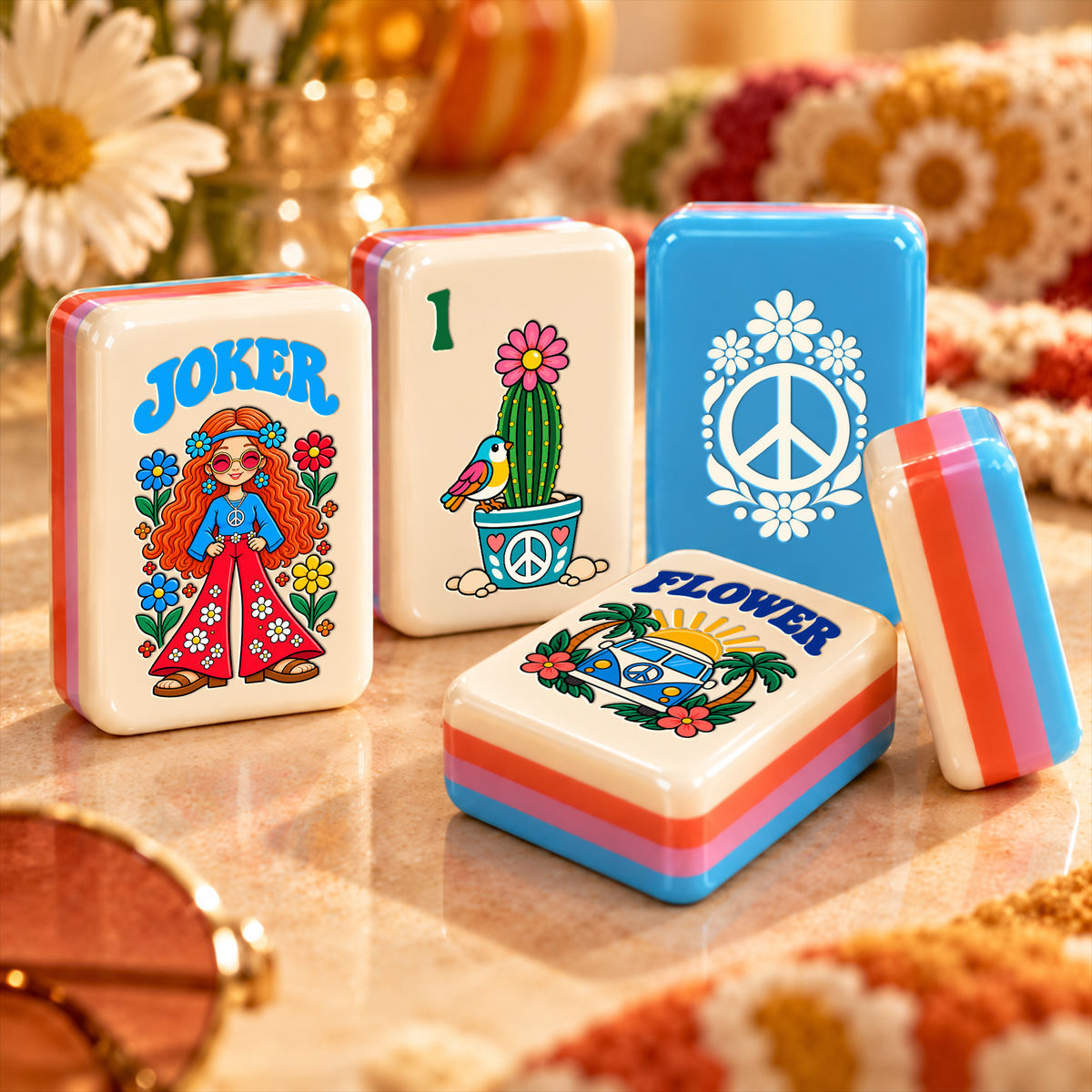
All Honors in American mahjong is a hand composed entirely of honor tiles: the 16 winds (N, E, W, S in four copies each), the 12 dragons (Red, Green, White in four copies each), and the 8 flowers. Because number suits (Bams, Craks, Dots) are excluded, All Honors hands appear on the current year's National Mah Jongg League card as fixed patterns. The scoring depends on which specific arrangement you declare—some pay 40 points, others 50 or higher—per the card's published values. Jokers can substitute for any tile in the hand, including honors. These hands rank among the hardest to complete because you draw from only 36 honor tiles (plus jokers) rather than the full 152-tile pool, so retaining and waiting for matches requires patience and strategic discarding from your best-selling mahjong sets.
All Honors hands compose some of the game's most dramatic moments. You're holding only winds, dragons, and flowers—no number tiles at all. On the current year's card, these patterns carry specific payouts, and once you recognize the shape you're building, the wait becomes electric.
What tiles count as honors in American mahjong?
Honors are winds (North, East, West, South), dragons (Red, Green, White), and flowers (eight distinct tiles). Unlike number suits, each honor is unique or draws from a small pool: four copies of each wind, four of each dragon, and one each of the eight flowers. You cannot form a chow (sequence) with honors; you can only use pungs (three identical), kongs (four identical), quints (five of a kind), sextets (six of a kind), or single tiles and pairs, depending on the pattern on the card.

How do All Honors hands appear on the mahjong card?
The National Mah Jongg League card publishes one year's legal hands each spring. All Honors patterns are listed in their own section and show exact tile requirements and joker counts allowed. Because the card changes annually, the specific All Honors hands available shift—some years feature more All Honors options than others. You must match the exact pattern on the current year's card; any deviation disqualifies the hand. Study how to read the mahjong card to identify All Honors sections and decode joker rules for each pattern.
🀄 Shop best-selling mahjong sets →
What do All Honors hands score?
Points vary by pattern. Some All Honors hands pay 40 points, others 50, 60, or occasionally higher—the card lists the exact value beside each pattern. The score reflects both the rarity of holding only honors and the difficulty of completing the specific arrangement without number tiles to trade or discard. Unlike some variants where all hands score the same, American mahjong rewards pattern difficulty: a five-pung All Honors configuration pays more than a simpler one. Check American mahjong scoring for how these totals combine with wash-outs, payments, and end-of-game settlement.
Can jokers help complete an All Honors hand?
Yes, jokers substitute for any tile in an All Honors pattern—a joker can stand in for a dragon, wind, or flower. The card specifies how many jokers each All Honors pattern allows; some permit zero, others one or two. A joker used as a single tile or pair is illegal in American mahjong, so if an All Honors pattern contains a pair of dragons, both must be real dragons or one real and one joker, never two jokers. This constraint forces you to hold real honor tiles early and trade aggressively during the Charleston to build joker-light patterns or secure enough real honors to close out the hand.

How rare is an All Honors hand compared to other patterns?
All Honors hands are uncommon because you're drawing from only 36 honor tiles per suit copy cycle, versus 108 number tiles. The probability drops further if an All Honors pattern requires specific wind or dragon combinations. Most weekly games see one or two All Honors completions per season, not per session. Players who chase All Honors often sacrifice flexibility: holding three winds early commits you to that path, reducing your ability to pivot to other hands. A balanced approach—building one primary hand and one alternate All Honors option if the honors cooperate—often proves more practical than pure All Honors focus.
When should you commit to an All Honors hand?
Commit only after the Charleston if you hold three or more matching honors (a pung) plus one or two others that align with a card pattern. If your hand contains scattered honors with no clear three-of-a-kind, let them go and focus on number suits. Mid-game, revisit an All Honors option only if you've already assembled one complete pung and are one or two draws away from a second; otherwise, you risk running down to the last few tiles without closure. The card is your anchor: before the hand begins, identify one or two All Honors patterns you'd be willing to play if the honors fall right, then decide during the Charleston whether the tiles justify the commitment.
🎁 See our most-loved mahjong sets & accessories →
Comparison: All Honors vs. other high-value hands
Hand Type | Tile Pool | Rarity | Typical Points | When to Pursue |
All Honors | 36 honors | Uncommon | 40–60 | After Charleston confirms ≥1 pung + matching pattern |
All Simples (1–8) | 72 tiles | Moderate | 30–50 | Always viable; easier to trade during Charleston |
Like Numbers (e.g., all Dots) | 36 tiles | Uncommon | 40–60 | Similar commitment as All Honors; requires luck + discipline |
Consecutive Pairs | Full suite (152) | Moderate | 30–50 | Flexible; adjust during play as draws arrive |
All Honors requires the same dedication as other honor-exclusive or number-restricted patterns, but honor scarcity makes completion harder. All Simples, by contrast, lets you draw from eight ranks across three suits, giving you more options to build pungs without exhausting a single pool.
What mistakes derail All Honors attempts?
Holding too many scattered honors. Three winds, two dragons, and a flower is a pretty picture—until you realize none of them match the card's fixed patterns. Discard the outliers and focus your hand elsewhere.
Ignoring the joker limit. The card says "All Honors, 2 jokers"—and you've already used both jokers in other parts of your hand. Now you can't complete the pattern. Track joker allocation carefully.
Refusing to pass good tiles during the Charleston. If you start with four dragons but the card shows no All Honors dragons-only patterns, you're locked into a low-payoff hand. Use the Charleston exchange to reset.
Chasing until the last tile. An All Honors hand that isn't closed with five to ten tiles left isn't a hand—it's a fantasy. Recognize when to fold and prepare for the next round.
How do All Honors hands differ in other mahjong variants?
In Chinese Mahjong (Sichuan, Shanghai), honor tiles form only specific melds and score far lower than number suits; all-honors hands are often weak. Hong Kong Mahjong allows sequences (chows), so honors can't be used at all in most hands. Riichi Mahjong separates honor scoring entirely and rewards number patterns over honors. American Mahjong is unusual in treating honors as equally valid tile sources—All Honors hands compete with mixed-suit patterns and sometimes beat them in point value. This balance makes American play more democratic and gives honor-focused strategies real viability week to week.
✨ Find your Mahstead set — free US shipping →
What to check before you buy a set for All Honors play
Before ordering, verify that your set includes a current-year card: older sets carry outdated patterns, and card updates shift which All Honors hands are legal each spring. Our best-selling mahjong sets ship with the current card. Count your jokers: a full 160-tile set includes extra jokers beyond the eight used in play, giving you spares if one is lost or marked. Inspect the dragon and wind tiles for wear or fading, especially white dragons (soap), which blend into light backgrounds and are easiest to misplace. If you host regularly, a durable mahjong mat protects tile visibility; our engraved mats include honor tile zones to keep honors organized during discards. Store honor tiles separately if they're valuable (engraved sets, for example) so they're never mixed with a borrowed or replacement set mid-game.
Real-world All Honors checklist
[ ] Card version matches current year (spring release)
[ ] All four copies of each wind tile present and legible
[ ] All four copies of each dragon tile present; White tiles readable
[ ] Eight flower tiles distinct and undamaged
[ ] Joker count equals eight (plus spares in the 160-tile count)
[ ] Jokers are blank or marked, never identical to real tiles
[ ] Storage bag or case keeps honors protected between games
[ ] At least one All Honors pattern on the card matches your tile setup (zero-joker or one-joker versions if strictness matters)

FAQ
What if I have an All Honors hand but the pattern isn't on my card?
It's illegal; you cannot declare it. American mahjong uses only patterns published on the current year's National Mah Jongg League card. Hand the tiles back, they're unplayable, and you'll sit out that hand.
How many All Honors patterns are usually on the card?
It varies annually; some years publish five to ten, others fewer. Study your current card's honor section before the game begins so you know what's available and don't waste tiles chasing an unlisted pattern.
Do All Honors hands require a specific number of jokers?
The card specifies for each pattern: some All Honors patterns allow zero jokers, others one or two. Exceeding the limit disqualifies the hand, so read the card notation carefully before committing to the pattern.
Can I mix flowers with dragons and winds in one hand?
Only if the card shows a pattern combining all three. A single card entry dictates the exact mix; you can't improvise your own All Honors combination.
Is an All Honors hand harder to complete than an All Simples hand?
Yes, because you're drawing from 36 honor tiles rather than 72 number tiles. All Simples lets you trade across three suits and eight ranks; All Honors restricts you to a single small pool, making matches rarer and waits longer.


View More
View More
View More
