
Same Tile in Mahjong: Examples & Rules for American Players
Last updated: Nov 23, 2026
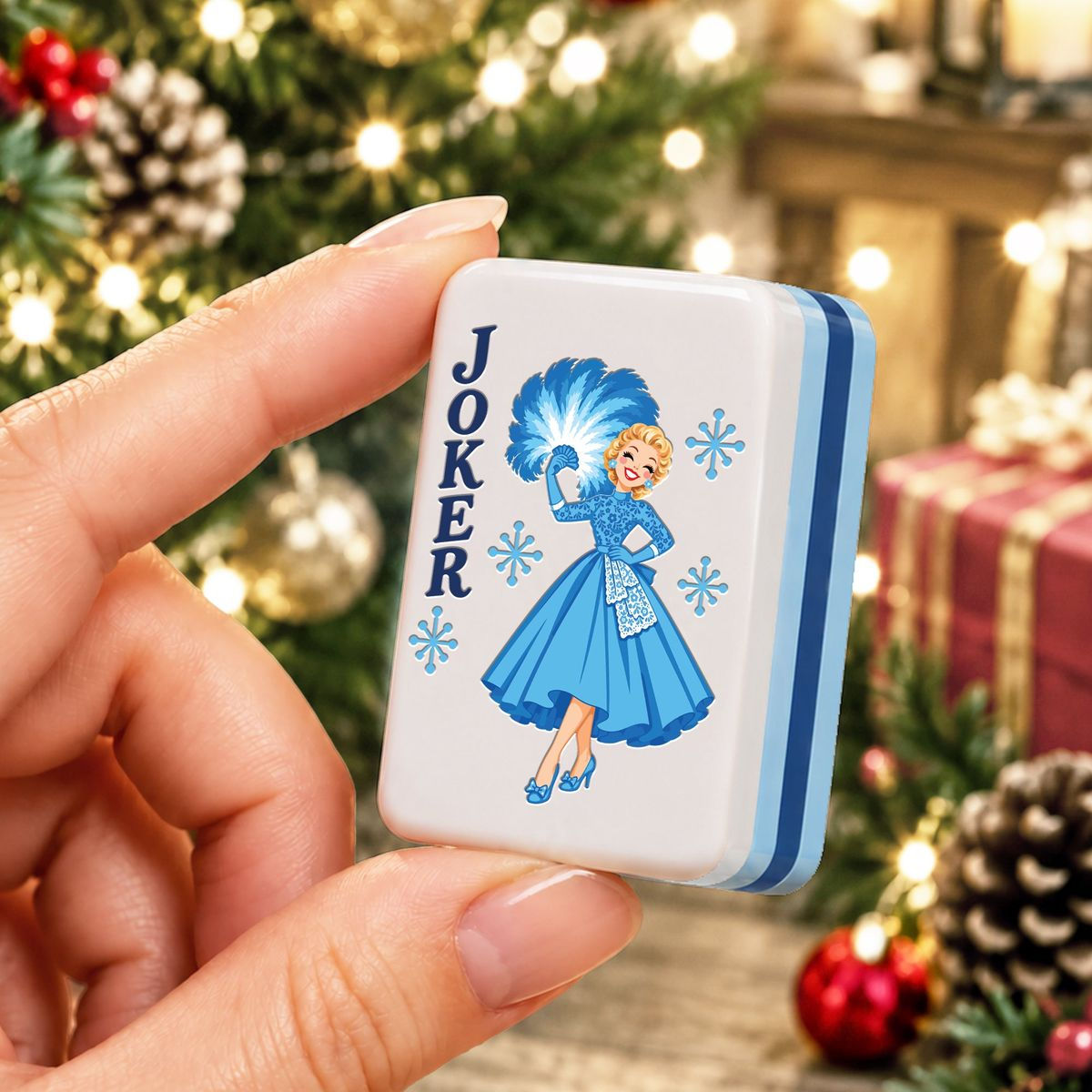
In American mahjong, "same tile" refers to tiles that are identical in number AND suit—for example, three 5 Dots or four East Winds. These identical sets form pungs (three tiles) and kongs (four tiles), the only exposed melds allowed in American play. Unlike Asian variants that use sequences (chows), American mahjong relies entirely on matching: you cannot expose 1-2-3 as a valid meld. Jokers can substitute for any missing tile within a pung or kong but never stand alone or form a pair. Understanding this rule is essential because the National Mah Jongg League card—your hand guide each year—lists every winning combination using same-tile groupings. A 160-tile set includes 152 standard tiles (four copies each of numbers 1–9 across three suits, plus winds and dragons) plus 8 jokers, giving you the exact inventory needed to build these identical melds. Beginners often mistake this for other games; in American mahjong, sameness is absolute—no substitution, no flexibility. 🀄 Shop best-selling mahjong sets →
What exactly is a "same tile" in American mahjong?
A same tile is three or four copies of one tile—identical number and suit. The 5 Crak, for instance, appears four times in the deck, so you can build a pung (three 5 Craks) or kong (four 5 Craks). Tiles are called "same" only when they match perfectly on both face value and suit. This is American mahjong's core rule: no sequences, no wildcards except jokers in specific roles, only identical groupings.

How do pungs and kongs work as examples of same tiles?
A pung is three identical tiles; a kong is four identical tiles. When you hold, say, three 1 Bams (the bird tile), that is a pung. If you later pick or draw a fourth 1 Bam, you can upgrade it to a kong—and declare it as an exposed meld by setting it face-up on the table in front of you. Both are winning components in American mahjong hands. Kongs earn bonus points during scoring. You may never create a pung or kong by mixing suits or numbers—1 Bam, 1 Crak, and 1 Dot, for example, do not form a valid pung, even though they share the number 1.
Can jokers replace tiles in same-tile melds?
Yes, jokers substitute for missing tiles within a pung or kong—but only there. If you have two 3 Dots and one joker, that joker counts as a third 3 Dot, making a valid pung. If you have three 7 Winds and one joker, the joker becomes the fourth, forming a kong. However, jokers can never be used as a single tile on their own, as a pair, or in any combination outside a pung or kong. Understanding how jokers work will clarify when and where they fit in your strategy. Breaking this rule—using a joker outside a meld or as a pair—makes your hand illegal and causes you to lose the round.
How does the mahjong card show same-tile examples?
The National Mah Jongg League card lists winning hands as combinations of same-tile groupings. Each row on the card shows a valid winning hand: for example, "Pung 1 Bam, Pung 2 Bam, Pung 3 Bam, Pung 1 Crak, and a pair of 1 Dot." Every grouping must be identical tiles; the card never displays sequences or mixed numbers. Learning to read the mahjong card teaches you to decode these patterns quickly. New players often scan the card looking for "any matching tiles," but the card always specifies exact suits and numbers. When you see "Pung Dragons Red," it means three Red Dragons exactly—not three reds of mixed types.
What's the difference between same tiles and other tile groupings?
American mahjong allows only two types of exposed melds: same-tile sets (pungs, kongs) and quints or sextets (five or six identical tiles). You cannot expose chows (sequences like 4-5-6) or kongs of mixed suits. Chinese, Hong Kong, and Riichi mahjong permit sequences, which is a fundamental difference—in those games, 4-5-6 Bams is a valid meld. American play forbids sequences entirely. The card is your reference: if a hand calls for sequences, it simply cannot be played in American format. This makes American mahjong a different puzzle—you hunt for identical groupings, not runs. When teaching a newcomer or switching between variants, clarify this boundary explicitly to prevent confusion and rule violations.
How do you spot valid same-tile melds during play?
During play, you expose melds when you have three or more identical tiles and want to claim a tile called or drawn by another player (called). To expose a pung, lay three identical tiles face-up on the table in front of your rack. If you later draw a fourth, add it to form a kong. Count carefully: three East Winds is a pung; East, South, West is not (different suits, same family). Many mistakes happen when players glance too quickly—verify the number AND suit before declaring. Use good lighting on your play surface; a quality mahjong mat with clear tile spacing helps prevent misreads. Tiles printed with sharp contrast between suits (Bam, Crak, Dot) and clear numerals reduce errors. At our weekly games, we slow down and verbally confirm each exposed meld to catch mix-ups early.

Comparison: Same Tiles Across Game Variants
Aspect | American | Chinese | Hong Kong | Riichi |
Allowed melds | Pungs, kongs only | Chows + pungs, kongs | Chows + pungs, kongs | Chows + pungs, kongs |
Same-tile rule | Identical number & suit | Identical number & suit | Identical number & suit | Identical number & suit |
Joker use in melds | Substitute within pung/kong only | None in some rules | Limited or none | None |
Card or memory | Annual League card | Player memory or book | Player memory | Player memory |
Sequence example | Not allowed | 4-5-6 Bam is valid | 4-5-6 Bam is valid | 4-5-6 Bam is valid |
American mahjong is unique in requiring you to match tiles perfectly and exposing only identical groupings. Other major variants (Chinese, Hong Kong, Riichi) all permit sequences—making the tile-matching rule feel loose by comparison. If you play American exclusively, switching to another variant can feel jarring; if you travel or have multilingual friends, knowing this difference prevents rule disputes. When learning a new variant, first clarify: Can sequences be exposed, or only identical melds?
🎁 See our most-loved mahjong sets & accessories →
Step-by-Step: Building a valid same-tile meld
Count your tiles by suit and number. Lay your hand out by suit: all Bams together, then Craks, then Dots, then winds, then dragons. Group by number within each suit.
Identify sets of three or four identical tiles. For example: three 7 Bams, four 2 Dots, three North Winds.
Check each tile face carefully. Verify number and suit—no shortcuts. A 2 Bam (bamboo) is not the same as a 2 Crak (character).
Note where jokers substitute. If you have two 9 Dots and one joker, write down that the joker represents the missing 9 Dot in that pung.
Match your groupings to the current year's card. Find a hand row that lists your melds and a pair (two identical tiles). If your grouping matches exactly, you may win.
Before declaring, announce each meld aloud and point to its tiles on the table. This gives other players a chance to catch errors and prevents costly disputes.
What to check before you buy a set for learning same-tile rules
Tile clarity: Ensure numerals and suit symbols are bold and easy to distinguish. Worn or faded tiles lead to misreads, especially during fast play.
Set size: A standard 160-tile set includes 152 playing tiles (four of each rank and suit) plus spare jokers. This exact inventory is non-negotiable for American mahjong and lets you build every valid meld safely.
Case or storage: If you plan to teach or host weekly games, a set with a protective bag or case prevents tiles from scattering or chipping. Damaged tiles become unreadable.
Rack visibility: A good rack with pushers lets you align tiles clearly so you—and other players—can spot identical tiles at a glance. Mahjong racks with pushers take the guesswork out of organizing your hand.
Practice exercise: Spot the valid same-tile melds
You draw the following tiles: three 4 Craks, two 4 Dots, one joker, four 1 Bams, two 3 Dots, three North Winds, two 5 Bams, and one Red Dragon.
Which are valid melds?
Three 4 Craks = pung ✓
Four 1 Bams = kong ✓
Three North Winds = pung ✓
Two 4 Dots + one joker = pung ✓ (joker substitutes for the third 4 Dot)
Two 3 Dots, two 5 Bams, one Red Dragon, one joker = not a valid meld ✗ (mixed suits and numbers)
Your valid melds so far: pung (4 Craks), kong (1 Bam), pung (North Winds), pung (4 Dots with joker). You still need a pair (two identical tiles) to win. The pairs available: two 4 Dots (if you don't use the joker), two 5 Bams, or two 3 Dots. This exercise shows that same-tile rules force you to be precise: mixing suits or numbers breaks the meld, but a joker within a same-tile group saves the day.
✨ Find your Mahstead set — free US shipping →
How to teach same-tile rules to a new player
Start by sorting tiles visually. Give a beginner a best-selling mahjong set and ask them to group all Bams, then all Craks, then all Dots. Then ask them to separate each suit by number. This tactile step anchors the concept.
Next, lay out three 5 Dots and ask: "Are these the same tile?" (Yes.) Then show two 5 Dots and one 5 Bam and ask the same. (No—different suit.) Repeat with winds and dragons. Use the current year's card and point to one hand row. Say, "This hand has these melds. Can you find them in the example tiles?" Most players grasp same-tile matching instantly when they handle tiles themselves.
When a beginner makes a mistake—say, mixing 1 Craks and 1 Dots in a pung—gently point out the suit difference without penalty. Frame it as "We're learning the borders." After one or two rounds, the rule becomes automatic. Speed comes with practice, but accuracy is the foundation.
Hosting a weekly game: Same-tile enforcement tips
We follow three practices at our table:
Verbal confirmation. Before any meld is exposed, the declaring player announces it: "Pung, three 2 Bams" or "Kong, four Dragon Green." Other players repeat back what they see. This catches misreads on the spot.
No rushing. If a tile is called, the exposing player has ten seconds to arrange and verify the meld before laying it down. Rushing leads to errors and disputes.
Joker tracking. When a joker substitutes in a meld, we point at it and say what tile it represents. This prevents confusion if the hand is challenged during or after the round. Documentation is your friend in house games.
FAQ
Can two 1 Bams and one 1 Crak form a pung?
No. A pung requires three identical tiles—same number AND suit. Two 1 Bams and one 1 Crak is a mixed group, not a valid meld. Only three 1 Bams or three 1 Craks alone form a pung.
If I have four identical tiles, must I declare a kong, or can I hide one?
You can keep all four in your hand if you wish; declaring a kong is optional. However, many hands on the card reward kongs with bonus points, so strategic players often expose them. Check the card and your scoring before deciding.
Can a joker be part of a pair in American mahjong?
No. Jokers cannot form a pair or stand alone. A pair must be two identical tiles—two East Winds, two 7 Dots, etc. Jokers work only as substitutes within pungs and kongs.
What happens if I expose a meld with a joker, then later find I miscounted?
Once exposed, a meld is binding for that round. If an error is caught by other players before you draw your next tile, house rules may allow a correction. After play resumes, the meld stands. Always double-check before exposing to avoid penalties.
Are same-tile rules the same in all American mahjong clubs?
Yes. The National Mah Jongg League card and rulebook standardize American mahjong nationwide. Same-tile groupings (pungs, kongs) and the ban on sequences are universal. Joker use, scoring, and Charleston rules are consistent. If a club plays by different rules, ask whether they follow League standards or house variants.


View More
View More
View More
