
Riichi Mahjong Defense: Reading Hands and Blocking Wins
Last updated: Nov 23, 2026
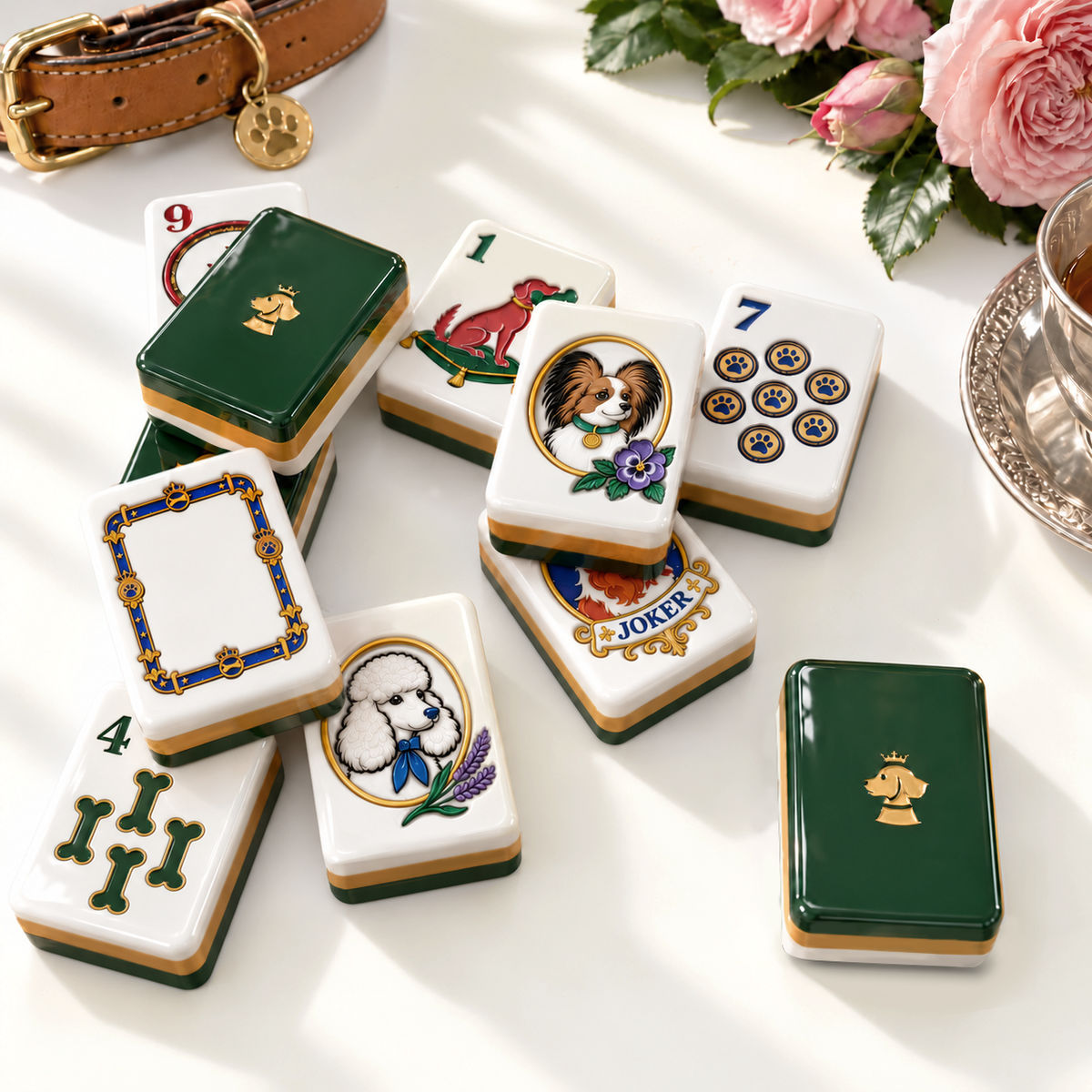
Riichi mahjong defense means studying opponent discard patterns, recognizing which tile groups they're collecting, and choosing your own discards to avoid feeding them winning tiles. The game uses 34 unique tiles (four copies each: 1–9 in three suits, plus seven honor tiles: four winds and three dragons), and winning hands must include melds—open triplets (pung), sequences of three consecutive tiles (chow), or pairs. Unlike American mahjong, which requires hands only from an annual card and forbids sequences, riichi rewards real-time reading: if an opponent discards a 5 Crak early, they likely don't need it; if they hold it, they're probably building a sequence or pair. A live riichi table teaches defense through exposure—watching which tiles opponents pick from the wall and which they discard telegraphs their goal. Defensive play means discarding "safe" tiles (ones your opponents have already shown) and sacrificing your own hand speed when an opponent signals danger. Mahstead sets designed for riichi play let you practice with clear tile faces and durable acrylic that won't stick or fade over long defensive sequences.
Riichi mahjong defense is about reading your opponents' tile patterns, recognizing which tile groups they're collecting, and choosing your own discards to avoid feeding them winning tiles. The game uses 34 unique tiles (four copies each: 1–9 in three suits, plus seven honor tiles: four winds and three dragons), and winning hands must include melds—open triplets (pung), sequences of three consecutive tiles (chow), or pairs. Unlike American mahjong, which requires hands only from an annual card and forbids sequences, riichi rewards real-time reading: if an opponent discards a 5 Crak early, they likely don't need it; if they hold it, they're probably building a sequence or pair. A live riichi table teaches defense through exposure—watching which tiles opponents pick from the wall and which they discard telegraphs their goal. Defensive play means discarding "safe" tiles (ones your opponents have already shown) and sacrificing your own hand speed when an opponent signals danger.
🀄 Shop best-selling mahjong sets →
How do you read an opponent's discard order in riichi?
Discard order reveals hand intention more than any single tile. A player discards their riskiest or least useful tiles first—usually honor tiles (winds, dragons) they don't immediately need, then number tiles on the edges of their range. If East discards White (soap) on turn one, they're not chasing an honor pung. If they discard a 1 Bam next, they've rejected low Bams. By turn five, when an opponent discards slowly and picks greedily from the wall, they're one tile away from winning—their hand is tight, and nearly every tile they touch advances them. Conversely, a player who discards variety (one suit, then another, then an honor) is building a mixed or open hand and hunting more tiles. Track which tiles stay in the discard zone longest: these are "dangerous"—your opponents have seen them, know they're unavailable, and won't waste mental energy on them. If a 7 Dot has been in the discard zone for ten turns, discarding it yourself is safe; if it was just discarded by a single player, two others have still not seen it clearly and might want it.

What tiles are safe to discard when multiple players are close to winning?
Safe tiles follow the "honor-first" rule: winds and dragons discarded early in the game carry minimal risk because most hands don't need all four copies. The 1 and 9 tiles (terminals) are riskier—they're needed for many hand patterns—but a 1 Dot or 9 Bam discarded early and never picked up is safer by round six. The safest tiles are ones your opponents have already discarded: if North player threw a 5 Crak in turn two and never picked one from the discard zone, they don't want Craks in the 4–6 range. Number-tile pairs on the edges of the discard zone (tiles discarded in the first three turns or last two turns) are also safer because players typically reveal their intentions in opening moves and retreat to safety in the endgame. Never discard a tile an opponent just picked from the wall, even if it seems like an honor—they either retrieved it from the discard zone or drew it fresh, and either way, it's relevant to their hand. If an opponent picks a 4 Bam you discarded three turns ago, they want 4 Bams or sequences near 4 (3–5 or 2–4), making 3 and 5 dangerous.
When should you discard a dangerous tile to block a player who's one tile away?
Defensive discard means accepting personal loss to save the table. If an opponent signals they're one tile away (slow discard, long pickup pause, or a dealer status that grants them frequent turns), you must decide: push forward with your own hand or wall them off. If you're also close to winning, the math shifts—both of you are hungry, and both of you will burn tiles recklessly. In that case, discard for speed, not safety. If you're far from winning (four or more tiles away from hand completion), discarding a tile that blocks an opponent's likely win is correct even if it damages your hand. For example, if North player has openly collected three of the four 3 Crak tiles (by showing melds or through discard patterns), holding onto your 3 Crak is wrong—you're denying them one copy, but the probability they'll complete their hand without it is high. Discard the 3 Crak and force them to adjust. If, instead, you suspect they want a sequence around 3 Crak (like 2–3–4 or 1–2–3 Craks), discarding a 2 or 4 Crak is more efficient than the 3 itself. Blocking a sequence is harder than blocking a pair, so target the tiles that complete the most common patterns: middle numbers (4, 5, 6) in any suit, and the winds (winds are needed in nearly every hand for pair or open meld). Terminals (1, 9) block fewer hands but still matter—wait until late game to discard them safely.

How does the riichi declaration change your defensive strategy?
A riichi declaration signals one thing: "I am one tile away from a complete, valid winning hand." The declarer is now locked into their hand—they cannot change their strategy, cannot discard tiles they don't draw, and cannot use wild cards or substitute tiles. This is your window. Once riichi is declared, you know exactly what the declarer needs: exactly one tile from the wall or exactly one discard that matches their waiting pattern. Their waiting pattern is almost always one of two types: a "single wait" (they need one specific tile, like a pair to complete) or a "two-way wait" (they need either of two tiles from nearby number sequences, like needing a 2 or 4 to complete a 1–2–3 or 3–4–5 Dot sequence). If you can infer their wait from their closed hand size and their earlier discards, you can jam the discard zone with tiles they don't need. For example, if a declarer has thrown all their Bams and every honor tile except one wind, they're likely waiting for Craks or Dots. Any Bam you discard is safe. The second part of riichi defense: if another opponent declares riichi, non-declarers should also accelerate their hands or discard defensively to avoid pushing tiles onto the discard zone that feed the declarer. A riichi table becomes conservative once declaration appears—players hold tiles longer, pick more carefully, and discard only when sure. Understanding how jokers work in American play doesn't directly apply to riichi, but the principle of controlling tile flow is the same.
What's the difference between defensive play in riichi versus other mahjong variants?
Riichi mahjong is unique because it uses only 34 unique tiles, four copies each, making probability calculations visible and tile patterns obvious. In American mahjong, players cannot call or expose sequences (chow), so defense focuses on reading what's in the rack, not what's exposed. American mahjong scoring also differs—you win by matching the current year's card, not by declaring riichi, so players hunt for named hand patterns rather than any valid winning combination. In Hong Kong mahjong, players use more tiles and more complex patterns, shifting defense toward tile counting and endgame push. Riichi defense is the most "readable" because so many melds are exposed on the table: once a player shows a pung or chow, half their hand is public, and opponents can calculate exactly what they still need. This means riichi players who track exposed melds have a massive edge. Keep a mental note of what each player has shown, what they've discarded, and what they've picked—three pieces of data that narrow their waiting hand to perhaps two or three tiles by the end. A best-selling mahjong set with large, clear tiles and good engraving makes tracking melds easier during long defensive sequences, because you'll often need to glance across the table and read tiles from a distance.
🎁 See our most-loved mahjong sets & accessories →
Defensive Play Comparison Table
Scenario | Riichi Variant | American Variant | Key Difference |
Opponent discards a tile early | Likely not needed soon; safe to re-discard later | No direct equivalent; focus on reading rack speed | Riichi exposes melds, making patterns obvious |
Opponent declares riichi | Stop all open melds, jam discard zone with safe tiles | No riichi declaration exists; play toward the card only | Riichi creates a known waiting state; American doesn't |
You're one tile away | Accelerate and push; assume table is now defensive | No acceleration phase; match the card or wait for next hand | Riichi rewards speed under pressure; American requires exact card match |
Safe discard in endgame | Tiles already shown in discards or from other players' melds | Any tile not matching current year's card patterns | Riichi safety is statistical; American is binary (card match or no) |
Honor tiles (winds, dragons) | Riskier than numbers; needed in most hands | Critical—dragons pair with specific suits; winds are wildcards | Riichi uses seven honors; American uses 16 winds + 12 dragons |
What to check before you buy: riichi defense essentials
Tile clarity. Riichi defense depends on reading tiles from across the table at a glance. Acrylic sets with deep engraving and high contrast (dark characters on light tiles or vice versa) are essential. Cheap sets with shallow print fade fast and make mid-game tile identification a guessing game. Check that the character engraving on each tile is uniform and legible from two feet away.
Tile weight and stick. Tiles that stick to humid fingers or to each other slow down your discard speed and make it harder to pick up single tiles from your rack. Smooth acrylic, polished and buffed, picks up cleanly. Rough or pitted acrylic will grip fingers and frustrate precise play.
Tile order and completeness. A riichi set needs all 34 unique tiles with four copies each. Count the set before play: 1–9 in three suits (27 tiles × 4 = 108), plus four winds (4 × 4 = 16), plus three dragons (3 × 4 = 12), totaling 136 tiles. If your set is short, you'll discover it mid-game, breaking rhythm.
Racks and pushers. Clear acrylic racks with smooth pushers let you sort and arrange your hand silently—crucial because hand organization signals intent to opponents. Racks that are too narrow or too tall waste energy and broadcast hesitation. A good rack with pushers should fit 14 tiles comfortably and allow single-tile pickup without tipping the rack.
Storage and travel. If you're playing riichi regularly at different venues, invest in a durable mahjong bag or case that protects tiles from chipping and keeps sets organized. Riichi tile sets are more fragile than American sets because they're lighter and thinner; impact damage is more visible.
✨ Find your Mahstead set — free US shipping →

FAQ
What is the most common mistake in riichi defense?
Discarding a tile too early just because it seems useless. If you discard a 6 Dot in turn two because you don't see an immediate use, you've tipped your hand—an opponent knows you don't want mid-range Dots and may infer you're building either high Dots or another suit. Safe discards come from tiles others have thrown or from the endgame, not the opening.
How many turns should I track before discarding a tile?
Track at least five turns from each player. A tile that stays in the discard zone for five turns without being picked up is increasingly safe. However, if one opponent picks it late (turn eight or nine), they wanted it specifically—don't discard similar tiles to them afterward.
Can you win if another player has declared riichi?
Yes. Riichi is a hand type that scores higher, but you can still win by drawing a tile that completes your hand before the riichi declarer does. Many hands beat riichi hands because they score more points. If you're close to winning, keep playing; don't surrender.
Should I always discard honors (winds, dragons) before numbers?
Not always. Early-game honor discards are standard because most hands don't need all four, but if you see another player collecting a specific wind (like East), holding your other East tiles and discarding numbers is safer. Read the table first.
What's the fastest way to tell if an opponent is close to winning?
Watch for two signals: slow discard (they pause before each play, weighing options) and frequent wall picks (they draw tiles but rarely seem surprised). A combination of hesitation and greed signals an imminent win. Accelerate your own hand or jam the discard zone immediately.
Does the dealer position affect riichi defense strategy?
Yes. The dealer wins more often and gets extra turns if they win. If the dealer is an opponent and they signal they're close, assume they'll complete within the next two or three turns. Discard defensively earlier against a threatening dealer than you would against a non-dealer.


View More
View More
View More
