
Mahjong Clubs in Detroit: Where to Play & What to Bring
Last updated: Nov 23, 2026
Detroit's mahjong scene centers on community spaces, not dedicated storefronts. Check the Detroit Public Library branches (especially branch locations with adult programming), local YMCAs, and Jewish community centers—these typically host weekly American mahjong games or can refer you to established groups. Libraries and community centers often post event calendars online; call to ask about "mahjong night" or "mah-jongg club." Country clubs and senior centers in the metro area also run regular games. You can also search Meetup.com and Facebook community boards for player groups that host casual games in homes or restaurants. Most Detroit clubs play American mahjong (the 152-tile variant with the National Mah Jongg League card); beginners are welcome, though you should learn the basics of American mahjong first. Bring a set if you host; otherwise the club provides tiles.
Where do Detroit mahjong clubs actually meet?
Detroit mahjong groups gather in three main settings: public libraries, synagogues and Jewish community centers, and private homes. The Detroit Public Library system hosts programs year-round; call the main branch or check their events page to ask about mahjong programs or request a referral to local clubs. Synagogues and Jewish community centers in the metro area—particularly in areas like Southfield and Bloomfield Hills—run weekly or biweekly American mahjong games that welcome both members and guests. Private home groups, often organized through word-of-mouth or Facebook, meet weekly and usually rotate hosts.

How do I find a game that matches my skill level?
When you first contact a club or group, ask three questions: (1) Do you play American mahjong (152 tiles, National Mah Jongg League card) or another variant? (2) Are beginners welcome, or is this an advanced group? (3) What do I need to bring, and what do you provide? Most Detroit clubs are welcoming to beginners and will pair you with experienced players. Expect to learn how the Charleston tile-pass works and how to read the yearly card before your first night. Many groups have beginner-friendly sessions; don't hesitate to ask if one exists. Community centers often run instructional classes before open play nights.
What equipment should I bring or expect at the table?
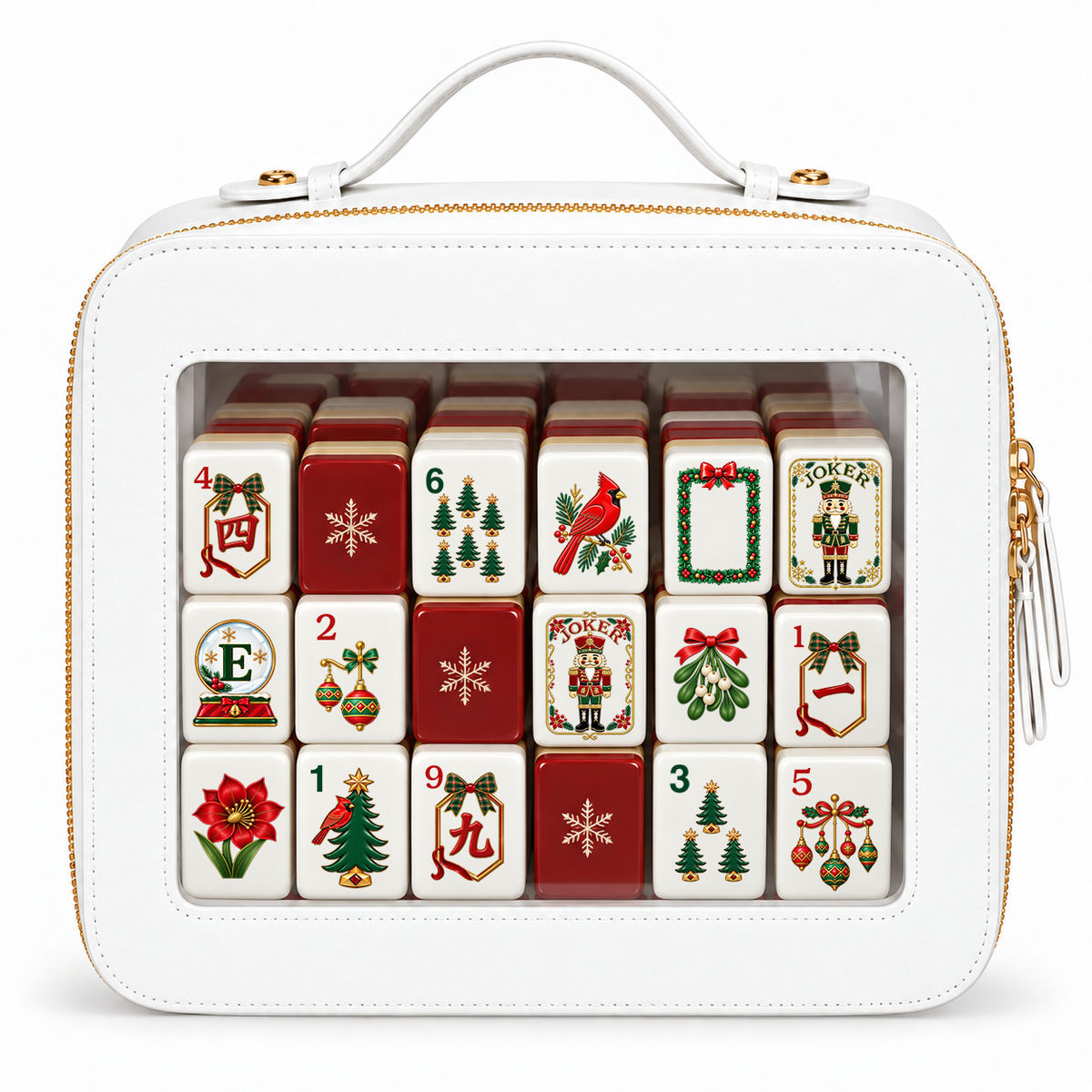
If you're visiting a club for the first time, you won't need to bring anything—the hosts will provide a 152-tile set, a mat, and racks. However, if you plan to join regularly or host your own game, you'll want your own set. American mahjong requires exactly 152 playing tiles plus 8 jokers (never add extra jokers to the game). Our best-selling mahjong sets come with tiles, racks with pushers, and a mat—everything four players need. A quality rack with pushers keeps your hand organized and speeds up play. A padded mat protects the tiles and provides a clear play surface; we offer mahjong mats in several designs to suit home or club settings. If you travel to different games, a sturdy mahjong bag or case keeps your set safe and portable.
🀄 Shop best-selling mahjong sets →
What's the difference between American mahjong and other variants you might encounter?
Most Detroit clubs play American mahjong, the only variant that uses the National Mah Jongg League card to determine valid hands each year. American mahjong has no "chows" (sequences like 1-2-3); you can only expose pungs (three identical tiles), kongs (four), or longer melds. Jokers can substitute for any tile in a pung, kong, or longer set, but never in a single tile or pair. If you encounter Chinese, Hong Kong, or Riichi (Japanese) mahjong, the rules differ significantly: those variants allow sequences, play with different tile sets, and use different scoring. Before joining a new group, confirm which variant they play; most beginner-friendly clubs stick to American mahjong because the card-based hand list makes learning straightforward. If you're new, read our guide to American mahjong rules and what's inside a standard set before your first game.

What should I check before I buy a set for home play?
Comparison: Choosing Your First Mahjong Set
Consideration | Why It Matters | What We Recommend |
Tile Material | Acrylic lasts longer than plastic; clearer symbols are easier to read during fast play | Our sets use durable acrylic tiles |
Joker Count | You play with exactly 8 jokers; extra spares are useful if one breaks | 160-tile sets include spare tiles |
Rack & Pusher Quality | Poor racks slide; good pushers make discarding clean and preventing claims of misplay | Our racks have smooth pushers built in |
Mat Inclusion | A mat protects tiles and marks the center zone for the wall | Quality mats reduce wear and disputes |
Set Customization | Engraved titles or family names add personality for regular groups | Our engraved sets reflect personal styles |
Before buying a set, confirm the tile count: you need exactly 152 tiles for play (American mahjong never uses 144 or 166-tile sets). Check that racks are sized for your hand comfort—test them at a club if possible. If you're gifting a set, consider engraved designs that reflect the recipient's personality or a family name. Make sure the set includes a usable mat and doesn't require you to buy extras separately. Our sets are designed for American mahjong and arrive with everything you need to host a four-player game.
🎁 See our most-loved mahjong sets & accessories →
How do I stay engaged with the Detroit mahjong community long-term?
Once you've found a club, attend regularly—consistency builds friendships and improves your play faster. Join a home rotation if the group offers one; hosting teaches you about set care and deepens your ties to players. Many clubs organize casual tournaments or charity games; ask if one is planned. Follow the group on Facebook or Meetup to stay updated on schedule changes or special events. If you find yourself playing weekly, invest in a quality set and a travel bag so you're always ready to play or host. Connect with newer players by inviting them to games—the community grows when established players mentor beginners.
✨ Find your Mahstead set — free US shipping →
What to check before you buy
Tile count: American mahjong uses 152 tiles exactly; verify the set includes this count.
Acrylic over plastic: Acrylic tiles are clearer, last longer, and feel better during extended play.
Rack fit: Visit a club and test the racks on your hands before committing to a set style.
Mat quality: A padded, non-slip mat prevents tiles from sliding and protects them from damage.
Completeness: Confirm the set includes racks, pushers, a mat, and dice—don't expect to buy these separately.

FAQ
How do I contact a mahjong club in Detroit if I'm a complete beginner?
Start by calling your nearest Detroit Public Library branch and ask if they offer mahjong programs or can refer you to a local group. Synagogues and Jewish community centers (search online for "mahjong" + "Detroit") often welcome new players. Facebook community groups and Meetup.com also list ongoing games. Mention you're new; most groups set aside beginner-friendly nights or pair newcomers with experienced players.
Do I need my own mahjong set to join a club?
No. Clubs and groups provide sets for open play. However, if you plan to play weekly or host games at home, owning your own set is practical. A quality set costs less than a month of regular play and lasts years with basic care.
What's the best American mahjong set for a beginner who wants to host?
Look for a 160-tile set with durable acrylic tiles, padded racks with smooth pushers, a non-slip mat, and a protective case. These sets are complete and designed for four-player American mahjong. Our best-selling collections include everything you need without requiring separate purchases.
Can I play mahjong online with Detroit clubs?
Some clubs have shifted to hybrid or online play during seasonal closures, especially through apps or video calls. Ask your local club if they offer virtual games. However, most Detroit groups prioritize in-person play for the social experience and the tactile feel of handling tiles.
What should I learn before my first night at a Detroit club?
Understand the three suits (Bams, Craks, Dots), the winds and dragons, how the Charleston tile-pass works, and how to read the current year's National Mah Jongg League card. Our beginners' guide covers these in detail. You don't need to memorize every hand; the card and the group will guide you.
Are there seasonal changes to club schedules in Detroit?
Many clubs follow academic or calendar cycles; some pause in summer or take breaks around holidays. Ask your club about its schedule when you join. Winter and spring are typically the busiest seasons for open play and tournaments in the metro area.


View More
View More
View More
