
How to Store a Mahjong Starter Kit: A Player's Guide
Last updated: Nov 23, 2026
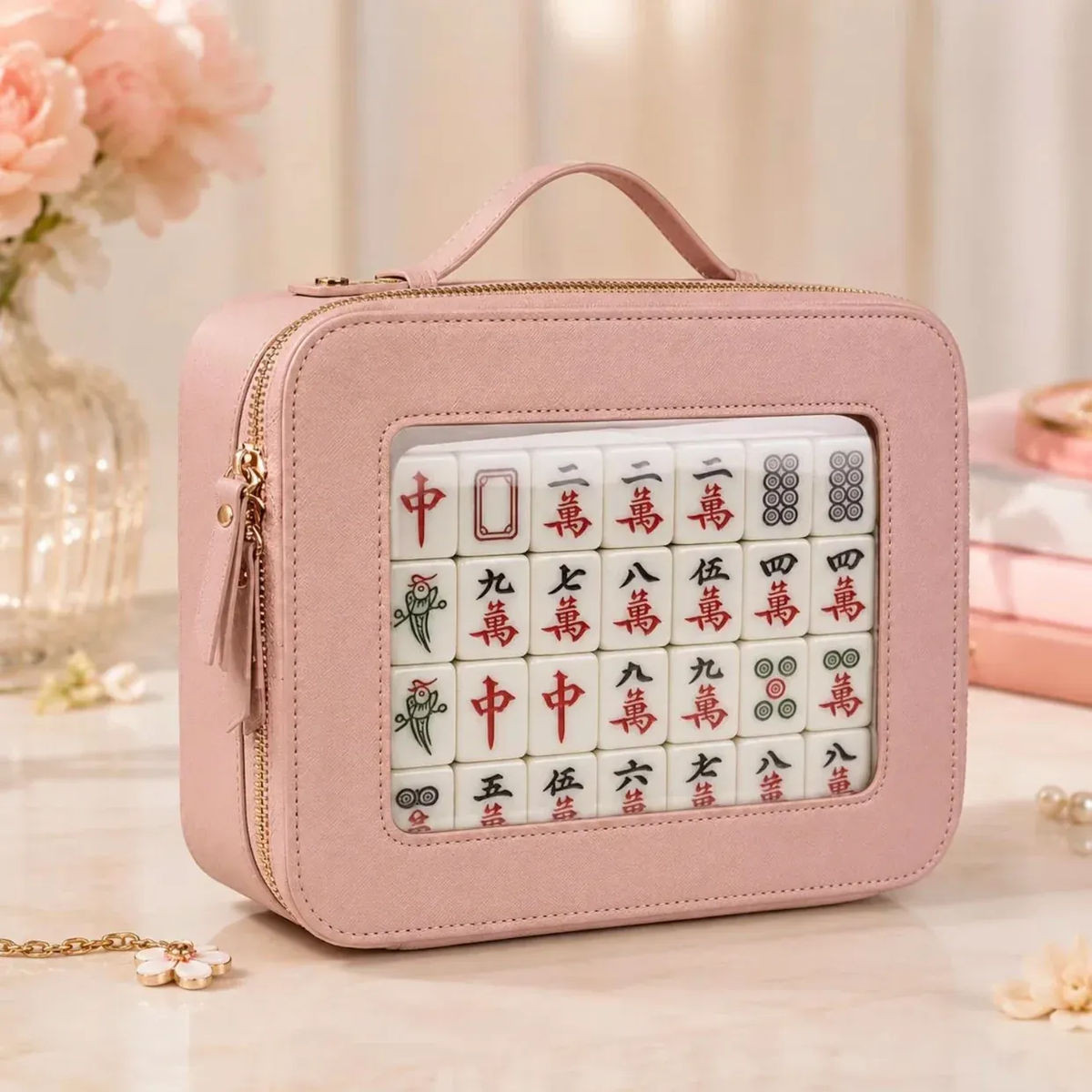
A mahjong starter kit includes 160 tiles (152 playing tiles plus spares), racks with pushers, a mat, and often a carrying case. Store it in a cool, dry place away from direct sunlight, humidity, and temperature swings—a closet shelf, cabinet, or dedicated game drawer works well. The tiles themselves (usually acrylic) resist warping better than bone, but case interiors matter: hard-sided bags with foam dividers protect from crushing; soft pouches suit occasional players. Keep the instruction card and current year's National Mah Jongg League card with your set so you don't hunt for them before game night. Most of us store racks, mats, and the case together in one unit so the whole kit travels as one unit.
🀄 Shop best-selling mahjong sets →
What temperature and humidity do tiles need?
Acrylic tiles are forgiving, but extremes cause problems. Store your kit between 60–75°F (16–24°C) and 40–60% relative humidity—a climate-controlled closet or spare room works far better than an unheated garage or damp basement. Temperature swings cause acrylic to expand and contract, cracking frames or making tiles stick in racks. Humidity above 70% warps wood racks and encourages mold on felt mats. We learned this the hard way: a friend stored her set in an attic one summer and found three cracked tiles and a moldy rack corner by fall. Avoid windowsills (UV fading), uninsulated sheds, and anywhere near a humidifier or water heater. A bedroom closet or office cabinet is your best bet.

Where should racks, mats, and tiles live separately?
Racks and mats take up space and don't need to sit on top of tiles. Keep your mahjong mats rolled (not folded—creases trap dirt and wear the fabric) and store them flat in a plastic bag or case to block dust. Racks with pushers fit neatly in a separate compartment or drawer; we stack ours horizontally to avoid pressure on the pushers. The tile case or box sits on a shelf where it won't be buried or crushed. If you use a hard case with molded tile trays, that's your entire tile storage—nothing else needed. If your set came in a soft bag, transfer tiles into rigid containers or keep the bag on a shelf where nothing heavy sits on top. Label each container so anyone in your household can find the game pieces without digging through closets.
How do hard cases, soft bags, and DIY storage compare?
Storage type | Best for | Pros | Cons |
Hard case with foam | Weekly hosts, travel | Crush-proof, dividers organize spare jokers | Takes up shelf space, heavier |
Soft padded bag | Occasional players | Lightweight, fits in closets, portable | Tiles shift in transit, less protection |
Cardboard box (original) | New players | Free, compact | Crushes easily, tiles slide around |
Plastic container + elastic bands | Budget option | Cheap, stackable, easy access | No organization, harder to grab the right tiles |
Dedicated cabinet drawer | Weekly players | Always accessible, hidden, temperature stable | Needs custom dividers, uses living space |
Our weekly group uses a mix: two of us have hard cases we take to each host's home, one has a soft bag that stays in her hallway closet, and one keeps his set in a plastic storage bin under the dining table. The case choice depends on whether your game travels or stays put. For a mahjong bags and cases collection, consider how often you move your set before buying.
🎁 See our most-loved mahjong sets & accessories →
How do you protect tiles from dust, fading, and damage?
Dust is the quiet killer: it settles on tile faces, clogs rack mechanisms, and makes shuffling gritty. Store your tiles in an opaque container (colored plastic, wooden box, or case) to block light and dust. Never leave them in a clear acrylic organizer on an open shelf—UV rays fade the paint on Bams and Dragons, and dust accumulates fast. If you host games weekly, wipe down the mat and tiles with a dry microfiber cloth before storage, and keep them covered. Cracked tiles happen when someone steps on a rack, drops a case, or overstacks boxes. Use a hard-sided case or store your set on a middle shelf—not under heavier items. We keep one spare tile from each suit in our Mahstead set (acrylic sets come with spares for a reason); label it clearly so it doesn't mix with the game tiles. If a tile cracks, replace it immediately so you don't accidentally play with a non-regulation set.
What should you store with your tiles to avoid chaos?
Before game night, chaos happens: someone asks "Where's the card?" or "Do we have pushers?" Keep a small pouch or envelope inside your case with these essentials: the current year's National Mah Jongg League card (laminated, if you play weekly), a dry pen for scorekeeping, dice (if your set includes them), and a note of house rules you use. Some of us laminate a printed copy of basic rules as a backup. If your set includes an instruction booklet, keep it in the same spot. Store pushers with the racks so they're never separated. We also tape a small label on the case lid with the number of tiles (152 playing + spares) and the year the set was purchased—useful for spotting missing pieces or knowing if it's your older backup set. A 160-tile set has a specific tile count; if you ever find loose tiles after a game, you'll know something's wrong.
✨ Find your Mahstead set — free US shipping →
What mistakes do new players make when storing their first kit?
We've watched beginners stash their sets in places that cause headaches later. The most common errors:
Storing the mat rolled and folded. Creases set permanently; unfold it flat in a bag or roll it loosely to avoid deep wrinkles.
Piling books or games on top of the case. This crushes tiles and warps racks. Use a shelf where the case is the top layer, or store it in a closed drawer.
Keeping everything in one airtight bag. This traps moisture. Use a breathable container or leave a small opening for air circulation.
Forgetting where the spare jokers are. Label your spare tiles clearly so you don't accidentally deal them into a game.
Leaving the set in a car overnight. Cars heat up and cool down rapidly; tiles crack. Always bring the set inside after game night.
Our pick: choose storage that matches your play style. If you host every week, invest in a mahjong bags and cases collection with a hard case and room for racks and mats. If you play once a month at a friend's house, a soft padded bag works fine—and costs less.
What to check before you buy a case or storage solution
Will your set fit? Measure the tile case (usually 11–12 inches × 7–8 inches × 3–4 inches). Hard cases have molded slots; soft bags should hold at least 160 tiles with room for the mat and racks.
Does it have dividers? Foam inserts keep spare jokers from mixing with game tiles and prevent crushing.
Is the case waterproof or moisture-resistant? Soft bags should use microfiber or padded nylon, not thin fabric that absorbs humidity.
Can you carry it comfortably? If you travel with your set, test the handle and weight before committing.
Does it stack flat? If you store multiple sets or share a closet, make sure cases nest or lie flat.
A quick reference: the storage checklist
Before storing your set after game night:
Count tiles (152 playing + spares) and return them to their case or container.
Wipe the mat dry and roll it loosely; store in a separate bag or with the case.
Place racks and pushers in a compartment or drawer separate from tiles.
Tuck the current-year card, rules sheet, and spare joker label in the case pocket.
Store the entire kit on a shelf in a cool, dry room (60–75°F, 40–60% humidity).
Keep it away from windows, heat sources, and moisture.
Label the case or drawer so everyone knows where game night lives.
A well-stored mahjong set lasts years and keeps your weekly game running smoothly. The best best-selling mahjong sets come ready to store: look for sets with cases, clear labeling, and spare tiles included. Starting with quality storage habits now means fewer cracked tiles and lost pieces later.
FAQ
Can I store my mahjong set in a basement or attic?
Not long-term. Basements trap moisture; attics swing between hot and cold. Both cause tiles to crack and mats to warp. A climate-controlled closet or cabinet is safer.
How often should I check my stored set?
We inspect ours before each game night—quick visual scan for cracks, dust, or missing pieces. A full count once per season catches problems early.
Do I need to store the National Mah Jongg League card with the tiles?
Yes. You need it to play. Keep it in the case or a nearby drawer so it never gets lost between game nights.
What happens if a tile cracks while stored?
Don't use it in a game; it's no longer regulation. Most sets come with spare tiles. If you've used all spares, contact the retailer or order a replacement tile from a set vendor.
Is it okay to store my set in a decorative box on the shelf?
If the box is opaque, dust-tight, and stable—yes. Make sure nothing heavy sits on top and the box sits on a solid shelf, not a wobbly stand.
Can I store racks and tiles in the same container?
Technically yes, if there's padding between them. We prefer separate storage: racks take up space and can dent tiles if stacked carelessly. Keep them apart if you have room.
Do acrylic tiles fade in sunlight?
Yes, over time. Store your set in a dark closet or opaque case, away from windows and direct UV light. Fading won't affect gameplay, but it looks worn.


View More
View More
View More
