
Rack Mahjong Rule Explained: How to Use & Master Hand Building
Last updated: Nov 23, 2026
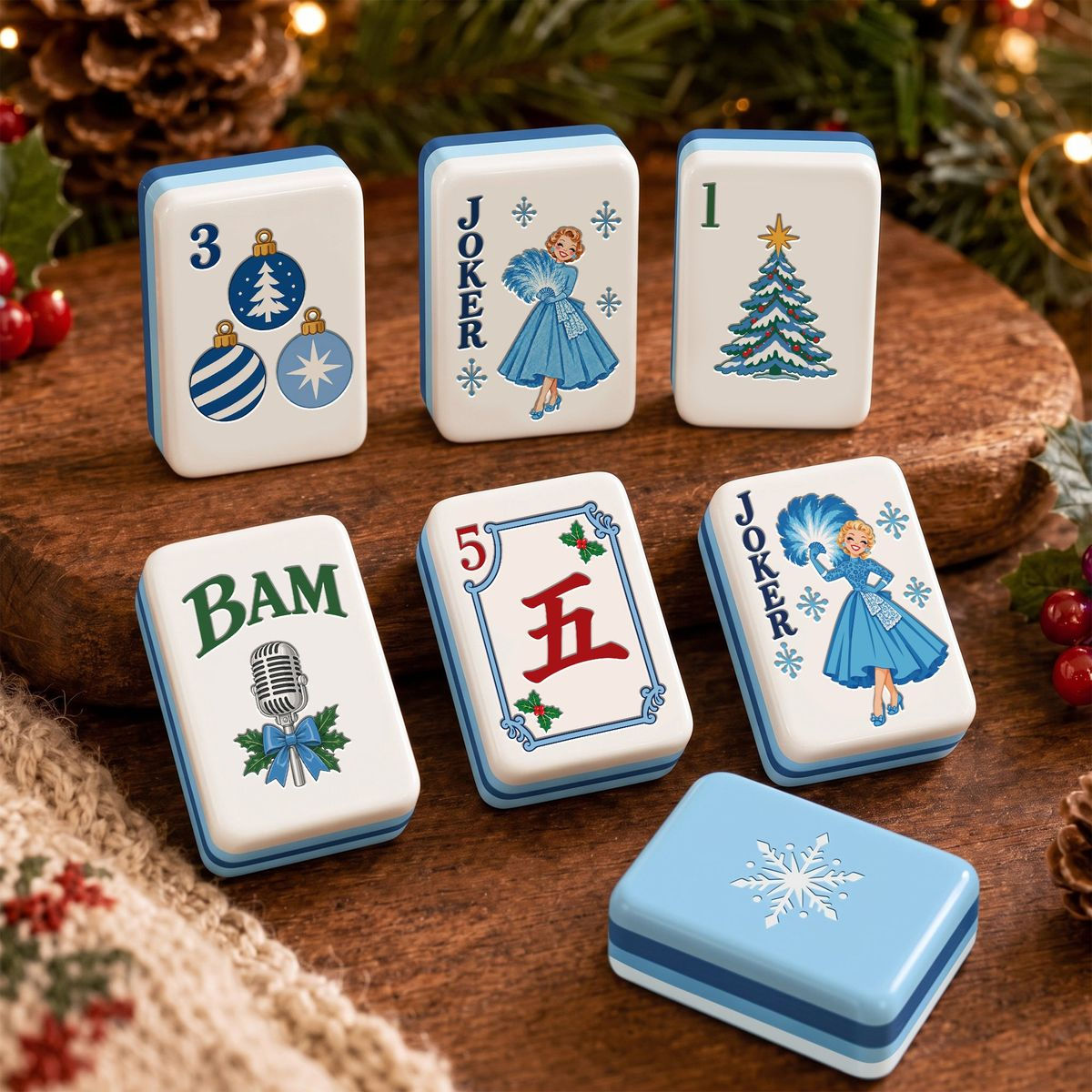
In American mahjong, a rack is a wooden or acrylic holder that sits in front of you to organize and conceal your 13-tile hand (or 14 during your turn). Tiles you draw stay in the rack face-down; any exposed melds—pungs (3 identical), kongs (4 identical), quints (5) or sextets (6)—are laid flat on the table in front of the rack so all players see them. You use a pusher (a small stick attached to or separate from the rack) to slide tiles left and right without revealing them to opponents. The rack rule exists to prevent accidentally flashing tiles and to keep play honest and organized. Most racks fit a standard 152-tile American mahjong set; our racks with pushers include integrated pushers and come in styles that match any table aesthetic.
What's the difference between a hidden hand and exposed melds?
Your hidden hand lives in the rack—all 13 tiles (or 14 on your turn) stay face-down and invisible to opponents. Exposed melds appear in front of the rack, lying flat. Once you expose a pung, kong, quint, or sextet during play, you may never take those tiles back into your hidden hand. The rule prevents cheating and keeps everyone's strategy visible.

How do you organize tiles inside the rack?
Most players arrange tiles left to right by suit (Bams, then Craks, then Dots) and within each suit by number (1–9). Place jokers at the far right where you can grab them quickly. The pusher lets you slide tiles one at a time without exposing face values. Never lift tiles above the rack rim—always keep them within the frame so opponents can't see them. After drawing a tile on your turn, rearrange immediately so your tile count stays hidden.
What happens when you expose a meld?
When you call a pung, kong, quint, or sextet (from the current year's National Mah Jongg League card), lay those tiles flat on the table in front of your rack, arranged side-by-side or in two rows. The rest of your hand stays in the rack. Once exposed, those tiles are locked; you cannot move them back into your hidden hand or change them. Other players can see the count and type of every exposed meld instantly. This transparency is why the rack rule protects fair play—no one can secretly hold or hide tiles once they're on the table.
Can you hide exposed melds by tilting your rack?
No. Tilting, angling, or partially covering exposed melds is a serious breach of etiquette and rule integrity. Exposed tiles must be fully visible to all players at all times. If you're playing at a table with a mat (especially one with a center ring or dedicated discard zone), arrange exposed melds in front of your rack section so sightlines remain clear. If you accidentally block another player's view of your melds, announce it and reposition immediately. Racks are built low and open-front precisely to prevent this problem.
Why does a pusher prevent tile flashing?
A pusher is a flat stick (usually 4–6 inches long) attached to or paired with your rack. Instead of picking up each tile with your fingers—which risks rotating it and showing the face—you use the pusher to nudge tiles within the rack. This keeps hands off the tiles and eliminates the tiny rotations that can reveal symbols. Many players prefer integrated pushers (built into the rack frame) because they're always ready and can't be lost between games.
Common Mistakes at the Table
Mistake 1: Lifting tiles above the rack rim. Any tile that rises above the frame is visible to the player across from you. Keep all hidden tiles at or below the rim line.
Mistake 2: Flashing a tile when you draw. When pulling a tile from the wall, pause and draw it close to your chest before slipping it into the rack. Opponents one or two seats away have sightlines to the rack's right edge—a quick flash is all they need to guess your strategy.
Mistake 3: Reorganizing visibly after an exposure. After you lay down a pung or kong, take a few seconds to rearrange your hidden hand inside the rack, not by lifting tiles into the open. Use the pusher to shift tiles into your preferred order.
Mistake 4: Forgetting jokers are not a "single" or a "pair". In American mahjong, jokers work differently from other tiles: they can substitute for any tile in an exposed meld (pung, kong, quint, sextet) but can never be used alone in a single-tile hand or as part of a pair. Many new players try to hide a joker in the rack thinking it's a wild card for their win—it isn't. Once exposed, a joker must be in a group of 3 or more.
Mistake 5: Exposing melds too early. You're not required to expose a meld as soon as you have it. Some players expose a pung immediately; others wait and build a stronger position first. The rack rule doesn't force you to expose—it only controls how you expose when you choose to.
How Racks Compare: A Closer Look
Feature | Wooden Racks | Acrylic Racks | What It Means for You |
Weight | Heavier (3–6 lbs) | Lighter (8–16 oz) | Acrylic travels better; wood feels premium |
Durability | Lasts decades; scratches visible | Lasts decades; scratches less visible | Both work equally well for 20+ years |
Pusher Integration | Usually separate or basic | Often molded into frame | Integrated pushers are faster and quieter |
Warmth & Feel | Naturally warm to the touch | Cool, modern aesthetic | Personal preference; no gameplay difference |
Tile Fit | Slightly wider channels | Slightly narrower; exact fit for standard tiles | Both hold American 152-tile sets securely |
Aesthetic Match | Complements traditional sets | Pairs well with modern, engraved sets | Choose based on your set style and table décor |
Both wooden and acrylic racks enforce the same rule: hidden tiles stay hidden, exposed melds stay visible. The difference is comfort, portability, and how your setup looks.

Step-by-Step: Using a Rack Correctly During Play
Step 1: Set up. Place your rack in front of you, pusher resting inside or beside it. Position the rack so its open edge faces you and the closed edge (where tiles rest) faces the center of the table.
Step 2: Draw and place initial tiles. After the Charleston (the tile-passing ritual), you'll have 13 tiles. Arrange them left to right (Bams, Craks, Dots) using the pusher to slide them into your preferred order.
Step 3: On your turn, draw one tile. Pull a new tile from the wall and slip it into the right end of your rack. Quickly rearrange (using the pusher) so your hand is organized.
Step 4: If you have an exposure, lay it down. Grab the three or four identical tiles from your rack, flip them face-up, and place them flat on the table in front of your rack. Do not angle or cover them.
Step 5: Discard. Remove one tile from your rack and place it in the discard zone (usually the center of the table). Call out the tile name so everyone hears it.
Step 6: Repeat. The next player takes a turn. Your hidden hand and exposed melds stay as they are until you call or your turn comes again.
What You'll Need: Racks & Pushers
A quality rack is essential for organized, fair play. Whether you're hosting weekly games or joining a club, a rack that fits your tile set and table style keeps everyone confident in the integrity of the game.
Browse our mahjong racks with pushers →
🀄 Shop best-selling mahjong sets →
Racks in Different American Mahjong Variants
Standard 4-player American mahjong: Each player has one rack, and the rule is exactly as described above. Hidden hand in the rack, exposed melds on the table.
2- and 3-player American mahjong: Some rule sets allow a single shared rack in the center, or each player still uses an individual rack. The hidden-vs.-exposed rule remains the same—check your house rules or club guidelines. Learn more about 2 and 3 player variants →
Chinese, Hong Kong, Riichi (Japanese), and Taiwanese mahjong: These variants do allow sequences (chows: 1-2-3, 5-6-7, etc.) to be called and exposed. Racks are still used to hide your hand, but the rules for what can be exposed differ significantly. American mahjong uses racks only for pungs, kongs, quints, and sextets—never for runs.
Rack Care & Maintenance
Wooden racks benefit from occasional conditioning (light wood oil once a year) to stay supple. Acrylic racks need only a gentle wipe-down with a soft cloth to remove dust. Never soak either type in water. If a pusher cracks, replace it immediately so play stays smooth. Store racks in a cool, dry place—heat can warp wood, and direct sun can yellow acrylic over time. Most players keep racks inside a mahjong bag or case when traveling to prevent damage and loss.
🎁 See our most-loved mahjong sets & accessories →
When NOT to Use a Rack
Some casual home players play without racks—holding tiles in their hands and arranging them on a pad or towel. This is faster but less formal and harder to keep fair (tiles can flash more easily). For any structured play—club games, league rounds, or serious weekly groups—a rack is the standard and expected. If you're new to mahjong, using a rack from the start builds good habits and shows respect for the game's integrity.
What to Check Before You Buy a Rack
Size compatibility: Confirm the rack accommodates a 152-tile American mahjong set. Most standard racks fit perfectly; oversized racks may waste space.
Pusher design: Integrated pushers are more convenient; separate pushers are portable but easy to misplace.
Material durability: Both wood and acrylic last; choose based on aesthetic preference and travel plans.
Edge finish: Look for smooth, beveled edges so tiles slide without catching or tilting.
Weight: If you travel frequently, lightweight acrylic may suit you better; for stationary home games, wood is traditional.
Aesthetic match: Pair your rack with your tile set. Engraved or modern sets pair well with acrylic; classic sets pair with wood.
Browse racks with pushers and tile sets to find a combination that fits your game.
✨ Find your Mahstead set — free US shipping →

FAQ
Can you move a meld from exposed back into your hidden hand?
No. Once you lay down a pung, kong, quint, or sextet on the table, those tiles are locked in place for the rest of the game. You cannot retrieve them or rearrange them into your hidden hand. This prevents cheating and keeps the rule fair.
What if you accidentally flash a tile to another player?
If the flash is unintentional and brief (you rotated a tile or lifted it too high), most house rules treat it as an honest mistake. Call it out immediately and let the other players know you saw it. Intentional flashing is cheating and can end your game or remove you from the group. Always use the pusher to avoid accidental flashes.
Do you need an integrated pusher or can you use a separate one?
Both work. Integrated pushers are built into the rack frame and are always ready; separate pushers are portable and sometimes easier to clean. Choose based on convenience and how often you travel. Either way, the tile movement and rule enforcement are identical.
Can you organize your hidden hand during another player's turn?
Yes. You can rearrange tiles in your rack at any time, as long as you use the pusher and keep all tiles inside the rack. Many players reorganize while waiting for their turn. Never lift tiles above the rim or expose them to other players.
What's the difference between a pung and a kong in the rack?
A pung is 3 identical tiles; a kong is 4 identical tiles. In the rack, both are kept hidden until you choose to expose them. Once exposed, a pung stays as 3 tiles on the table, and a kong stays as 4 tiles (often arranged as two rows of 2 to save space). Both are locked once exposed.
Why can't jokers be used as a single tile or a pair?
In American mahjong, jokers are wild substitutes only within a larger group (pung, kong, quint, sextet). A hand cannot win with a joker as the solo single tile or as part of the pair. This rule prevents exploitation of jokers and ensures winning hands have true, verifiable patterns from the current year's Mah Jongg League card.
Do I need a rack for casual home play?
Racks are not mandatory, but they're standard for any structured play and strongly recommended for beginners. Using a rack from the start builds good habits: keeping tiles organized, preventing accidental flashes, and respecting the game's integrity. Casual players may skip them, but you'll play better—and be more welcome at group games—if you have one.
How do you handle a meld if you run out of rack space?
Most racks fit 13–14 tiles comfortably. Once you expose a meld, those tiles leave the rack and sit on the table, freeing up space. If somehow you have multiple exposures and your rack is crowded, stack your exposed melds in two rows directly in front of your rack so they're still fully visible.


View More
View More
View More
