
Picking Ahead Mahjong Rule Explained
Last updated: Nov 23, 2026
Picking ahead means drawing a tile from the wall before the current player has finished their turn and discarded. In American mahjong, you may pick ahead only after the player discards and you have clearly stated or gestured "ready"—never before. The moment the discard hits the table, any player can pick from the wall immediately, but you must wait for the discard; picking from the wall before a discard is an illegal move and ends your eligibility to win that hand. Beginners often draw too early out of habit or rhythm, which is why many weekly games use physical racks and pushers to slow the pace and make turn order unmistakable. The rule exists to prevent table chaos and ensure every hand is playable by the NMJL card. Our acrylic best-selling mahjong sets come with clear tile edges that make it obvious when a discard lands and when the draw wall is live.
Picking ahead—drawing a tile from the wall before the current player has finished their turn and discarded—is one of the most misunderstood rules in American mahjong. In American mahjong, you may pick ahead only after the player discards and you have clearly stated or gestured "ready"—never before. The moment the discard hits the table, any player can pick from the wall immediately, but you must wait for the discard; picking from the wall before a discard is an illegal move and ends your eligibility to win that hand. Beginners often draw too early out of habit or rhythm, which is why many weekly games use physical racks and pushers to slow the pace and make turn order unmistakable.
What Exactly Is "Picking Ahead" in American Mahjong?
Picking ahead is drawing your tile from the wall before the active player finishes their turn by discarding. The rule allows the game to flow faster—instead of waiting for the discard, then drawing, you can pull your tile immediately after the discard lands. You must wait for the discard to hit the table; drawing from the wall while the active player still holds tiles is an illegal move. The rule keeps rhythm tight and prevents the dead silence that slows four-player games. Many players signal readiness by placing their discard tile at the edge of their rack or tapping the table, so everyone knows a discard is coming and picking is now legal.

When Can You Pick Ahead and When Can't You?
You can pick ahead only after a tile has been physically discarded—never before. If you draw before the discard, your draw is illegal and you lose your chance to win the current hand. You cannot pick ahead if the active player is still deciding which tile to discard or if they are checking their rack. You can also pick ahead on a kong draw (when someone draws a replacement tile after declaring a kong), but the same rule applies: wait until the draw is complete and the tile is in hand, then pick ahead from the wall if the next player is ready. If a player calls a tile off the discard (like a pung, kong, or win), picking ahead is suspended—the calling player draws from the wall, makes their play, and then picks resume. Always wait for clear confirmation that the discard is final.
Why Do Players Pick Ahead and What Goes Wrong?
We pick ahead to speed up the game and maintain rhythm—a four-player round can take 90 minutes, and picking ahead saves seconds per turn that add up. The problem: inexperienced players draw too early from habit, thinking "the discard is coming" instead of waiting for it to actually land. This causes arguments about whether a premature draw was legal, whether the discard tile is still valid, and whether the early draw should be reshuffled back into the wall. To avoid mistakes, establish a table signal before the game starts—a tap, a pause, or a verbal "discard" call. Use mahjong racks with pushers to slow the action and make each step clear: the active player places their tile in the pusher, everyone sees the discard land, then picking resumes. Many tables with physical racks and pushers have zero picking-ahead disputes because the mechanics force a pause.
Picking Ahead vs. "Passing" on a Call
A common confusion: when a discard lands, you must decide instantly whether to call it (for a pung, kong, or win) or pass. If you pass, you are implicitly ready to pick ahead. If you call a tile off the discard, picking ahead stops—the caller draws from the wall and makes their play. Once the caller's play is complete, picking resumes for the next discard. The difference is timing: a call interrupts the picking-ahead rhythm, while passing keeps it going. If three players pass on a discard, the active player keeps it and the next player in turn order begins their turn; that next player can pick ahead immediately after the discard hit the table—they don't have to wait.
How to Set Clear Picking-Ahead Signals at Your Table
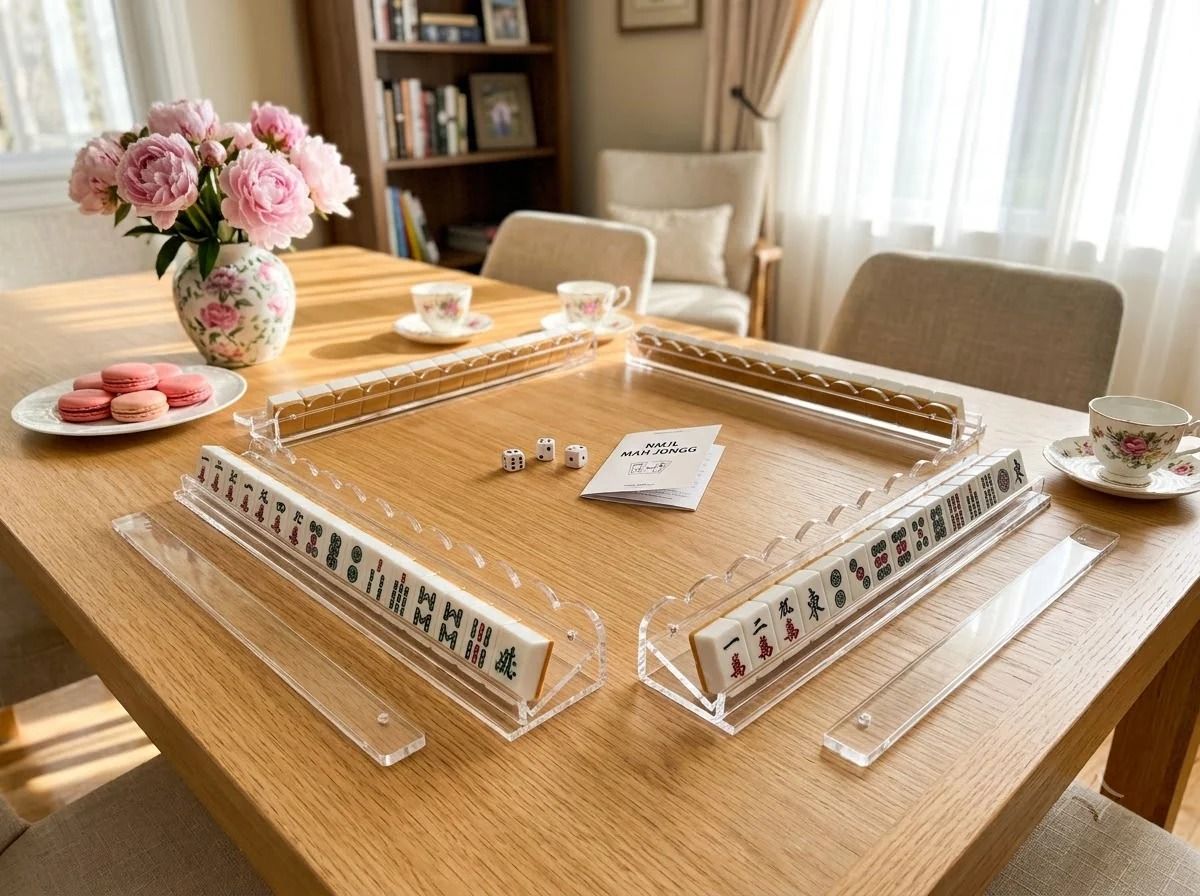
The best tables have one simple rule: no picking ahead without a clear discard signal. Some groups use a verbal cue ("discard" or "live"), others use a hand pause or tap on the table. Others use mahjong mats with a discard zone, so the tile must land in that zone before picking is legal. The most reliable method: use racks with pushers and require the active player to place their discard tile in the pusher—the physical act creates a visual checkpoint that everyone recognizes. Before the first hand, say out loud: "We will pick ahead only after the discard is in the pusher" (or "hits the mat" or "clears the rack," whatever your table uses). Write it down if you have new players. This one conversation prevents 90% of picking-ahead disputes and keeps the game moving at a professional pace.
Picking Ahead Signal | Best For | Why It Works |
Verbal ("Discard" call) | Small, experienced groups | Fast, but requires focus; easy to miss |
Hand pause or tap | Casual play, bar games | Natural rhythm; everyone watches the table |
Rack with pusher | Weekly serious games, teaching | Mechanical, unmistakable; works every time |
Designated discard zone on mat | Large groups, tournaments | Clear visual boundary; no ambiguity |
🀄 Shop best-selling mahjong sets →
Picking Ahead When Someone Calls
If you have picked ahead and are holding your tile, but another player calls the discard before you realized it was called, you must put your tile back into the wall. This is tricky: you drew a tile you weren't entitled to draw. The most professional way to handle this: the player who called plays their call; when they finish, you return your early-picked tile to the wall (usually placed facedown at the end of the wall), and the game resumes normally from the next player's turn. To avoid this mess, do not pick ahead if you see any hesitation in the previous player's rack—they might be considering a call. Watch the table before you draw.
Picking Ahead in Different Mahjong Variants
Picking ahead is primarily an American mahjong rule and rhythm. In how to play American mahjong, picking ahead is optional but nearly universal. In Chinese and Hong Kong mahjong, the turn structure is stricter and picking ahead is rare; you typically draw only when it is your turn. In Riichi mahjong, the wall is drawn in a fixed sequence, so picking ahead doesn't exist. In Taiwanese mahjong, picking ahead depends on the house rules of your specific group. If you play multiple variants, clarify picking-ahead rules before every game—especially if your table mixes experienced American mahjong players with players from other traditions.
What to Check Before You Buy Your Mahjong Set
If picking ahead and clear signals matter to your game, invest in a good set with clear, large tiles and mahjong racks with pushers. Acrylic tiles are easier to read than bamboo or bone, and the pusher forces the mechanical pause that prevents early draws. A mahjong mat with a designated discard zone also helps—the physical boundary removes doubt about when a discard is "live." If your table plays every week, a proper mat and rack set is worth the investment: disputes drop to zero, new players learn faster, and the game stays enjoyable.
🎁 See our most-loved mahjong sets & accessories →
FAQ
Can I pick ahead if the player hasn't announced what they're discarding yet?
No. You can pick ahead only after the discard tile has left the player's hand and landed on the table. Picking from the wall while the active player still holds tiles is illegal and voids your draw for that hand.
What happens if I pick ahead and someone calls the tile I was supposed to draw?
Return your early-picked tile to the wall (placed facedown at the end). The calling player makes their play, and the game resumes from the next player in turn order.
Do I have to pick ahead, or can I wait for the discard?
You can do either. Picking ahead is optional and a matter of table rhythm. Some casual groups wait for each turn to finish before drawing. Competitive and weekly games almost always pick ahead to keep pace.
How do I signal that I'm ready to pick ahead?
Establish one clear signal with your table before the game: a verbal "live" call, a hand tap, a pause in your rack, or (best) a pusher placement. Consistency prevents disputes.
Is picking ahead allowed in Chinese mahjong or Riichi?
Picking ahead is primarily an American mahjong convention. Chinese and Hong Kong mahjong have stricter turn order. Riichi has a fixed wall draw sequence. Always confirm picking-ahead rules if playing a different variant.
If the wall is empty and someone runs out of tiles to pick, what happens?
The game is a draw (no winner). This is rare in four-player American mahjong. If you're playing 2 and 3 player mahjong rules, a dead wall is more common; house rules apply. ✨ Find your Mahstead set — free US shipping →


View More
View More
View More
