
Mahjong Travel Bag for a Mahjong Group: How to Choose
Last updated: Nov 23, 2026
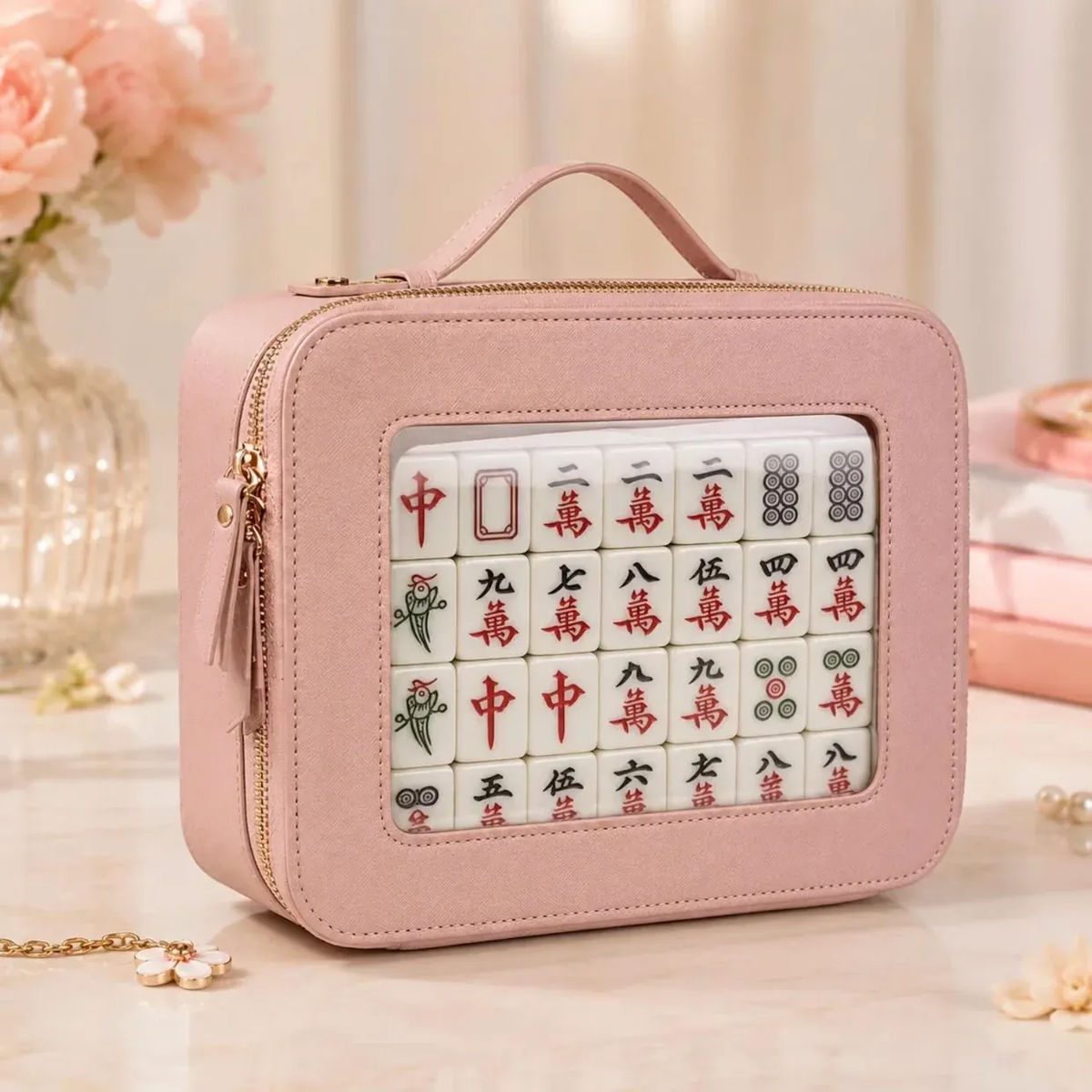
A mahjong travel bag is a case or carryall designed to hold a 160-tile American mahjong set, mats, and racks in one place, protecting tiles from breakage and keeping your game portable between hosts' homes. Most groups play weekly or biweekly, so a reliable bag saves setup time and prevents loss or damage. Mahstead offers structured cases and soft carryalls in different sizes—some hold a set and mat together, others just the tiles and racks. Prices vary by material and capacity; see the travel-bag collection for current options. Avoid bags that are too loose (tiles shift and crack) or too rigid without padding (awkward to carry). The right bag depends on whether you rotate hosting, travel by car or public transit, and how much gear your group brings each game.
🀄 Shop best-selling mahjong sets →
What size bag do you actually need for a mahjong set?
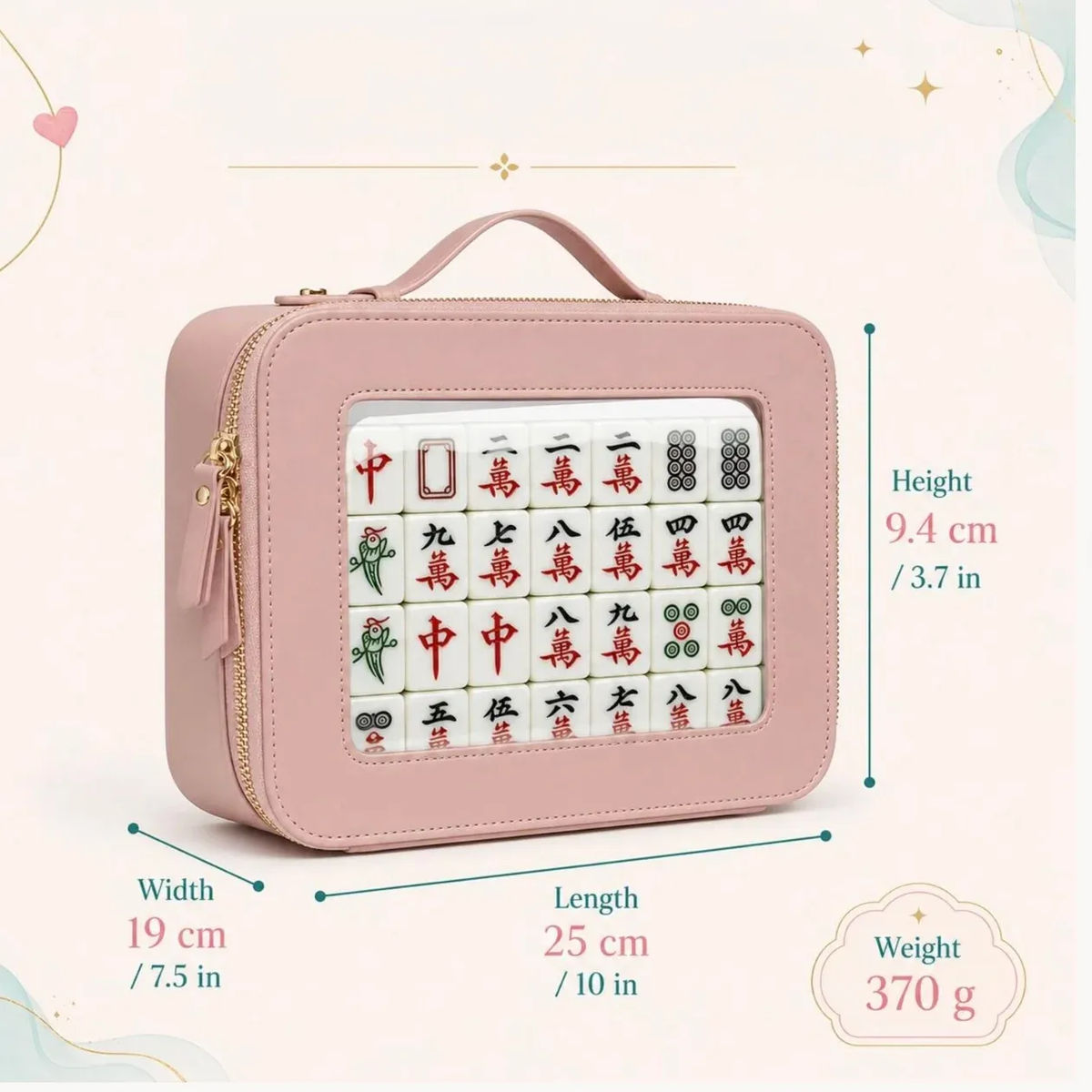
A standard American mahjong set (160 tiles including spares) occupies roughly 8×6×3 inches when contained in its original or custom case. Most groups also transport a mat (rolled or folded to 24×24 inches or smaller) and four racks with pushers. A single-set travel bag holds just the tiles and racks; a dual-capacity or group bag fits the set, mat, and often a second set or backup tiles. If your group rotates hosting, one person carrying everything in a larger structured case saves coordination. If each player brings their own set, smaller individual bags work fine. Measure your current setup before ordering—tile height varies slightly by acrylic thickness, and mat bulk depends on folding method.
Soft bags vs. rigid cases: which protects tiles better?
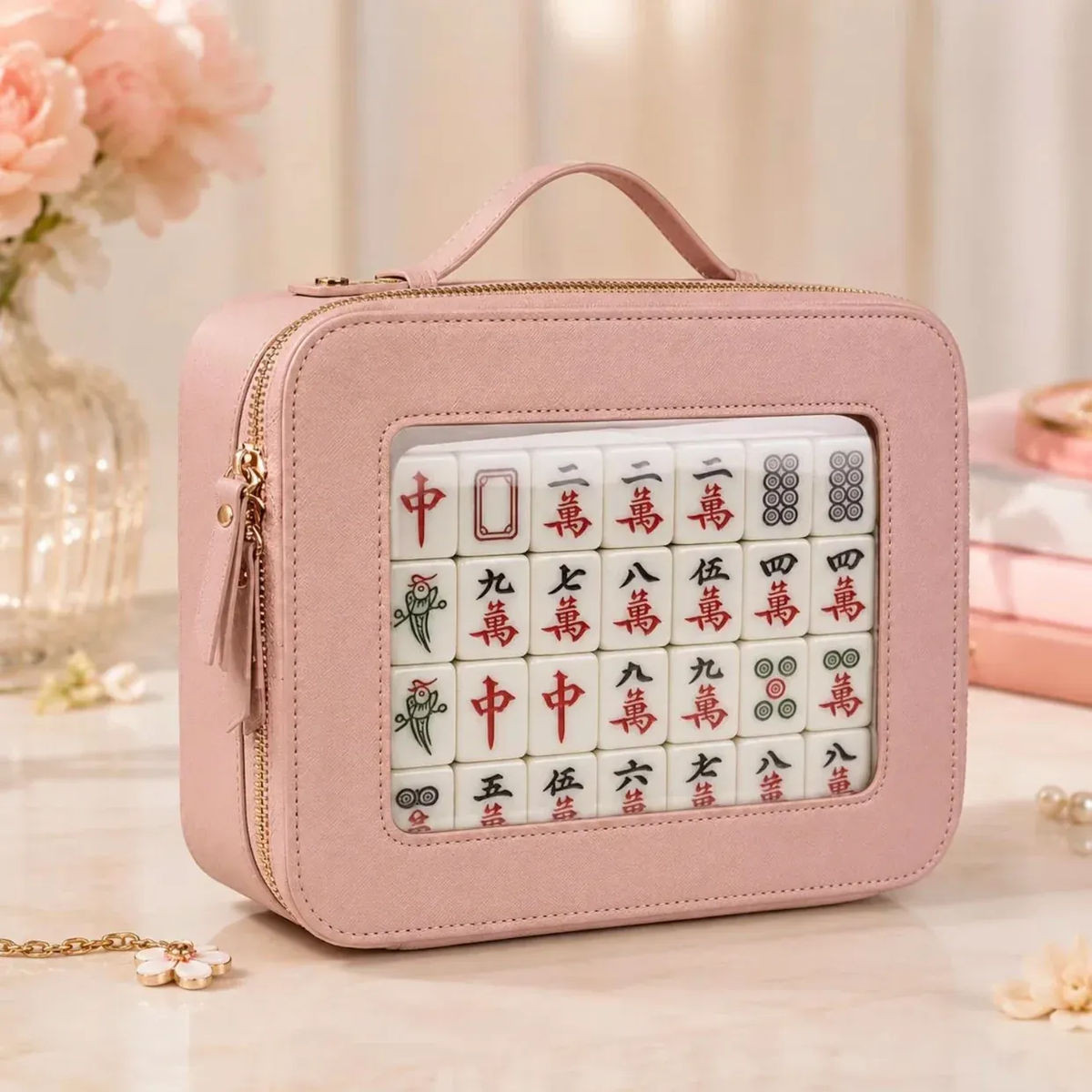
Soft nylon or canvas bags are lightweight and compress into car trunks; rigid acrylic or plastic cases protect tiles under pressure but weigh more and take up fixed space. A soft bag with internal padding prevents most tile-to-tile friction during driving. A rigid case is better for stacking in closets or moving through crowded venues (like synagogues or community centers where groups meet). Soft bags suit car-based groups; rigid cases suit players who store sets vertically or walk long distances. We recommend checking the interior padding thickness before ordering—at least 5 mm of foam between tiles and the outer shell prevents cracking on potholes.
How do you know if a bag's capacity matches your group's needs?
Ask yourself three questions: (1) Does one person bring all the group's sets, or does each player carry their own? (2) Do you travel by car, public transit, or on foot? (3) Do you also need to carry the mat, racks, and dice in the same bag? A single-set bag is fine if each player owns a best-selling mahjong set and brings it to a host's home with an existing mat. A group bag (or two coordinating smaller ones) suits a weekly game where one rotating host supplies all equipment. A carryall with multiple compartments lets you separate tiles, racks, and scoring chips, reducing fumbling at setup.
Scenario | Bag Type | Why It Works |
Each player owns a set; meets at someone's home | Single-set soft bag | Lightweight, protects tiles, fits in purse or backpack |
One person brings all sets for the group | Dual-set rigid case or carryall | Secure stacking, durable, organized compartments |
Travel by public transit or on foot | Soft carryall with shoulder strap | Comfortable carry, padded walls absorb jostling |
Store at home between games | Rigid case or stackable boxes | Protects from dust and accidental crushing |
Mix of gifting and regular play | Decorative or engraved bag | Doubles as display and transport |

What features prevent tiles from shifting or cracking during transport?
Look for internal dividers, elastic straps, or foam inserts that hold the tile rack or individual tile compartments in place. Tiles slide during sharp turns or sudden braking; secure positioning stops friction between pieces. Check whether the bag's interior is foam-lined or bare plastic—bare plastic allows tiles to rattle and chip edges. Padded handles reduce strain when carrying a full, heavy set. Ventilation ports or mesh panels prevent moisture buildup, which can cause acrylic to warp or jokers to stick. A zipper or latch that closes smoothly ensures tiles don't spill if the bag tips. These details separate a protective bag from a mere container.
How do you match a bag to an engraved or decorative set?
If your group owns engraved American mahjong sets with personalized tiles or custom art, a matching or neutral-colored bag preserves the visual appeal and protects the investment. Bright nylon or canvas bags suit players who like bold aesthetics; neutral tones (black, grey, navy) suit conservative groups or corporate play. Clear-front bags let you see the tile condition and set design without opening. If you bought a Christmas mahjong set or special edition, check whether the bag complements the theme or stands apart. A decorative bag also doubles as a gift when paired with a new set.
What should you check before ordering a mahjong travel bag?
Interior dimensions: Measure your set's footprint (length × width) and height when stacked in its current case. Add 1 inch for padding. Compare to the bag's listed capacity.
Strap type: Shoulder strap vs. handles. If you carry the bag weekly, test shoulder comfort first—a handle-only bag gets tiring.
Padding: Confirm foam thickness or padding material. Thin padding (under 3 mm) risks tile damage on bumps.
Compartments: Will you store the mat, racks, and dice in the same bag? Count compartments. Separate sections prevent tiles from pressing on soft items.
Material durability: Nylon softens in heat; acrylic cracks under impact. Check reviews for real-world durability (water resistance, zipper longevity, seam quality).
Weight empty: A light empty bag is easier to carry when full. Rigid cases are heavier when empty but protect better.
Warranty or return policy: Check whether the seller offers returns if the bag doesn't fit your set.
🎁 See our most-loved mahjong sets & accessories →
When a group plays weekly, a dedicated travel bag eliminates setup delays and protects your investment. Whether you're rotating hosts or pooling one shared set, the right mahjong travel bag keeps tiles, mats, and racks organized and ready. Soft bags work for car-based groups; rigid cases suit stacked storage or frequent moves. Padding, compartments, and secure straps matter more than price. Before ordering, measure your current set and mat, test bag weight in your hands if possible, and confirm the return policy. If you're building a group set from scratch, pair a new best-selling mahjong set with a matching mahjong mat and bag for a complete, portable game. We ship free across the US, so you can order today and play this week.
✨ Find your Mahstead set — free US shipping →
FAQ
Can I fit a mat and racks in the same bag as a mahjong set?
Yes, if the bag has multiple compartments or is large enough. Measure your rolled mat (typically 24×24 inches or 18×18 inches folded) and racks separately, then check the bag's interior. A carryall-style bag usually fits all three; a single-set case may not.
What's the difference between a mahjong travel bag and a regular storage case?
Travel bags prioritize carrying comfort (straps, handles, light weight) and protection during transport. Storage cases optimize stacking and space efficiency at home. A travel bag can serve both; a storage case is less portable.
How much does a quality mahjong travel bag cost?
See current prices on the travel-bag collection page. Soft carryalls are typically less expensive than rigid structured cases, but both offer good value for weekly play.
Should each player in a group buy their own travel bag?
Not necessarily. If one person hosts and supplies the sets, one group bag saves cost and simplifies logistics. If each player owns a set, individual soft bags are convenient. Many groups use both—one shared group bag plus personal backup bags.
Will a mahjong travel bag protect tiles from humidity or temperature swings?
Padded bags reduce moisture exposure and insulate tiles from extreme temperature changes, but they're not airtight. Store your set indoors after games to prevent warping. Avoid leaving bags in hot cars for long periods.
Can I use a regular dice or jewelry bag for mahjong tiles?
Not reliably. Tiles are heavier and more fragile than dice; they need deeper padding and structure to prevent chipping. A dedicated mahjong bag ensures proper support and organization.


View More
View More
View More
