
Picking Ahead in Mahjong: Examples & When It's Legal
Last updated: Nov 23, 2026
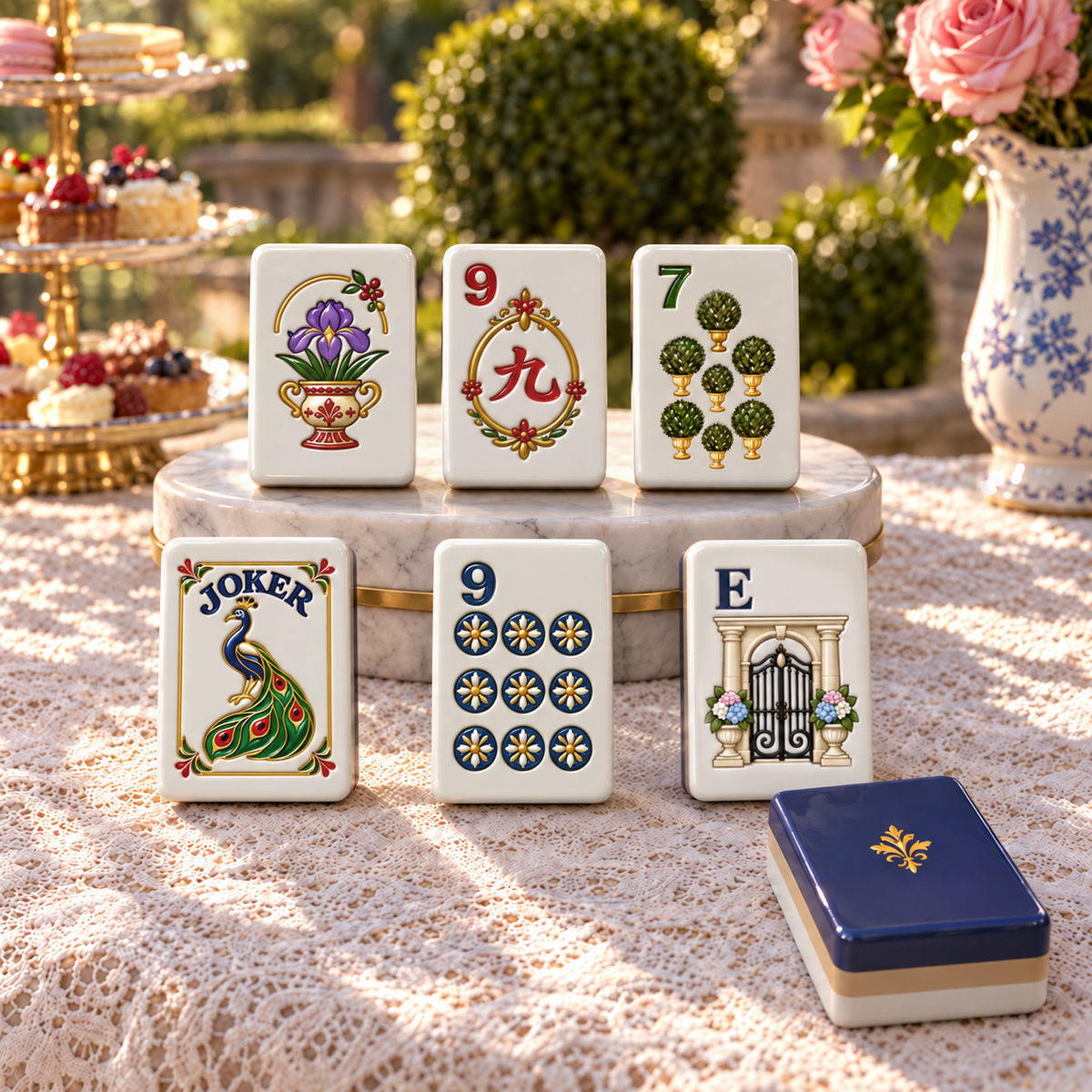
In American mahjong, you cannot pick ahead. The National Mah Jongg League rules dictate that tiles are drawn in strict turn order: East draws first, then South, West, North, and the cycle continues. A player must wait until their turn arrives to draw from the wall or pick from the discard. Picking ahead—drawing tiles out of sequence or before being called upon—is a dead hand violation that ends your play for that round. The only exception is during the Charleston, the tile-passing ritual before play begins, where players exchange tiles simultaneously according to a set pattern. Beginners often fumble this during fast games; the fix is to keep your hands and eyes at the wall edge until the previous player has finished their turn and officially ended it by discarding. Mahstead sets come with best-selling mahjong sets that include clear tile organization, making turn order easier to track.
Picking ahead in American mahjong is one of the clearest rule violations—yet it happens often at casual tables, especially when players are excited or the pace quickens. Understanding exactly what the rules permit, what they forbid, and why this rule exists will protect your hand and keep the game fair.
What does "picking ahead" mean in American mahjong?
"Picking ahead" refers to drawing a tile from the wall before it is your turn to do so. In American mahjong, players draw in a fixed sequence: East, South, West, North, repeat. You are picking ahead if you reach for the wall tile stack when it is another player's turn, or if you draw more tiles than you are entitled to on your turn. The rule exists to ensure game integrity and prevent cheating or accidental hand imbalance.

Is picking ahead ever allowed during play?
No. Once the Charleston ends and live play begins, picking ahead is not permitted under any circumstance. Your turn to draw is defined by the direction of play and the discard sequence. If you pick ahead, your hand is dead—you cannot win that round and play passes to the next hand. This applies equally to all players: East, South, West, North, and any subsequent turns. How to play American mahjong explains the full turn sequence and draw mechanics in detail.
What about during the Charleston—can you pick tiles ahead then?
Yes, but only within the rules of the Charleston itself. The Charleston is a tile-passing ritual performed before live play. During this phase, tiles move between players in a predetermined pattern—first pass, second pass, optional third pass—and players exchange tiles simultaneously in each round, not sequentially. This is not "picking ahead" because it is part of the established passing protocol. Once the Charleston ends, picking ahead is forbidden again.
How do you avoid accidentally picking ahead?
Keep your hands on or near your rack until the previous player has completed their turn—that is, until they have discarded a tile face-up on the table and announced it. Only then may you reach for the wall. Watch the discard pile carefully. Count turns mentally if the table is loud. If you are East or South (the first or second player), resist the urge to draw early; wait for the previous player in the preceding round to discard. Many casual players rush because they are holding a hand they are confident about; this is exactly when accidents happen. Slow play beats a dead hand.
What if you pick ahead by accident—can you put the tile back?
No. If you have drawn a tile that is not yours to draw, your hand is dead. The tile you drew becomes part of the wall or discard pool (rules vary slightly by house, but the outcome is the same: you cannot win that round). Some groups allow a player to put the tile back if the draw was caught immediately and no other player has acted on it, but this is a house rule variation and not standard NMJL procedure. The safest approach is to never pick ahead, period. Train your reflexes: wait for the discard, then move.
How does picking ahead differ in Chinese, Hong Kong, and Riichi mahjong?
In Chinese and Hong Kong mahjong, the tile-drawing system is more fluid—players often draw and discard in quicker succession, and simultaneous picking is more common in casual play. However, in organized play, turn order is still enforced. Riichi mahjong (Japanese) also enforces strict turn order during live play. The principle is universal: fairness and balance. American mahjong's emphasis on turn order is partly a legacy of its codification by the National Mah Jongg League in the 1930s, and it has remained a cornerstone of the game.

Decision Frame: When Is It Your Turn?
Moment | Your Turn? | Action |
Another player is studying their hand | No | Wait |
Another player just discarded | Yes | Draw from wall or call the discard |
Charleston is active | Per pattern | Exchange per the current pass round |
You have 14 tiles (East/South) or 13 (West/North) | Maybe | Check if it is actually your turn to draw |
Someone says "Go" or passes their turn | Yes | You may now pick |
🀄 Shop best-selling mahjong sets →
Real-world example: the fast-game trap
You are playing West. North (the player to your left) has just drawn from the wall. Your hand is close to complete—you need just one tile to win. You lean forward and pull a tile off the wall before North has discarded. North immediately calls you out: "You picked ahead." Your hand is dead. You cannot win this round, and the turn passes to East.
The error was not impatience; it was breaking the turn sequence. Even if you were one tile away from winning, the rules do not bend. A single moment of waiting—until North discarded—would have been enough. This is why mahjong for beginners drills turn order as lesson one.
What to check before you buy a set
When you purchase a mahjong set, confirm it includes 152 playing tiles plus spare jokers (sets are sold as 160-tile). Clearer, larger tiles reduce the likelihood of accidentally drawing the wrong tile or miscounting. Tiles that are engraved or printed with precise numbers and suit symbols help players read the wall quickly and avoid confusion. Engraved American mahjong sets are carved rather than printed, so symbols remain sharp through years of weekly play. A well-organized mahjong rack with pushers also helps—when your tiles are clearly sorted and visible only to you, you are less likely to miscount or rush your draw.
Why does the rule matter?
The rule against picking ahead protects the game's fairness. In a four-player game, the 152-tile supply is divided in a precise sequence: each player draws specific tiles in order. If one player draws out of sequence, the wall becomes unbalanced, and other players are deprived of tiles that should be theirs. Over time, this imbalance compounds and ruins the game. The rule is not arbitrary; it is structural.
Casual players sometimes assume that picking ahead is a "soft" violation—something that can be overlooked if no one notices. It is not. It is the same category of violation as discarding the wrong tile or playing a hand that does not match the card. Enforce it, and your table's games remain fair and competitive.
🎁 See our most-loved mahjong sets & accessories →
Common mistakes and how to dodge them
Mistake 1: Drawing a tile immediately after another player draws (not discards). Fix: Wait for the discard. Turn order is draw → discard → next player's turn.
Mistake 2: Reaching for the wall while another player is deciding which tile to discard. Fix: Keep your hands on your rack until a tile lands on the table.
Mistake 3: Assuming the Charleston rules apply to live play. Fix: The Charleston is pre-game only. Once live play begins, turn order is rigid.
Mistake 4: Drawing two tiles on your turn (e.g., one from the wall and one from the discard simultaneously). Fix: Your turn is one draw, then one discard. If you pick from the wall, you cannot also pick a discard.
✨ Find your Mahstead set — free US shipping →

FAQ
If I pick ahead and no one sees it, does it count as a violation?
Yes. The rule is not enforced by observation; it is a structural rule of the game. If you discover after the fact that a player picked ahead, that hand is dead. Play with integrity, and you will never have to explain this.
Can East pick ahead because East goes first in turn order?
No. East goes first in the first round, but once the Charleston ends and live play begins, East must still wait for the previous round's player (North) to discard before drawing. Turn order is circular.
What if I accidentally draw two tiles at once from the wall?
One of the two tiles is returned to the wall. Your hand is not necessarily dead if the error is caught immediately and corrected, but this varies by house rule. The safest play is to draw one tile at a time, deliberately.
Does picking ahead apply to jokers?
Jokers are part of the tile supply, so yes. If you pick ahead, you are picking ahead whether the tile is a joker, a numbered suit, a wind, or a dragon. The rule is universal.
Is picking ahead the same as "peeking" at the next tile in the wall?
No. Peeking means looking at a tile without drawing it. Picking ahead means drawing it. Both are violations, but picking ahead is more serious because the tile has left the wall and must be resolved (usually returned, and the hand is dead).
In 2-player or 3-player mahjong, is picking ahead still a violation?
Yes. The rules of turn order apply no matter how many players are at the table. 2 and 3 player mahjong rules covers the variant turn sequences, but the principle of not picking ahead holds.


View More
View More
View More
