
What Is Thirteen Orphans in Mahjong? Hand Guide
Last updated: Nov 23, 2026
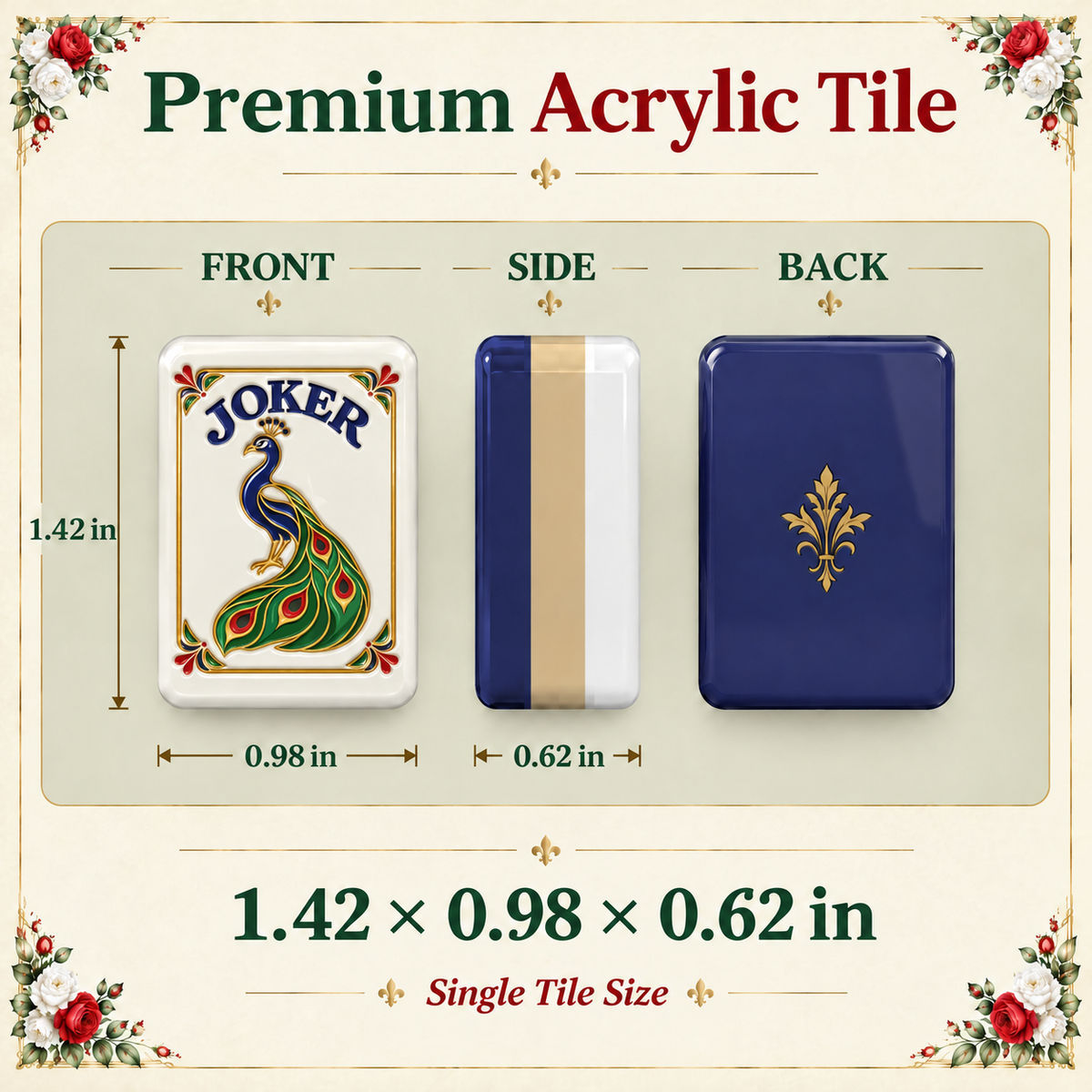
Thirteen orphans (or "thirteen wonders") is a hand composed of one tile each of all thirteen terminal and honor tiles—the 1 and 9 of each suit (Bam, Crak, Dot), all four winds (North, East, West, South), and all three dragons (Red, Green, White)—plus one additional tile from that same set to form a pair or waiting hand. In Chinese and Hong Kong mahjong, it counts as an automatic win (a "limit hand," the highest score). American mahjong players cannot play thirteen orphans as a recognized hand because American rules require hands to come only from the current year's National Mah Jongg League card, and this hand is not officially listed on it; however, players using our best-selling acrylic sets in home games or other variants may enjoy studying and attempting it for strategy and fun.
Thirteen orphans is one of mahjong's most talked-about hands because it is extraordinarily difficult to assemble, and because its standing varies dramatically between game systems. In Chinese, Riichi, and Hong Kong variants, it is prized as a limit hand—often the single highest score you can achieve. In American mahjong, it does not officially exist on the competition card. Understanding this hand teaches you how different mahjong cultures approach terminal and honor tiles, and why hand lists matter so much to the game.
Why Is Thirteen Orphans So Rare?
You need one of each of these thirteen distinct tiles: 1 Bam, 9 Bam, 1 Crak, 9 Crak, 1 Dot, 9 Dot, North, East, West, South, Red Dragon, Green Dragon, White Dragon. The deck contains only one copy of each honor tile (one North wind, one East wind, one Red Dragon, one White Dragon), so four players are competing for just four copies of every single honor. Drawing exactly one of all thirteen terminals and honors before your opponents deplete them is statistically brutal. Add the requirement that your fourteenth tile must be a duplicate of one of these thirteen, and you understand why many longtime players never complete this hand even once.

How Do Rules Differ by Variant?
The standing of thirteen orphans shifts dramatically across mahjong systems. In Chinese mahjong and Hong Kong mahjong, thirteen orphans is a named limit hand worth the maximum score—an automatic win if you complete it. In Riichi mahjong (Japanese), it appears as "kokushi," one of the rarest and highest-scoring hands, valued precisely because of its difficulty. Some Riichi rulesets award extra payment if you win with it. In Taiwanese mahjong, variations exist, but terminal-and-honor patterns are generally high-scoring.
In American mahjong, thirteen orphans does not appear on the National Mah Jongg League card. American players follow only the hands printed on each year's official card; any hand not listed cannot be called or won. This means American players cannot legally win with thirteen orphans in a formal game. However, in friendly home games using mahjong variants, players often introduce house rules, and some groups do allow it. Always confirm house rules before the game begins.
What Tiles Make Up the Hand?
The thirteen tiles are:
Terminals (all four suits):
1 Bam (usually depicted with a bird)
9 Bam
1 Crak
9 Crak
1 Dot
9 Dot
Winds (all four):
North (typically marked with a Chinese character or N)
East
West
South
Dragons (all three):
Red Dragon (associated with Craks)
Green Dragon (associated with Bams)
White Dragon, also called "Soap" (associated with Dots and represents zero)
Your fourteenth tile is a copy of any one of these thirteen. If you have 1 Bam as your pair and twelve other orphans, you have "thirteen orphans waiting," meaning you need a second 1 Bam to win. If you already hold both 1 Bams and the other twelve orphans, you have the complete hand.
Strategy: Why Players Chase This Hand
Players pursue thirteen orphans for multiple reasons. First, psychological victory: assembling thirteen completely different tiles in one hand feels almost miraculous. Second, scoring dominance: in variants where it counts, the hand awards the maximum payout. Third, table story: every player remembers the session when someone actually completed it. Fourth, skill building: tracking orphan tiles teaches you to recognize which tiles are most contested and how to read what other players are holding.
The downside is wasted time and tiles. If you collect ten orphans but lose three key winds to other players' melds, you are holding essentially unplayable tiles. Many strong players avoid chasing thirteen orphans mid-game and instead play it as a "bonus discovery"—if you naturally draw enough orphans while playing a solid hand, you pursue it; if not, you pivot.

Thirteen Orphans vs. Other High Hands
Aspect | Thirteen Orphans | Pure Terminal Hand | All Honors Hand |
Tiles needed | One of each 13 distinct + pair | Multiple sets of 1s and 9s | Only winds and dragons |
Difficulty | Extreme (rarest) | Very high | High |
Variants where legal | Chinese, Hong Kong, Riichi | Most variants | Most variants |
American mahjong | Not on card | Not on card | Not on card |
Completion odds | 1 in 1000+ games | 1 in 100+ games | 1 in 50+ games |
The key difference is diversity: thirteen orphans requires one tile each, whereas a pure terminal hand like a set of three 1 Dots plus a set of three 9 Dots stacks multiples. Thirteen orphans forces you to spread your collection across all four suits and all honors simultaneously, making it far harder to defend against discards and draws.
🀄 Shop best-selling mahjong sets →
What to Check Before You Play
Confirm the rule set. Ask your group explicitly: "Is thirteen orphans a winning hand in our game?" Before sitting down, clarify whether you are playing American, Chinese, Riichi, or a house-rules variant. Do not assume.
Know your tiles. Study what's in an American mahjong set so you can instantly spot orphan tiles and count how many are in play. Orphans are the easiest tiles to misidentify early in your learning.
Track discards. Watch which orphans appear on the discard pile. If the North wind hits the pile in turn three, you know no one can complete thirteen orphans that round. This information shapes your own tile-retention strategy.
Have a backup hand. Never commit all your tiles to thirteen orphans hunting. Always keep a realistic second or third hand available so you can pivot if the orphans dry up.
Play with the right set. A set with clear acrylic tiles and big engraved characters eliminates confusion about tile identity. If you are new to orphans, clarity matters most. Worn or faded tiles cost you precious seconds when you are scanning for that elusive second White Dragon.
Where to Learn and Play
Most Western mahjong clubs focus on American mahjong, so thirteen orphans is rarely discussed in formal lessons. To study it, connect with players in Chinese or Riichi communities—usually found through community centers, libraries, and meetup boards in larger cities. Online forums and YouTube channels dedicated to Chinese mahjong also explain the hand in depth.
If you host weekly games at home and want to experiment with variants, our engraved sets make it easy to introduce house rules. Clear, beautiful tiles help new players learn faster and keep the table engaged.
🎁 See our most-loved mahjong sets & accessories →
Why American Mahjong Excludes Thirteen Orphans
American mahjong follows a rigid, annual hand list issued by the National Mah Jongg League. This card includes roughly 70–80 hands, all based on Chinese mahjong fundamentals but adapted for American play. Thirteen orphans is not on the card because it competes with the card's existing patterns for table time and because American mahjong emphasizes exposable sets (pungs, kongs, quints, sextets) over single-tile or all-honor arrangements. The League prioritizes standardization and clarity so that competitive games remain consistent year to year.
If you read the mahjong card, you will notice that orphan tiles appear in combination patterns—such as terminal sets paired with honors—but never as thirteen distinct orphans. This design keeps the American game tight and reachable for casual and competitive players alike.
✨ Find your Mahstead set — free US shipping →

FAQ
Can I win with thirteen orphans in American mahjong?
No. Thirteen orphans is not on the National Mah Jongg League card, so it is not a legal winning hand in competitive American mahjong. You can use it in friendly home games if you adopt it as a house rule before play starts.
How many copies of each orphan tile exist in a standard set?
Each of the thirteen orphan tiles (1 Bam, 9 Bam, 1 Crak, 9 Crak, 1 Dot, 9 Dot, and the four winds and three dragons) appears exactly four times in an American set of 152 tiles. This is true across all standard mahjong decks.
Is thirteen orphans the same hand in every mahjong variant?
No. Chinese and Hong Kong mahjong treat it as a limit (maximum-score) hand. Riichi mahjong calls it "kokushi" and ranks it extremely high. American mahjong does not recognize it at all. Always confirm house rules before playing.
What is the fastest way to practice spotting orphan tiles?
Lay out one complete set and physically separate all thirteen orphan tiles into a pile. Do this five times. Your eyes will learn the pattern instantly, and you will spot them during play without thinking.
Why do experienced players rarely chase thirteen orphans mid-game?
Because holding thirteen completely different tiles reduces your options to form melds or build a winning hand. Most orphans are awkward to use unless you are actively collecting all thirteen. Smart players play a strong primary hand first and pursue orphans only if they naturally appear.
Can I get thirteen orphans if someone else has already called a wind or dragon?
Yes, because American sets contain four copies of each tile. However, if three of the four North winds are already on the table in other players' melds, only one North remains in the deck or in hands—making your odds of drawing it very low.


View More
View More
View More
