
How to teach mahjong to seniors: A step-by-step guide
Last updated: Nov 23, 2026
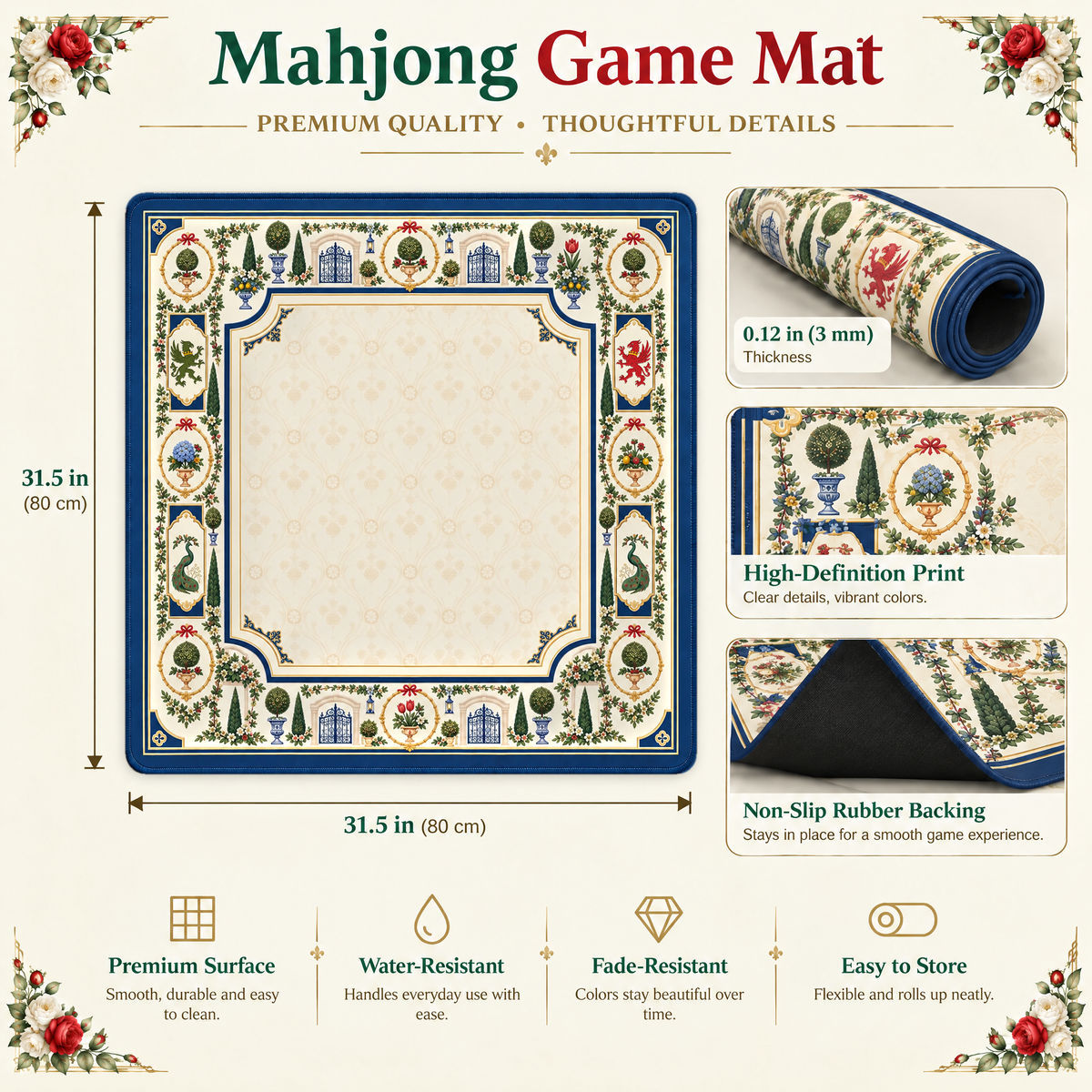
Teaching mahjong to seniors works best when you simplify without losing authenticity. Start with four learners at a table; any more becomes chaos. Teach American mahjong using the current National Mah Jongg League card (issued each spring); it's standardized and has fewer rule variations than other variants. A standard 160-tile set includes 152 playing tiles plus spares. Expect four to six weeks of weekly 60-minute sessions before beginners grasp hand patterns, tile grouping (pungs, kongs), and the Charleston. Avoid teaching via video alone—live demo with physical tiles matters. Many seniors worry about memorizing 152 tiles; reassure them they'll learn tile families, not names. Use large-print cards, tiles with high contrast, and a mat with clear suit symbols. Mahstead offers engraved sets designed for readability; mats with textured guides help players track discards.
Teaching mahjong to seniors is rewarding when you break down the rules, start with a strong foundation, and choose equipment that's easy to grip and read. Start with four learners at a table; any more becomes chaos. Teach American mahjong using the current National Mah Jongg League card (issued each spring); it's standardized and has fewer rule variations than other variants. A standard 160-tile set includes 152 playing tiles plus spares. Expect four to six weeks of weekly 60-minute sessions before beginners grasp hand patterns, tile grouping, and the Charleston. Avoid teaching via video alone—live demo with physical tiles matters. Many seniors worry about memorizing 152 tiles; reassure them they'll learn tile families, not names. Use large-print cards, tiles with high contrast, and a mat with clear suit symbols.
🀄 Shop best-selling mahjong sets →
What makes American mahjong easier to teach than other variants?
American mahjong has one official hand list issued every spring, so there's no debate over valid hands—what's on the card, you can play; what's not, you can't. Unlike Chinese or Hong Kong mahjong, American rules forbid sequences (chows): players only expose groups of identical tiles (pungs, kongs, quints, sextets). This removes a whole layer of pattern logic that confuses newcomers. Jokers are limited and can never form a pair or single tile, which simplifies discard strategy. Most seniors find this structure comforting—fewer exceptions, clearer wins.

How do you explain tiles and suits to complete beginners?
Show, don't tell. Lay out all three suits (Bams, Craks, Dots) in order 1–9, with four copies of each. Explain that a suit is just a category—like cards in hearts or diamonds. Bams often show a bamboo stick or bird; Craks show circles (think Chinese coins); Dots are literal dots. Then show the honors: Winds (North, East, South, West) and Dragons (Red, Green, White). Tell learners: "You'll never memorize this sitting at home. Your hands will remember once you play." Most seniors grasp tile families within three games. Have a guide to reading the mahjong card printed at larger text for reference at the table.
What's the best way to teach the Charleston?
The Charleston is the tile-passing ritual before each game—it's unfamiliar and feels awkward. Teach it sitting down with a demo set before the real game. Start with passes to the right (three tiles face-down across the table). Then reverse (three tiles to the left). Then the courtesy pass (optional; three tiles to the opponent across). Go slow, narrate every move, and let players do it three times without worrying about which tiles to pass. Once they're comfortable with the mechanics, explain strategy (pass tiles that don't match your hand plan). Mistakes happen; laugh and retry. Never rush this.
How much time should each learning session take?
Sixty minutes is ideal for the first four weeks. Spend the first 15 minutes reviewing tiles and the card, 10 minutes on the Charleston, and 35 minutes playing one actual hand start-to-finish (slow, with talk-throughs). By week five, speed up to 90 minutes with two complete games. Seniors retain more when sessions are weekly and consistent. Two-hour marathons backfire—fatigue kills learning. If a player falls behind, pair them with a quieter learner at a separate table for one game, then regroup.
What equipment do seniors actually find helpful?
Feature | Why it matters for seniors | Look for ---|---|--- Tile size and texture | Larger tiles (standard acrylic, not mini) are easier to hold and read. | Sets labeled as standard size, not travel or mini. Card clarity | Small print causes squinting and frustration. | Enlarged card copies (18pt+) or laminated reference sheets at the table. Mat guides | A mat with textured suit dividers helps track discards and organize your hand. | Mats with embossed suit symbols or color-blocked discard areas. Racks with pushers | Spring-loaded pushers reduce hand strain for arthritis or tremor. | Racks with pushers designed for ease, not speed play. Case storage | A protective bag keeps tiles safe between sessions and shows respect for the game. | Durable cases with compartments for tiles, card, mat.
Mahstead's best-selling sets come in standard acrylic with clear suit markings and high-contrast colors that work well for aging eyes. Pair any set with a quality mat with printed guides—the visual structure reduces cognitive load during early games.
🎁 See our most-loved mahjong sets & accessories →

What mistakes do new teachers make, and how do you avoid them?
Mistake | What happens | Fix ---|---|--- Teaching all rule variations at once | Learners freeze. They ask "but what if…" for every edge case. | Teach only the main hand-building rules the first month. Add edge cases (dead wall draws, kong limits) in week five. Letting one player dominate | Faster learners take over, slower ones disengage. | Set a rule: no one advises another player on tile play. Mistakes are learning. Using outdated cards | Hands on old card versions aren't valid; confusion erupts mid-game. | Always use the current-year card. Buy fresh card copies each spring. Mixing American and Chinese rules | You'll contradict yourself and lose credibility. | Pick one variant (American is best for beginners) and stick to it all season. Skipping the Charleston because it's "too hard" | Players don't understand tile distribution or strategy. | Teach it week one, every game, without apology. It takes 90 seconds.
What if a player has mobility or vision challenges?
Large-print cards are non-negotiable. Print the card at 18-point font or larger, laminate it, and have a copy at every seat. For tremor or arthritis, racks with spring pushers let players organize and push tiles one-handed. Some players prefer to discard by naming the tile aloud; set that as table protocol early so no one feels isolated. Ensure the playing surface is well-lit; bring a desk lamp if needed. Never make accessibility a big deal; just normalize it. Seniors with vision loss often have strong memory—they'll surprise you.
How do you keep motivation high over those first six weeks?
Post the current-year card on the wall so learners see themselves getting faster at reading it. Celebrate small wins: "You spotted a quint on your own!" or "You read your hand in 30 seconds—last week it took three minutes." Play for small stakes (pennies or points, not money) so there's a tangible outcome. End each session with one hand everyone wins together, just for fun. Bring snacks. Humor defuses frustration—when someone plays a tile face-up by accident, laugh and move on. Never tolerate mean teasing; mahjong is social, and safety matters.
✨ Find your Mahstead set — free US shipping →
What to check before you buy
Set completeness: Confirm you have all 152 playing tiles plus spares (160-tile sets include both). Count suits and honors to verify nothing is missing before teaching begins.
Tile clarity: Hold tiles up to light. Suit symbols should be crisp and readable from arm's length. High-contrast colors beat pastels for aging eyes.
Card legibility: Order or print cards at 18pt minimum. Laminate them so they survive coffee spills and eraser marks.
Mat durability: Check that seams are stitched, not glued. Mats get folded and moved weekly; cheap ones fray fast.
Racks fit comfortably: If a player tries racks before you buy, do it. Some spring designs are stiff for arthritic hands.

FAQ
Can you teach mahjong to someone with no card-game background?
Yes. Mahjong doesn't require prior gaming knowledge—many seniors learn it as their first card game. Focus on tile families (three suits, four types of honors) rather than strategic depth the first month. Patience and repetition beat prior experience.
How many people should I teach at once?
Four learners is ideal. Five or six become unwieldy because the Charleston takes longer, and side conversations distract teaching. If you have eight, split into two tables with identical hands so faster players help slower ones.
Should I teach using an app or online tutorial first?
No. Live demo with physical tiles is essential. Apps teach rules, but they don't build the muscle memory or social rhythm that makes mahjong stick. Use the app as a refresher between sessions, not a substitute.
What if someone learns the rules but says they'll never win a hand?
It's a common worry. Reassure them: hands are published on the card for the whole year, so everyone has the same odds of building them. Winning is 40% tile luck, 40% card knowledge, 20% strategy—new players often win their second or third month when card familiarity kicks in.
Is American mahjong the only variant I should teach seniors?
Yes, start there. American mahjong has one official hand list, clear rules, and no regional variation—perfect for teaching. If learners later want to explore Chinese or Riichi, they'll have a foundation. Mixing variants in one group causes chaos.
How do I find teaching resources specifically for older adults?
Community centers, senior centers, and libraries often have mahjong groups. Contact them to observe a teaching session. The National Mah Jongg League provides rule summaries and updated cards each spring. For one-on-one teaching, our beginner blog covers step-by-step setup and play. Consider pairing that with printed tile reference sheets at your table.


View More
View More
View More
