
Passing Tiles in Mahjong: The Charleston Rule Explained
Last updated: Nov 23, 2026
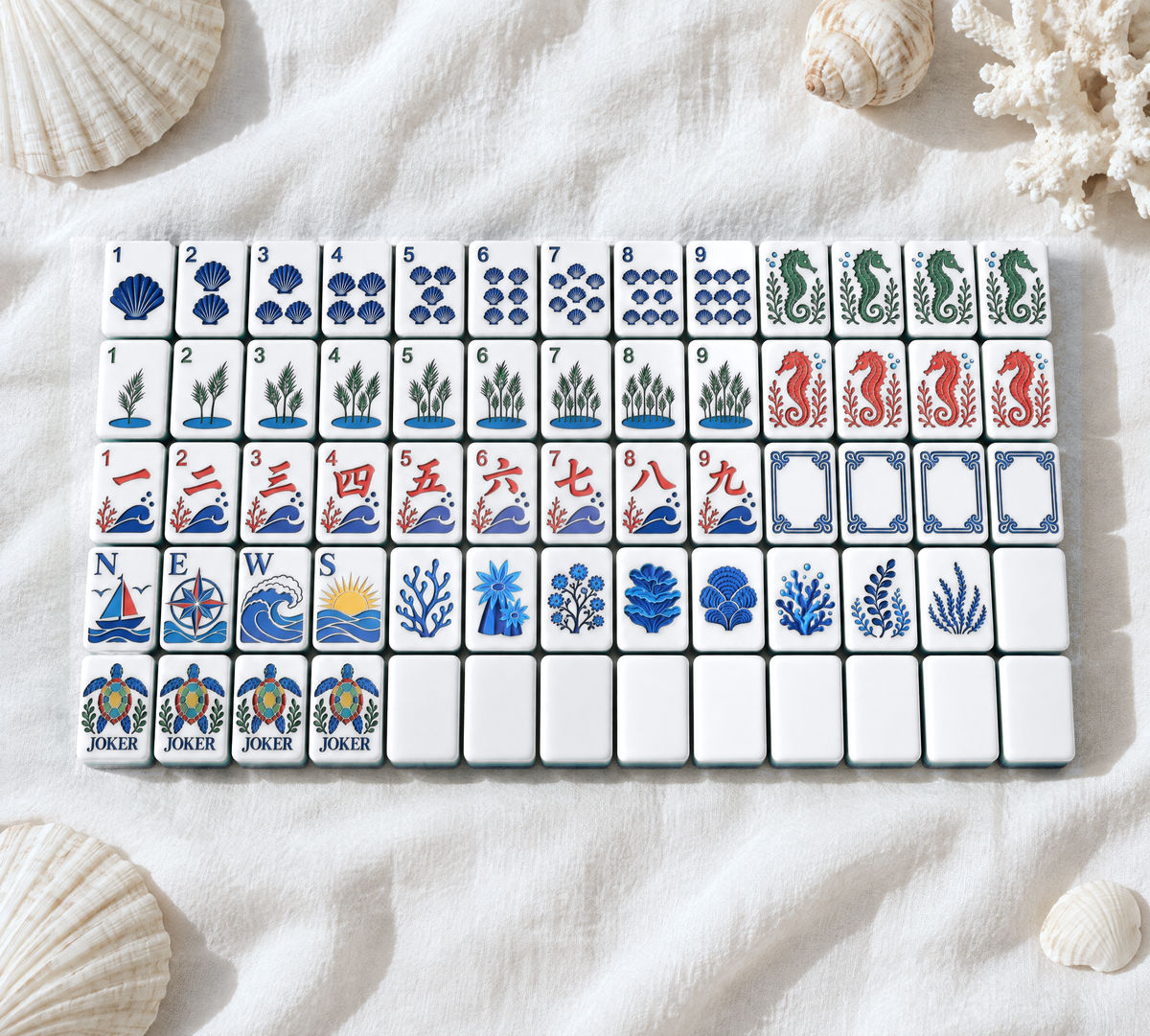
The Charleston is the three-round tile-passing exchange that opens every American mahjong game. In round one, you pass three tiles to the player on your right (without looking at her tiles). Round two: pass three to the player across. Round three: pass three to your left. After round three, if all four players agree, a fourth "optional" round begins where players can pass right, left, or across—each player decides independently. You must pass exactly three tiles per round; you cannot pass fewer. The goal is to shuffle the starting hand and let strategy influence your opening tiles before the live draw. The Charleston takes two to three minutes and is so integral that skipping it changes the game's character entirely.
Why does American mahjong require the Charleston?
The Charleston randomizes starting hands beyond the initial tile draw. Without it, luck alone determines your opening 13 tiles—and the player with the best initial draw has an unfair edge before play even starts. The pass ritual gives every player agency: if your draw is weak, you can trade out weak tiles and receive better ones from your opponents. It rewards table awareness (paying attention to what your neighbor is willing to give you) and strategic thinking. The Charleston also builds momentum and camaraderie—it's the first collaborative moment at the table, a tiny negotiation before competition begins.

What tiles can you pass in the Charleston?
You may pass any three tiles you wish—no restrictions. Many players pass tiles they don't need for their target hand (the hand they're building from the current year's National Mah Jongg League card), but you can pass your best tiles if you're bluffing or defensive. Smart players watch what their left-hand opponent passes (the tiles you'll receive) and adjust. Never announce which tiles you're passing or why; the exchange is blind. Beginners often ask whether they can pass jokers—yes, absolutely. You can pass flowers, winds, dragons, numbered tiles, or jokers. Some players pass jokers to keep their options open; others hoard them. By the end of round three, you've given away three tiles three times and received nine tiles from three different opponents.
How does the optional fourth round work?
After round three, any player can say "I'd like to do a fourth pass." If all four agree, play continues. In the optional round, each player independently decides to pass right, left, or across—or pass nothing at all. You still pass exactly three tiles (or zero, if you opt out). This fourth pass is where careful players lock in their hands. If you've already made your hand and don't need more tiles, you might pass nothing. If you're still one or two tiles short, you pass to the direction most likely to help you—often right (toward the player you suspect has your suit). The optional round requires unanimous agreement; even one "no" and you move straight to the live draw.
Table: Charleston Pass Order and Timing
Round | Passes to | Your tiles go | You receive from | Decision |
1 | Right | Player on your right | Player on your left | Mandatory |
2 | Across | Player opposite | Player opposite | Mandatory |
3 | Left | Player on your left | Player on your right | Mandatory |
4 (optional) | Your choice | Right, left, or across (or none) | Depends on others' choices | All 4 players must agree to start this round |
What are the most common Charleston mistakes?
Passing the wrong number of tiles: You must pass exactly three. Passing two or four invalidates the exchange and can cause disputes. Count before you hand them over.
Looking at received tiles before all three rounds finish: This breaks table flow and can give away information. Wait until round three completes, then arrange your full 13-tile hand.
Announcing your hand strategy during the Charleston: Saying "I need Bams" tells opponents to keep Bams away from you. Stay silent; let your pass choices speak.
Holding back your best tiles: Beginners hoard their strongest tiles, but this wastes the Charleston's purpose. If your draw includes tiles for multiple hands, pass the tiles you're least likely to use.
Forgetting that the Charleston is blind: You don't negotiate or know what's coming back. Pass decisively and adjust to what you receive.
Refusing the optional fourth round without reason: If it's unanimous agreement for a fourth pass and you have no strategic reason to block it, passing the "no" vote makes you unpopular at the table.

How does Charleston fit into the full American mahjong game flow?
The Charleston happens after each player has drawn and arranged 13 tiles but before the east player (dealer) draws the 14th tile to begin live play. Here's the sequence: (1) dealer draws and distributes tiles, (2) all players arrange their 13-tile hands, (3) Charleston rounds 1–3 happen, (4) optional round 4 (if agreed), (5) dealer draws the 14th tile and announces the hand she's building, (6) play begins with south (the player to the right of east) drawing from the wall. The Charleston is the last "dead time" before the timer and pressure kick in. By the time the first live draw happens, you've had a chance to adjust your luck and align your tiles with a hand on the current year's League card.
🀄 Shop best-selling mahjong sets →
Why timing and attention matter during the Charleston
Speed matters—take five to ten seconds per pass. Dithering slows the game and annoys your neighbors. Hold your three tiles loosely in one hand; pass them face-down or face-up (house rules vary, but most Dallas games pass face-down for mystery). Pace yourself: if round one happens fast, your opponents will expect round two at the same tempo. Pay attention to which direction the tiles are flowing. Some players develop tells—always passing the same suit—so use that intelligence. If someone passes three Dots three times, there might be fewer Dots available in the wall. This doesn't guarantee anything, but it's a hint. The Charleston is short (usually under three minutes) but information-dense if you're watching.
🎁 See our most-loved mahjong sets & accessories →
What to check before you buy a set for practicing the Charleston
If you're learning American mahjong and want to practice the Charleston at home, a complete 160-tile set is essential—you need all 152 playing tiles plus 8 jokers (the spares are useful for teaching replacements). Look for sets with clear, readable tiles; acrylic sets are durable and easy to shuffle during the exchange. Consider a mahjong mat to define the playing area and organize the discard zone; it also protects your table during the pass ritual. If you're hosting weekly games, racks with pushers help beginners hold and pass tiles smoothly—they're especially useful for players with hand mobility concerns. A travel bag or case keeps your set organized between games and protects it during the pass, draw, and discard cycles.
✨ Find your Mahstead set — free US shipping →
How does the Charleston differ across mahjong variants?
American mahjong (the subject here): mandatory three-round pass to right, across, left, with optional fourth pass. All players must agree on the optional pass.
Chinese mahjong and Hong Kong mahjong: typically no Charleston at all. Players draw and discard without pre-game passing, or in some rule sets, a "kong" allows passing during live play—a different mechanic entirely.
Riichi (Japanese) mahjong: no Charleston. Players arrange their 13 tiles and the dealer draws the 14th immediately. Play begins without any exchange.
Taiwanese mahjong: may involve passing, but the structure and rules differ significantly from American Charleston—not a direct equivalent.
The American Charleston is unique to our variant and is one of the reasons American mahjong feels more collaborative and strategic than luck-based before the first live draw. It also gives new players (and those with weak initial draws) a real chance to compete.

FAQ
What happens if I pass four tiles instead of three in round one?
The exchange is invalid. One player has four tiles to pass and one has only two, throwing off the entire round. Most groups stop, recount, and restart the round. Always count aloud: "One, two, three" as you separate your pass stack.
Can I look at the tiles I receive from my left-hand neighbor before passing to my right?
No. The three rounds must complete without rearranging your hand. Wait until all passes are done, then count your full 13 tiles and arrange them. Looking mid-Charleston breaks flow and wastes time.
If all four players are at the table, can we skip the Charleston to start faster?
Technically yes, but it changes the game significantly. Skipping the Charleston removes player agency and makes the initial draw pure luck. Most house rules require it. Check with your group before your first game.
In the optional fourth round, what if two players want to pass and two don't?
The fourth round does not happen. All four players must agree. If even one person declines, you move straight to the dealer's draw and the start of live play.
Can I pass a joker in the Charleston?
Yes, jokers are just tiles. Passing a joker early signals you don't need it for your current hand—but opponents might use that signal against you, so bluff if it helps your strategy.


View More
View More
View More
