
Online Mahjong Lessons vs. In-Person: Which Teaches Better?
Last updated: Nov 23, 2026
Online mahjong lessons offer flexibility and wider teacher access but lack real-time tile handling and table feel. In-person lessons provide immediate hand correction, the tactile experience of shuffling and organizing a physical rack, and social connection—but require travel and fixed schedules. Online suits learners who juggle work or family, prefer recorded content, or live far from clubs; in-person suits those who learn by doing and benefit from a teacher physically adjusting tile placement or showing posture. Most players benefit from hybrid approaches: start in-person to build foundation (4–6 weeks, weekly sessions), then supplement with online refreshers. Cost varies widely by location and teacher experience; community centers and synagogues often offer affordable in-person programs, while online tutors range from donation-based Discord groups to private coaching. The real answer: your learning stage and lifestyle matter more than the format itself.
Can you actually learn mahjong online?
Yes—but not everything transfers equally. Online lessons work well for the National Mah Jongg League card (how to read it, which hands are legal, scoring), strategy, and probability. Screen share or Zoom board lets a teacher show tile patterns and hand logic step-by-step. Where online falls short: you never physically manage 13 or 14 tiles, never practice the Charleston passing ritual with a group, never feel the weight and click of tiles in your rack. Beginners often struggle online because they can't yet visualize hand structure; intermediate players (those who've played 20+ games) typically thrive with online coaching on specific hand types or discards.

What do in-person lessons teach that screens can't?
In-person instruction embeds muscle memory and social rhythm. A teacher watches you draw from the wall, organize your rack by suit and number, and respond to calls—then corrects your grip or posture in real time. You experience the full two-minute game cycle with three other people, which online solo drills never replicate. You also learn table etiquette (how loudly to declare, when to ready your tiles, how to pass tiles during the Charleston) by osmosis. For nervous beginners, sitting with the same teacher and two classmates for four weeks builds confidence faster than Zoom tutorials alone because you know what to expect and you develop a small trusted community. Many players report that they finally "got it" when they sat at a real table, even after weeks of online study.
How does learning pace differ between the two?
In-person lessons move at group speed: if two players in your cohort need extra time on hand recognition, the whole group slows. Online lessons, especially recorded or self-paced, let you rewind a card explanation five times without holding anyone back. Conversely, live online group lessons (Zoom classes) can feel rushed because teachers often cram more content into 60 minutes than an in-person 90-minute session—fewer breaks, no shuffling downtime, no social chat. Private online coaching gives you control: pause, ask questions, get bespoke feedback. But group in-person lessons create accountability: you show up every Thursday at 6 p.m. because three people expect you. That structure helps rank-and-file players commit longer. Intermediate players often mix formats: they attend in-person monthly meetups for live games, then use online forums and video libraries to study specific hands between sessions.
Which format costs less?
This varies dramatically by location. Community centers, libraries, and synagogues often run in-person beginner circles (usually eight weeks) for modest fees or even free—you cover materials or donate. Country clubs may charge more. Online lessons range from free Discord coaching and YouTube tutorials to private Zoom sessions with experienced teachers, which can cost substantially more per hour. Neither format has inherent cost advantage; the best value usually comes from in-person group instruction in your area (low per-person cost, real table time) or free online communities (Discord servers, Reddit groups) combined with self-study using the National Mah Jongg League card. Many players find hybrid cheapest: attend one in-person eight-week session to build foundation, then use free or low-cost online resources to stay sharp.

How do you pick a teacher or program in either format?
For in-person, contact community centers, libraries, synagogues, and country clubs in your area and ask if they host mahjong circles or beginner classes. Ask the instructor whether they teach the American version (with the current year's National Mah Jongg League card) and how many players will be in the cohort (4–6 is ideal for beginners). For online, search for Discord mahjong communities, YouTube channels, and private tutors; ask if they offer a free first session or trial. Vet credentials lightly: Does the teacher play in tournaments or run a weekly game? Have they taught others past beginner stage? Be wary of lessons using non-standard rules (house rules can confuse you later). The National Mah Jongg League card changes every spring, so your teacher must use the current year's version. Start with one format for 4–6 weeks before switching; jumping between teachers and styles mid-learning creates confusion.
Quick comparison: Online vs. In-Person
Dimension | Online | In-Person |
Flexibility | High—learn any time, rewind content | Fixed schedule, must attend |
Tile handling | None—watch only | Full real-table practice |
Teacher feedback | Delayed or text-only (async); immediate if live 1-on-1 | Real-time, physical corrections |
Social connection | Minimal; Discord or Zoom chat | Strong; cohort bonds fast |
Access | Wider—any teacher, any geography | Limited to local programs |
Cost (typical) | Free–$$; private coaching pricier | $–$$; often cheaper per hour |
Best for | Intermediate+ players, working parents, refreshers | Beginners, learners who need ritual, no experience |
🀄 Shop best-selling mahjong sets →
Should you start online or in-person?
Most successful learners start in-person if available. One cohort of four weekly sessions teaches hand structure, the Charleston, and real-game pacing in ways 10 online videos cannot. Then supplement with online resources: watch a specific YouTube explainer on jokers, join a Discord for strategy chat, or book a 30-minute private Zoom call to review a sticky hand pattern. If no in-person program exists nearby or your schedule is truly rigid, start online with a structured course (not just random tutorials), ideally one with a live weekly group component. Avoid beginning entirely alone with video; the lack of immediate correction and peer feedback kills momentum for most newcomers. After your first 4–6 weeks and 8–12 games, you'll know whether you want to deepen your skill online or find a weekly in-person group to join.
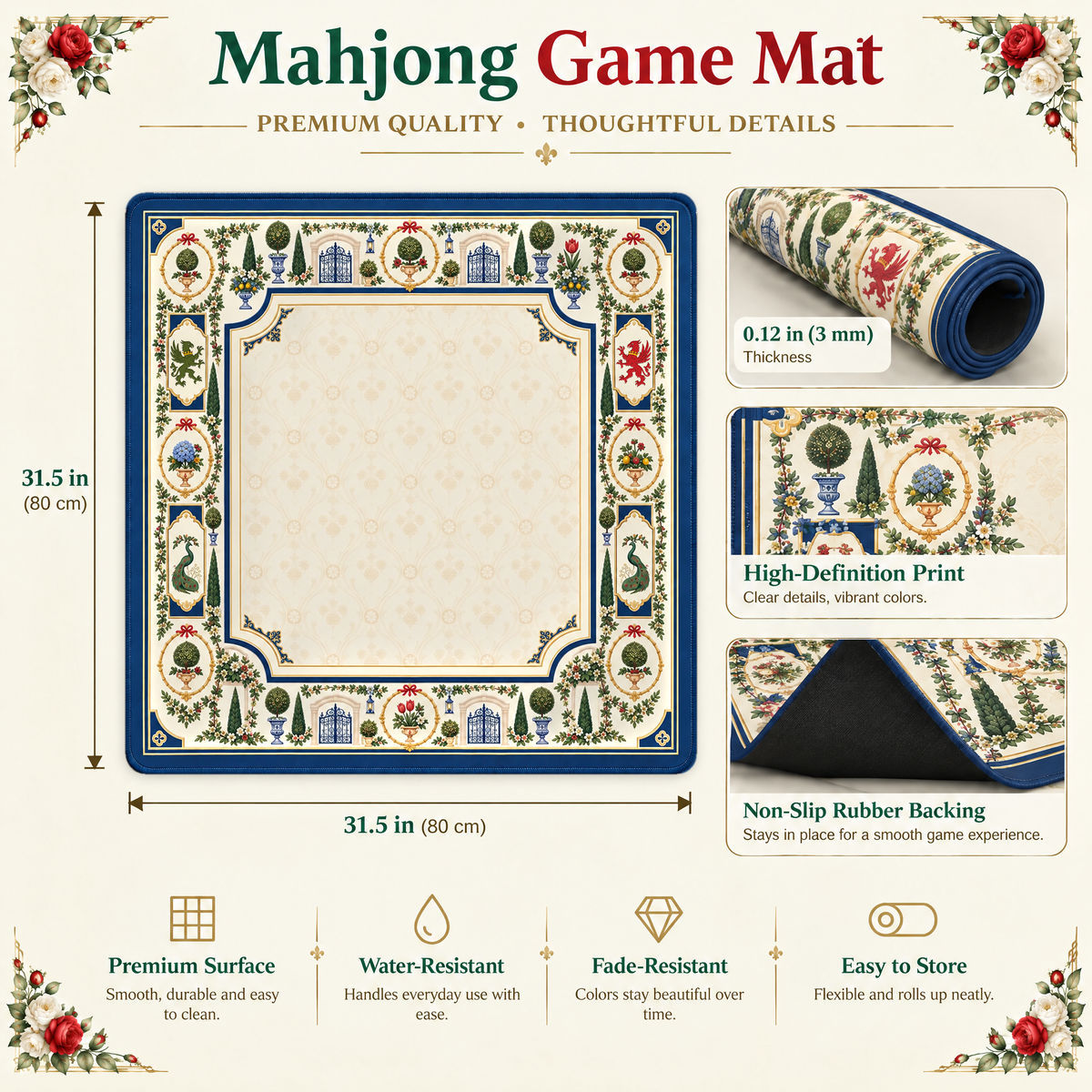
When you're ready to host or join a game at home, the best-selling acrylic sets come with racks and a mat—everything a lesson cohort or weekly game needs to feel and play like the real thing. Many teachers and community organizers buy a set for each player to keep consistency; if you're stepping into a regular game after your lessons, having your own engraved set makes you feel like part of the crew.
What to check before you commit to lessons
Before signing up, verify these points to avoid wasting time or money.
Rule version: Is the teacher using the current year's National Mah Jongg League card? If they mention "house rules" or "variations," ask specifically whether those are American mahjong or a different variant (Chinese, Hong Kong, Riichi). American mahjong is the most popular in the U.S. and the easiest for most beginners.
Group size and cohort model: For in-person, ask whether you join a fixed cohort (same four people all eight weeks) or a drop-in group (you play with whoever shows up). Fixed cohorts build camaraderie; drop-in offers flexibility. Both work, but set expectations.
Frequency and duration: Beginners need at least one session per week for at least four weeks. Two-hour sessions are standard (shuffling, one or two full games, Q&A). Anything shorter feels truncated.
Materials included: Does the program provide tiles, racks, and a mat, or do you need to bring your own? If you own none, factor in cost to purchase a set if required.
First-game experience: Ask the teacher whether beginners play a full game on day one (good for confidence) or study only (slower, more focused). Both are valid; know which you prefer.
Recording or notes: For online lessons, ask if sessions are recorded so you can review. For in-person, ask if the teacher provides a reference sheet (card reading tips, hand patterns, scoring quick-ref).
🎁 See our most-loved mahjong sets & accessories →
Many of our players started as solo learners or with a half-hearted YouTube binge. The ones who stuck with the game committed to at least one group experience—in-person or online, didn't matter much. That live feedback loop and rhythm is what separates "I watched a tutorial" from "I'm a mahjong player." After your first 4–6 weeks, the format becomes secondary; you'll find yourself seeking games anywhere you can, and having quality tiles and a mat at home becomes part of your routine.
✨ Find your Mahstead set — free US shipping →

FAQ
If I learn online, will I be lost when I sit at a real table?
Possibly, if you've never handled a physical rack or passed tiles during a Charleston. You'll know the rules and hands, but table rhythm takes real practice. Attend one in-person game or meetup before joining a regular group. Many online-trained players catch up after 2–3 live games.
Can I skip lessons and just learn from friends?
You can, but it's slower and riskier. Friends often teach house rules without realizing they differ from the National Mah Jongg League standard. If your friend plays the official American game and you play 4–6 times together, you'll learn. But a structured 4-week course removes ambiguity and builds confidence faster.
How long until I can play in a real game after lessons?
Most players are ready for a beginner-friendly weekly group after 4–8 in-person sessions (4–8 weeks). Online learners may need 2–3 extra games at a table before they feel natural. Practice games with your cohort count as real games; you don't need special tournaments.
Do I need to own a mahjong set to take lessons?
No. Group classes and community programs provide tiles. But if you continue after lessons and want to host or join a regular game, owning a 160-tile set gives you independence and makes you a valued player (not everyone brings their own gear).
Is there a difference in learning American vs. other mahjong types online or in-person?
Yes. American mahjong (152 tiles, National Mah Jongg League card, no chows) is easier to teach and learn in structured lessons because the hand list is fixed. Chinese and Hong Kong variants are harder to teach because rules vary by region. If you're just starting, confirm your teacher uses American rules; it's the most beginner-friendly.
What if I'm a slow learner—should I choose one format over the other?
Choose in-person with a patient teacher and small group, or private online 1-on-1 coaching. Group in-person lessons move at group pace, so if the group is fast, you may feel rushed. Private lessons (in-person or online) let you repeat and ask questions without pressure. Cost is higher, but speed and confidence are worth it for some learners.


View More
View More
View More
