
New Year's Eve Mahjong Party Invitations: Wording Tips
Last updated: Nov 23, 2026
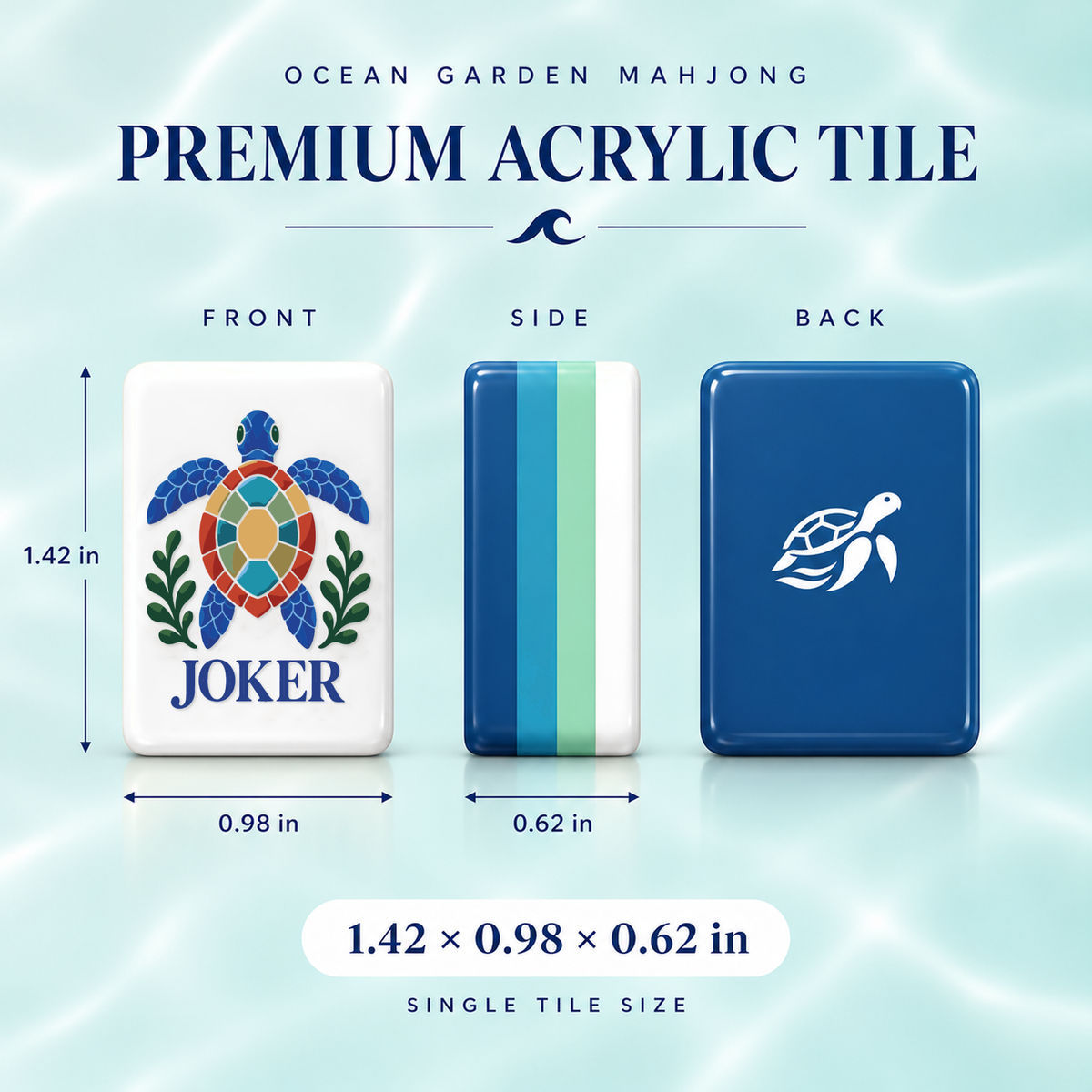
A New Year's Eve mahjong party invitation should arrive 2–3 weeks ahead, specify the time (typically 7–10 p.m.), expected guest count (ideally 4, but note any 2- or 3-player format), NMJL card year, and whether beginners are welcome. Include the address, parking notes, what to bring (tile set, snacks, score pads), and your contact info. Tone can be formal ("You are cordially invited to ring in 2026 with tiles and champagne") or casual ("Come lose money and gain friends on NYE"). Avoid vague dates; say "Tuesday, December 31, 7 p.m." not "end of year." Mention if you're providing everything (set, mat, snacks) or asking guests to contribute. Pair your written invite with a best-selling mahjong set if you're hosting for the first time—it signals you're serious and lets guests see what they're playing with. 🀄 Shop best-selling mahjong sets →
What tone matches your guest list?
The tone of your invitation should reflect your group's vibe and relationship. A formal, elegant invitation works if your group plays competitively or meets through a club. A warm, humorous invite suits close friends or family. Casual or witty phrasing ("Bring your A-game and your lucky socks") signals you're not taking it too seriously. Mixed groups—beginners plus veterans—deserve a reassuring tone: "All skill levels welcome; we'll catch newcomers up fast." The invitation's voice sets expectations about the evening's pace and stakes, so match it to who you're inviting.

How far in advance should you send it?
Send mahjong invitations 2–3 weeks before the party. This gives guests time to confirm, arrange childcare or travel, and prepare mentally (some people need practice beforehand). A reminder text or email 3–5 days out keeps people from double-booking. For a New Year's Eve party, sending 21 days ahead (early December) catches people before holiday chaos and other NYE plans solidify. If inviting players who live across town or state, add another week. Avoid last-minute invites; they read as afterthoughts and reduce attendance.
What practical details must you include?
Include the full date (day and date, not just "NYE"), exact start time, your full address, and parking instructions if needed. State whether you're playing 4-player (standard) or adapting for 2–3 players, and explain the rules you'll use if it's non-standard. Specify which year's NMJL card you'll play (2026 for January 2026 games; clarify this because players study the current card and bring nothing else). Note whether beginners are welcome and how you'll handle teaching. Tell guests whether you're supplying tiles, mat, snacks, and score pads, or asking each person to bring something—don't assume. Include your phone number and preferred contact method (text, email, phone call). A one-line dress code note ("cocktail casual," "wear red and gold," "pajamas encouraged") adds personality and sets atmosphere.
Should you include a wording template?
Yes. Here are four templates you can adapt:
Formal/Elegant: "You are cordially invited to a New Year's Eve Mahjong Celebration. Join us on Tuesday, December 31, 2025, at 7 p.m. at [address]. We'll play American mahjong using the 2026 NMJL card. Cocktails, hors d'oeuvres, and friendly stakes. RSVP by December 20 to [your contact]."
Warm/Family-Friendly: "Ringing in 2026 the right way: with tiles, laughs, and good friends. New Year's Eve Mahjong Night. December 31, 7 p.m., [address]. All skill levels welcome—we'll teach newcomers. Bring yourselves; we're supplying the set, mat, snacks, and mah-jong! RSVP to [your contact] by Dec 20."
Casual/Friends: "NYE Mahjong Showdown. Dec 31, 7 p.m., my place [address]. Bring your mahjong set (or borrow one of ours), a side dish, and your competitive spirit. We're playing 4-player with the 2026 card. Contact me by Dec 20 to confirm. Let's win big and celebrate bigger."
Inclusive/Mixed Skill: "Come play mahjong with us on New Year's Eve and welcome 2026 with tiles instead of champagne (well, both!). Tuesday, December 31, 7 p.m., [address]. Veterans and beginners alike—no experience needed, just show up ready to learn and laugh. I'm providing the set and mat. Bring a snack to share and your lucky dice. Reply by Dec 20: [contact]."

What should you send alongside the written invite?
Pair your invitation with context or gifts that reinforce the message. If your group includes beginners, include a link to how to play American mahjong or a quick how-to sheet. If you're hosting a formal game, send a digital copy of how to read the mahjong card so players can study ahead. For close friends or people new to your hosting, a small thank-you or welcome gift—such as mahjong-themed accessories—signals that you've put thought into the evening.
Comparison table: invitation wording by occasion
Occasion | Tone | Key phrase | What to add | Why it works |
Club or league players | Formal, specific | "NMJL 2026 card, competitive play" | Card year, hand scoring rules | Experienced players expect clarity and structure |
Family gathering | Warm, inclusive | "All skill levels welcome, we'll teach" | Link to beginner guide, contact for questions | Families mix ages/experience; reassurance reduces anxiety |
Close friends | Casual, witty | "Bring your A-game and your lucky socks" | Dress code or fun theme | Humor bonds groups and signals a low-pressure vibe |
Mixed group (friends + partners of players) | Balanced, welcoming | "No mahjong experience? We'll catch you up fast" | Brief rule summary, offer pre-game calls | Newcomers need visible permission to join |
Corporate or networking | Professional | "Join us for an evening of American mahjong" | Parking, cocktail/snack details, RSVP deadline | Professionalism shows respect for attendees' time |
🎁 See our most-loved mahjong sets & accessories →
What should you check before you hit send?
Before sending your invitation, verify these five things:
Date and time are locked: Confirm the exact date (e.g., "Tuesday, December 31, 2025, 7 p.m.") and double-check that it doesn't conflict with other major events your group attends (New Year's dinners, religious observances, family travel).
Address and parking info are clear: If your home is hard to find, include cross streets, landmarks, or a Google Maps link. Note street parking, driveway space, or nearby lots. Say whether guests should ring a doorbell or use a back entrance.
You've stated the NMJL card year: Say "2026 NMJL card" explicitly. Don't assume everyone reads your mind. If you're using a different variant (Chinese, Riichi, or house rules), name it.
You've said who's welcome: Explicitly state "All skill levels welcome," "Experienced players only," or "Couples welcome—you'll split into two tables." Ambiguity leads to awkward confirmation emails.
RSVP deadline is realistic: Give guests at least 10 days to confirm so you can plan food, seating, and tiles. A late RSVP deadline (3 days out) signals you don't need their decision, which is rude.
Common mistakes to avoid
Vague timing: Saying "evening of Dec 31" without an hour leaves guests unsure. Say "7 p.m." or "7–11 p.m." (if it's a drop-in event).
Assuming everyone has a set: Many players don't own a mahjong set. If you're asking guests to bring one, say so explicitly. If you're providing, say that too. Silence invites confusion.
Forgetting the address or contact info: Include your full address (street, city, state, zip) and phone number or email. Guests shouldn't have to hunt you down.
Not mentioning the NMJL card year: Players study the current card intensely. If you say nothing, experienced players will show up expecting to play 2026 while you're using 2025. Confusion kills the mood.
Being too casual about beginners: If you say "beginners welcome" but then speed through the game ignoring newcomers, they'll feel shut out. Match your invitation promise to your actual hosting behavior.
Overcomplicating the stakes or rules: Avoid long lists of house rules in the invite. Say "We play friendly stakes" or "No money, just bragging rights." Save complex rule clarifications for a day or two before the party, when people are ready to focus.
Final checklist before sending
[ ] Date, day of week, and time are exact and correct
[ ] Full address and parking instructions included
[ ] NMJL card year stated (e.g., "2026 card")
[ ] RSVP deadline given (10–14 days ahead is kind)
[ ] Tone matches your group's dynamic
[ ] Who should bring what is clear (set, food, money, nothing)
[ ] Beginner status addressed (welcome or not)
[ ] Your contact info is correct (phone, email, or both)
[ ] You've reread it once for typos
[ ] You've sent a reminder 3–5 days before the party
✨ Find your Mahstead set — free US shipping →
FAQ
Can I send a mahjong invite via text or email, or should it be printed?
Either works. Email or text is faster and lets you include links (like a how-to guide or map). Printed invitations feel more formal and are memorable for big celebrations. Mixed groups—some young, some older—benefit from both: a printed card mailed 2 weeks out, plus an email reminder and a text 3 days before.
Should I mention money or stakes in the invite?
Yes, if money is involved. Say "Friendly stakes," "We play for 25 cents," or "No money, just bragging rights." Clarity prevents awkwardness and lets guests decide if they're comfortable. If you're unsure how your group will play, mention stakes after people confirm they're coming.
What if I'm inviting people from different mahjong backgrounds (American, Chinese, Hong Kong)?
Specify your variant in the invite: "We play American mahjong using the 2026 NMJL card." If your group mixes variants, agree on one beforehand and explain why in the invitation: "This year, we're playing American rules so everyone's on the same card." Expect some learning curve and build in extra time for setup and teaching.
How do I word an invite if I'm asking guests to bring a mahjong set?
Say: "Please bring your own mahjong set, or let me know and I'll have one for you." This gives people the option without making assumptions. Add, "We're using the 2026 NMJL card, so if you want to study beforehand, I can send you a copy of the card."
Is it rude to ask guests to contribute snacks or bring their own chips/score pads?
No, if you ask clearly in the invite. Say, "I'm providing the set, mat, and beverages. Would you bring a side dish or dessert?" or "I have extra sets and mats; please bring a snack to share." Clarity prevents resentment. Always provide the core game items (set, mat, cards) yourself; asking guests to share snacks or drinks is standard and friendly.
Can I give a mahjong gift with my invitation?
Yes, if your budget and relationship allow. Pairing an invite with a small token—like dice or a mahjong-themed gift—is a warm touch. For a large group, it's optional. For a small, close group or first-time hosting, a small gift shows thoughtfulness. Keep it simple so it doesn't overshadow the real gift: your hosting.


View More
View More
View More
