
Mixed One Suit Mahjong: Meaning, Points & How to Play
Last updated: Nov 23, 2026
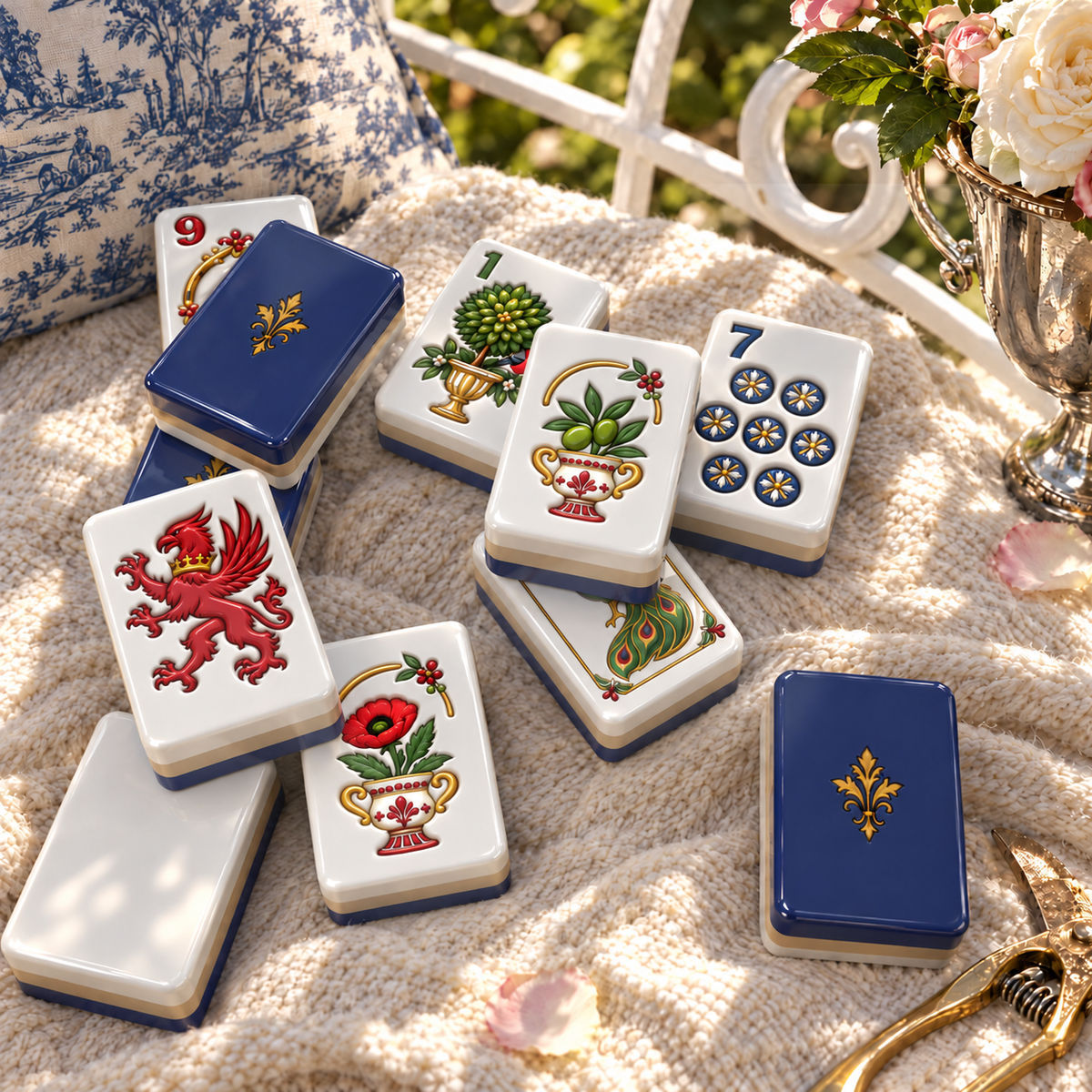
Mixed one suit means all tiles in your hand come from a single suit (Bams, Craks, or Dots) plus any combination of honors—winds, dragons, and flowers. The honors have no suit restriction, so a hand of 5 Bams, 7 Bams, 9 Bams, East Wind, South Wind, Red Dragon, and Green Dragon qualifies. This pattern appears on every National Mah Jongg League card because it's flexible and achieves high point values. Points vary by year and hand composition; consult the current League card for exact values. American mahjong scores only hands from the active year's card, and mixed one suit is one of the three major categories (the others being all honors and mixed). When building a mixed one suit, keep all suit tiles in one family and freely add any honor tiles you draw. Avoid mixing tiles from two suits—that disqualifies the hand entirely. A Mahstead engraved American mahjong set with clear, large suit symbols helps you quickly confirm one-suit purity during play.
What exactly does "mixed" mean in the card notation?
"Mixed" tells you the hand contains at least one honor tile (wind, dragon, or flower) alongside tiles from one suit. If a hand is "all in one suit"—meaning only Bams, Craks, or Dots—it's called "pure" and scores higher. On the League card, mixed one suit typically sits in a separate section from pure one suit. The word "mixed" simply signals: you're allowed honors here, and you need them to complete the pattern correctly. Checking the card's layout and section headers prevents costly mistakes.

How many points does mixed one suit typically score?
Points for mixed one suit vary by hand composition and the current year's card—they're never fixed. The League issues a new card every spring, and hand values change annually. Hands with all pungs (three-tile sets) typically score higher than hands with pairs and quints; hands with more honors also gain bonus points. To know your hand's exact value, you must match it exactly to the current season's League card before you declare. Never assume a hand scores based on prior years; the 2026 card may list different values than 2025. Learning how to read the mahjong card teaches you to locate and verify point values in seconds.
Why do mixed one-suit hands appear so often on the League card?
Mixed one suit appears every year because it balances accessibility with scoring strength. New and intermediate players can build it by focusing on one suit while collecting any honors they draw—the suit discipline is easy to follow, but the honor flexibility makes completion achievable. Advanced players value mixed one suit because its broad range of valid combinations gives them multiple discard paths during a game. From the League's perspective, including mixed one suit ensures the card rewards consistent play across skill levels. The pattern also reduces dead draws: if you're pursuing mixed Dots and you pick up North Wind, East Wind, or a dragon, you keep it rather than discard it, staying active longer.
🀄 Shop best-selling mahjong sets →
How do you avoid accidentally mixing two suits?
The most common error: holding a 1 Bam (the bird tile) and a 1 Crak (the stick tile) and forgetting they're different suits. Both are "1s," but Bams and Craks are separate families. To avoid this, arrange your rack by suit first, then by number within each suit. Keep Bams on the left, Craks in the middle, Dots on the right—never let them overlap. When you draw a tile, immediately place it in its suit section before deciding whether to keep it. If a hand requires mixed Dots, every single numbered tile must be a Dot; honors (winds, dragons, flowers) sit apart and can be any type. Many players sketch a mental line: "Everything on the left half of my rack is Dots; the right half is my honor zone." This visual boundary prevents accidental suit mixing mid-game.
Does mixed one suit play differently across mahjong variants?
In American mahjong, mixed one suit follows the League card strictly—no suit mixing, honor tiles allowed, jokers usable to replace missing tiles. Chinese classical mahjong has no "one suit" pattern; instead, it scores melds (chows, pungs, kongs) in any combination, and all players see each other's tiles. Hong Kong mahjong uses fast-paced, simpler tile combinations and no League card; it's a live scoring system based on sets you declare as you play. Riichi (Japanese) mahjong involves a betting mechanic and runs (sequences of three consecutive numbers), which don't exist in American mahjong—so "mixed" hands look completely different. Taiwanese mahjong often plays with eight players and draws from a center pile; honor tiles score as individual bonus points rather than as part of a ranked hand. If you play multiple variants, always confirm which version your group is using before the game starts; mixed one suit is uniquely an American League concept. Your American mahjong set is built for League rules only—the tile count, joker count, and suit symbols all align with American play.

When should you commit to chasing a mixed one-suit hand?
Commit to mixed one suit early only if your first Charleston pass (the opening tile exchange) gives you at least three strong Bams, Craks, or Dots and you're already holding honors. If you receive one Bam, two Craks, and no winds, abandon it—don't cling to a weak suit. After the Charleston, look at the current League card and identify 2–3 realistic mixed one-suit hands in your chosen suit that match what you hold. As you pick and discard, confirm every hand you're pursuing still appears on the card; if it doesn't, stop pursuing it immediately. Watch the discard pile: if four 9 Dots have been thrown, stop chasing mixed one suit in Dots that requires a 9 Dot. The best mixed one-suit players pivot quickly when the probability of completing a hand drops. A hand of five suited tiles and two honors is worth pursuing; a hand of two suited tiles and one honor is not. Early commitment based on a strong draw beats late pivoting based on hope.
🎁 See our most-loved mahjong sets & accessories →
Comparison: One-Suit Hand Patterns at a Glance
Hand Type | Tiles Allowed | Honors Allowed? | Typical Point Range | Difficulty |
Pure one suit | Only one suit (Bams, Craks, or Dots) | No—zero honors | Higher | Hard |
Mixed one suit | One suit + honors | Yes—any number of winds, dragons, flowers | Medium | Moderate |
All honors | Winds, dragons, flowers only | N/A—always all honors | Varies by year | Hard |
Mixed (two+ suits) | Does not exist on League card | N/A—not a valid pattern | N/A | N/A |
Real-Game Scenario: When Mixed One Suit Wins
You're sitting North, and after the Charleston you hold three 4 Bams, two 5 Bams, East Wind, South Wind, and Red Dragon. You scan the 2026 League card and find a mixed Bams hand: 4-4-4 Bam (pung), 5-5-5 Bam (pung), East Wind (pair), South Wind (single), Red Dragon (single). It's there. You discard the least useful tile from your hand and begin picking. Three turns later, you pick another 4 Bam (now you have four—a kong). You expose the kong and draw a replacement. A few turns later, someone discards a South Wind; you pick your pair. Now you need only one South Wind to win. Two rounds pass. Your right-hand neighbor discards South Wind. Mahjong! You place your winning tile, declare mixed Bams, and score according to the card—say, 50 points (verify the card for actual value). You won because you (1) identified a realistic mixed one-suit hand early, (2) committed to it when your draw supported it, (3) exposed sets as you completed them (kongs and pungs), and (4) checked the card one final time before declaring.
Common Mistakes to Avoid
Mistake 1: Assuming "mixed" means "any suit mix." It doesn't. "Mixed" means one suit plus honors. Mixing two numbered suits disqualifies your hand entirely.
Mistake 2: Holding a hand for mixed one suit without verifying it on the card. You might build what feels like mixed Dots—four tiles from Dots, two winds, one dragon. But if that exact combination isn't on the current League card, you cannot win with it. Always verify before declaring.
Mistake 3: Not pivoting fast enough. You chase mixed Craks but by turn eight, two players have already discarded four 3 Craks and three 7 Craks—you're not going to complete it. Switch gears; don't lose four more turns waiting for a tile that won't come.
Mistake 4: Over-valuing small suit hands. Two Bams and three honors is not a foundation for mixed one suit. You need at least four to five suited tiles after the Charleston to commit. Otherwise, you're hoping for too many draw cards.
Mistake 5: Misreading suit symbols on worn tiles. A faded 5 Dot can look like a 5 Bam if you're tired or the tile is old. Use a high-quality set with clear, large symbols. Mahstead sets use crisp engraving and bold suit markers, so you never second-guess what you're holding during play.
What to Check Before You Buy a Mahjong Set for Mixed One-Suit Study
Tile clarity: Can you instantly distinguish Bams (circles) from Craks (characters) from Dots (bamboo sticks)? Squint-test it in dim light.
Tile size: Are tiles large enough to read the numbers comfortably? Tiny tiles slow you down when practicing hand combinations.
Joker and honor count: Does the set include eight jokers and a complete honor set? Mixed one suit uses honors heavily, so you need all 16 winds and 12 dragons.
Rack quality: Do racks have pushers to hold tiles upright? Pushers let you build and rearrange mixed one-suit hands without dropping tiles.
Durability: Are tiles smooth and chip-resistant? If you play weekly, you'll shuffle and sort thousands of tiles per year.
✨ Find your Mahstead set — free US shipping →
A Mahstead acrylic American mahjong set with matching racks and pushers gives you the clarity and durability to confidently drill mixed one-suit combinations every week without worrying about tile fading or getting stuck.

FAQ
Can you use jokers in a mixed one-suit hand?
Yes. Jokers substitute for any missing tile in your hand—suit tiles or honors. However, jokers cannot form a pair or sit alone; they must replace a third, fourth, or fifth tile in a set (pung, kong, quint, sextet). Learn how jokers work for full rules on legal joker placement.
Does the League card list mixed one-suit hands separately from pure one-suit hands?
Yes. The current League card has distinct sections for pure one suit (higher-scoring, no honors) and mixed one suit (moderate scoring, with honors). Always check the right section to verify your hand.
If I draw a flower tile while building mixed one suit, does it count against the suit requirement?
No. Flowers are bonus honor tiles—they don't belong to any suit and don't break one-suit purity. Flowers are collected and scored as additions to your hand but don't interfere with the one-suit pattern.
What happens if the discard pile shows that the tile I need is already gone?
You cannot win with that hand. You must abandon it and pivot to a different hand or play defensively. Tracking the discard pile prevents wasting turns chasing impossible hands.
How do I know if my mixed one-suit hand matches the League card if I'm new?
Learn how to read the mahjong card step-by-step. Find the mixed one-suit section for your chosen suit, locate the hand that matches your tiles exactly, and note the point value. If your tile combination doesn't appear, it's not a valid hand.
Can I play mixed one suit in casual games without using the League card?
You can invent house rules, but "mixed one suit" as a scored hand exists only in American mahjong under League rules. Other variants don't recognize this pattern. Stick to the League card if you want standard scoring.


View More
View More
View More
