
Matching Dragons in Mahjong: The Rule Explained
Last updated: Nov 23, 2026
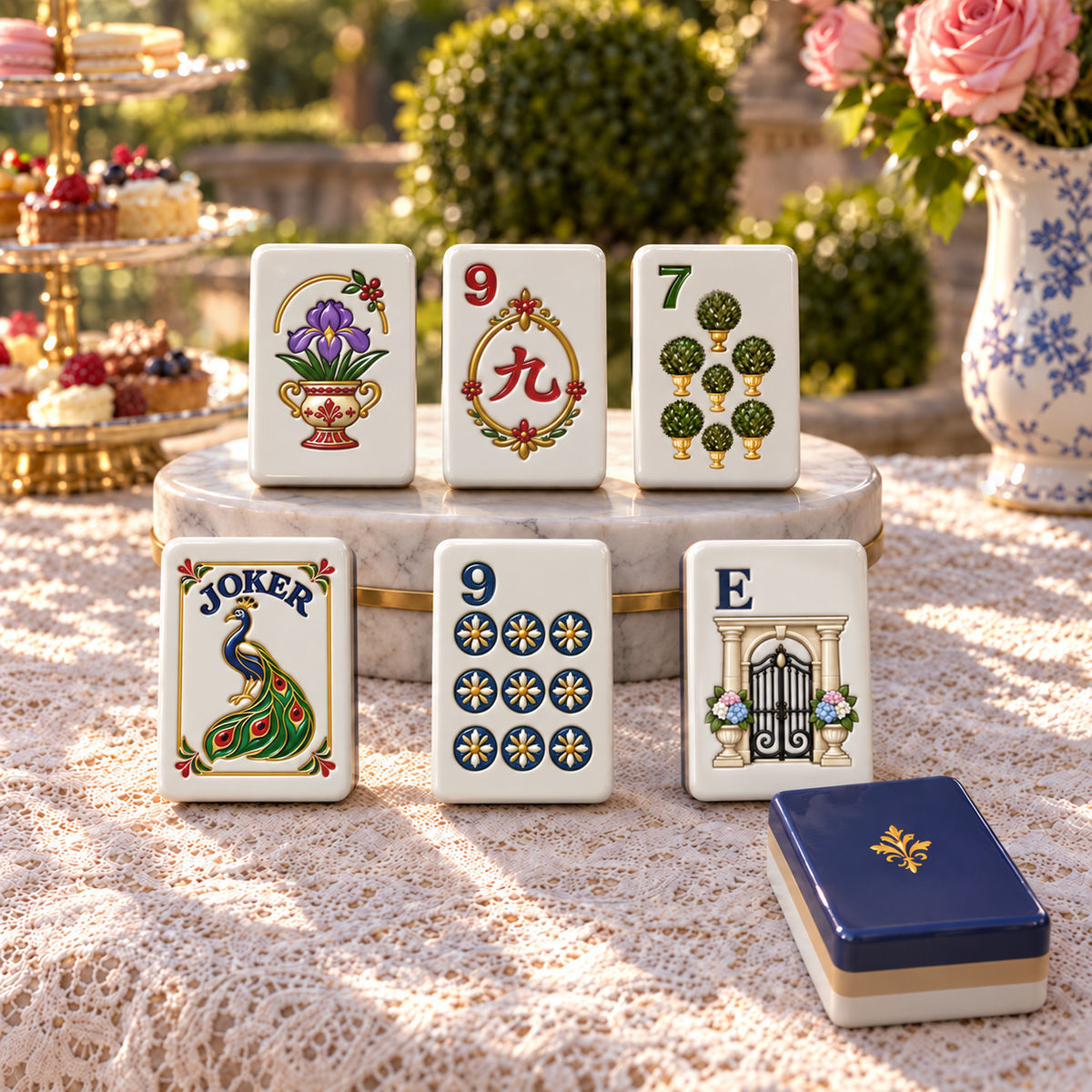
In American mahjong, a pung (three identical tiles) of any dragon—Red (Crak Dragon), Green (Bam Dragon), or White/Soap (Dot Dragon)—counts as a valid matched set. You cannot mix dragon types; three different dragons don't count. Dragons are honors (like winds), so a three-dragon pung appears on the current year's National Mah Jongg League card in the "honor" sections. Three matching dragons are often part of larger winning hands. Unlike number suits, you don't need a sequence (1-2-3) with dragons—only identical sets of 3, 4, or more. This rule is unique to American mahjong; Chinese variants handle dragons differently. A three-dragon hand is straightforward to play but requires holding all three tiles yourself or using jokers to complete the set.
In American mahjong, dragons aren't magical wildcards—they're fixed honor tiles, and the matching rule is brutally simple: three identical dragons make a pung, and that's it. No mixing colors. No sequences. Three Red dragons, three Green dragons, or three White/Soap dragons. That's the rule.
We've been hosting weekly games for years, and the most common mistake is new players thinking they can mix dragons—"I have one Red, one Green, one White—is that a pung?" No. Dragons only work in matched sets of identical tiles. The moment you understand that, everything else about dragons falls into place.
What counts as a "matched dragon set"?
A matched dragon set in American mahjong is exactly three or four identical dragon tiles of one color. You need all three Red dragons, all three Green dragons, or all three White dragons—never a mix. If you're using jokers, a joker can replace one (or more) missing dragons to complete a three- or four-tile set. For example: Red, Red, joker = valid three-dragon pung. Red, Red, Green = not valid. This distinction matters because many new players conflate dragons with wildcards; dragons are fixed honors, just like North Wind or South Wind, and they follow the same pung rule as Dots, Craks, and Bams.
The key takeaway: look at the current year's National Mah Jongg League card honor sections, and you'll see dragon hands listed explicitly. They're not hidden; they're there. We recommend beginners scan that card before every game so they see exactly which three-dragon combos win.

Why are dragons separate from sequences?
In American mahjong, you cannot form a sequence with dragons—ever. Sequences (chows) don't exist in American mahjong at all; you can only expose pungs (3), kongs (4), quints (5), and sextets (6). Dragons follow honor rules: they only match by identical tile, never by number progression. This is a fundamental difference from Chinese mahjong, where dragon sequences can sometimes be formed. American mahjong has no such thing. Knowing this prevents a huge rules dispute at the table: someone holds 1 Dragon, 2 Dragon, 3 Dragon and thinks they've got something. They don't. Honors don't sequence. Period.
The simplicity is the design: American mahjong rewards recognizing identical sets quickly, not spotting number patterns in honors. That speed is why the game flows at our tables—no debating whether 1 Dragon–2 Dragon–3 Dragon is legal (it isn't). Stick to identical only.
How do jokers change the dragon rule?
Jokers can substitute for one or more missing dragons in a dragon pung. So if you hold two Red dragons and one joker, you have a valid three-dragon pung. If you hold one Red dragon and two jokers, that's also valid. How jokers work is crucial here: a single tile can never be a joker, and a pair can never include a joker. But in a pung (3+), jokers slot in freely. This is why holding at least one natural dragon is so powerful—the jokers do the heavy lifting.
A practical example: Week 3 of our season, someone needed three Red dragons to go out. They had one natural Red, drew two jokers, and won immediately. No waiting for the third natural tile. That flexibility is why jokers are worth protecting. When you're building a dragon hand, lock in your natural dragons first; jokers are plan B for the missing pieces.
Dragons vs. winds: what's the difference?
Both dragons and winds are honors, so they follow the same matching rules: identical sets only, no sequences. The difference is symbolic and strategic, not mechanical. You have four of each wind (North, East, West, South) and four of each dragon color (Red, Green, White). On the National Mah Jongg League card, honor hands mix dragons and winds freely—e.g., a hand might need three Red dragons, two White dragons, and two North winds. All are honor tiles; all pung identically. The distinction matters only for memorizing card patterns; the rule is the same: three identical honors make a pung.
This is why beginners benefit from a laminated current-year card: you see dragons and winds side by side, and the parallelism becomes obvious. No special dragon logic. Same logic as winds.
🀄 Shop best-selling mahjong sets →

Dragon hands on the card: what should you memorize?
The current year's National Mah Jongg League card lists dozens of hands that include dragons. Some are pure dragon hands (three or four dragons plus other honors or number tiles); some are mixed. The card sections break down by hand type: "All Honors," "Like Number," "Consecutive Run," "2012 Like Number," and so on. Dragon hands appear across multiple sections. You don't need to memorize all of them—just be able to recognize the hand structure when you're holding tiles.
For example, if you have three Red dragons and the card shows a hand like "3 Red Dragons + 2 White Dragons + 1 East + 1 South + 1 North," you scan for that exact combo. If you have three Red, three Green, and two White, you look for a hand with that pattern. Speed comes from scanning, not memory. Keep a clean, readable card on the table; we recommend printing or laminating the current year's card so it lasts through your season.
Common mistakes: what to avoid at the table
Mistake | Why It Fails | How to Prevent It |
Mixing dragon colors (Red + Green + White = pung) | Dragons only match by identical color; there is no "dragon" suit | Check the card before calling anything; say the tile names aloud: "Red, Red, Red"—not just "dragon, dragon, dragon" |
Using a joker in a pair with dragons | Jokers can never form a pair; pairs are always natural tiles | Never hold a dragon-joker pair; always keep three natural or three natural + jokers |
Treating dragons like Dots/Craks/Bams (as if they sequence) | Dragons are honors, not number suits; honors never sequence in American mahjong | Review how to play American mahjong before your first game; say aloud: "Honors don't sequence" |
Confusing White Dragon with Soap or zero | White Dragon is one tile; it serves as zero in number hands and as a White honor, but it's still one physical tile | Look at your set: White is one distinct tile; don't double-count it as two roles |
Calling a dragon hand before checking the card | You think you have three Red, but the card requires three Red and something specific (e.g., 1 Bam, 9 Bam) | Always read the full hand requirement line on the card; don't assume partial patterns are complete hands |
The fastest way to kill table drama: everyone uses the same current-year card, and everyone reads the line before anyone calls. Simple.
🎁 See our most-loved mahjong sets & accessories →
What to check before you buy
Before you sit down to play, make sure your mahjong set is complete and legible. You need 152 playing tiles (four of each number 1–9 in Bams, Craks, and Dots; four each of North, East, West, South winds; four of each dragon color; eight flowers; and eight jokers). Our best-selling 160-tile acrylic sets include those 152 tiles plus spares—enough for years of play.
Check that your dragon tiles are clearly marked by color: Red (looks like a character, belongs with Craks), Green (character, belongs with Bams), and White/Soap (a blank-looking tile, belongs with Dots and doubles as zero). If your tiles are worn or hard to read, consider upgrading; squinting at dragons during play kills the game. Also make sure you have a current-year card printed or laminated. Last season's card is worthless—hands change yearly.
Finally, organize your setup: a padded mahjong mat keeps tiles stable, racks with pushers let you hold and move tiles smoothly without fumbling, and a sturdy bag or case protects everything in transit. Sloppy setup breeds mistakes—including mis-calling dragons. Treat your tiles right.
✨ Find your Mahstead set — free US shipping →

FAQ
Can I make a dragon pung with one Red, one Green, and one White?
No. Dragons only match by identical color. Red, Red, Red is valid. Green, Green, Green is valid. Red, Green, White is not a pung at all—each color is its own honor tile. The card will never ask for a mixed-color dragon set.
If I have three Red dragons showing and pick up a fourth Red dragon, do I upgrade to a kong automatically?
Only if the hand on the card requires a four-tile dragon set (a kong). Otherwise, you stop at three—you have what you need. In American mahjong, you don't upgrade sets mid-hand; you build to match the card line exactly.
Is a White Dragon the same as a zero tile?
A White Dragon is one tile that serves two roles: it's the White honor (paired with Dot honors and number Dots) and it acts as zero in hands involving number sequences (e.g., 0-1-2 in Dots). It's not two tiles; it's one physical tile with two functions depending on the hand you're building.
Do dragons count as wildcards in American mahjong?
No. Jokers are the only wildcards. Dragons are fixed honor tiles—like winds. They only match by identical color and never substitute for anything else.
Can I use a joker to replace a dragon in a pair?
No. Pairs must always be natural tiles; jokers cannot be part of any pair. A joker can only slot into a set of three or more.
How do I know which dragon hands are on this year's card?
Get the current-year National Mah Jongg League card (released every spring). Scan the honor sections and any mixed hands involving dragons. Every legal hand for the season is on that card—and nothing else counts.


View More
View More
View More
